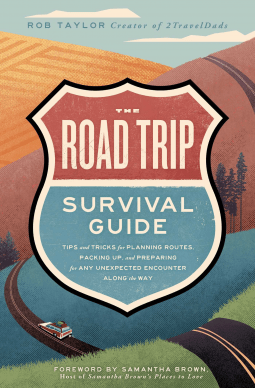
Cover Crush: The Road Trip Survival Guide by Rob Taylor

About the Cover:

I like the simplicity of this cover and the composition. There is nothing fancy about the layout but the road on the rolling hills evokes adventure.

About the Book:

Roads trips have always been popular. Though, it is safe to say more and more people are using this form of travel other than flying. Which means, this book is relevant and I will be looking out for what people have to say about it. -Stephanie Hopkins

Tips and Tricks for Planning Routes, Packing Up, and Preparing for Any Unexpected Encounter Along the Way

Cooking, Food & Wine | Parenting & Families | Travel

Tiller Press/ Pub Date 25 May 2021

Description

Make the most of your next road trip with these essential tips and tricks for planning the ultimate epic adventure.

During COVID-19, we’ve all had to find different ways to travel. From the disruptions of airlines to the possibility of many travel restrictions at your destination, the car has become a more attractive (and safer) option.

One-part Bushcraft 101- and one-part vacation planning workbook, The Road Trip Survival Guide provides guidance for new road trippers as well as essential tips and tricks for even the most experienced roadsters including:

-How to organize your car for trips

-Packing lists for different types of vacations, from city breaks to outdoor adventures

-How to develop the perfect road trip itinerary that will suit the whole family

-Recipes and recommendations for the best car snacks (easy access and less mess!)

-Tips and tricks for making your trip more eco-friendly

-How to reroute a road trip gone wrong

-And more!

The Road Trip Survival Guide is a must-have for anyone planning a vacation. Perfectly designed to fit in a glove box or back-seat pocket, you can now stop dreaming, hit the open road, and start experiencing the perfect road trip.

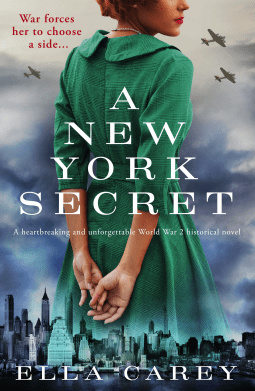
Book Review: A New York Secret by Ella Carey

(Daughters of New York #1)

Expected publication: March 12th 2021 by Bookouture

War forces her to choose a side…

1942, New York. As war rages in Europe, Lily Rose is grateful for her perfect life: a wealthy family who love her and a dream job working uptown as a restaurant chef. Times are changing for women and Lily is determined to run her own kitchen one day. She hopes handsome Tom Morelli, son of Sicilian immigrants, will be at her side. Together they work late, dreaming up delicious meals for New Yorkers struggling with wartime rationing and the threat of sons and sweethearts being called up…

Then Tom receives a devastating telegram that changes everything: he is drafted to fight in Italy.

Suddenly alone, Lily turns to her parents for support. But when her mother finds out about Tom, she is furious. When the war ends, Lily’s duty is to marry the man picked for her, keep house and raise children. They give her a heartbreaking ultimatum: end her relationship with Tom or lose her family and inheritance forever.

In the middle of the war, Lily is left in an impossible position. Will she choose to stay with her family and live the safe life she has always known, or will she follow her heart and her dreams?

My thoughts:

Often times we only read stories about war in the midst of battles and evasions. Ella Carey gives us a story about the families back home and the affect war has on them and the sacrifices they have to make. Like any war, people on the home front are thrust into uncertainties and adjusting to a new way of life, even if temporary. Is it really temporary?

Women were called to do “mens’ work” and this fact alone opened many opportunities and gave women a sense of pride and validity. We have much to thank them for…

Rationing food, gas and clothing became part of the necessary means and people had to find creative and alternatives to these commodities. While these things were taking place, there was also fear that gripped the nation for their love ones off fighting on the front lines.

These themes are woven throughout the story in an engrossing way that captivates the reader and gives one an appreciation for sacrifices that are made for the good of community.

I was completely enthralled with Lily’s strength and following her life during this period in history. All the characters, really, have a special role that gives this story depth and purpose.

What fun it was to read about the restaurant kitchen life and its culture.

A New York Secret is most definitely a thought-provoking, emotional story that portrays courage, hard choices, family, friendships in unlikely places and adversity.

Stephanie Hopkins

I obtained a copy from the Publishers through NetGalley for an honest review.

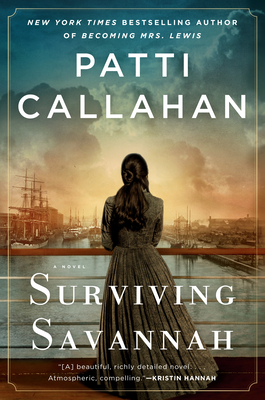
Book Review: Surviving Savannah by Patti Callahan

Berkley Publishing Group

Historical Fiction

Pub Date 09 Mar 2021

About the book:

When Savannah history professor Everly Winthrop is asked to guest-curate a new museum collection focusing on artifacts recovered from the steamship Pulaski, she’s shocked. The ship sank after a boiler explosion in 1838, and the wreckage was just discovered, 180 years later. Everly can’t resist the opportunity to try to solve some of the mysteries and myths surrounding the devastating night of its sinking.

Everly’s research leads her to the astounding history of a family of eleven who boarded the Pulaski together, and the extraordinary stories of two women from this family: a known survivor, Augusta Longstreet, and her niece, Lilly Forsyth, who was never found, along with her child. These aristocratic women were part of Savannah’s society, but when the ship exploded, each was faced with difficult and heartbreaking decisions. This is a moving and powerful exploration of what women will do to endure in the face of tragedy, the role fate plays, and the myriad ways we survive the surviving.

My thoughts:

The Steamship Pulaski disaster is a true historic story. In 1838, there was an explosion on board at eleven pm at night and two-thirds of the lives were lost. The ship was about 30 miles off the coast of North Carolina and the ship sank within 45 minutes after the explosion. Can you image the utter chaos and the fight for survival? The utter fear of the women, men and children experienced was beyond horrific. As the story goes, through time, the fate of the lives lost were forgotten.

The historical story of Augusta Longstreet, and her niece, Lilly Forsyth was fascinating to follow. The plight that was handed to them and having to deal with it in life altering ways was extraordinary and powerful to read about. This story truly explores how life can change in an instance and the outcome is uncertain but one must never give up hope. Lily is a person I would love to read more about. Not only that but what the other families were going through during those fateful hours on the Pulaski and in the ocean.

Divers reported that they are believed to have found the wreckage of Pulaski from recovered items they salvaged from the wreck. Savannah professor Everly Winthrop was asked to study the artifacts and of that fateful period leading up to the disaster and afterwards. While she is working on the project, she was dealing with her own tragedy affecting her life in more ways than one.

This story is told in a dual time-line and I enjoyed many of the history elements throughout the story but felt at times the writing of the modern part was contrived. Also, Everly’s personal tragedy -where she eventually found closure- was too drawn out and I became irritated. I felt that part did not carry the overall modern day story well and it lacked structure and seemed forced, for a lack of better word. I found it hard to empathizes with her, but don’t misunderstand me, I’m fully aware that people grieve in different ways.

I did enjoy reading about Everly’s surroundings in Savannah because the city is known to me and her search for the artifacts, and finding out more about the families on the ship was intriguing.

I do love dual story-lines but I found myself thinking that I would have just preferred reading the historic aspects of the story without the modern part. Both need to be equally strong and it wasn’t which makes it difficult to follow the flow of the story with ease.

Despite a few of my misgivings, it is a good story and I’m confident that many readers will enjoy learning about the Pulaski through Surviving Savannah.

Stephanie Hopkins

I obtained a copy from the Publishers through NetGalley for an honest review.

Art in Motion: Knowledge

No thief, however skillful, can rob one of knowledge, and that is why knowledge is the best and safest treasure to acquire. ― L. Frank Baum

Interview with Author W.S. Winslow

What a pleasure it is to be chatting with Author W.S. Winslow about her new book, The Northern Reach. Winslow is a ninth generation Mainer, descended from both Pilgrims and Puritans with odd French fur trapper thrown in, a blood and guts background if there ever there was one.

Though she was born and brought up in Maine, she spent her adult life mostly in New York, where her husband and her raised their daughters. They also lived in San Francisco for five years before returning to Maine in 2019 to settle in a small town Downeast, where it is very, very quiet.

Winslow’s MFA is from NYU, and she also has an undergraduate and graduate degrees in French from the University of Maine. The Northern Reach is her first novel.

Thank you for talking with me today about your book, W.S. Please tell me a little bit about how you came to write about these characters and the time period you chose. What is the most surprising thing you discovered while writing your story?

Thanks so much for having me!

I came to these characters from an interest in the intersection of people with place and culture, especially as these things have existed, evolved and still persist in my home state of Maine. This project was partly sparked by genealogical research – my family’s origins go back to the earliest settlers in both Plymouth and Salem. When I got into the historical records, I was struck by the unmistakable similarities between my ancestors who lived 350 years ago and some of my family members today. I was also intrigued by the cultural legacy of Puritanism in a remote and demanding place like Maine.

The book has its origins in stories about my own family and the families of my friends who are from here. I’ve been lucky to know many great raconteurs over the years, and I wanted to share those stories, or fictionalized versions of them anyway. I also wanted to write about this place over a long sweep of time, from the dawn of the 20th Century to the beginning of the 21st, but I didn’t want to write a historical novel per se. What I was interested in was telling the story of a place and its people in episodes, in much the same way a patchwork quilt is stitched together.

This is my first book, so I started with no expectations. What surprised me was the way that characters would just suddenly say or do something, completely unbidden and with no warning. I think it was because at a certain point these fictional people became so real in my mind that they set up housekeeping there and just kind of got on with their lives. Even though I’d heard authors talk about that I never expected to experience it.

You certainly have quite the cast of characters! With each of their circumstances, it must have been rather dark at times to write. Is there anything in particular that helped you set the characters’ tone?

There is darkness in the book, to be sure. Maine is isolated and cold, with a short summer and a long, dark winter. It’s always been a hard place to live and consistently ranks among the poorest states in the union. Weirdly, we also have an unusually large number of wealthy people, mostly in summer, which creates a wide gulf between the haves and the have nots. This is the reality, and it’s rough for a lot of people. Looking away doesn’t help, so I leaned in.

That said, I wanted to find the humor in these stories, because Mainers can be really funny in a dry, dark way. There’s a tendency to dismiss the painful and the difficult with humor. It’s a reflexive thing, a way of keeping darkness and pain at arm’s length. Sometimes it works.

As for the book’s tone, language is everything for me. I love accents and foreign languages, but what really tickles me is the way Maine people speak, the intonation, the rhythm, the words, the austerity and understatement. I tried to work as much of that into the text as I could, mostly because writing dialogue is one of my favorite things to do. Tonally, the setting was also important, both as a character and as a place, and I hope people see the Maine I know – the cold bay, the low gray sky, the rolling blueberry fields and round topped mountains – in summer and winter.

Can you share a snippet that isn’t in the blurb or excerpt?

“Planting Tiger” comes in the middle of the book. It’s a sort of palate cleanser in that it’s lighter than the other stories, even in its treatment of grief and death. That was my favorite episode to write, because it includes one of the rare first-person narratives in the book, a “talky” passage from Earlene Baines:

I knew we were in for it when Jessie Martin showed up at Tiger’s funeral. It had been at least ten years since I laid eyes on her, but I could see she was still rougher than the back of a ditch. I can’t say I was shocked when she walked into the church, but I never expected to see her at my house. When Jessie came limping up the driveway, with her go-go boots and that mop of red hair, and introduced herself to Tino, the look on his face was priceless. I was watching from the kitchen window. Mill told me not to interfere and I didn’t, not until Vicky started hollering. She’s half Moody after all, and I never met one who didn’t like a good fight once in a while.

How long have you been writing and what advice would you give to writers who want to write a family saga?

I’m a late bloomer in that I didn’t start writing creatively until my fifties, and I’ll be a few months shy of 60 when The Northern Reach is released. So, my first piece of advice is to just do it, no matter how old you are or how many jobs you’ve had. It’s all experience, and experience fuels imagination.

Even though I started writing relatively late in life, I have always held stories in my head, and I’ve always been a reader. What I’ve found recently is the more I learn about writing, the choosier I become as a reader. Opening a book is something of a busman’s holiday, and I get a great deal out of well written books – because they’re fun to read but also because they’re instructive at the same time.

Anyone who wants to write a family saga would be well advised to start by reading some, and with the most critical eye they can manage. For episodic narratives, Sherwood Anderson’s Winesburg Ohio and Love Medicine by Louise Erdrich are good places to start. For more traditional narratives, I like Pachinko by Min Jin Lee, The Namesake by Jhumpa Lahiri, or Marilynne Robinson’s Gilead books – so many to choose from.

Where can readers buy your book?

It’s available from major booksellers like Bookshop.org, Barnes & Noble  and Amazon  , as well as your favorite local bookstore. My favorite indie is Print in Portland, Maine at  Print A Bookstore.

More Links:

W.S. Winslow’s Website/ Twitter @WSWinslow / W.S. Winslow goodreads page

Layered Pages Book Review

About the Book:

Published March 2nd 2021 by Flatiron Books

A heart-wrenching first novel about the power of place and family ties, the weight of the stories we choose to tell, and the burden of those we hide

Frozen in grief after the loss of her son at sea, Edith Baines stares across the water at a schooner, under full sail yet motionless in the winter wind and surging tide of the Northern Reach. Edith seems to be hallucinating. Or is she? Edith’s boat-watch opens The Northern Reach, set in the coastal town of Wellbridge, Maine, where townspeople squeeze a living from the perilous bay or scrape by on the largesse of the summer folk and whatever they can cobble together, salvage, or grab.

At the center of town life is the Baines family, land-rich, cash-poor descendants of town founders, along with the ne’er-do-well Moody clan, the Martins of Skunk Pond, and the dirt farming, bootlegging Edgecombs. Over the course of the twentieth century, the families intersect, interact, and intermarry, grappling with secrets and prejudices that span generations, opening new wounds and reckoning with old ghosts.

W. S. Winslow’s The Northern Reach is a breathtaking debut about the complexity of family, the cultural legacy of place, and the people and experiences that shape us.

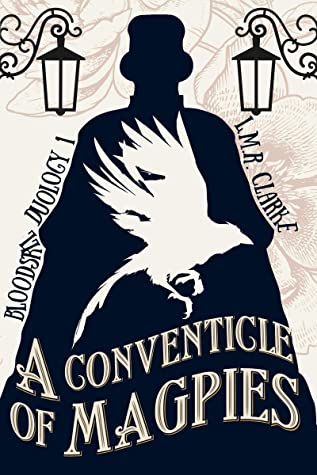
Book Review: A Conventicle of Magpies by L.M.R. by LMR Clarke

(The Bloodskill Duology Book 1)

BooksGoSocial

Sci Fi & Fantasy

Pub Date 06 Jan 2021  

About the Book:

Rook is an unapologetic thief, determined to do anything to ensure her mother and siblings survive the squalid and dangerous streets of Stamchester.

Rook slips, like a shadow, in and out of the homes of the ruling elite, the Avanish, and steals what she needs. She feels no regret, afterall, the Avanish have enslaved her people, the Saosuíasei, and worse, have now determined the Saosuíasei to be disposable and worthy of nothing other than death. 

However, Rook is not the only shadowy figure in Stamchester. And far more deadly one haunts the filthy streets, striking fear into Avanish and Saosuíasei alike. A serial killer who drains every ounce of blood from his victims, and satisfies the elite’s demand for blood to burn in the magical art of Bloodskill and enhance their own natural, and sometimes unnatural, abilities. 

How can Rook outfox the serial killer and raise her people from the ashes left by the Avanish oppression? 

My Thoughts:

Conventicle girls never surrender.” – Rook

I stepped out of my comfort zone picking up this story and glad I did! I recommend starting with the prologue. You get a clear understanding of just how despicable the people in power AKA the rich are to people who are different from them. The prologue is written as letters between Governor Dredchain and Viscount Trass. They viewed these people as animals that needed to be dealt with swiftly. As you read on, you soon discover their plans are much more sinister and you become further absorbed in the story.

I really enjoyed getting to know a few of the characters and their quirky names. For example: Rook, Pit, Crake, Billy Drainer, and Pigeon- to name a few. That said, there are too many characters introduced and not enough information about them to form any lasting connection or impression, me thinks. Which is important, especially, in a story like this one. Though I felt like I began to know Rook pretty good seeing she is a protagonist.

There is also too many things going on in the story that I felt pushed and pulled -a bit- in different directions. Nonetheless, I kept ready on because the premise itself was so fascinating and the writing engaging! A few interesting aspects include the Victorian setting, conflicts between the characters and the bloodskill.

Fans of Neil Gailman and Suzanne Collins will enjoy this story. Not only that, Clarke gives a bird’s eye view of discrimination and the people who stand up to adversity. I look forward to reading the next book in this series!  

Stephanie Hopkins

I obtained a copy from the Publishers through NetGalley for an honest review.

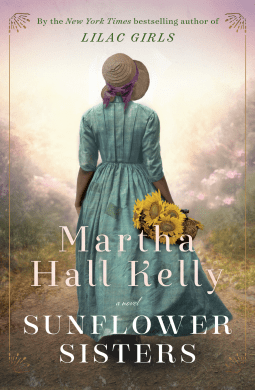
Book Review: Sunflower Sisters (Lilac Girls #3) by Martha Hall Kelly

Random House Publishing Group

Ballantine Books

Historical Fiction

Pub Date 30 Mar 2021

About the Book:

Lilac Girls, the 1.7-million-copy bestselling novel by Martha Hall Kelly, introduced readers to Caroline Ferriday, an American philanthropist who helped young girls released from Ravensbruck concentration camp. Now, in Sunflower Sisters, Kelly tells the story of her ancestor Georgeanna Woolsey, a Union nurse who joins the war effort during the Civil War, and how her calling leads her to cross paths with Jemma, a young enslaved girl who is sold off and conscripted into the army, and Ann-May Wilson, a southern plantation mistress whose husband enlists.

Georgeanne “Georgey” Woolsey isn’t meant for the world of lavish parties and demure attitudes of women of her stature. So, when the war ignites the nation, Georgey follows her passion for nursing during a time when doctors considered women a bother on the battlefront. In proving them wrong, she and her sister Eliza venture from New York to Washington, D.C., to Gettysburg and witness the unparalleled horrors of slavery as they become involved in the war effort.

In the South, Jemma is enslaved on the Peeler Plantation in Maryland, where she lives with her mother and father. Her sister, Patience, is enslaved on the plantation next door and both live in fear of LeBaron, an abusive overseer who tracks their every move. When Jemma is sold by the cruel plantation mistress Anne-May at the same time the Union army comes through, she sees a chance to finally escape–but only by abandoning the family she loves.

Anne-May is left behind to run Peeler Planation when her husband joins the Union Army and her cherished brother enlists with the Confederates. In charge of the household, she uses the opportunity to follow her own ambitions and is drawn into a secret Southern network of spies, finally exposing herself to the fate she deserves.

My Thoughts:

When I began to read this story, I must confess my feelings were not completely favorable. I’ve read and studied the American Civil War for quite some years and was looking for something I haven’t read before. As the story unfolded, I became less frustrated and was intrigued with how the author portray the character’s personalities. Needless to say, she doesn’t hold back.

Kelly marvelously shows us multi-dimensional people of the time. Which is important to have a better sense of mindsets and not told just in the perspective of the people who oppose them. Yes, it can be a slippery slope in today’s social norms but it is extremely counterproductive when people’s voices-all around-are silenced. 

I was quite impressed with the realistic imagery of the Civil War background and the author’s portrayal of the evils of slavery. Heart-wrenching to say the least…

As the war continued, just about every household lost someone they loved. Death became commonplace and with Sunflower Sisters, you experience that fact, vividly.

The Civil War topic still holds to this day with powerful and emotional attitudes. There was a particular scene in the story where I felt the author was bringing up a subject that many don’t speak of openly. Powerful business men in the north of that time profited from slavery. Yes, they surely did as the sun rises. Still applies today, really. Slavery is the oldest institution in the world. The author also portrays quite a few prejudices by people in the north had towards people of color.

There was a couple themes in the story that reminded me of what C.S. Harris wrote in an interview I had with her a few years back. To turn the Civil War into a morality play in which one side equals good and the other evil serves only to distort history and perpetuate the dangerous divisions that still exist in our country over 150 years later.

Bravo, Martha Hall Kelly! You have written a story that provokes discussion and clarity on this sensitive subject. You give new meaning to the good, bad and ugly. Memorable characters and an unforgettable story that needed to be told.

Stephanie Hopkins

I obtained a copy from the Publishers through NetGalley for an honest review.

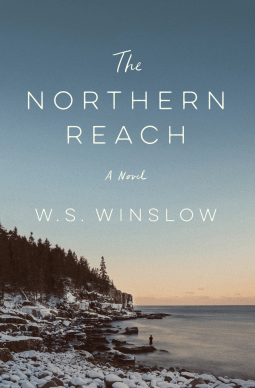
Book Review: The Northern Reach by W.S. Winslow

Published March 2nd 2021 by Flatiron Books

A heart-wrenching first novel about the power of place and family ties, the weight of the stories we choose to tell, and the burden of those we hide.

Frozen in grief after the loss of her son at sea, Edith Baines stares across the water at a schooner, under full sail yet motionless in the winter wind and surging tide of the Northern Reach. Edith seems to be hallucinating. Or is she? Edith’s boat-watch opens The Northern Reach, set in the coastal town of Wellbridge, Maine, where townspeople squeeze a living from the perilous bay or scrape by on the largesse of the summer folk and whatever they can cobble together, salvage, or grab.

At the center of town life is the Baines family, land-rich, cash-poor descendants of town founders, along with the ne’er-do-well Moody clan, the Martins of Skunk Pond, and the dirt farming, bootlegging Edgecombs. Over the course of the twentieth century, the families intersect, interact, and intermarry, grappling with secrets and prejudices that span generations, opening new wounds and reckoning with old ghosts.

My Thoughts:

First impressions are not always correct. In the beginning, I must confess the writing style and story structure threw me for a loop. When I started to feel something for a character or the family dynamic, the story moves on to the next and at times I became frustrated. Yes, I was having a rough go of it all. It was time to take a step back and reevaluate the story and purpose of the presentation and I’m glad I did.

One must remember that when reading about generational families or interconnected families-if you will, there will be multi-faceted plots. You will be taken deeply into a historical time-lines. There will be strong elements that can sway you from happy moments to darker times. In short, they evolve. Family bonds are complicated to say the least and the author marvelously portrays this fact. We might not like the characters or we will feel we are not getting enough from them but that is okay. The Northern Reach is an evocative story and will push boundaries you might not have expected to cross.

I did enjoy a quite few of the story-lines and the setting and I was intrigued with the character’s life story and I wanted to read more about them. Will we be reading more about these interesting people? I would like to very much! As the story continued, I began to have a better understanding of the set-up-if you will. There is strong character development and the setting gives you a stark, realistic view of the state of Maine and its’ towns. There is a particular social element in the story that is still considered a hot topic in today’s climate that I would really like to pick the authors brain about!

The author superbly portrays how people can make assumptions about other people and even more so in families. The Northern Reach is not a story of virtuous people, but they are down to the bone’s realistic of human nature and thought. In particular the attitudes of the Baines family and the people who marry into that family. At first, I found Edith Baines to be an intriguing woman, I soon discovered her to be just as flawed-if not more- like the rest of them. She was hardened by her life experiences and loss. Her attitude-I felt-towards her daughter-in-law Lilane was unjust. The women who made the most impression on me were Imelda, Alice, Liliane and Suzanne. I would like to read more about them.

An intriguing story wrought in hardships, cultural differences, family dysfunction, legacy and loss.

Stephanie Hopkins

I obtained a copy of this book through the publishers for an honest review.

Interview with W.S. Winslow coming up Friday, March 5th here a Layered Pages!