Published March 16th 2021 by Bethany House Publishers
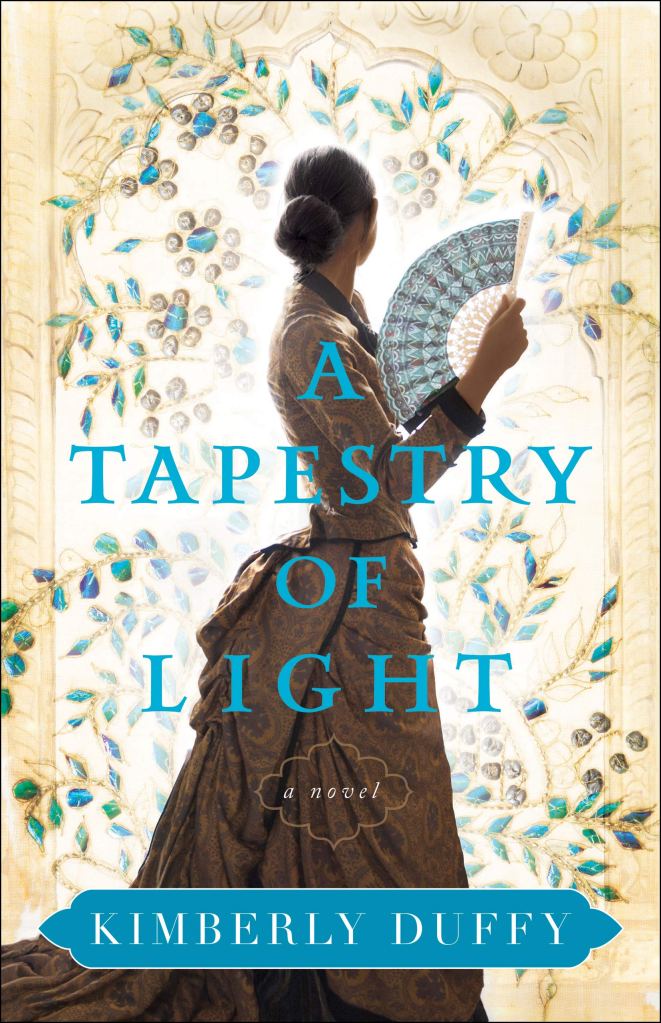
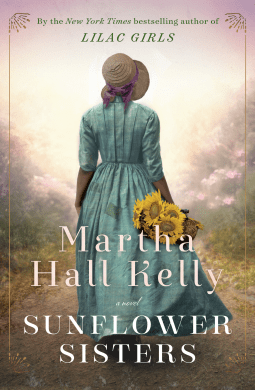
About the cover: I love everything about this cover. Okay, maybe expect for you can’t see the woman’s face. Anyhow, this cover alone makes me want to read this book. The background, the fan, and the dress…swoon.
About the book: I wanted to read this book before I even read the book description! That said, the premise sounds wonderful! Check it out. -Stephanie Hopkins
Calcutta, 1886.
Ottilie Russell is adrift between two cultures, British and Indian, belonging to both and neither. In order to support her little brother, Thaddeus, and her grandmother, she relies upon her skills in beetle-wing embroidery that have been passed down to her through generations of Indian women.
When a stranger appears with the news that Thaddeus is now Baron Sunderson and must travel to England to take his place as a nobleman, Ottilie is shattered by the secrets that come to light. Despite her growing friendship with Everett Scott, friend to Ottilie’s English grandmother and aunt, she refuses to give up her brother. Then tragedy strikes, and she is forced to make a decision that will take Thaddeus far from death and herself far from home.
But betrayal and loss lurk in England, too, and soon Ottilie must fight to ensure Thaddeus doesn’t forget who he is, as well as find a way to stitch a place for herself in this foreign land.
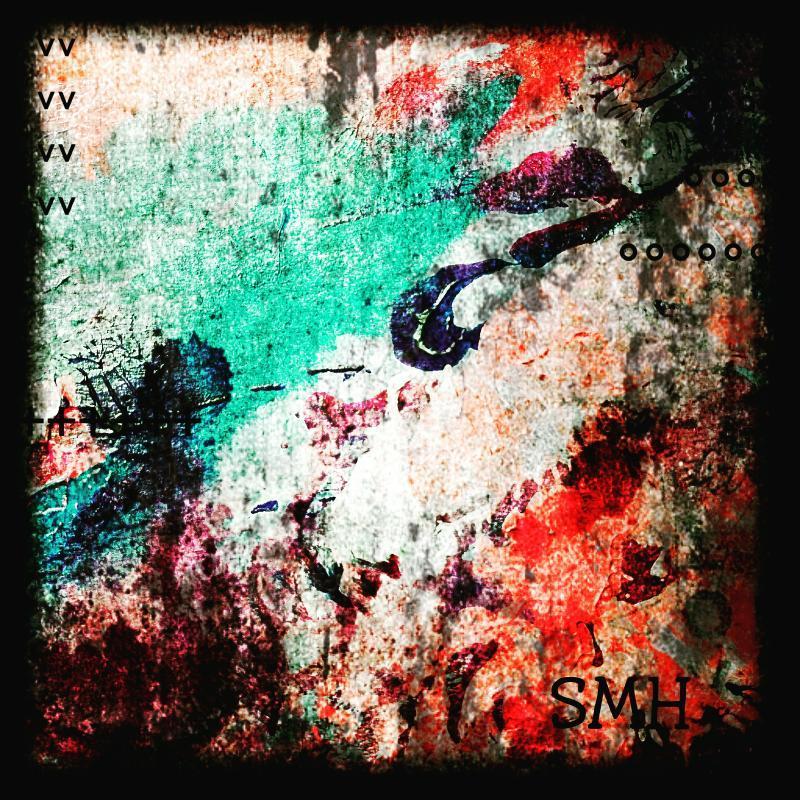
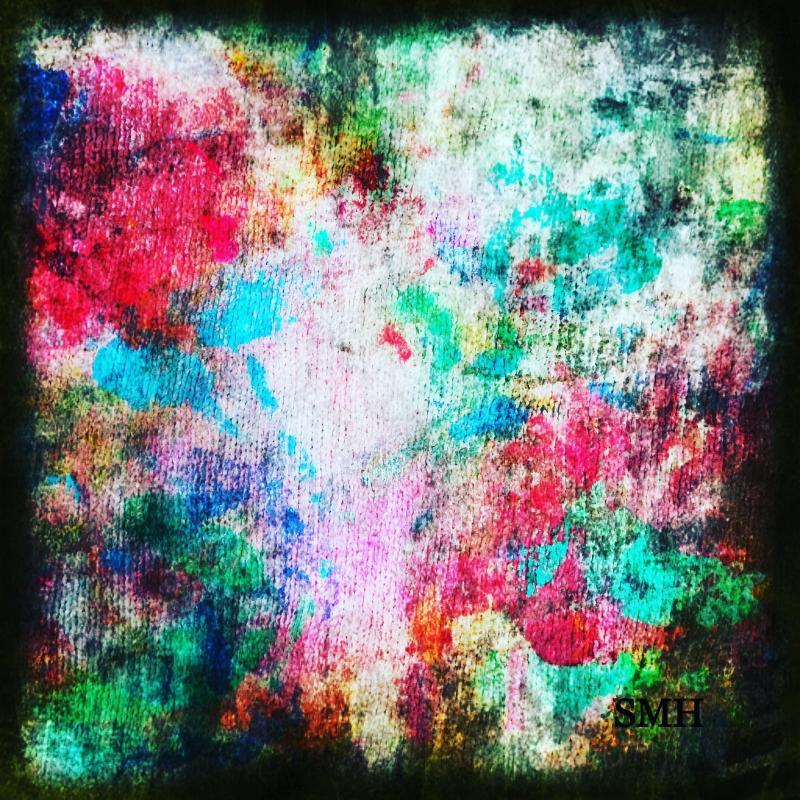
Don’t be afraid of colors! Be bold and experiment! You’ve got to mix it up.
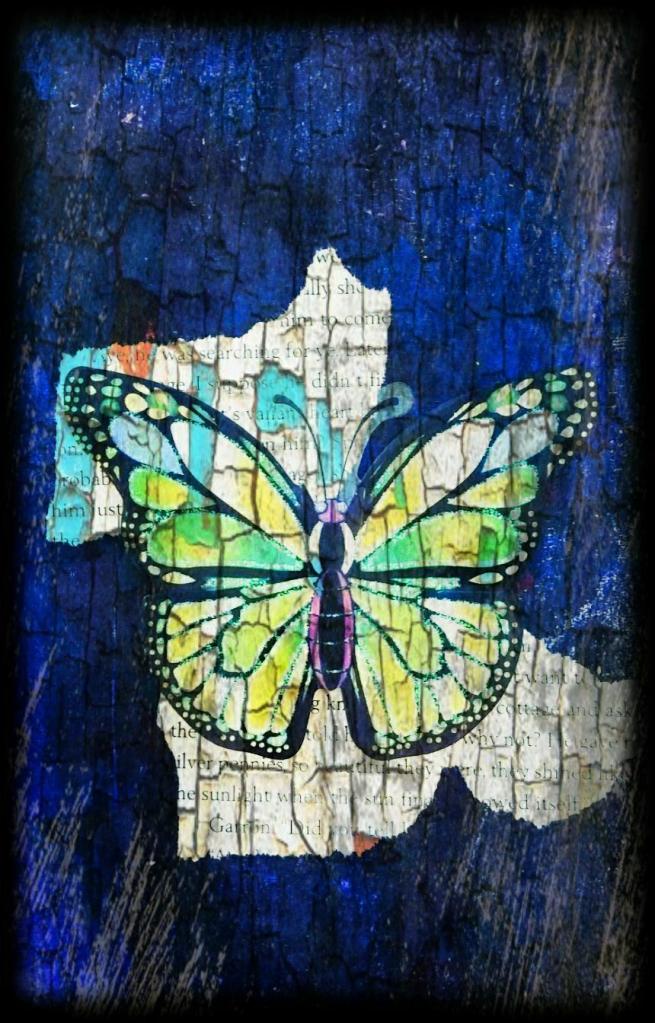
My tip for mixed media abstract: lots of layers. Blend, blend, and blend some more. Understand cool colors, warm colors and how they work together. If you’re not feeling it, throw more paint at it and mark it up! Remember, ignore the naysayers. Create what you love. -Stephanie Hopkins
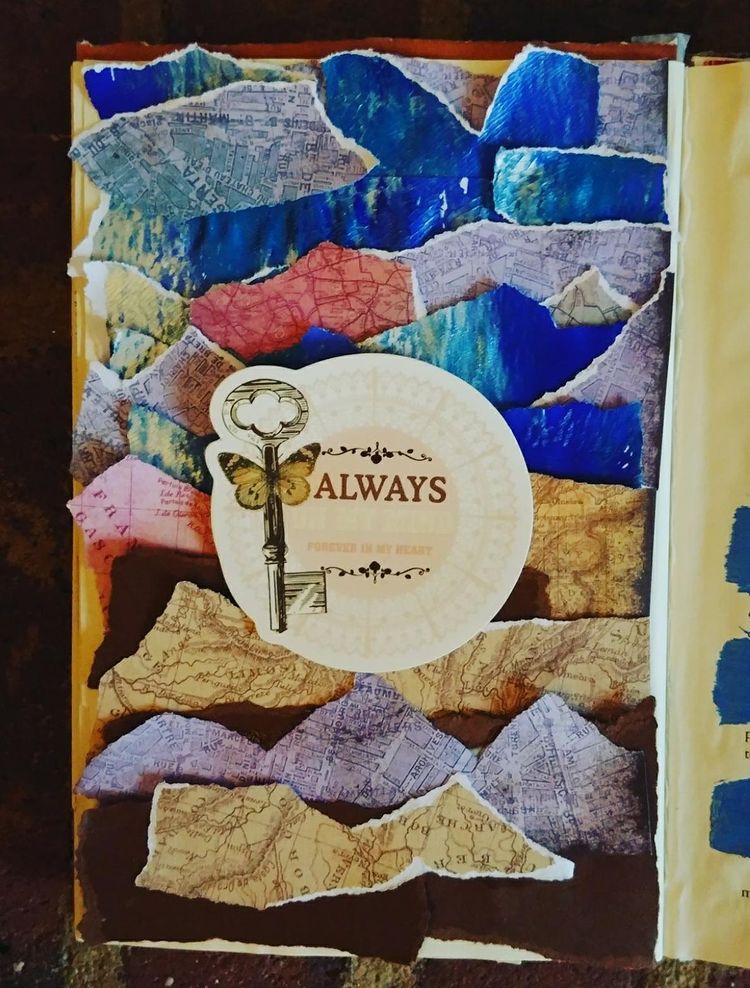
Mixed media collage is a form of visual arts, in which you take more than one element and create an image or background. Paper is one of the more popular forms of making collage. Such as using magazine clippings, scrapbook paper, photos, wrapping paper and so on…
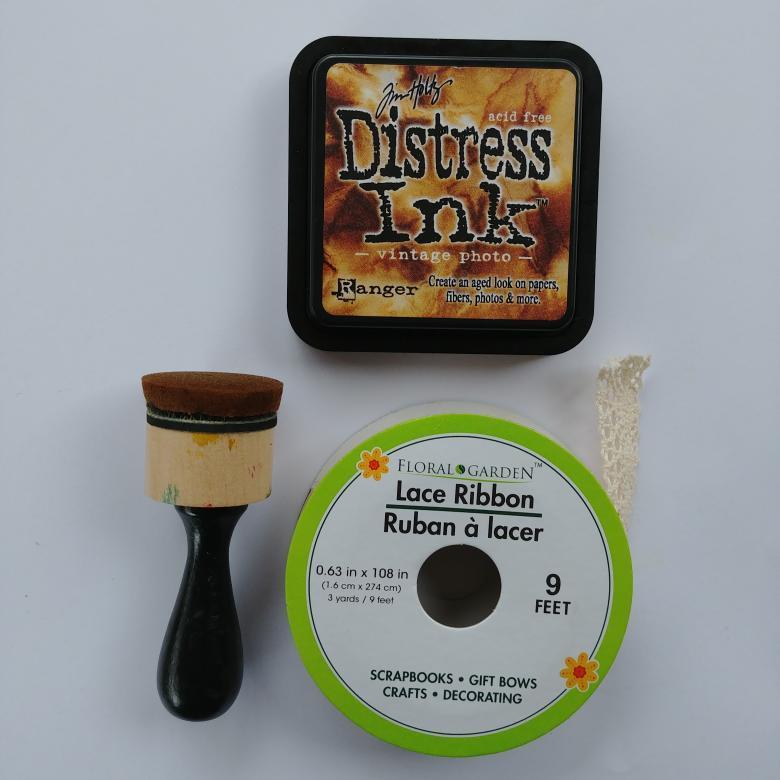
It becomes mixed media when you add elements such as paint, ink, markers, ribbons, metal, cardboard, wood, and stamps. The ideas are endless, really. You don’t have to go out and spend a lot of money. You can use items from around your home. I’ve even seen people use sticks and leaves they find out doors. I have to admit, I’ve done that as well. In short, keep your cost down to little or no cost at all. That is the beauty of being creative.
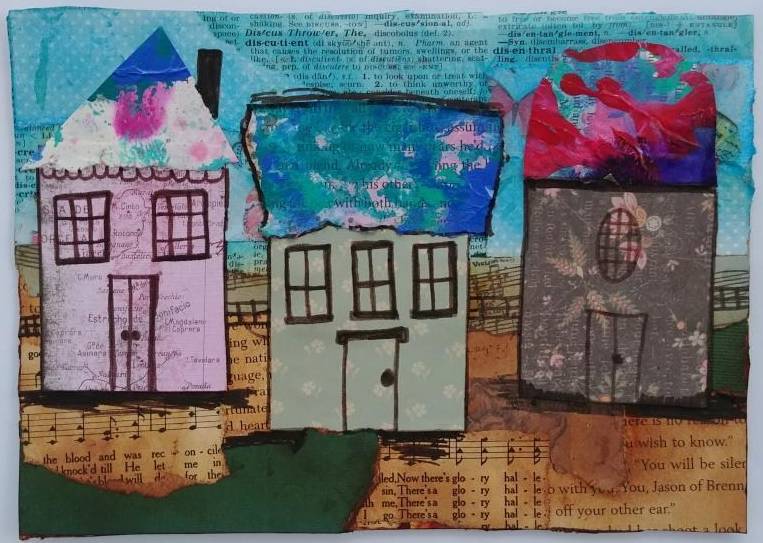
Mixed Media Collage by Stephanie Hopkins
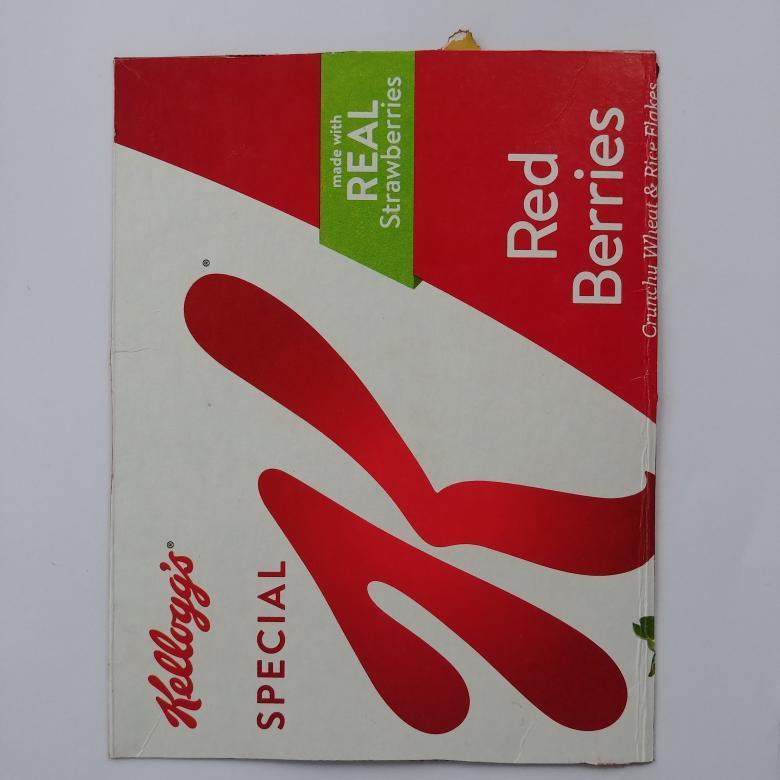
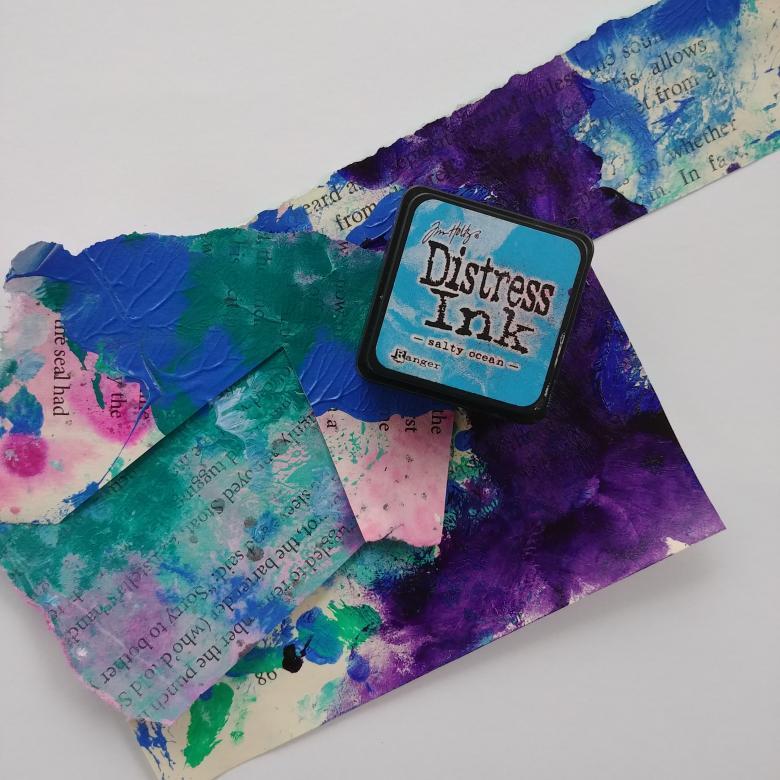
These collages were fun and easy to make. A perfect project for beginners or even advance crafters’. I love the quirky mismatched window panes on the house above. I tend to do that with projects like these. For my base I used cardboard from a cereal box. Don’t throw away those boxes! You can use them for all sorts of crafts. Once I cut it to the size I wanted, I inked the sides. Then grabbed a pile of scrap paper I have on hand and inked them up really good and glued them down the way I wanted. Tip: Arrange the paper on the base to see how it looks before gluing them down. Once the paper is glued down, add ribbon and use a marker(s) to make the door and windows. I also used the markers to highlight the sides of the roof and house. That part is optional but it really helps the image to stand out.
Tip: If you don’t have crafting ink, you can use coffee to dye your papers or even watercolor paint.
These collage can be framed, or used in a journal, or a card to send to a friend or love one, or propped up against something-like a bookshelf. Have fun and enjoy the process!
You can find more of my paper-crafting and art at my Instagram!
Stephanie Hopkins
Supplies:
Cardboard from Cereal Box/Scrap Paper/Ink and Ribbon/Glue and Markers
I did use some of my painted papers for this project.
Dante Gabriel Rossetti-Proserpine (1874) (Image courtesy of Wikimedia)
This month, I re-visited a book called, That Summer by Lauren Willig and quite a few memories of reading her story beforehand and previously studying the Pre-Raphaelite Brotherhood came flooding back. Then it hit me, Rossetti’s Proserpine painting (1874) is among my favorites! I quickly did an on-line search and found the picture with some information. What is extraordinary is that, before the second sleep recommended via email that I might consider featuring a painting from the Pre-Raphaelites, the very weekend I read Willig’s book. Isn’t it funny how things work out sometimes?
Victorians are known for their dramatic romantic notions, take on mortality and among other things…For instance, death was on their mind quite often to say the least. How they died and the afterlife was extremely important to them. Rightly so during the 19th century both in England and America.
Dante Gabriel Rossetti often created his art based on his own experiences in life and love. In this painting, Proserpina is the queen of the underworld and the wife of Pluto. She was abducted by Pluto and her mother Ceres cast a famine on earth until her daughter was returned. The fruit Proserpina holds represents death. Anyone who ate it had to stay in the underworld for the rest of their life. Imagine that! As the story goes, Pluto made an agreement to release Proserpine back to her mother once a year.
Rossetti founded the Pre-Raphaelite Brotherhood in 1848 along with William Holman Hunt and John Everett Millais. A group of English painters, poets and art critics who showed extraordinary talent. They formed the Brotherhood that was inspired by a rejection of the essence of art that the Royal Academy, London was promoting at the time.The members included William Holman Hunt, John Everett Millais, Dante Gabriel Rossetti, William Michael Rossetti, James Collinson, Frederic George Stephens and Thomas Woolner. Am I leaving anyone out?
They are widely known for turning back to lavish detail (such as using props), vibrant color and complex compositions. What really stands out to me are the themes and characters drawn from of literature in history, folklore and Greek mythology. You will also find these artists believed a return to nature was paramount.
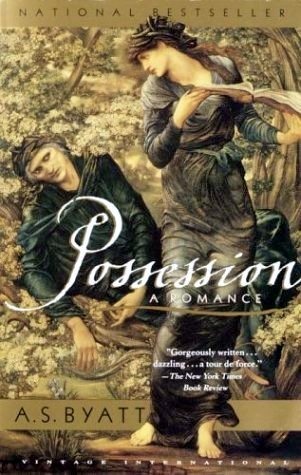
Many renown authors such as Dante, Spenser, Shakespeare, Keats and Scott inspired their art. To this day these artist’s paintings are still well-known. Many of you will be familiar with Edward Burne-Jones-The Beguiling of Merlin-which is on the book cover of Possession by A.S. Byatt. The story happens to have set in a dual time-line of 19th and 20th Century. “A novel of wit and romance, at once an intellectual mystery and triumphant love story. It is the tale of a pair of young scholars researching the lives of two Victorian poets. As they uncover their letters, journals, and poems, and track their movements from London to Yorkshire—from spiritualist séances to the fairy-haunted far west of Brittany—what emerges is an extraordinary counterpoint of passions and ideas.” There was also a movie made in 2002 based on this book starring Gwyneth Paltrow, Aaron Eckhart, Jeremy Northam, Jennifer Anne Ehl, Game of Thrones Lena Headey and other notable actors. There is a particular scene where Jennifer Anne Ehl (Christabel Lamotte) is modeling for Lena Headey’s (Blanche Glover) painting and she is in a medieval custom. Very Pre-Raphaelite feel. I highly recommend both book and movie.
One can seriously go down a rabbit hole exploring Classic Literature and Art History. I haven’t even begun to scratch the surface!
The sources come from Wikipedia, Wikimedia (Image: Proserpine painting) the free encyclopedia and my own independent studies. The description of Possession by A.S. Byatt is from goodreads.
We live in an extraordinary quirky world that often times we forget to pause in our busy lives to notice. During these times many cannot venture outside-another great reason to pick up a book-so we are bringing our explorations to you.
As many of you already know, I’m obsessed with history and cultures from all walks of like. Today, I’m exploring, What Jane Austen Ate and Charles Dickens knew by Daniel Pool. A book on the facts of daily life in the 19th-Century England. The book as a whole is mighty interesting but we are going to examine some of the information in its glossary. Needless to say, there are a little over a couple hundred pages but we won’t be covering it all. Let’s get started.
QuirkyMeanings:
Abigail: A Lady’s maid.
Carking: Having the ability to worry someone or make them careworn.
Sounds about right.
Chine: A term applied to the spin of animals like pigs when they were being chopped up for cooking.
Gross.
Fly: A horse and carriage that was rented, usually by the day.
Who would have thought.
Glee: In music, the glee was a vocal piece for three people or more. In Jane Eyre, singers gather around the piano while Jane” the solo over, a duet followed and then a glee.” and her pupil listen:
Jane Eyre was written by Charlotte Bronte and published in 1847.
Ha-ha: A landscaping device that consisted of a trench dug at some point in the view where it could not be seen unless one were very close to it. Also, called a sunken fence.
Ha ha! Too funny!
Ladybird: Not a bird at all but what we call the ladybug. Also, called a lady clock.
Had no idea that Ladybugs where ever refereed as that.
Milch cow: One that was giving milk.
Nob: Someone with a good deal of status. Used often in conjunction with “snob” in the sense snob initially had of someone of no status or pretensions.
Huh.
Rasher: A not very slice of ham or bacon.
I love the way this is worded.
Sell-out: To leave the army by selling the commission one had purchased to someone.
Skittles: Basically, bowling. One set up nine skittles or pins and then tried to knock them down with a ball.
When I hear the word “Skittles” I think of candy. Ha!
Snipe: A bird with a long bill that lives in marshes.
Is this the type of bird that is hard to hunt? Hmm… I wonder if this is the same name that referred to as Snipers? Or where it partly originated? I do believe Sniper was coined by the British Military in the 1700s? Need to look more into this. Can’t wait!
Stewpond: A special fishpond kept by manor houses in medieval days so as to have a supply of fresh fish.
That is actually a good idea. I wonder if people still actually do that?
Twelfth cakes: Cakes made for Twelfth Night. They contained a coin or bean that made the finder the “King” or “queen” of celebration.
I get the coin part but not entirely sure why a bean is used for this. Maybe it is explained in the book and I messed it. I haven’t read this book on quite sometime.
Whiting: A good-tasting small fish. Also, pulverized fine chalk used for cleaning or whitewashing.
Talk about two different meanings altogether!
This post was fun to but together. I highly recommend adding this book to your to-read list.
Stephanie Hopkins
About the book:
A “delightful reader’s companion”; (The New York Times) to the great nineteenth-century British novels of Austen, Dickens, Trollope, the Brontës, and more, this lively guide clarifies the sometimes bizarre maze of rules and customs that governed life in Victorian England.
For anyone who has ever wondered whether a duke outranked an earl, when to yell “Tally Ho!” at a fox hunt, or how one landed in “debtor’s prison”; this book serves as an indispensable historical and literary resource. Author Daniel Pool provides countless intriguing details (did you know that the “plums” in Christmas plum pudding were actually raisins?) on the Church of England, sex, Parliament, dinner parties, country house visiting, and a host of other aspects of nineteenth-century English life—both “upstairs” and “downstairs.”
An illuminating glossary gives at a glance the meaning and significance of terms ranging from “ague” to “wainscoting,” the specifics of the currency system, and a lively host of other details and curiosities of the day.
This weekend was strange and I didn’t have anything planned to blog about today. Do you ever have days like that? When even your favorite pastimes need a rest. If that makes any sense. I kind-of like that, “Pastimes need a rest.” That said, the weather has been really off that last few days and I haven’t been able to go for my strolls. I woke up this morning and looked out the window to discover the weather isn’t any better.
Yesterday was more productive and I created a page in my bullet journal and started another art project. Oh, and of course, got some reading time in. I definitely think my mind and soul need a rest and refuel.
“Weekends are days to refuel your soul and to be grateful for the blessings that you have.” — Unknown
Do you read multiple books at once? I know some people can’t and some people can’t only just read one at a time. Normally, I have several books going and spread them out during my day. Currently, I’m reading two books and listening to one through audible. Though, I must mention, that it took me quite a few years to program my brain to read more than just one book at a time.
Two of the books I’m currently reading are two that I’ve already read before. One I’m actually listening too and want to re-write my review. The third one is an ARC and it is quite a long read! I do have lots to say about that one already. Looking forward to the reading forecast ahead!
I want to wish you all a beautiful and adventurous week!
The pleasure in the simple designs. Collage Art by Stephanie Hopkins
“Without freedom, no art; art lives only on the restraints it imposes on itself, and dies of all others.” ~Albert Camus
I’ve previously discussed a little about how to break the barrier of feeling stuck on an art piece you are wanting to create. Today, I’m examining a simple way to find confidence in your art.
In one way, building confidence in your art is taking the opportunity to explore different techniques. Collage is my main go-to way of creating. There are various types of collage and one of my favorites is, “Analog Collage.”
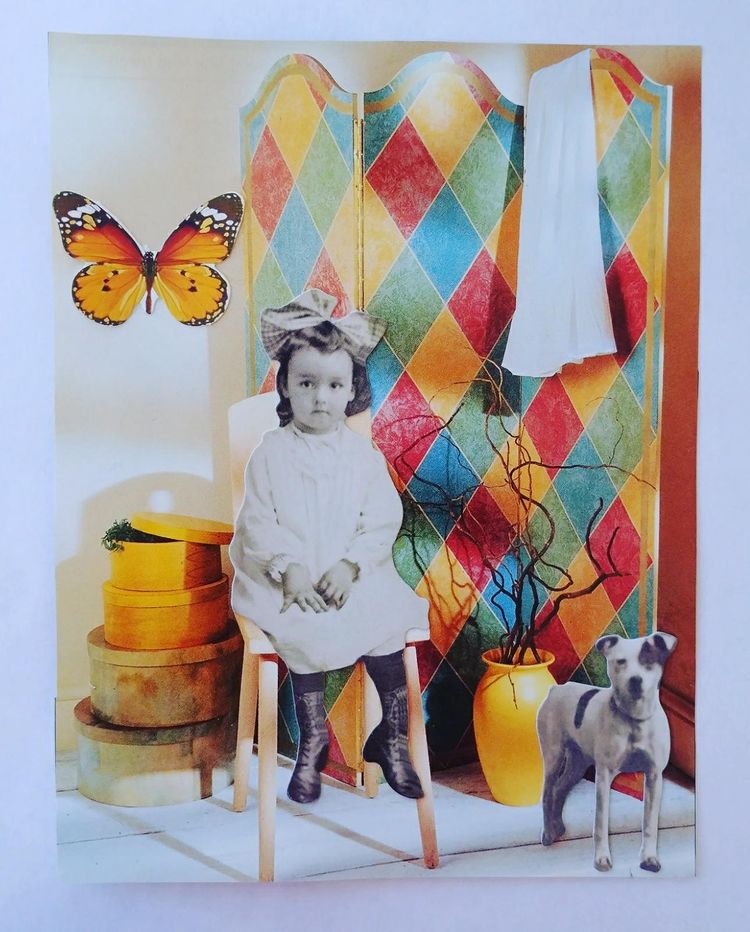
The process is taking cutouts from various sources and put them together to build a new whole. This type of collage ranges from simple to intricate designs. Often times, one’s vision for the collage changes as the image unfolds.
If you’ve never created this form of medium, I recommend starting with an uncomplicated collage. Magazine images are a great place to find images. Enjoy the journey!









 Layered Pages