Book Blast & Giveaway: The House of Barlic by Jillian Bald

02A_Shield's DownThe House of Baric Part One: Shields Down

Publication Date: December 5, 2015
Hillwalker Publishing
eBook & Paperback; 440 Pages

Genre: Historical Fiction\Romance

Add to GR Button


READ AN EXCERPT.

Marriage matches for the Venetian nobility were not preordained by God in heaven. They were skillfully negotiated by fathers looking to enhance their own prestige and wealth. A young lady could overlook petty shortcomings in her future husband, if he were rich, held a title, and was easy on the eyes. The young Baron Mauro Baric was such desirable yet flawed match.

Mauro was the last of the House of Baric, and he required a wife to provide him with sons. Resi Kokkinos was not interested in marrying an aristocrat any more than Mauro wanted a common, Ottoman Greek girl as his bride. Betrothed as children to repay Resi’s father’s debt to the Barics, they had no choice in their paired future.

Resi made the best of her sequestered adolescence in Thessaloniki while she waited to be summoned to the Venetian colony of Croatia to marry. Since her fate had already been decided, Resi’s mother allowed her to be tutored with her brothers. She did not need to learn the skills her friends focused on to entice a desirable husband, so she used her freedom to read every book she could find.

Mauro’s bachelor years of soldiering gave way to burdensome responsibilities as a baron and a new husband. Personal and political conflicts added more challenges to the couple’s awkward first year of marriage. Dear friends and unexpected visitors would bring their own troubles to the House of Baric. Through it all, Mauro could no longer deny that his complicated and unpredictable wife might be his perfect match after all.

Set in the summer of 1649, you are a fly-on-the-wall into their intriguing and adventurous world. Love, war, hating, and mating were perhaps not so different back in the seventeenth century. These memorable characters only wanted to steer their own destinies in search of happiness, and you will find yourself rooting for them to succeed in their quest.

Amazon | Barnes & Noble | Book Depository | Kobo | Smashwords

02B_A Brother's DefenseThe House of Baric Part Two: A Brother’s Defense

Publication Date: March 16, 2016
Hillwalker Publishing
eBook & Paperback; 526 Pages

Genre: Historical Fiction\Romance

Add to GR Button


Book two of this fast-paced tale of aristocratic life in the 17th century Venetian Empire begins where book one left off: the mercenaries arrive to visit Resi and her new husband, Baron Mauro Baric.

Part One: Shields Down introduced you to the colorful characters of the House of Baric, their loyal bonds of friendship, willing romances, arranged marriages, political conflicts, and suspicious deaths. Mauro’s family secrets and buried pain can no longer be ignored. In Part Two: A Brother’s Defense, he must face his demons. But first, his new brother-in-law stirs up trouble, while the elegant Venetian guests fill their idle time at the Baric castle with new romantic pursuits.

Set in the summer of 1649, this gripping rendition of the saga of love, revenge, and redemption do not disappoint. Questions will be answered, and more will come to light, as this engaging trilogy speeds along. Swords will be drawn. The House of Baric must be protected. But from whom?

Amazon | Barnes & Noble | Book Depository | Kobo | Smashwords

About the Author03_Jillian Bald

Most of the novels in Jillian Bald’s library take place in the far past or the far future, so it came naturally for Jillian to set her first novel in the year 1649. She has always enjoyed discovering new things, and historical fiction is an entertaining path to learning. After working in business management and living in France and Germany for several years, Jillian moved with her husband across the country while taking time off to raise her boys. Writing is a new occupation to Jillian, but she has always had a story churning in her imagination. “The House of Baric Part One: Shields Down” is Jillian Bald’s first published work.

Connect with author Jillian Bald on Facebook and Goodreads.

Book Blast Schedule

Tuesday, April 19
The Book Junkie Reads

Wednesday, April 20
The Never-Ending Book
Eclectic Ramblings of Author Heather Osborne

Thursday, April 21
The Reading Queen

Friday, April 22
The Writing Desk

Monday, April 25
Passages to the Past

Tuesday, April 26
Oh, For the Hook of a Book

Friday, April 29
Book Nerd

Monday, May 2
Laura’s Interests

Thursday, May 5
Let Them Read Books

Friday, May 6
Layered Pages
CelticLady’s Reviews

Monday, May 9
To Read, Or Not to Read

Wednesday, May 11
What Is That Book About

Giveaway

To enter to win a signed copy of The House of Baric Part One: Shields Down please enter the giveaway via the GLEAM form below.

Rules

– Giveaway ends at 11:59pm EST on May 11th. You must be 18 or older to enter.
– Giveaway is open to residents in the US, UK, Canada and Australia.
– Only one entry per household.
– All giveaway entrants agree to be honest and not cheat the systems; any suspect of fraud is decided upon by blog/site owner and the sponsor, and entrants may be disqualified at our discretion
– Winner has 48 hours to claim prize or new winner is chosen.
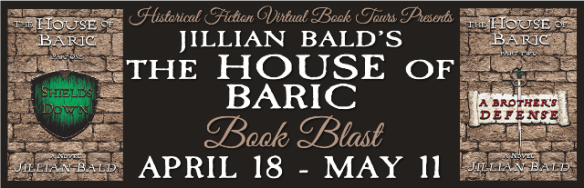
The House of Baric Book Blast

04_The-House-of-Baric_Book-Blast_FINAL.png

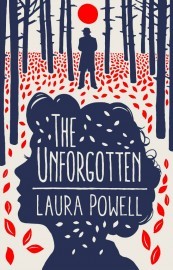
Review: The Unforgotten by Laura Powell

The Unforgotten

It’s 1956 and fifteen-year-old Betty Broadbent has never left the Cornish fishing village of St Steele or ventured far beyond the walls of the boarding house run by her erratic mother. But when the London press pack descends to report on a series of gruesome murders of young women, Betty’s world changes. In particular she is transfixed by mysterious and aloof reporter, Mr Gallagher. As the death toll rises, an unlikely friendship blossoms between Betty and Gallagher. But as their bond deepens, they find themselves entangled with the murders and each is forced to make a devastating choice, one that will shape their own lives – and the life of an innocent man – forever.

My thoughts:

I thoroughly enjoyed this book and loved working out the pieces to the story and making connections. There was a twist to this story I didn’t see coming and as the story came to an ending, I found myself wanting to read more. I did not want this story to end. The story represents fifty years in the future and fifty years in the past and people who lived in a town where murders were happening and about two unlikely people-Betty and Mr. Gallagher- who form a bond of a forbidden relationship while trying to discover who the killer is.

The mother/daughter relationship Betty had with her mother was intriguing and heartbreaking, at best. You see, her mother seemed to be an alcoholic and her moods were so unpredictable. How Betty handled it was like she resigned herself to this lot in her life. The outcome is truly emotional and the effect it has on Betty’s life is maddening in my opinion. My heart went out to Betty.

This murder mystery is unique and the characters are an unusual bunch. I love the complexity of the characters and the plot. I am rating this book four and a half stars.

I obtained a copy of this book through NetGalley for an honest review.

Stephanie M. Hopkins

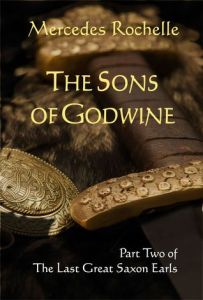
The Sons of Godwine: Part Two of The Last Great Saxon Earls by Mercedes Rochelle

02_The Sons of Godwine

Publication Date: March 7, 2016
Sergeant Press
eBook & Print; 306 Pages

Genre: Historical Fiction

Emerging from the long shadow cast by his formidable father, Harold Godwineson showed himself to be a worthy successor to the Earldom of Wessex. In the following twelve years, he became the King’s most trusted advisor, practically taking the reins of government into his own hands. And on Edward the Confessor’s death, Harold Godwineson mounted the throne—the first king of England not of royal blood. Yet Harold was only a man, and his rise in fortune was not blameless. Like any person aspiring to power, he made choices he wasn’t particularly proud of. Unfortunately, those closest to him sometimes paid the price of his fame.

This is a story of Godwine’s family as told from the viewpoint of Harold and his younger brothers. Queen Editha, known for her Vita Ædwardi Regis, originally commissioned a work to memorialize the deeds of her family, but after the Conquest historians tell us she abandoned this project and concentrated on her husband, the less dangerous subject. In THE SONS OF GODWINE and FATAL RIVALRY, I am telling the story as it might have survived had she collected and passed on the memoirs of her tragic brothers.

This book is part two of The Last Great Saxon Earls series. Book one, GODWINE KINGMAKER, depicted the rise and fall of the first Earl of Wessex who came to power under Canute and rose to preeminence at the beginning of Edward the Confessor’s reign. Unfortunately, Godwine’s misguided efforts to champion his eldest son Swegn recoiled on the whole family, contributing to their outlawry and Queen Editha’s disgrace. Their exile only lasted one year and they returned victorious to London, though it was obvious that Harold’s career was just beginning as his father’s journey was coming to an end.

Harold’s siblings were all overshadowed by their famous brother; in their memoirs we see remarks tinged sometimes with admiration, sometimes with skepticism, and in Tostig’s case, with jealousy. We see a Harold who is ambitious, self-assured, sometimes egocentric, imperfect, yet heroic. His own story is all about Harold, but his brothers see things a little differently. Throughout, their observations are purely subjective, and witnessing events through their eyes gives us an insider’s perspective.

Harold was his mother’s favorite, confident enough to rise above petty sibling rivalry but Tostig, next in line, was not so lucky. Harold would have been surprised by Tostig’s vindictiveness, if he had ever given his brother a second thought. And that was the problem. Tostig’s love/hate relationship with Harold would eventually destroy everything they worked for, leaving the country open to foreign conquest. This subplot comes to a crisis in book three of the series, FATAL RIVALRY.

Available at Amazon

TOSTIG REMEMBERS

Not long after we were comfortably housed in Flanders, Judith and I attended church with Matilda, Baldwin’s only surviving daughter, and her ladies. Matilda was a tiny thing, but a spirited little bundle of energy nonetheless, and very pretty. She would have fit under Judith’s chin. But she was the pride and joy of her parents, well-educated and very conscious of her lineage; her mother was the king of France’s sister, and Baldwin’s ancestors have ruled Flanders since the ninth century.

It had been raining that day and the sun was just peeking from the clouds as we finished the services in the church of St. Donation, which stood only about 400 meters from the castle. As we were leaving, Matilda led her little procession; I was far back in the crowd when the commotion began. Women were screaming, arms were waving, and people were pushing into each other trying to fall back. By the time I elbowed my way through the door, craning my neck to see over all the heads, Matilda was lying face-down in a puddle of mud. She was sobbing for all the world like she had just taken a beating. The poor girl was covered from head to toe with muck, and her beautiful dress was ruined. As she pushed herself up by the arms, I shook the girl next to me.

“What happened?”

“It was him,” she sobbed, pointing. Looking up, I saw a somewhat disheveled man riding away. There was no time to catch up with him—not with poor Matilda in need of assistance. I ran to her side and rolled her into my arms, picking the unresisting girl up like she was a child. She put her arms around my neck, smearing mud and tears all over my tunic.

“Take…take me home,” she coughed between sobs. She didn’t need to tell me that!

By now we had drawn a crowd, but they all parted respectfully as I carried Bruges’ favorite daughter back to her father’s castle. I heard the murmurs as we passed by.

“William the Bastard,” said somebody.

“The Duke,” said another. “He must be punished.”

“Poor girl,” said a third. “He just grabbed her by the back of the neck and threw her in the mud.”

“He beat her!”

“No, he kicked her!”

“He rolled her in the mud then got on his horse.”

I was shocked. That was the Duke of Normandy?

Murmuring words of encouragement, I carried Matilda up the hill to the castle. We passed between rows of soldiers and into the citadel where her ladies ran ahead of me to prepare her chamber. I laid Matilda on a pile of covers and she rolled on her side, hiding her face. Her father rushed in the door and knelt by her bedside.

“Oh my poor child. What happened?”

At that, she sat up and threw her arms around Baldwin’s neck, covering him with mud, too. After a few moments of sobbing, she pulled herself together.

“Oh father. It was Duke William. He was waiting for me at the church. When I came out, he accused me of humiliating him! I told him I would not lower myself to marry a mere bastard, when he grabbed me and threw me into the mud. He pushed me back and forth until I was totally covered then got on his horse and rode away.”

She took a cloth from one of her ladies and blew her nose in it.

“Outrageous!” spit the Count. “I will have his head for this!”

Turning Matilda over to her women, he rose and tried to look dignified. But he was all bespattered like myself, and decided to leave the room, taking the witnesses with him. He put an arm around my shoulder.

“Thank you, Tostig. Poor girl.” He tried to straighten out his tunic then gave up. “Right before you came to Flanders, Duke William sent an embassy asking for Matilda’s hand in marriage. You can imagine how quickly she sent them packing. William was beneath her station, and a bastard on top of everything else. She is not shy, my little Matilda!” He laughed briefly. “But we weren’t expecting this!”

The more he thought about it, his face became redder and redder.

“How dare he shame my little girl! Come, Tostig. We cannot let this go unavenged!”

There is one thing I can say about Count Baldwin; he is a very decisive man. He wasted no time in calling together his scribes and composing letters to his knights and captains. He summoned his household steward and demanded an accounting of all supplies. He called for his banker so he could determine how many funds he could raise. He worked long into the night.

The following day, as Baldwin was busily giving orders, Matilda walked into the great hall, trailing her women. There were no signs of the previous afternoon’s dishevelment; in fact, she had regained her proud bearing. Everyone stopped what they were doing and stared at her.

“Father, I have made a decision,” she said evenly. “You may stop preparations for war. I have decided I will marry Duke William of Normandy.”

You could have heard a feather drop in the room. We were all stunned into silence.

“You what?” her father finally muttered.

“I will have no one else.”

Apparently used to Matilda’s strange behavior, her father leaned back and put the quill down.

“And what has brought about this change of mind?” He crossed his arms over his chest.

She appeared to think for a moment. “It must be a brave and powerful man who would dare do such a thing, right in the middle of your territory.” A brief smile flicked across her face. “I understand him better, now.”

Baldwin looked around at his courtiers. “There you have it. Cancel our preparations.” I detected a bit of sarcasm in his voice, but he was quickly obeyed. He held out a hand to Matilda.

“Come, my child. Sit beside me.”

Someone brought a chair and Matilda obliged, taking her father’s hand.

“Are you sure you want to do this?” he said gently. “He may prove to be a dangerous husband.”

“I will manage him. After all, he really didn’t hurt me.”

Baldwin didn’t even try to reason with her. Given time, he told me later, she might change her mind again.

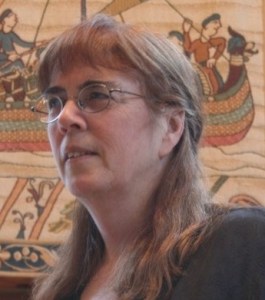
Mercedes Rochelle

About the Author

Born in St. Louis MO with a degree from University of Missouri, Mercedes Rochelle learned about living history as a re-enactor and has been enamored with historical fiction ever since. A move to New York to do research and two careers ensued, but writing fiction remains her primary vocation. She lives in Sergeantsville, NJ with her husband in a log home they had built themselves.

For more information visit Mercedes Rochelle’s website and blog. You can also follow her on FacebookTwitter, and Goodreads.

Blog Tour Schedule

Monday, April 18
Guest Post & Giveaway at Let Them Read Books

Wednesday, April 20
Guest Post at Just One More Chapter

Friday, April 22
Excerpt & Giveaway at Queen of All She Reads

Sunday, April 24
Excerpt & Giveaway at Teddy Rose Book Reviews Plus More

Monday, April 25
Review at Book Nerd

Wednesday, May 4
Excerpt at Layered Pages

Thursday, May 5
Review at Impressions In Ink

Friday, May 13
Interview at Passages to the Past

04_The Sons of Godwine_Blog Tour Banner_FINAL (2)


Book Review: Cascade by Maryanne O’Hara

Back in May 2013 I shared my short but to the point review of Cascade by Maryanne O’Hara. It’s such a great read I thought I would share it again! Enjoy!

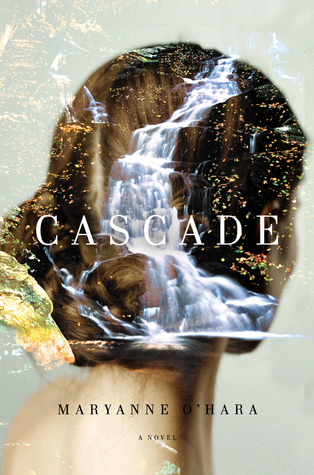
Cascade

About the book:

What would you give up to become the person you knew you were meant to be?

It’s 1935, and Dez Spaulding has sacrificed her plans to work as an artist in New York to care for her bankrupt, ailing father in Cascade, Massachusetts. When he dies, Dez finds herself caught in a marriage of convenience, bound to the promise she made to save her father’s Shakespeare Theater, an especially difficult feat since the town faces almost certain flooding to create a reservoir. When she falls for fellow artist and kindred spirit Jacob Solomon, she sees a chance to escape with him and realize her New York ambitions, but her decisions will have bitter and unexpected consequences.

Fans of Richard Russo, Amor Towles, Sebastian Barry, and Paula McLain will savor this transporting novel about the eternal tug between our duties and our desires, set in New York City and New England during the uncertain, tumultuous 1930s.

*All reviews, interviews, guest posts and promotions are original works of the people involved. In order to use any part of the material from this site, please ask for permission from Stephanie M. Hopkins-Layered Pages. *

My thoughts:

Love, loss and conflicting loyalties and promises- this story sweeps you into the 1930’s, a town in Cascade, Massachusetts. Who is fighting for their very own survival of a flood that is to create a reservoir for Boston. A woman-Desdemona, who has made promises to her dying father and bound to the man she married. Yet she yearns to for a life of an artist and falls for a young Jewish man. Author Maryanne O’Hara brings you raw emotions in her characters, their lives and gives you a sense of timeless love and beauty. I have to admit when I opened the first page and started reading, I had a hard time getting into it. So I stepped away for a few days and went back to it. Because I literally had just finished a book that was set in the 19 Century and I picked this one up immediately afterwards. Not the best idea in the world. Once I picked it up again, the story drawled me in and I was memorized. I truly admire the authors writing style and her way with characterization. The story all around is just beautiful and atmospheric. I highly recommend this novel.

Book Cover Rating:

I am rating this book cover five stars! I absolutely love it! It’s stunning and true to the story.

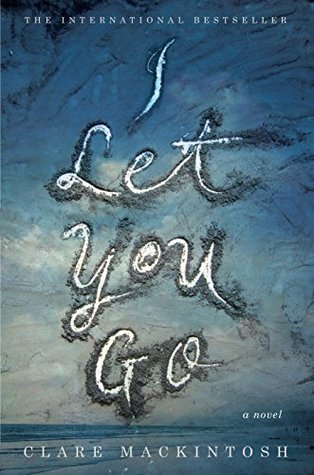
Review: I Let You Go by Clare MacKintosh

I let you go

I Let You Go by  Clare Mackintosh

On a rainy afternoon, a mother’s life is shattered as her son slips from her grip and runs into the street . . .

I Let You Go follows Jenna Gray as she moves to a ramshackle cottage on the remote Welsh coast, trying to escape the memory of the car accident that plays again and again in her mind and desperate to heal from the loss of her child and the rest of her painful past.

At the same time, the novel tracks the pair of Bristol police investigators trying to get to the bottom of this hit-and-run. As they chase down one hopeless lead after another, they find themselves as drawn to each other as they are to the frustrating, twist-filled case before them. Elizabeth Haynes, author of Into the Darkest Corner, says, “I read I Let You Go in two sittings; it made me cry (at least twice), made me gasp out loud (once), and above all made me wish I’d written it . . . a stellar achievement.”

My thoughts:

This story has so many twist and turns in the plot it’s hard to know where to begin. However, I think I will start with the character development. I have to say that I found Jenna Gray’s character to be better written in the story than the two Bristol Police Investigators.  The personal intersection between the two fell flat. I felt absolutely no chemistry between them and I felt it did not add to the story. I was disappointed in that.

Also, Ray one of the investigators, has a troubled son and I was wondering where the author was going with that in the story. It could have been a good back ground story if it played in the main plot some but it didn’t. So I felt that could have been left out.

Jenna Gray is a complex character that a reader can sympathize with. She has faced many hardships-to put it lightly and as you read through the story, it unfolds what those hardships are. Truly suspenseful and gripping.

Though in the beginning I wasn’t sure about the pacing and I wanted things to become clearer a little sooner than later. I know there is some build up to the suspense but I felt it could have happened a little sooner than later.

As for a psychological thriller, this makes a truly good one and for that I am wanting to read more stories by the author.

I have rated this book three stars.

I received a copy of this book from NetGalley for an honest review.

Stephanie H. Hopkins

Side note: I had the pleasure of buddy reading this book with a fellow book blogger and we had great fun with it. It was also refreshing to see that we were eye to eye about a lot of aspects of the story.

Characters in Motion with Wendy J. Dunn

Often times the best inspiration comes within us. How do you flesh out your characters to drive the plot?

How do I flesh out my characters to drive my plots?  I could answer this very simply, by saying inspiration, of course, is the key to all my writing, but to answer this truthfully, I must talk about the real key unlocking this inspiration, a story beginning on the day of my tenth birthday. That day, a school friend gave me a child’s book of English history and changed my life forever. At ten, I desperately needed a hero, a guiding light to help me navigate through those difficult growing up years. Because of a chapter in this book, Elizabeth I became my first hero; my search to know more about her introduced me to my second hero, her mother, Anne Boleyn. They both gave me examples of strong and determined women – women who claimed their voices and true identities in a time when women were told to be silent and remember their inferiority.

Dear Heart How Like You This

As a child and teenager, I was also told to be silent and that my worth did not equal that of the males in my world. I was told it was a waste of time to educate girls. Learning about Anne and Elizabeth taught me otherwise. Their stories were the beginning of my understanding that I was not the one at fault, but my world – a world where I learned not only to navigate my ‘woman’s life’ but also one mapped out by patriarchy.

My interest in Elizabeth I and Anne Boleyn soon grew to embrace the whole Tudor period, and grew into a passion turning me into a writer. I not only hold Elizabeth and Anne responsible for my two Anne Boleyn novels (Dear Heart, How Like You This? and The Light in the Labyrinth), Falling Pomegranate Seeds: Duty of Daughters, the first book my Katherine of Aragon trilogy, a novel I hope to see published this year, but also my doctorate.

While my novels are shaped through vast research, I am first and foremost a writer of fiction. My stories are initially ignited by research and then imagined, or dreamed, onto the page. This ‘dreaming’ draws from the compost of my own life experience, which makes me empathise with my characters, especially that of my female characters; this empathy helps me flesh them out. My human experience, faced as a woman, is one common to all humanity: I have experienced rejection, sorrow, love. I have also known what is to hate, but if there is one thing my life has taught me, it is hate gets us nowhere. Writing has been a wonderful tool to help me let go of hate. I don’t even hate Henry VIII. One of the reasons I revisited Anne Boleyn’s story in The Light in the Labyrinth was because I wanted to be more fair to him. I don’t like him, but I don’t hate him; writing Kate Carey’s story helped me to pity him.

I once heard the very lovely and talented Australian author Sophie Masson say, ‘A writer is a lifelong learner’. How true that is; writers learn from observing and thinking about their world. When we write, our thinking goes to another, far, far deeper level. This deep place is where magic happens, through the writer’s engagement with imagination – a magic that builds a bridge between the writer and the reader. But it is more than this. Every time I embark on a new, novel writing adventure, I rediscover the truth of Kundera’s claim that creating a novel ignites a catalyst for change (2006).

The Light in the Labyrinth

For me, this catalyst of change not only happens through the practice of writing, but also through engagement with stories of women from long ago. It is by telling these stories, I realize, yet again, what being a feminist is all about – and how all my writing comes from my standpoint as a woman. Reclaiming the voices of women of the past illuminates for me that the battle for gender equality is one not won – and that women (and men) must keep fighting to achieve it. Women of the first world must fight not only for ourselves, but also for our sisters who live in oppressive cultures where women and female babies are killed because they are regarded as worthless and replaceable. This fight is not one to be won through violence – but through the education of both girls and boys. It is my hope that by giving voice to Tudor women through the construction of fiction, young adult women will engage with my stories and reflect about the possibilities for their own lives.

It goes without saying, despite the passing of hundreds of years since the last Tudor monarch drew her final breath, patriarchy still rules our world. I feel deeply about my historical women. It breaks my heart to think of how Anne and Katherine of Aragon ended their lives – simply because the man they loved had the power to destroy them. It breaks my heart that this still happens in 2016. Last year, in Australia, two women a week were murdered by someone who once professed to love them. The majority of the murderers were men. It is one of the greatest tragedies of our time that there are men who see their female partners and children as possessions – possessions they have the right to destroy.

I flesh out my characters through passion. I’m passionate about giving my historical women voices – not only because they were too often silenced and refused justice during their lives, but because giving them voices also gives me a voice.

I live in hope if enough women speak up about their lives then we might yet discover the truth of Muriel Rukeyser’s words: ‘What would happen if one woman told the truth about her life? The world would split open’ (Cited by Gandolfo  2008, p 142).

 Smile, I hear again my imagined Anne Boleyn speaking in my mind, telling me she would like the final word:

Defiled is my name full sore

Through cruel spite and false report,

That I may say for evermore,

Farewell, my joy! Adieu comfort!

For wrongfully ye judge of me

Unto my fame a mortal wound,

Say what ye list, it will not be,

Ye seek for that can not be found.”

REFERENCES:

Gandolfo, E  2008, ‘Feminist Fictionmaking’, New Writing, vol. 5, no. 2, pp. 140-149.

Kundera, M  2003, The Art of the Novel, Reprint Edition, Harper, Perennial Modern Classics, New York.

Wendy Dunn

Wendy J. Dunn is an Australian writer who has been obsessed by Anne Boleyn and Tudor History since she was ten-years-old. She is the author of two Tudor novels: Dear HeartHow Like You This?, the winner of the 2003 Glyph Fiction Award and 2004 runner up in the Eric Hoffer Award for Commercial Fiction, and The Light in the Labyrinth, her first young adult novel. Her third Tudor novel, Falling Pomegranate Seeds, will be published with Madeglobal sometime in 2016.

While she continues to have a very close and spooky relationship with Sir Thomas Wyatt, the elder (Tom told the story of Anne Boleyn in Dear HeartHow Like You This?), serendipity of life now leaves her no longer wondering if she has been channeling Anne Boleyn and Sir Tom for years in her writing, but considering the possibility of ancestral memory. Her own family tree reveals the intriguing fact that her ancestors – possibly over three generations – had purchased land from both the Boleyn and Wyatt families to build up their own holdings. It seems very likely Wendy’s ancestors knew the Wyatts and Boleyns personally.

Born in Melbourne, Australia, Wendy is married and the mother of three sons and one daughter—named after a certain Tudor queen, surprisingly, not Anne.

After successfully completing her MA (Writing) at Swinburne University Wendy became a tutor for the same course. She gained her PhD (Human Society) in 2014.

Website

Facebook

Goodreads

*All reviews, interviews, guest posts and promotions are original works of the people involved. In order to use any part of the material from this site, please ask for permission from Stephanie M. Hopkins-Layered Pages. *

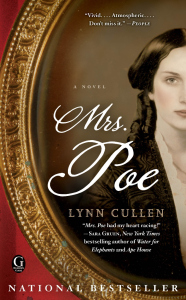
Review: Mrs. Poe by Lynn Cullen

Back in 2014 I had the pleasure of interviewing Lynn Cullen and reviewing her book Mrs. Poe for a book tour. I thought I would re-visit my review and wonderful interview with her and share with you all. I hope you enjoy reading about our chat and please be sure to read Mrs. Poe if you haven’t. I highly recommend it!

Mrs. Poe

A vivid and compelling novel about a woman who becomes entangled in an affair with Edgar Allan Poe—at the same time she becomes the unwilling confidante of his much-younger wife.

It is 1845, and Frances Osgood is desperately trying to make a living as a writer in New York; not an easy task for a woman—especially one with two children and a philandering portrait painter as her husband. As Frances tries to sell her work, she finds that editors are only interested in writing similar to that of the new renegade literary sensation Edgar Allan Poe, whose poem, “The Raven” has struck a public nerve.

She meets the handsome and mysterious Poe at a literary party, and the two have an immediate connection. Poe wants Frances to meet with his wife since she claims to be an admirer of her poems, and Frances is curious to see the woman whom Edgar married.

As Frances spends more and more time with the intriguing couple, her intense attraction for Edgar brings her into dangerous territory. And Mrs. Poe, who acts like an innocent child, is actually more manipulative and threatening than she appears. As Frances and Edgar’s passionate affair escalates, Frances must decide whether she can walk away before it’s too late…

Set amidst the fascinating world of New York’s literati, this smart and sexy novel offers a unique view into the life of one of history’s most unforgettable literary figures.

Book description from goodreads.

My thoughts: 

I have always wondered about Poe’s personal life and what drove him to write such stories. I didn’t know anything about his wife or his literary circles. I too had so many misconceptions about him before reading this novel. When I first discovered this book, I was completely intrigued with the book cover first off and when I discovered the premise of the story, I knew I HAD to read this book as soon as I could.

I have discovered Frances Osgood through this intriguing story and I enjoyed the interaction between Poe and Osgood. I felt Cullen did a splendid job developing her character and has left me wanting to know more about her.

When Mrs. Poe was introduced in the story, I could literally sense a troubled soul coming through the pages! What a complex, dark, frightening- yet-pitiful person she is. Fascinating and thrilling in a bizarre sort-of way.

I loved all the characters in this book and most of all, the interaction between Poe’s and Frances’s literary circles and their followers. And I have to say that Cullen brilliantly set the tone of the nineteenth century and an era of Victorian lifestyle and mindsets. I really cannot say enough about this book. You just have to read the story for yourself and be swept up into Poe’s world.

Check out my interview with the author here

*All reviews, interviews, guest posts and promotions are originals. In order to use any part of the material from this site, please ask for permission from Stephanie M. Hopkins-Layered Pages. *

Stephanie M. Hopkins

Interview with Meredith Allard

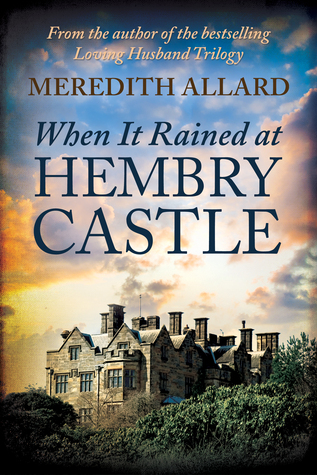
Meredith, thank you for chatting with me today about your book, When It Rained at Hembry Castle. Does Hembry Castle exist and if not, was there a real castle that was your inspiration?

Hembry Castle is very much a figment of my imagination, though two real life places served as the inspiration for the exterior: Scotney Castle and Wentworth Castle, both in England, of course. The picture on the book’s cover is of Scotney Castle. The interior of Hembry Castle was largely influenced by Pittock Mansion, which can be found in Portland, Oregon. Primarily, I used photos I found on Pinterest to help me describe the interior and exterior of Hembry Castle.

02_When-It-Rained-at-Hembry-Castle

Please tell me a little about your story.

When It Rained at Hembry Castle is a love story set in Victorian England. The novel is about Edward Ellis, a rising author, and Daphne Meriwether, the American niece of the 9th Earl of Staton. Daphne is new to England and she must learn how to live in the Downton Abbey-like world her father’s family lives in. It’s a blossoming romance for Edward and Daphne, and there’s some mystery thrown in involving Daphne’s uncle, Richard, the 9th Earl of Staton.

What are the common movements your main characters make?

All my novels are about characters who are or see themselves as outsiders in one way or another. In When It Rained at Hembry Castle, Daphne is very much an outsider, being an American in England who is unfamiliar with the aristocratic world her father grew up in. Edward is also an outsider of sorts. He’s the grandson of servants who is working hard to make his way as a writer. I think all of my main characters mean to do the right thing, but whether their choices are correct or not always remains to be seen.

What is the mood or tone your characters portray and how does this affect the story?

I think both Edward and Daphne are largely positive people. Neither one of them are prone to complaining and they try to make the best of whatever is thrown their way. I hope this adds a positive, hopeful tone to the story.

What are the emotional triggers of your characters and how do they act on them?

For Daphne, she’s triggered by her grandmother’s insistence that she conform to the aristocratic way of life. For Edward, he’s triggered by his love for Daphne and his frustration at the obstacle that is keeping them apart. Daphne humors her grandmother and on the outside she seems to be conforming, though she’s a bit of a rebel and isn’t as complacent as her grandmother thinks. Edward, in typical man fashion, does nothing, hoping the problem will go away.

What do you like most about writing stories that take place in the past?

I’ve loved history since I was in school, and I even toyed with the idea of majoring in history in college. Writing historical fiction is perfect for me because it a combination of the two things I’m most interested in—history and writing. I have a funny habit of writing stories set in times I’m not all that familiar with, which is fine because that’s part of the fun for me, researching the history. When It Rained at Hembry Castle is actually the exception to that because I was already pretty familiar with Victorian England.

Describe Victorian England in your eyes.

My knowledge of Victorian England came from my love of Dickens’ novels, which started for me in college, but when I researched the era as I was writing Hembry Castle I realized that the time was much more complicated than I first realized. Yes, there was the poverty and the darkness of Dickens’ descriptions, but it was also a time of great change. The Victorian era spanned nearly 70 years, and England in 1901 was very different than England in 1837. By the end of the Victorian era, we can begin to see inklings of the modern era that we live in today. Since Hembry Castle takes place from 1870-1872, the story is happening right in the middle of the Victorian era.

What are some of the romantic parts to the story readers can expect?

My stories tend to focus more on the falling in love aspect of romance. Edward and Daphne have a few obstacles they have to overcome in order to be together. Even acknowledging that they want to be together is the first hurdle. After they admit to themselves that they care for each other, Edward has a big secret he’s keeping from Daphne. How Daphne reacts to the secret remains to be seen.

How long did it take to write your story and where in your home do you hone in your craft?

Hembry Castle took me two years. I returned to college in 2014, and of course that takes a lot of my time. I had a lot of research to complete for this book, and it took me a little time to figure out the point of view. Normally, I write novels with either a one person or two person point of view, but I finally realized that Hembry needed to allow more characters their moment in the sun. Since I live in a small apartment, my computer is set up in my bedroom. I know they say don’t keep your work where you sleep, but oh well. I have a nice view from my bedroom window so it works for me.

What is up next for you?

Fans of my Loving Husband Trilogy will be happy to know that I’m writing the prequel to the series, called Down Salem Way. Like the first book in the series, Her Dear & Loving Husband, it takes place in Salem, Massachusetts during the Salem Witch Trials.

AMAZON US | AMAZON UK | BARNES & NOBLE | ITUNES | KOBO

03_Meredith-Allard

About the Author

Meredith Allard is the author of the bestselling novels The Loving Husband Trilogy, That You Are Here, Victory Garden, Woman of Stones, and My Brother’s Battle. Her newest release, the historical novel When It Rained at Hembry Castle, is a great read for fans of Downton Abbey.

Visit Meredith online at www.meredithallard.com. You can also connect with her on FacebookTwitterGoogle+,  Pinterest, and Goodreads.


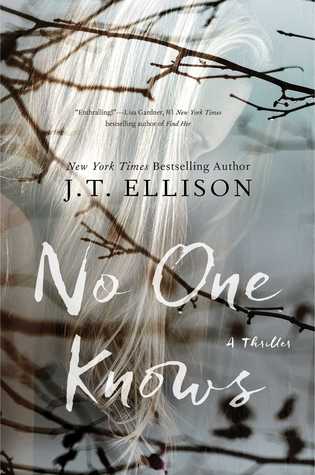
Book Review: No One Knows by J.T. Ellison

No one knows II

In an obsessive mystery as thrilling as The Girl on the Train and The Husband’s SecretNew York Times bestselling author J.T. Ellison will make you question every twist in her page-turning novel—and wonder which of her vividly drawn characters you should trust.

The day Aubrey Hamilton’s husband is declared dead by the state of Tennessee should bring closure so she can move on with her life. But Aubrey doesn’t want to move on; she wants Josh back. It’s been five years since he disappeared, since their blissfully happy marriage—they were happy, weren’t they?—screeched to a halt and Aubrey became the prime suspect in his disappearance. Five years of emptiness, solitude, loneliness, questions. Why didn’t Josh show up at his friend’s bachelor party? Was he murdered? Did he run away? And now, all this time later, who is the mysterious yet strangely familiar figure suddenly haunting her new life?

My thoughts:

When I began reading this story the jumping back and forth to the present and past was getting on my last nerve. I think it was the way it was done starting in the beginning. At first I couldn’t see where it was going and I thought it might be too much back story on things that did not matter to the plot. Well, I was dead wrong. I started to see a pattern and when I thought I had the whole story figured out, BAM-there is a total plot twist that had me so shocked! I did not see it coming at all!

For the characters, Aubrey actually annoyed me. I disliked Daisy until I realized that she was right about a few things and I sort-of changed my opinion of her. Okay, I really didn’t but I sympathized with her a little. Though she was wrong about a lot of things. As for the other characters they are just as messed up.

This psychological thriller has all the right twisted, disturbing, dysfunctional characters and situations. I found myself about half way racing through the pages to see what happens next. Things get really intense and when you think you have it all figured out, everything you thought will turn out differently in the end.

I rated this book three stars.

I received a copy from NetGalley for an honest review.

Stephanie M. Hopkins

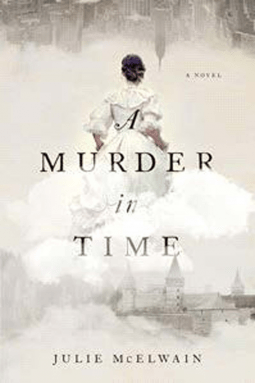
Review: A Murder in Time by Julie McElwain

A murder in time

Beautiful and brilliant, Kendra Donovan is a rising star at the FBI. Yet her path to professional success hits a speed bump during a disastrous raid where half her team is murdered, a mole in the FBI is uncovered and she herself is severely wounded. As soon as she recovers, she goes rogue and travels to England to assassinate the man responsible for the deaths of her teammates. While fleeing from an unexpected assassin herself, Kendra escapes into a stairwell that promises sanctuary but when she stumbles out again, she is in the same place – Aldrich Castle – but in a different time: 1815, to be exact. Mistaken for a lady’s maid hired to help with weekend guests, Kendra is forced to quickly adapt to the time period until she can figure out how she got there; and, more importantly, how to get back home. However, after the body of a young girl is found on the extensive grounds of the county estate, she starts to feel there’s some purpose to her bizarre circumstances. Stripped of her twenty-first century tools, Kendra must use her wits alone in order to unmask a cunning madman.

My thoughts:

I’d like to start off my mentioning the whole concept of time-travel story. Sometimes it works in stories and sometimes it does not. In this story, it works and the author gives such a brilliant and believable description of Kendra being pulled through time. For me that was pretty intense. I could almost feel the physical pain she was going through.

I really dig the premise of an FBI Agent traveling through time and ending up working a case of a 19th century murder that turns into much more. You also meet some other great characters that race to help her solve the crimes. For starters, Rose, Rebecca, Molly, Alec and Duke Aldridge are about the best written supporting characters I have read in a good while. Most of all I was so fascinated with Kendra’s process in trying to solve these murders and some of the other characters thought process. I believe Kendra really brought that out in them and she really got them to think outside their 19th century minds.

The killings are graphic, there is profanity in this story. Quite a bit of it in the beginning actually. I’m not one for profanity but I understand the scenario the author was portraying. Intense situations cause people to react in all kinds of ways. For many, profanity is one of them. Even though the killings are graphic, this gives you a real sense of what the victims are going through, which makes the story all the more intense. I think that was brilliantly done and gives you a real understanding of that type of evil in the world.

I found this story to be atmospheric, packed with lots of action, high-energy situations and such intense and real emotions. I couldn’t put it down. I loved it and I hope there will be a sequel!  I’ve rated this book four and a half stars.

I received a copy from NetGalley for an honest review.

Stephanie M. Hopkins