Aegis Incursion by S.S. Segran

Aegis incursion book cover three

On a bright July morning in 1948, a B-29 Superfortress flying a top-secret research mission over Nevada crashes into the calm waters of Lake Mead and sinks, remaining lost for half a century.

It has been nearly a year since five friends—Jag, Kody, Mariah, Tegan and Aari—mysteriously reappeared in a small town in Yukon several weeks after their small plane went down in Northern Canada. All were found in good health but with no recollection of what happened to them after the crash.

A baffling contagion is spreading across the bread-basket of North America destroying vital crops. As this dark shadow marches across the globe, widespread famine and riots bring desperate nations to the brink of war.

These seemingly unrelated events set the stage for a battle between the forces of darkness and those destined to become the ‘bearers of light’. From ravaged fields in the Great Plains to clandestine installations around the world, the Aegis League must race against time to save humanity.

Praise for The Aegis League Series

“Five Stars! Unique and compelling. Delivers on every level… ”

~ Readers’ Favorite Book Reviews ~

“Unique and compelling! With non-stop action, adventure and intrigue,

Aegis Incursion will appeal to fans of Maze Runner, Percy Jackson and Hunger Games.”

~ Michael Beas – Bestselling Author of ‘Strump: A World of Shadows’ ~

“Astonishingly Imaginative and thoughtful…the book should be read both quickly and slowly – quickly in order to enjoy the rapid sledding of the plot and slowly to mull characters and ideas. Aegis Rising sets a festive narrative table and makes the reader eagerly anticipate a sequel.”

~ Samuel F. Pickering – Professor Emeritus of English, University of Connecticut

& Inspiration for the film Dead Poets Society ~

“S.S. Segran wields a skillful pen that transcends her youth by crafting haunting prose, vivid imagery,

and a well thought out plot to cast herself into a mix of young authors to watch.”

~ Christopher Gill – Amazon Reviews ~

“What a blast! A roller coaster ride filled with twists and turns that leaves the

reader devouring every page right up to the last word in the epilogue.”

“S.S.Segran brings us a worthy sequel to her best-selling debut novel, Aegis Rising. Relentless action and gravity defying twists and turns hold the reader in a tight grip till the last page.”

~ Honore Gbedze – The SAGE Foundation ~

“An extraordinary effort… all the more amazing given the author’s age. I was especially gratified by the way she used the teen protagonists’ close knit relationships as the backdrop against which the dramatic events in Aegis Rising unfolded, without having “love interest” or other typical teen story devices hijack the underlying theme of the book. She’s a real talent!”

~ Red Grammer – Grammy Nominated, Award Winning Producer ~

“Recommended! Screaming for adaptation as a successful film…”

~ The US Review of Books ~

S.S. Segran

S.S. Segran spent a good chunk of her childhood exploring the enchanted forest of a million tales in the mystical land of books. In her early teens, she began crafting intriguing new worlds and conjuring up characters who came alive with the flick of her wand… err… pen. With the publication of Aegis Rising in her senior year of high school, she was surprised by the abundance of time that magically appeared right after graduation. She plans to use this newfound resource to expand the arc of the Aegis Series. Her future plans include studying Cognitive Science at university and helping youths in developing countries realize their potential through her non-profit organization, Aegis League  

When not devouring a book or writing one, S.S. Segran can be found standing behind the cauldron of life, stirring a potion made up of chores, parkour, gaming, drawing, horseback riding and—having recently jumped off a perfectly fine airplane at fifteen thousand feet – perhaps skydiving.

 S.S. Segran B.R.A.G. Medallion for Aegis Rising


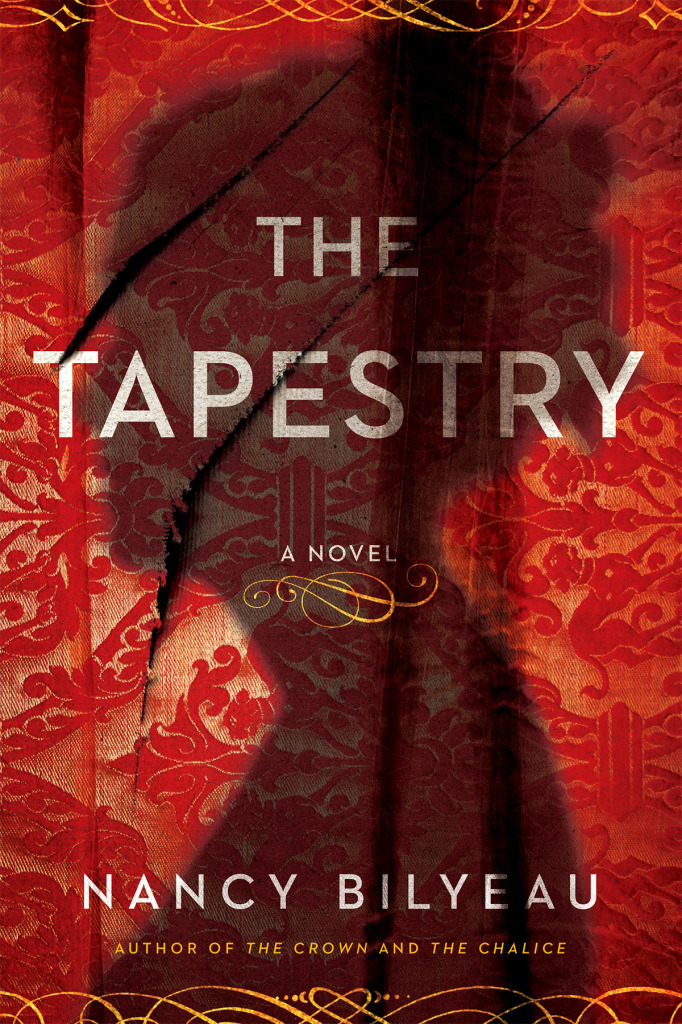
Book Review: The Tapestry by Nancy Bilyeau

01_The-Tapestry1-682x1024

North America & UK Publication Date: March 24, 2015

Touchstone Publishing

Formats: eBook, Hardcover

Pages: 390

Series: Joanna Stafford, Book Three Genre: Historical Mystery

In THE CROWN, Sister Joanna Stafford searched for a Dark Ages relic that could save her priory from Cromwell’s advancing army of destruction. In THE CHALICE, Joanna was drawn into an international conspiracy against Henry VIII himself as she struggled to learn the truth behind a prophecy of his destruction.

Now, in THE TAPESTRY, Joanna Stafford finally chooses her own destiny.

After her Dominican priory in Dartford closed forever—collateral damage in tyrannical King Henry VIII’s quest to overthrow the Catholic Church—Joanna resolves to live a quiet and honorable life weaving tapestries, shunning dangerous quests and conspiracies. Until she is summoned to Whitehall Palace, where her tapestry weaving has drawn the King’s attention.

Joanna is uncomfortable serving the King, and fears for her life in a court bursting with hidden agendas and a casual disregard for the virtues she holds dear. Her suspicions are confirmed when an assassin attempts to kill her moments after arriving at Whitehall.

Struggling to stay ahead of her most formidable enemy yet, an unknown one, she becomes entangled in dangerous court politics. Her dear friend Catherine Howard is rumored to be the King’s mistress. Joanna is determined to protect young, beautiful, naïve Catherine from becoming the King’s next wife and, possibly, victim.

Set in a world of royal banquets and feasts, tournament jousts, ship voyages, and Tower Hill executions, this thrilling tale finds Joanna in her most dangerous situation yet, as she attempts to decide the life she wants to live: nun or wife, spy or subject, rebel or courtier. Joanna Stafford must finally choose.

*********

In this third book of what is one of my all-time favorite series, Joanna Stafford is summoned to Henry VIII’s court. She’d rather stay in Dartford with her loom to weave tapestries and be with her friends. She has had quite enough of the dangers out there. However, Joanna tapestry making has caught the attention of King Henry VIII. She knows she must go and fears for her life because of her involvement in tempting to over thrown the King. Not only that, she has made a few enemies along the way…Almost the moment she gets there her life is in danger and then starts the peril and yet-exciting- journey to find out who this time is trying to take her life….what do I mean by exciting? Just that. This story was a page turner from the start until the very end. I did not want the story to end. I wanted more. Joanna is the perfect heroine and she leads such a thrilling life. She is intelligent, courageous, a woman of unfailing faith and just an all-around true lady.

There are a few things that really stood out to me. The momentum of the narrative (thrilling), how Joanna is describing Henry’s court and how she notices details around her. For example, how she describes the chamber where the King receives ambassadors or presides over certain court functions. She gives you such a clear picture. I felt I was there standing next to her taking it all in. There are so many examples like that in the story and they are all fascinating. What I have imagined the life of the Tudor court to be is just how Bilyeau describes it.

Another thing about this story is that there is many notable historical figures…several really stood out to me. Hans Holbein-the court painter-is someone who I am highly interested in and I think that has a lot to do with my profound interest in the arts. I admire Bilyeau portrayal of him in the story. He is a famous painter who is from Augsburg, Germany. A few of the portraits he painted were of Thomas More, Anne Boleyn, Thomas Cromwell and Henry VIII-to name a few. In this story there was one person’s portrait he painted that I would like to find out from Bilyeau if he actually did….if historically he didn’t, it certainly was a great addition to the story-line.

Catherine Howard is another one that stood out to me. My heart went out to her and I wanted there to be another outcome of her fate so bad in this story but we all know the history of what happen to her and Bilyeau portrays that splendidly. I was also impressed with the themes of the Reformation, Martin Luther and some of the occult dealings in the story and Henry VIII personality and behavior. Well researched and brilliantly written.

Since having read this book there are a few other history events that was included I look forward to exploring more. I want there to be another story about Joanna Stafford from Bilyeau. That is my wish. When finished reading, The Tapestry, I already missed her…sigh. What a fantastic story.

I’ve rated this book five stars.

Stephanie M. Hopkins

Pre-Order/Buy The Tapestry

Amazon

Barnes & Noble

IndieBound

Nancy photo

Nancy Bilyeau has worked on the staffs of InStyle, Rolling Stone, Entertainment Weekly, and Ladies Home Journal. She is currently the executive editor of DuJour magazine. Her screenplays have placed in several prominent industry competitions. Two scripts reached the semi-finalist round of the Nicholl Fellowships of the Academy of Motion Pictures Arts and Sciences. Her screenplay “Zenobia” placed with the American Zoetrope competition, and “Loving Marys” reached the finalist stage of Scriptapalooza. A native of the Midwest, she earned a bachelor’s degree from the University of Michigan. THE CROWN, her first novel, was published in 2012; the sequel, THE CHALICE, followed in 2013. THE TAPESTRY will be released in March 2015.

Nancy lives in New York City with her husband and two children. Stay in touch with her on Twitter at @tudorscribe. For more information or to sign up for Nancy’s Newsletter please visit her official website.

The Tapestry Blog Tour Schedule

Monday, March 16 Review at Peeking Between the Pages Review & Interview at Words and Peace

Tuesday, March 17 Review at A Bookish Affair Review at The Eclectic Reader Review at Let Them Read Books

Wednesday, March 18 Review at Writing the Renaissance Review at Oh, For the Hook of a Book

Thursday, March 19 Review at A Book Geek Review & Interview at Tea at Trianon Interview at Writing the Renaissance

Friday, March 20 Review at Impressions in Ink

Monday, March 23 Review at CelticLady’s Reviews Review at Flashlight Commentary

Tuesday, March 24 Review at The Lit Bitch Review at Broken Teepee

Wednesday, March 25 Review at Luxury Reading Guest Post at Oh, For the Hook of a Book

Thursday, March 26 Review at She Reads Novels

Friday, March 27 Review at 100 Pages a Day – Stephanie’s Book Reviews

Monday, March 30 Review at Bibliophilia, Please

Tuesday, March 31 Review at The True Book Addict Guest Post at Bibliophilia, Please

Wednesday, April 1 Review at Library of Clean Reads Interview at Oh, For the Hook of a Book

Thursday, April 2 Review at Ageless Pages Reviews

Friday, April 3 Review at Layered Pages Review & Guest Post at Always With a Book

 03_The Tapestry_Blog Tour Banner_FINAL


Spotlight: A Soldier of Substance by D.W. Bragbridge

02_A Solder of Substance Cover

Publication Date: November 1, 2014

CreateSpace

Formats: eBook, Paperback

Pages: 470

Series: Daniel Cheswis Mystery

Genre: Historical Mystery

  1. The smoke of parliamentary musket, cannon, and mortar fire is in the air around the royalist stronghold of Lathom House. Though guards still stand atop its walls, it is besieged on all sides, and it is only a matter of time until the house, along with its embittered and unwavering countess, Lady Charlotte de Tremouille, falls to Parliament’s might. Yet somehow, a royalist spy still creeps, unseen, through its gates, and brings the countess Parliament’s secrets.

Barely recovered from the trials of the last few months, Daniel Cheswis is torn from his family and sent north, to uncover the identity of the traitor; though before he can even begin, Cheswis finds himself embroiled in a murder. A woman has been garrotted with cheese wire in her Chester home, suggesting there is more than just the usual hatreds of war at play.

As lives are lost and coats are turned on both sides, Cheswis is tasked with finding the murderer, uncovering the traitor, and surviving his soldierly duty long enough to see Lathom House fall.

Buy the Book

Amazon US

Amazon UK

03_Author D.W. Bradbridge

D.W. Bradbridge was born in 1960 and grew up in Bolton. He has lived in Crewe, Cheshire since 2000, where he and his wife run a small magazine publishing business for the automotive industry.

“The inspiration for The Winter Siege came from a long-standing interest in genealogy and local history. My research led me to the realisation that the experience endured by the people of Nantwich during December and January 1643-44 was a story worth telling. I also realised that the closed, tension-filled environment of the month-long siege provided the ideal setting for a crime novel.

“History is a fascinating tool for the novelist. It consists only of what is remembered and written down, and contemporary accounts are often written by those who have their own stories to tell. But what about those stories which were forgotten and became lost in the mists of time?

“In writing The Winter Siege, my aim was to take the framework of real history and fill in the gaps with a story of what could, or might have happened. Is it history or fiction? It’s for the reader to decide.”

For more information please visit D.W. Bradbridge’s website. You can also find him on Facebook and follow him on Twitter.

A Soldier of Substance Blog Tour Schedule

Thursday, March 19 Guest Post at What Is That Book About

Saturday, March 21 Review at Book Nerd

Monday, March 23 Spotlight at I’d So Rather Be Reading

Tuesday, March 24 Guest Post at Just One More Chapter

Monday, March 30 Guest Post at Mythical Books

Thursday, April 3 Spotlight at Unshelfish Spotlight at Layered Pages

Friday, April 3 Review at Genre Queen

A Soldier of Substance_Blog Tour _2 Banner_FINAL_JPEG

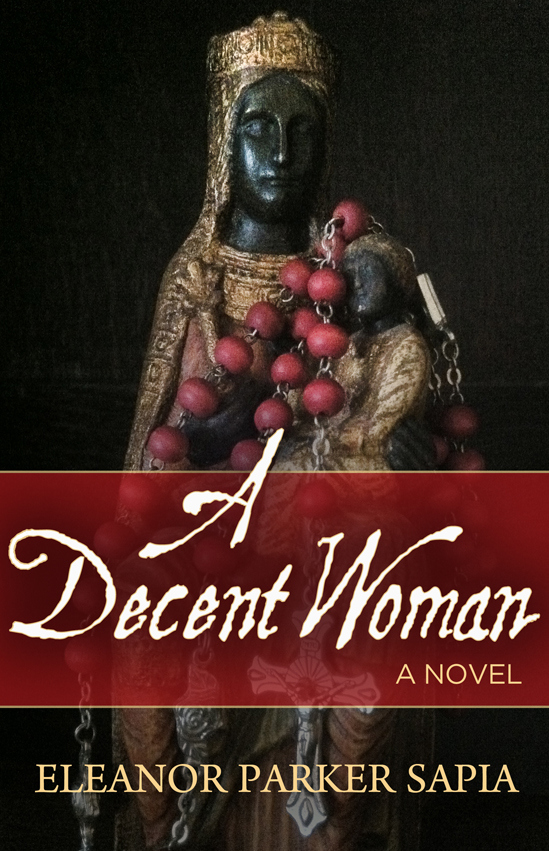
Book Blast: A Decent Woman by Eleanor Parker Sapia

01_A Decent Woman_Cover

Publication Date: February 20, 2015

Booktrope Formats: eBook, Paperback

270 Pages

Genre: Historical Fiction

Ponce, Puerto Rico, at the turn of the century: Ana Belén Opaku, an Afro-Cuban born into slavery, is a proud midwife with a tempestuous past. After testifying at an infanticide trial, Ana is forced to reveal a dark secret from her past, but continues to hide an even more sinister one. Pitted against the parish priest, Padre Vicénte, and young Doctór Héctor Rivera, Ana must battle to preserve her twenty-five year career as the only midwife in La Playa.

Serafina is a respectable young widow with two small children, who marries an older, wealthy merchant from a distinguished family. A crime against Serafina during her last pregnancy forever bonds her to Ana in an ill-conceived plan to avoid a scandal and preserve Serafina’s honor.

Set against the combustive backdrop of a chauvinistic society, where women are treated as possessions, A Decent Woman is the provocative story of these two women as they battle for their dignity and for love against the pain of betrayal and social change.

Advanced Praise for A Decent Woman

“A Decent Woman brings vividly to life the world of early twentieth-century Puerto Rico through the struggles of Ana Belén, an Afro-Cuban midwife, as she attempts to live a meaningful life. Spanning almost thirty years, the story encompasses Ana’s unusual friendship with Serafina, a white woman of humble origins who marries into a wealthy, upper class family. Race, class, the lingering legacy of slavery, and a woman’s role in this neo colonial society are all effectively illustrated through the intimate depiction of these two intersecting lives.

Author Eleanor Parker Sapia lovingly evokes old Puerto Rico: the graceful colonial city of Ponce, the mixture of African and Catholic traditions, the tropical lushness of the land, and the devastating force of a Caribbean hurricane.

Overall, A Decent Woman is a powerful and moving tale; well worth reading.”

-Alina García-Lapuerta, biographer and author of La Belle Creole: The Cuban Countess Who Captivated Havana, Madrid, and Paris

“A Decent Woman opens with a birth and a hurricane and doesn’t let up. Deep with delicious detail, scrumptious characters, and full of folklore, this is a unique debut novel from Eleanor Parker Sapia, one that will win her readers over. Written in a clean style that lets the historical ambience seep through into our consciousness, this book is a tale of wonder, of life and death, of love and life and not a few twists and turns. Ana and Serafina are, indeed, decent women living in a hard time. Buy it, read it, love it.”

-Jack Remick, short story writer, poet, and author of award-winning, Gabriela and the Widow

“A Decent Woman takes the reader on a journey into the heat and steam of Puerto Rico in the early 1900s. The writing is so visceral and evocative that you almost feel the rain on your face, the pain of childbirth, fear, betrayal and redemption along with the women in this story of midwives and mothers.”

-Claudia H Long, author of The Duel for Consuelo and Josefina’s Sin

“A Decent Woman takes the reader on an unforgettable journey of friendship between two strong women set against the backdrop of colonial Puerto Rico of the early 1900s. When former Cuban slave and midwife Ana Belén delivers Serafina Martínez’ first child, an unbreakable bond is formed despite the hurricanes nature and politics thrown in their paths. A striking first novel from Eleanor Parker Sapia.”

-Arleen Williams, writer and author of The Alki Trilogy

“It’s not only that I enjoyed A Decent Woman as much as Alice Walker’s work, there is a quality to her prose. I went back and read an excerpt of The Color Purple to really identify the similarity. The only way I can describe it is that I wanted to read it in gulps. Like when you’re really thirsty. I found myself sucked into the world in three or four lines, and galloping through the prose, because reading more made me want to read more.

A Decent Woman embodies the genre of women’s fiction in the most complete sense of the word exploring the lives of women – young and old, dark- and light-skinned, poor and rich. This is an outstanding read and an important book about a little known corner of women’s history.”

-Yma Johnson, short story writer and journalist

“Eleanor Parker Sapia’s historical fiction novel, A Decent Woman, steeped in friendship, romance, politics, and mysticism, is the captivating story of Ana Belén’s struggle and perseverance to become a Certified Midwife in turn of the century Puerto Rico. Ana’s passions, joys, and plight are shared by midwives everywhere and throughout herstory.

Reading this book was inspiring. I’m sure readers will enjoy A Decent Woman as much as I did.”

-Sarahn Henderson, Midwife and Educator at Birth in the Tradition

“I really enjoyed this novel and particularly enjoyed the characters who I could visualize clearly as I moved along with the story. Eleanor’s descriptions really created such a vivid image in my mind, bringing them to life as I read. I was moved by the various events and was even brought to tears at times. I suspect it will be a huge success and certainly one that I will recommend to my circle of family and friends.”

-Gina Tsiapalis, Registered Midwife

Official Book Trailer

Buy A Decent Woman

Amazon

Barnes & Noble

02_Eleanor Parker Sapia

Puerto Rican-born novelist and painter, Eleanor Parker Sapia, was raised in the United States, Puerto Rico, and Europe. Her passion for travel and adventure combined with her compassion for those in need have led to her careers as a counselor, alternative health practitioner, and a Spanish language social worker and refugee case worker. These life experiences inspire her writing. She facilitates The Artist’s Way creativity groups, and teaches creative writing to children and adults. Eleanor shares her passion for telling stories on her blog, The Writing Life. A Decent Woman is her debut novel. Eleanor has two adventurous and loving grown children, and currently lives in wild and wonderful West Virginia.

For more information please visit Eleanor Parker Sapia’s website. You can also connect with her on Facebook, Twitter, and Goodreads.

Sign up for Eleanor Parker Sapia’s Newsletter for news and updates.

A Decent Woman Book Blast Schedule

Monday, March 16 To Read, Or Not to Read

Tuesday, March 17 Unshelfish

So Many Books, So Little Time

Wednesday, March 18 The Maiden’s Court

Thursday, March 19 A Literary Vacation

Flashlight Commentary

Friday, March 20 A Bookish Girl

CelticLady’s Reviews

Saturday, March 21 Griperang’s Bookmarks

Monday, March 23 History From a Woman’s Perspective

Tuesday, March 24 100 Pages a Day

Back Porchervations

Wednesday, March 25 Book Lovers Paradise

What Is That Book About

Friday, March 27 Book Babe

Saturday, March 28 Book Nerd

Monday, March 30 Let Them Read Books

Tuesday, March 31 Passages to the Past

Wednesday, April 1 Layered Pages

With Her Nose Stuck In A Book

Thursday, April 2 Svetlana’s Reads and Views

Monday, April 6 Historical Fiction Connection

Giveaway

To enter to win one of the following four prizes, please complete the giveaway form below.

* Autographed Copy of A Decent Woman * A Decent Woman eBooks (2) * $25 Amazon Gift Card

RULES

Giveaway starts on March 16th at 12:01am EST and ends at 11:59pm EST on April 6th. You must be 18 or older to enter. Winners will be chosen via GLEAM on April 7th and notified via email. Winners have 48 hours to claim prize or new winner is chosen.

Direct Link to book giveaway

03_A Decent Woman_Book Blast Banner_FINAL


Sunday Book Highlight

Children of the shadows Staurt Laing

Book Blurb:

Edinburgh November 1745 As the nights grow longer in the depths of a Scottish winter, Robert Young, Captain Travers, their families and friends, chase the darkness away as they gather to celebrate a joyful engagement. But grim news casts a pall over the happy atmosphere. A sobbing woman has carried the body of a child into the headquarters of Edinburgh’s Town Guard. In her hand she still clutches a bloody dagger. What at first was thought to be no more than a domestic tragedy soon becomes a hunt for a cold blooded killer who runs the worst possible sort of brothel. Robert Young faces a race against time to find the guilty and save other children from the same fate. His investigation will bring him face to face with his deadliest and most ruthless adversary to date and leave him fighting for his life!

 Excerpt:

“A murder is it?” the man said with no flicker of emotion on his face. “You had best explain further captain”.

As quickly as he could Charles outlined what he knew of the crime. From when the woman had entered the Guardhouse covered in blood bearing the body of Kirsty MacDonald, through to her assertion of other children being held in a brothel. Point by point he went through every detail while the councilors listened in a stony silence without questions or interruptions. Only when he asked again that the woman be turned over to him was there was any display of interest. One man to his right sat forward to look towards him as he said, “do you think there is any truth to her claims captain?”

Charles quickly nodded in response. To reveal he himself thought it more than likely that the prisoner was lying to try and save her own neck was not something he wished to share with these men. “It seems possible sir. We know that several dozen women and children were left behind when the rebels departed the city. Most exist by begging but I believe some of them may have turned to prostitution to get by. If some of these children have been lured from the streets and forced to work in a brothel I think it would be worthwhile to investigate and if possible free them from such a cruel fate…”

“A cruel fate!” another man suddenly laughed. As every face turned towards him he continued with bitterness clear in his voice, “These damn rebels invaded our homes! They took what they wanted and made us thank them for the privilege of being robbed! They strutted the streets like cockerels with their blue bonnets and swords and stinking tartan! Why in the name of God should we concern ourselves if some of the bitches and whelps left in their wake are starving now? I think the Town Guard would be of more use to the city if they rooted these vagabonds out and sent them back to the wilderness they call home!”

Several heads nodded and there was a murmur of agreement at this sentiment. Emboldened by this show of support he added with a sneer, “and what will become of these children supposedly held in a brothel sir? You rescue them – hurrah! – and then what? I’ll tell you what captain! They’ll end up being placed in the work-house where we shall be expected to feed and clothe them! Can you explain why we should pay for the upkeep of these stinking caterans that blight out streets?”

Charles was struggling to contain his irritation at this man but forced his voice to remain calm as he replied carefully, “sir, it is children being forced to work in a brothel that I am talking about. Surely as Christians we cannot allow small children to be used for so foul a purpose?”

The man scowled and spat out “Papists!” He then shook his head but said no more as he studied the papers on the table before him. Another man now raised a finger to attract Charles’ attention. “While we can all share your feelings towards the cruel fate of these children it has to be admitted that they are not the only children who find themselves in such a predicament are they? Why sir, only last year I recall your men closing down just such an establishment and the city found itself responsible for…five children if I recall correctly? Five children sir who must be fed, watered, clothed and cared for and these were children of Edinburgh sir! They were not some flotsam washed down from the Highlands in the wake of the invaders!” He shook his head. “No sir, I can fully understand your concern but really, is it worth the bother and the risk of allowing a murderer free rein to roam our streets? I can see no benefit to the city in this. What if she, the prisoner I refer to here, were to be rescued from your custody by confederates and accomplices sir? What then indeed? From what you have told us, you have the guilty party safely locked away in the Tollbooth where she can get up to no further mischief and I for one think it best that is just where she should remain!”

Stuart Laing

Born and raised on the east coast of Scotland in the ancient Pictish Kingdom of Fife Stuart grew up looking across the Firth of Forth towards the spires and turrets of the city of Edinburgh and its castle atop its volcanic eyrie.

He has always been fascinated by the history of Auld Reekie and has spent most of his life studying Scottish history in all its aspects whenever he finds the time between family, work and the thousand and one other things that seek to distract him.

Despite the vast panorama of Scotland’s history he always find himself being drawn back to the cobbled streets of the Old Town. Those streets have provided the inspiration for his stories and characters.

He would urge all visitors to Scotland’s ancient capital to (briefly) venture into one of the narrow closes running down from the Royal Mile to get a flavour of how alive with mischief, mayhem, love and laughter these streets once were.

Author Website


Review: Haunted by Lynn Carthage

Haunted

Moving to my stepfather’s English country mansion sounded so promising. But the Arnaud Manor is neglected and unwelcoming, and I get the feeling it isn’t exactly uninhabited. Something wants to hurt us–especially my little sister, Tabby.

Okay, so I might be a little sensitive lately. My parents act oblivious to me, my old life is far away in San Francisco, and the gorgeous guy I just met tells me terrible stories about the infamous Madame Arnaud who lived here long ago, and about missing children and vengeful spirits. The kind of stories that are impossible to believe–until you’re living in one of them, fighting to protect everyone you love…

**********

What first drew me to this story was a family moving to a English country mansion, a haunting, and a sense of mystery to it…I’m not a paranormal reader normally but this one called out to me and I wasn’t disappointed. This is a debut novel as well and it was definitely entertaining and spooky to say the least. I think many young readers will find it flows really well and there is a lot of tension and surprises you don’t see coming…

Another thing that grab my attention was the infamous Madame Arnaud’s role in the story. I didn’t see that coming. I can’t tell you what part of the plot relates to, you will have to read the book to find out!

I also enjoyed the historical aspects to the story and feel it enriches and gives the plot more depth. I recommend this to young readers who enjoy light paranormal stories with a blend of the past.

I’m giving this a four star rating.

Stephanie M. Hopkins

A Writer’s Life with Jude Knight


Jude Knight

I’d like to welcome, Jude Knight to Layered Pages to talk about her writing. She writes strong determined heroines, heroes who can appreciate a clever capable woman, villains you’ll love to loathe, and all with a leavening of humour.

Jude, why do you write?

I write because I cannot not write. Stories keep occurring to me, and I have to know what happens next.

I’ve told stories since I could talk, and I’ve written since I learned how. At primary school, I created dramas with a cast of any other child who wanted to play. At secondary school, I wrote short stories and published them in a student paper friends and I created and ran off on an old Gestetner.

Then came family, a mortgage, and the need to earn a living. I became a commercial writer, and poured my creativity into computer manuals and government reports. (Yes, you might well laugh.)

But the stories didn’t go away. In notebooks and computer files, I have nearly 100 story lines, more than 40 of them set in the late-Georgian, but other historicals, plus fantasy, sf, and contemporary. For a long time, I’d finish them inside my head – which, like any form of self-gratification, was temporarily satisfying but ultimately sterile. A story teller isn’t a story teller without an audience.

What is your writing process?

I tell myself the bare bones of the story, flesh out particular scenes that interest me, hear scraps of dialogue and see bits of action. Then I research the period, write detailed character sketches, and create a full story outline.

Then I ignore everything once I start writing, and let the story take me wherever it wants to go. I write like a knit: I lose track of the pattern, and I’m always dropping stitches.

Once I write THE END, I go back to my original plans. I analyse the story as it stands, find the holes and the dropped plot points, and decide what needs to be fixed. After the rewrite, it goes to beta readers, and the third draft takes their suggestions into account.

How has writing impacted your life?

For a start, I’ve never been so busy. I’ve set myself a publication schedule that, with a full-time day job, is turning out to be grueling. I’m convinced I was wise to wait until I was no longer raising children and grandchildren. They would have been neglected. I become absorbed and the time flies, and my PRH (personal romantic hero) arrives home, and I’m still in my pyjamas. I haven’t had breakfast and the chickens and cats haven’t been fed, but that’s in the 21st century. In the 19th, all is going as it should.

Fortunately, PRH supports me fully, and keeps me supplied with bacon and egg sandwiches and coffee.

The second way writing fiction has impacted on my life is that I’ve seldom been so happy. This is what I was made to do, and I love it. It’s the most fun one can have while standing (at least at my age).

When do your best ideas come to you for a story?

No particular time. The characters go on working behind my back, and an idea will pop up in the middle of another story, or when I’m in a meeting at work, or even in church. Sometimes, I’m forced into a corner by an inconvenient historical fact, and the solution to it turns out to be better than my original plans.

That happened in Farewell to Kindness, when I wanted to get rid of the minor villains by having them imprisoned for smuggling. But they were wealthy, and would have paid the fine and never seen the inside of a goal. Criminal justice worked on a different system back then.

In the end, my hero set them up to rob him on the highway – a crime against him and the King. This meant he could prosecute them and have them imprisoned. And it serendipitously put him in the right place to rescue the heroine.

How do you respond to positive and negative reviews?

I’ve been fortunate with Candle’s Christmas Chair, my novella, to have mostly positive reviews. And I try to stay positive about the others, too. I blogged about bad reviews after I had two in one week that really panned the poor little story. In summary, I want to 1. Learn from them 2. Accept that any publicity is good publicity, 3. Understand that a bad review that states what someone doesn’t like may attract readers that like just that thing. What to do with a bad review

What advice would you give a beginner writer?

Write and keep writing. And when you’re not writing, read. Set a daily word count and stick to it. Make writing what you do whenever you’re waiting for an appointment or a bus; whenever you have a few minutes to spare. If you write 200 words a day, in a year you will have a novel. So just write.

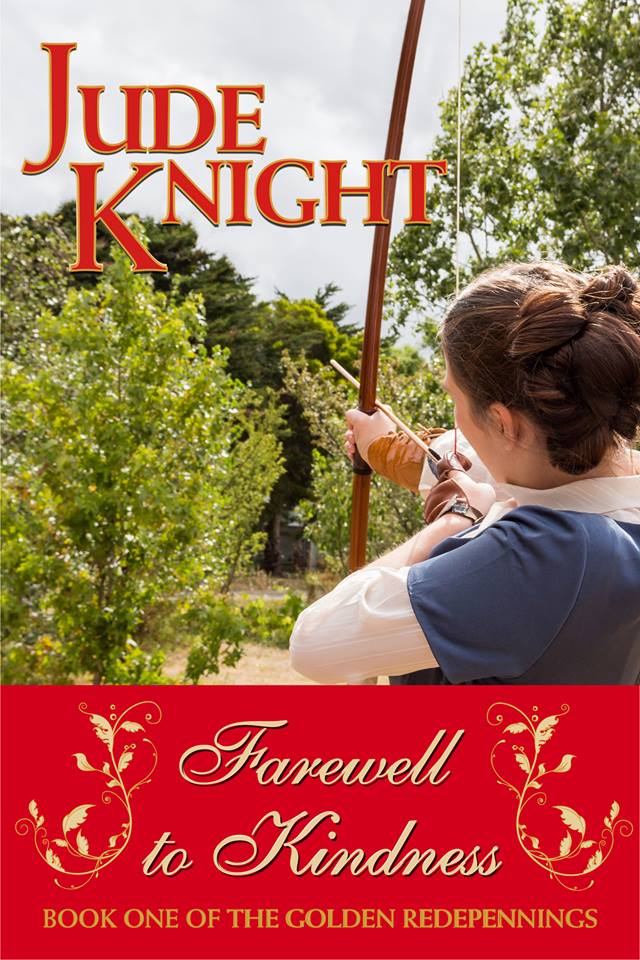
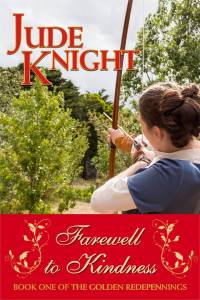
Farewell to Kindness
Fairwell to kindness

Regency noir (On prerelease; on sale from 31 March 2015)

Price: US99c to 8 April 2015; USD3.49 from 9 April 2015

For three years, Rede has been searching for those who ordered the murders of his wife and children. Now close to end of his quest, he travels to his country estate to be close to the investigation.

He is fascinated by the lovely widow who lives in one of the cottages he owns. A widow who pays no rent. A widow, moreover, with a small daughter whose distinctive eyes mark her as as the child of his predecessor as Earl.

Six years ago, Anne blackmailed Rede’s predecessor at arrow-point for an income and a place to livein hiding from her guardian’s sinister plans for her and her sisters. He no longer has legal rights over her, but the youngest sister is still only 18. He cannot be allowed to find her.

Rede is everything she has learned not to trust: a man, a peer, a Redepenning. If he discovers who she is, she may lose everything.

To build a future together, Rede and Anne must be prepared to face their pasts.

Heat: PG13 edging towards R in places

Excerpts of Farewell to Kindness

George was drunk. But not nearly drunk enough. He still saw his young friend’s dying eyes everywhere. In half-caught glimpses of strangers reflected in windows along Bond Street, under the hats of coachmen that passed him along the silent streets to Bedford Square, in the flickering lamps that shone pallidly against the cold London dawn as he stumbled up the steps to his front door.

They followed his every waking hour: hot, angry, hate-filled eyes that had once been warm with admiration.

He drank to forget, but all he could do was remember.

One more flight of stairs, then through the half open door to his private sitting room, already reaching for the waiting decanter of brandy as he crossed the floor.

He had a glass of oblivion halfway to his lips before he noticed the painting.

It stood on an easel, lit by a carefully arranged tree of candles. George’s own face was illuminated—the golden shades of his hair, his intensely blue eyes. The artist had captured his high cheekbones and sculpted jaw. “One of London’s most beautiful men,” he’d been called.

He stalked to the easel, moving with great care to avoid spilling his drink.

Yes. The artist had talent. Who could have given him such a thing?

As he bent forward to look at it more closely, something whipped past his face. With a solid thunk, an arrow struck the painting, to stand quivering between the painted eyes.

******

Rede stayed for a while, shaking hands with those who came for an introduction, catching up with those he’d met during the week, and generally making himself pleasant.

Several times, he met eyes as blue as his own, fringed like his with dark lashes. His predecessors had certainly left a mark on the population. Many of the poorer members of the community bore the certain sign that a female ancestor had caught a Redepenning’s fickle attention.

Mrs Forsythe, the rent-free tenant, wasn’t introduced. He had been hearing her name all week. His tenants spoke of her warmly, and with respect, listing her good deeds, and praising her kindness. From what they said, she was a lynch pin of village life. Listening to their stories, he’d formed a picture of a mature widow; a gentlewoman of private—if straitened—means; a bustling matron with a finger in all the charitable activity of the parish.

The trio of young ladies on the path broke up, two coming over to be introduced as the daughters of the Rector and the Squire. The third young lady collected a child and another young woman from the Rectory garden.

The child was a little older than his Rita would have been; perhaps the age Joseph would have been, had he lived. She studied him curiously as she passed; meeting his blue gaze with her own. Indeed, he could have been looking at one of his own childhood portraits, cast in a more feminine mould.

She didn’t take her colouring from the two young ladies with her. And a quick glance after her showed that bonnets masked the faces of the two ladies they joined.

“Once my cousins arrive, we’ll invite the local gentry to dinner,” he told Mrs Ashbrook. “I’ve met some of them. Could you perhaps introduce me to others?”

As he’d hoped, she launched into a list of all the gentlemen and ladies in the neighbourhood, starting with those present. He listened impatiently as the objects of his interest moved further and further towards the gate.

At last, just as they passed under the arch, Mrs Ashbrook said, “and Mrs Forsythe and her sisters, the Miss Haverstocks. They were standing right there by the church… oh dear, you’ve missed them. They’ve just left.”

The slender figure hurrying away down the road with her sisters and daughter did not fit the picture he’d formed of the busy Mrs Forsythe. Not at all.

He continued listening to Mrs Ashbrook, commenting when appropriate, murmuring pleasantries to the people she took him to around the churchyard. And with another part of his mind he planned a change in the order of his tenant visits.

Meeting Mrs Forsythe, owner of the trimmest pair of ankles he had ever noticed and mother of a Redepenning by-blow, was suddenly a priority.

******************

What was it about this woman that made Rede want to spend time with her? She was, of course, delectable. But many women had faces and forms as lovely.

Since Marie-Josèphe died, he’d felt the stirrings of lust from time to time—and more than stirrings. Acting on those stirrings always felt like too much trouble, though.

In his private desires, as in all the rest of his life, he saw the world as if through a thick blanket that numbed feeling. He went through the motions of looking after his business interests and the Earldom, of acting appropriately in social occasions, of charming his tenants and his neighbours—but all the time, he was acting a part, as if he had been buried with his wife and children, and was reaching from the grave to operate his own body like a puppet.

Except when he woke each morning with his grief still raw. Except when he was planning how to make his enemies pay. Except when he read the reports David sent him every week.

And now, something beyond his vengeance was reaching through the blanket of unfeeling and bringing him back to life. Or, rather, someone.

He studied her for a moment, as he stood apart from the group. He couldn’t put his finger on what made her different. Perhaps it was that she talked to him, and not to his title or his wealth. He enjoyed her wit, her humour. He liked how she treated him with no more and no less deference than she did Will or the Squire or the innkeeper’s wife.

Today, she was dressed far more like a lady than a cottager, in a light-coloured dress in the modern style, modestly covering but shaping to her bosom, and dropping from there to a flounced hem. Yesterday’s apron had defined her slender waist, but the dress beneath it had hidden her shape entirely. Today’s dress left her waist a mystery, but clung to her hips and legs as she walked…

It would give the villagers confidence to see their lord working side by side with the other local leaders. Rede had run large teams of trappers, invested the money into multiple enterprises and made a not inconsiderable fortune by finding managers he could trust and inspiring them to give their all to serve him. He knew the value of showing his tenants and neighbours that he counted himself one of them.

His decision to help was for the village at large, not to impress the lovely Mrs Forsythe.

“And,” he admonished himself as he rode away, “if you believe that, I have a village built of pure gold in Upper Canada that I’d like to sell you.”

********

Rede leaned closer to Anne.

“Have I told you yet how lovely you look this evening?”

“Susan’s maid, Markham, is a wonder. She chose the gown, and altered it.” Anne preened a little, twisting from side to side in display.

“Lovely,” Rede agreed. “I always think you lovely, but I’m delighted to see you in clothes that are fit for you. And you managed to match the ribbon I gave you!”

Anne blushed. Rede was quick to notice and guess the reason. “That is the ribbon I gave you!”

“I happened to have it in my pocket,” Anne murmured.

Rede looked so smug at the thought that she wanted to rein him in.

“Rede, your nephew saw us last night, and he has told Baroness Carrington.”

He was instantly serious. “How…? Oh no. I forgot the lookout in his bedroom. Anne, I do apologise. I should not have… you were so lovely that I lost myself. But that is not an excuse. I should have been more careful. I will be more careful.”

“It cannot happen again, Rede.”

“What are you two looking so serious about,” Kitty asked. “Anne, did you know that in Russia, there is a water spirit that seeks out men and drowns them? And witches live in cottages with chicken legs, so they can turn the cottages around! If you go into the forest, they may catch you!”

“Really,” Rede said, “and you saw these yourself, Alex?”

Major Redepenning just laughed.

“In Canada,” Rede told Kitty, “the Rugaru live in the forest. They are part human and part wolf, and they eat ice. In the river live the Memaquasesak. They are little people, who love sweet things and are always to blame when baking goes missing.”

“And you saw these yourself, Rede?” the Major mocked.

“I certainly had many sweet things go missing. But that could have been John. Or perhaps it was Ti Jean.”

Then Rede told them the tale of Ti Jean and the Rugaru, and Major Redepenning topped it with a story of Baba Yaga and foolish Ivan, and the supper passed merrily.

Pre-order links

Kobo Books

ibooks

B&N

Smashwords

Amazon

Follow Jude on twitter

Friend Jude on Facebook

Subscribe to Jude’s blog

Subscribe to Jude’s newsletter

Follow Jude on Goodreads

A Writer’s Life with Author Nancy Bilyeau

I’d like to welcome Nancy Bilyeau to Layered Pages today to talk about her writing and to share with you all her newly released novel, The Tapestry. This story is the third in the award-winning Joanna Stafford series that takes place in the heart of the Tudor court. Thrilling plots, historical intrigue and unforgettable characters. I highly recommend this series!

Nancy, why do you write?

My journey to fiction is a little unusual. I have been writing professionally since I was 22 years old, and earning bylines before then. I was the managing editor of my college newspaper, The Michigan Daily, at the University of Michigan. But as I wrote articles for newspapers and magazines, moving into editing, it just didn’t occur to me that I could write fiction. Even less that I could write the sorts of books I’d most enjoyed reading since I was about 11 years old: historical fiction. My 13-year-old daughter reads J.K. Rowing and Rick Riordan. At her age, I was devouring Mary Stewart and Jean Plaidy. And as I grew older, I continued to read the genre: Norah Lofts, Mary Renault, Bernard Cornwall, Robert Graves, and Margaret George. Right before I started my own first novel, I read Possession, by A.S. Byatt. What made me decide to try to write novels 20 years after I graduated from college? I was invited to a small fiction workshop in a teacher’s workshop, because they needed four people to keep going and they only had three. I was a seat warmer. I walked in, saying, “I am not sure what I want to write, but I know it will be historical, set in Tudor England.” Once I started writing my novel, I couldn’t stop. It became an obsession. I love creating my own world and characters to live in it. It’s very hard, but incredibly rewarding.

The Crown (Joanna Stafford, #1)

The Crown (Joanna Stafford, #1)

How has writing impacted your life?

It’s exciting to put out these books and I’m happy to find readers who respond to them. I’m always touched to get a positive email or hear something nice. And also I’ve met so many incredible authors and bloggers and lovers of history. Ten years ago, I don’t know how I would meet many of them, because they come through social media largely, followed by perhaps a meeting at a writer’s conference or some other event. These people have enriched my life. Now I can’t imagine not knowing them!

The Chalice (Joanna Stafford, #2)

The Chalice (Joanna Stafford, #2)

What advice would you give to beginner writers?

You have to believe in yourself. It’s a cliché but it’s so true! If you decide to go the traditional publishing route, it can be very bruising and you must be strong. I will share with you the saga of my being published in England to demonstrate the extreme up’s and down’s. After my agent sold ‘The Crown” in America to Touchstone Books, an imprint of Simon & Schuster, a co-agent sold it to Orion Books in England in a very exciting newsworthy two-book deal. My British editor came to NYC for some reason and while here took me out to a fabulous dinner. I was ecstatic. But when the book was actually published in February 2012, there was no staff publicist assigned—and it received virtually no reviews. So, not surprisingly, the book didn’t sell well. I was upset. But then, the Crime Writer’s Association put “The Crown” on the shortlist for the Ellis Peters Historical Dagger Award and called it “the debut of the year.” Again—I was ecstatic. This would turn it all around! But the release of “The Chalice” had no more publicity or attention than “The Crown,” with predictable results. Low sales. I asked the UK co-agent to go in and talk to the publishing team on my behalf. She came back with the news that I shouldn’t worry—my team in England reassured her that they weren’t

expecting big sales at this stage, they were growing me for the long term. They believed in me. Several months later, I was told that the British publisher did not want my third book in the Joanna Stafford series. I was dropped. You can’t believe how upset I was. The agents tried to get another publisher to take it, but no one wanted the third in a series. One editor I had very high hopes for waited months to decide she didn’t want the book. I got the news in an email as I sat down to a birthday lunch with friends. I had to leave the table and cry in the bathroom. So, OK, my fiction career was officially dead in England. But I couldn’t give up on my books or the readers I knew I had in England. I was able to obtain the ebook rights for the UK and I self-published the book a few days ago. And people are buying it with enthusiasm! There were many times I wanted to give up, but I didn’t. You have to adopt that spirit if you want to write books for the marketplace.

The Tapestry (Joanna Stafford, #3) Newly Released

The Tapestry (Joanna Stafford, #3) Newly Released

How do you respond to positive and negative reviews?

Again, I am a little unusual. I know a lot of novelists who refuse to read bad reviews and if they do, they become very upset. I am not happy to see them, but I read them carefully and think about whether there is something I can learn from it. Maybe this comes from my magazine background—you have to have a fairly thick skin on your work.

Author Bio:

Nancy photo

I’m a novelist, a magazine editor, a mother, and a wife—but not in that order! I am writing a series of novels for Simon & Schuster on a Dominican novice struggling to survive the Dissolution of the Monasteries in the time of Henry VIII. The first two novels, ‘The Crown’ and ‘The Chalice,’ are on sale in North America, the United Kingdom, and 9 foreign countries. ‘The Tapestry’ goes on sale March 24, 2015.

Links:

Author Website

twitter: @tudorscribe

Pinterest

Facebook

The Tapestry Book links:

US Amazon

UK Amazon


Sunday Book Highlight

A Rage to Live

B.R.A.G. Medallion Honoree

Victor Breitburg is a survivor of the Lódz Ghetto, Auschwitz, Buchenwald, Rhemsdorf and Theresienstadt concentration camps. He was liberated with a group known as “The Boys”. Their experiences have been documented in Sir Martin Gilbert’s Book, The Boys:Triumph Over Adversity. Victor and many of “The Boys” are still in contact with one another, although as it is with WWII veterans, their numbers are slowly diminishing.

Victor’s journey from Lódz, to the camps in Europe, to England, Scotland and the United States and his new life in America is the story told in this volume.

Victor completed studies in America, became a successful businessman and an accomplished lecturer on the Holocaust, having received numerous awards and citations for his role as an educator.

He is a widower, having been married to his beloved wife Lucille for sixty years.

He currently lives in Coconut Creek Florida, and at 84 years old, occasionally speaks on Yom HaShoa. He has written some poems, short stories and is considering a novel based on the early days of the Mossad, the Israeli Secret Service. Victor has two daughters, Denise and Myra. Denise is married to Mark and they have two children, Maya and Eli.

 Excerpt from Chapter 9: Resettlements and Goodbyes

We must have been traveling for several hours, with some stops to permit other trains to pass. We observed that eastbound trains were army trains and westbound trains were transports for the Red Cross. We knew that the Germans were suffering heavy casualties on the eastern front. Were they losing the war? Were they winning on the western front? Is this why they needed our help?

We stopped for the night and every one settled down to sleep. We still had bread and there was a barrel of water. If we had to go to the toilet, we put up a little curtain and went through a crack in the floor as we relieved ourselves down onto the railroad tracks. The mood on the train improved. Most were thinking that if they wanted to kill us, why would they use such a valuable train? We must have stopped a dozen times. Every time we stopped, we stood there for hours. This was the third day.

All of sudden there was a commotion. We went through a gate and the train stopped. There was silence, and we knew we had arrived. Everyone put on their backpacks and waited for the doors of the train to open. I heard my heart beating. I was not at ease and my lips were trembling. My mother gathered us in her arms and told us to stay together. “If for some reason we get separated, we should not forget that our meeting destination is with my sister in Brooklyn.” She kissed us. I hugged my mother.

I said, “Nothing is going happen to us, we are going to stay together.”

I took Felek’s hand, but he pulled it away and said, “Take care of Sarah. I am twelve years old and am able to help myself.” I smiled at him. He certainly was growing up. I was surprised at his reaction. He turned out to be such a good-looking kid. He was a Breitburg; blond and blue eyed. I am a cross breed between the Wajnmans and Brajtburgs.

Waiting for the door to slide open was hard. We didn’t know what to expect. At that moment I felt we should pray to the Almighty, “Please let this nightmare end for us so that one day we might go to the Promised Land and serve you for eternity.”

victor-and-joe

Victor & Joe

Joseph Krygier is the Pastor of New Covenant Baptist Fellowship in Buffalo, New York. He has written about and been engaged in cross-cultural ministry for over thirty years. He has taught in Poland, Ukraine, Romania and Australia. His current overseas ministry is TheosDoulos Church Planting Movement, training pastors in the Philippines on the island of Mindanao. Before becoming ordained, he was involved in theater, dance and lighting design. His a musician and a composer and he is currently writing a one-man play, Chagrined, based on this book. An audio book version will soon be available with the talent of Lee Wilkof and other Broadway actors.  He is married to Deborah, who works for the Buffalo Public Schools and has a son Aaron, who is pursuing a career as a writer and an actor.

Website

Blog

Facebook


A Song of Sixpence by Judith Arnopp

JA Picture

Judith, who is from Wales in the UK, is the author of seven historical fiction novels. Her early novels, Peaceweaver, The Forest Dwellers and The Song of Heledd, are set in the Anglo-Saxon/Medieval period but her later work, The Winchester Goose, The Kiss of the Concubine, Intractable Heart and A Song of Sixpence, concentrate on the Tudor period. She is currently researching for her eighth novel about Margaret Beaufort, the mother of Henry VII. Judith is also a regular blogger and author of historical articles.

A Ssong of Sixspence By JA

Blurb of A Song of Sixpence

In the years after Bosworth, a small boy is ripped from his rightful place as future king of England.

Years later when he reappears to take back his throne, his sister Elizabeth, now Queen to the invading King, Henry Tudor, is torn between family loyalty and duty.

As the final struggle between the houses of York and Lancaster is played out, Elizabeth is torn by conflicting loyalty, terror and unexpected love.

Elizabeth must choose between supporting the man claiming to be her brother, or her husband, the king?

Set at the court of Henry VII A Song of Sixpence offers a unique perspective on the early years of Tudor rule. Elizabeth of York, often viewed as a meek and uninspiring queen, emerges as a resilient woman whose strengths lay in endurance rather than resistance.

London – Autumn 1483

Ink black water slaps against the Tower wharf where deep impenetrable dark stinks of bleak, dank death. Strong arms constrict him and the rough blanket covering his head clings to his nose and mouth. The boy struggles, kicks, and wrenches his face free to suck in a lung full of life saving breath. The blanket smothers him again. He fights against it, twisting his head, jerking his arms, trying to kick but the hands that hold him, tighten. His head is clamped hard against his attacker’s body. He frees one hand, gropes with his fingers until he discovers chain mail, and an unshaven chin. Clenching his fingers into a fist, he lunges out with a wild inaccurate punch.

With a muffled curse the man throws back his head but, keeping hold of his prisoner, he hurries onward, down narrow, dark steps, turning one corner, then another, before halting abruptly. The boy hears his assailant’s breath coming short and sharp and knows he too is afraid.

The aroma of brackish water is stronger now. The boy strains to hear mumbled voices, low and rough over scuffling footsteps. The ground seems to dip and his stomach lurches as suddenly they are weightless, floating, and he senses they have boarded a river craft. The invisible world dips and sways sickeningly as they push out from the stability of the wharf for the dangers of the river.

The only sound is the gentle splash of oars as they glide across the water, far off the clang of a bell and the cry of a boatman. He squirms, opens his mouth to scream but the hand clamps down hard again. The men draw in their breath and freeze, waiting anxiously. A long moment, a motionless pause before the oars are taken up again and the small craft begins to move silently across the surface.

River mist billows around them; he can smell it, feels it seeping through his clothes. He shivers but more from fear than cold.

He knows when they draw close to the bridge. He can feel the tug of the river; hear the increasing rush of the current, the dangerous turbulence beneath. Surely they will not shoot the bridge, especially after dark. Only a fool would risk it.

The boy wriggles, shakes his head, and tries to work his mouth free of the smothering hand. He strains to see through the blinding darkness but all is inky black. The boat gathers pace and, as the noise of the surging river becomes deafening, the man increases his hold, a hurried prayer rumbling in his chest.

The whole world is consumed in chaos, rushing water, clamouring thunder, biting cold. In the fight for survival, the boy continues to battle fruitlessly for breath, struggle for his freedom. The body that holds him hostage tenses like a board and beneath the boy’s ear beats the dull thud of his assailant’s heart. The blanket is suffocating hot, his stomach turning as the boat is taken, surging forward, spinning upward before it is hurled down again, between the starlings, shooting uncontrollably beneath the bridge.

Then suddenly, the world is calmer. Somehow the boat remains upright on the water. It spins. He hears the men scrabble for the oars, regain control and his captor relaxes, breathes normally again. Exhausted and helpless, the boy slumps in the soldier’s arms, his fight defeated.

All is still now; all is quiet. The oars splash, the boat glides down river, and soon the aroma of the countryside replaces the stench of the city.

His clothes are soaked with river water; his stomach is empty, his body bruised and aching. Defeated and afraid, the man releases his hold and the boy lies still in the bottom of the boat.

He sleeps.

The world moves on.

Much later, waking with a start, the boy hears low, dark whisperings; a thick Portuguese accent is answered by another, lighter and less certain. This time when he blinks into the darkness, he notices a faint glimmer of light through the coarse weave of the blanket. He forces himself to lie still, knows his life could depend upon not moving but his limbs are so cramped he can resist no longer. He shifts, just a little, but it is too much. His kidnapper hauls him unceremoniously from the wet wooden planks.

The boy’s legs are like string. He stumbles as they snatch off his hood and daylight rushes in, blinding bright. He blinks, screwing up his face, blinking at the swimming features before him, fighting for focus. He sees dark hair; a heavy beard; the glint of a golden earring, and recognition and relief floods through him.

“Brampton!” he exclaims, his voice squeaking, his throat parched. “What the devil are you doing? Take me back at once.”

Brampton tugs at the boy’s tethered arms, drawing him more gently now to the bench beside him.

“I cannot. It is unsafe.”

“Why?” As his hands are untied the boy rubs at each wrist in turn, frowning at the red wheals his bonds have left behind. His Plantagenet-bright hair glints in the early morning sun, his chin juts forward in outrage. “If my father were here…”

“Well, he is not.”

Brampton’s words lack respect, but the boy knows him for a brusque, uncourtly man.

“But where are you taking me? What is happening?”

“To safety, England is no longer the place for you.”

The boy swallows, his shadowed eyes threatening tears. Switching his gaze from one man to the other, he moistens his lips, bites his tongue before trusting his breaking voice. “Where is my brother? Where is Edward?”

Brampton narrows his eyes and looks across the misty river. He runs a huge, rough hand across his beard, grimaces before he replies and his words, when they come, spell out the lost cause of York.

“Dead. As would you be had I left you there.”

Links

Amazon Author Page

Author Website

Author Blog

Facebook

JA Banner