
“I always thought of the stars like a handful of gems that God randomly tossed across the sky, saying, ‘Here, go wherever you please.” ― Chelsea Vanderbeek
Photo by WSM Photography

“I always thought of the stars like a handful of gems that God randomly tossed across the sky, saying, ‘Here, go wherever you please.” ― Chelsea Vanderbeek
Photo by WSM Photography

“It’s rare to come across someone like Stephanie who has such a natural gift for the arts. A true professional, her expertise and passion shine through, and you know instantly you’re in the best of hands. With an exceptional flair for discovering great stories, fiercely supportive and loyal, Stephanie’s skills are truly invaluable to any artist.” -Award Winning Author Suzy Henderson
Twitter: @Suzy_Henderson
Suzy’s Website: Website
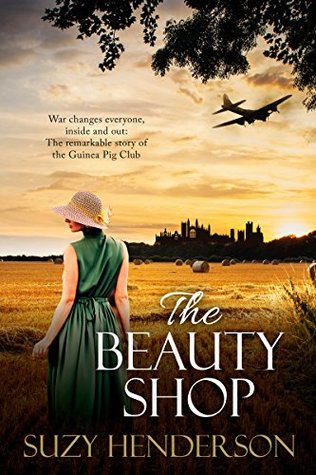 About The Beauty Shop:
England, 1942. After three years of WWII, Britain is showing the scars. But in this darkest of days, three lives intertwine, changing their destinies and those of many more.
Dr Archibald McIndoe, a New Zealand plastic surgeon with unorthodox methods, is on a mission to treat and rehabilitate badly burned airmen – their bodies and souls. With the camaraderie and support of the Guinea Pig Club, his boys battle to overcome disfigurement, pain, and prejudice to learn to live again.
John ‘Mac’ Mackenzie of the US Air Force is aware of the odds. He has one chance in five of surviving the war. Flying bombing missions through hell and back, he’s fighting more than the Luftwaffe. Fear and doubt stalk him on the ground and in the air, and he’s torn between his duty and his conscience.
Shy, decent and sensible Stella Charlton’s future seems certain until war breaks out. As a new recruit to the WAAF, she meets an American pilot on New Year’s Eve. After just one dance, she falls head over heels for the handsome airman. But when he survives a crash, she realises her own battle has only just begun.
Based on a true story, “The Beauty Shop” is a moving tale of love, compassion, and determination against a backdrop of wartime tragedy.
******************

L.A.P. it is a social media platform that applies to a variety of professions-such as-Literature, Art and Photography. The practicalities of Internet life can be tricky for many, not everyone is computer savvy and would prefer to solely focus on their craft or they have a tight budget but need help in this arena. There are so many entities out there charging fees that are not doable for most or they promise what they cannot deliver. L.A.P. it has created a new concept of social media marketing and provides a unique service to showcase writers, artists and photographers work. L.A.P. it will also work with publishers, independent presses, artists/photographers galleries and other entities that involve the three areas mentioned.
L.A.P. it Marketing Website
Twitter: @lapitmarketing
“Jenny went above and beyond as my cover and bookmark designer. Not only is she talented as a designer, but she is patient, polite, and easy to work with. I felt completely comfortable giving her my opinion on design and telling her what I did and didn’t like. Further, her clients are her top priority. She spent countless extra hours helping me to work through several snafus with my printers. She made phone calls on my behalf and even worked on a holiday weekend to help me meet a deadline. I couldn’t have asked for a more talented or professional designer, and I am so grateful that I found her. I plan to work with her again and again in the future.” ~ Stephanie Carroll
About White Room:
At the close of the Victorian Era, society still expected middle-class women to be “the angels of the house,” even as a select few strived to become something more. In this time of change, Emeline Evans dreamed of becoming a nurse. But when her father dies unexpectedly, Emeline sacrifices her ambitions and rescues her family from destitution by marrying John Dorr, a reserved lawyer who can provide for her family.
John moves Emeline to the remote Missouri town of Labellum and into an unusual house where her sorrow and uneasiness edge toward madness. Furniture twists and turns before her eyes, people stare out at her from empty rooms, and the house itself conspires against her. The doctor diagnoses hysteria, but the treatment merely reinforces the house’s grip on her mind.
Emeline only finds solace after pursuing an opportunity to serve the poor as an unlicensed nurse. Yet in order to bring comfort to the needy she must secretly defy her husband, whose employer viciously hunts down and prosecutes unlicensed practitioners. Although women are no longer burned at the stake in 1900, disobedience is a symptom of psychological defect, and hysterical women must be controlled.
A novel of madness and secrets, A White Room presents a fantastical glimpse into the forgotten cult of domesticity, where one’s own home could become a prison and a woman has to be willing to risk everything to be free.
Based on historical trends of the era and inspired by the classic Victorian novels The Yellow Wallpaper, The Secret Garden, and Wuthering Heights, author Stephanie Carroll has taken women’s empowerment in fiction to an all new level in this inspiring debut.
–
A White Room was featured as a Notable Page Turner in Shelf Unbound Magazine and named 2013’s Best Cross-Genre Title by USA Book News.
To read behind the scenes material about “A White Room” and learn about future books by Stephanie Carroll in addition to giveaways, freebees, and how to become a test reader, visit her website and sign up for the VIP Reader newsletter.
About Author:

As a reporter and community editor, Stephanie Carroll earned first place awards from the National Newspaper Association and from the Nevada Press Association. Stephanie holds degrees in history and social science. She graduated summa cum laude from California State University, Fresno.

I am not a cover designer but I can agree that cover layouts play an important role in the overall presentation of stories and I must admit, often times I first judge a book by its cover.
Cover Crush is a weekly series that originated with Erin at Flashlight Commentary.
 The Border by Steve Schafer
Published September 5th 2017 by Sourcebooks Fire
Perfect for readers of This Is Where it Ends, The Border is a gripping drama about four teens, forced to flee home after a deadly cartel rips apart their families. They must now face life-threatening danger and unimaginable sacrifice as they attempt to cross the U.S. border.
“Thrilling… often brilliant.”—Kirkus
One moment changed their lives forever.
A band plays, glasses clink, and four teens sneak into the Mexican desert, the hum of celebration receding behind them.
Crack. Crack. Crack.
Not fireworks—gunshots. The music stops. And Pato, Arbo, Marcos, and Gladys are powerless as the lives they once knew are taken from them.
Then they are seen by the gunmen. They run. Except they have nowhere to go. The narcos responsible for their families’ murders have put out a reward for the teens’ capture. Staying in Mexico is certain death, but attempting to cross the border through an unforgiving desert may be as deadly as the secrets they are trying to escape…
My thoughts:
The premise is a dark and-to me-a depressing one, but the cover is fantastic! I like the simplicity of it and yet it speaks volumes. I’m curious about this story and will keep an eye on how it does in the book market.
Stephanie M. Hopkins
Other great cover crushes from my fellow book bloggers:
Magdalena at A Bookaholic Swede
Colleen at A Literary Vacation
Heather at The Maiden’s Court
Holly at 2 Kids and Tired
Meghan at Of Quills & Vellum
At a book event I attended in the Fall of 2017, the authors were asked what books they liked to read. One author said she liked to read biographies on writers and gave her reasons why. I was really fascinated with her interest in the genre that I decided I wanted to start reading them as well and to start a series of posts of the list of biographies I am compiling for my Library. This month I am choosing, Anne Sexton: A Biography by Diane Wood Middlebrook.
Stephanie M. Hopkins
************
 Book Description:
Published October 27th 1992 by Vintage (first published 1991)
Anne Sexton began writing poetry at the age of twenty-nine to keep from killing herself. She held on to language for dear life and somehow — in spite of alcoholism and the mental illness that ultimately led her to suicide — managed to create a body of work that won a Pulitzer Prize and that still sings to thousands of readers. This exemplary biography, which was nominated for the National Book Award, provoked controversy for its revelations of infidelity and incest and its use of tapes from Sexton’s psychiatric sessions. It reconciles the many Anne Sextons: the 1950s housewife; the abused child who became an abusive mother; the seductress; the suicide who carried “kill-me pills” in her handbag the way other women carry lipstick; and the poet who transmuted confession into lasting art.

I’d like to welcome Scott Moore today to talk with me about his photography business and how he got into photography.
Scott, what is the name of your Photography business?
The name of my business in WSM Photography. It’s an often-used formula, but the WSM stands for my initials “Walker Scott Moore”. I also have a variation of my initials I use online, as an online id, which is “Wizum”. Kind of how you would say my initials as a word… I use that identity quite a bit with social media and photo sharing sites.
How long have you been in photography?
I started shooting with a Minolta film camera back in the late 90’s. It was something very casual and I really didn’t have a clue what I was doing. After finishing up my degree in architecture in the early 2000’s, I picked up my first digital camera, a Coolpix 3200, and used it quite a bit on travels, especially when I visited famous buildings designed by architects I had studied in school. Two “point and shoot” cameras later I decided to buy my first SLR camera, a Canon XTi. From there, things really took off and around the start of 2009 I excepted my first architectural paid shoot, which just so happened to be a new high rise I could see from my work desk looking out the window. It must have been fate, right?
Professionally I’ve been photographing architecture for 8 years. I’ve also sold a number of prints and canvases over the years as well or Landscapes and Cityscapes, as well as having done some professional portraits and a wedding or two as a second shooter. This last year I shot the Tom Glavine Spring Training Georgia Transplant Foundation fundraiser event. I shot that for 5 years straight and it was always a rewarding and fun event to shoot.
What is your motivation in photography?
Place.
While studying architecture in school- a lot of time is spent studying other architects work and also their writings. This invariably led to other writings from non-architects, but still discussing related subjects, or subjects that could influence the world of architecture. One of the more influential writings led to the realization of how we interact with the world and how when we create architecture, it is something that does not sit in an open field of grass, it sits in a place. Buildings have context. and it is this context which can have a major influence on the design of a building.
So, context is such a key for me when I look at a place. Whether that place is in the city or in a natural setting. I love capturing places and subjects within these places.
What do you specialize in and what is your process?
For pay, my photography work is primarily shooting architecture. I obviously understand the subject well, as I have been trained to be an architect and have been practicing it for 20 plus years.
My process for shooting sometimes depends on the building I’m shooting, and also the client I am shooting for, but primarily I like to do a survey of the project and take sample shots before doing the final shooting. This allows me to get a feel for the project and how light, depending on the time of day, interacts with it. After that I’ll have a good understanding of the shots I will take, which are usually derived from a client request and ideas I see while shooting and reviewing the sample shots I took.
I also shoot multiple exposures when shooting. I sometimes will use these exposures in a blending process, but sometimes I am able to capture the right shot in one exposure. You might ask why I do this? Well, the camera does not have the same exposure adjustment that the human eye has. When dealing with multiple light levels, sometimes very drastic from each other, you shoot for these extremes so you can balance them out in post processing, so that the final image reflects more closely to what the eye can see of the scene you captured.
Who are a few of the businesses you have shot images for?
I have had the opportunity to shoot a number of buildings I have actually designed, while working for various architecture firms in Atlanta. These firms are DAG Architects, CDH partners and AE Perspective (formally AE Design). I’ve also shot for 2 firms in Chattanooga, TN as well as having the opportunity to shoot for an architect in Cape Town South Africa. The 2 homes I photographed in Cape Town were simply amazing, one having an open view of the Atlantic Ocean from the living room, overlooking an infinity edge pool, and the other on the beach, with a view of Table Mountain in the distance and across the bay.
I have also photographed for an architectural lighting company as well several General Contractors who constructed several of the projects I have photographed.
What gear do you prefer to use the most?
For my architectural work I shoot a lot with my 17mm Tilt Shift lens. It is very wide and it allows for me to correct perspective within the lens real-time. It is a really great lens and gives me some of my sharpest images.
When shooting landscapes or cityscapes I also tend to shoot with a wide angle, but generally I shoot with my L17-40 4.0 Lens.
My current camera body is the Canon 6D. I used to shoot with the 5D mark ii, but had a mishap with it in the ocean. 😦
What settings do you use when at a shooting site?
Not to give away too many secrets 😉 but when shooting architectural work, I keep my aperture around f11-f16. I shoot with a tripod 90% of the time, which allows for the multiple exposures I mentioned before. The ISO is usually at 100, for as little pixel noise (grain), and the exposures will vary drastically, but I do like to shoot with longish exposures.
Please share your favorite image you have taken.
I don’t know if I have just 1 favorite. So many of my shots remind me of those times I shot them and are also kind of a photographic journal of my journey, and development as a photographer. The one I will share with you though is from early on in my shooting career of a waterfall in Alabama. It is called, Caney Creek Falls. What is so cool about the shot is that visiting the place was really amazing. Call it a good day or the location itself, but a lot of things photographically really came to me when doing this shoot.

Who are your influences in the industry?
It is kind of funny, but I cannot really name one established or famous photographer that has been an influence on me. What I can name is the massive amount of talent that is out there, who share their work on sites like Flickr and 500px. Also, there is a local photography group in Atlanta called the Atlanta Photography Guild. They started out as a meet-up group from Flickr and met at a small local pub in Castleberry Hill. Every 2 weeks models would be there to photograph and the organizer, Mark Turnley, would setup different lighting. Everyone would pay 5 bucks to shoot and it was a really fun social, and engaging group. Though I don’t do a whole lot of portrait work the knowledge about lighting was important to my development as a photographer. The group is still around, though I’m not 100% where they meet these days.
How can people get in contact with you?
I can be reached easily online through my website or shoot me an email at wizum2003@yahoo.com.
Also, if you find an image on my website or while exploring my work on Flickr or 500px, that you like, I can do custom prints. Contact me on those for a quote. These days I’ve sent photographs to be printed on metal sheets, canvas and even carpet. The options are abundant, so reach out to me.
About Scott Moore:
Scott Moore started his photography venture in 2008. His work is rooted in his love and practice of architecture. He has been practicing architecture for nearly 20 years, while shooting architecture, throughout the Southeast U.S. and abroad in South Africa, for 9 years.
What allows Scott’s work to stand apart from others is his background in architecture and design. By practice and training Scott understands the architect’s vision. He has had the opportunity to shoot a number of projects he also designed and managed through construction. It is this comprehensive understanding of place, design and architectural vision that influences his eye through the lens.
Scott also enjoys shooting landscapes and cityscapes from various continents. This love of architecture and photography comes from his understanding and appreciation of the context all of us live around and within. Capturing places and things, while an extension of his education and practice in architecture, is an extension of his passion for the beautiful world we all live in.
Other Social Media Links:
What is L.A.P. it Marketing?

L.A.P. it is a social media platform that applies to a variety of professions-such as-Literature, Art and Photography. The practicalities of Internet life can be tricky for many, not everyone is computer savvy and would prefer to solely focus on their craft or they have a tight budget but need help in this arena. How does one market their own work if they have little money or they don’t understand how the market works or both? There are so many entities out there charging fees that are not doable for most or they promise what they cannot deliver. L.A.P. it has created a new concept of social media marketing and provides a unique service to showcase writers, artists and photographers work. L.A.P. it will also work with publishers, independent presses, artist/photographer galleries and other entities that involve the three areas mentioned.
L.A.P. it Marketing Website
Twitter: @lapitmarketing
 I enjoy creating book art and experimenting with different mediums. The picture below is my latest creation. I was going through a collection of my art supply to see what I needed to throw out or give away and came across a few vintage items I thought would be splendid to showcase Kate Quinn’s book, The Alice Network. After talking with a friend and fellow book lover on-line about books and art, we decided to work on a few art projects. I am wanting to put together a book Journal with my presentations of books and my opinions of the stories and so on… I think it is inspiring to reflect on the stories you have read and the art you created with the covers. Do you journal with art and what are your projects or ones you would like to start?
*Photo of Kate and I at the HNS Denver Conference back in 2015.
Stephanie M. Hopkins
**********

The Alice Network by Kate Quinn
Paperback, 503 pages
Published June 6th 2017 by William Morrow Paperbacks
In an enthralling new historical novel from national bestselling author Kate Quinn, two women—a female spy recruited to the real-life Alice Network in France during World War I and an unconventional American socialite searching for her cousin in 1947—are brought together in a mesmerizing story of courage and redemption.
1947. In the chaotic aftermath of World War II, American college girl Charlie St. Clair is pregnant, unmarried, and on the verge of being thrown out of her very proper family. She’s also nursing a desperate hope that her beloved cousin Rose, who disappeared in Nazi-occupied France during the war, might still be alive. So when Charlie’s parents banish her to Europe to have her “little problem” taken care of, Charlie breaks free and heads to London, determined to find out what happened to the cousin she loves like a sister.
1915. A year into the Great War, Eve Gardiner burns to join the fight against the Germans and unexpectedly gets her chance when she’s recruited to work as a spy. Sent into enemy-occupied France, she’s trained by the mesmerizing Lili, the “Queen of Spies”, who manages a vast network of secret agents right under the enemy’s nose.
Thirty years later, haunted by the betrayal that ultimately tore apart the Alice Network, Eve spends her days drunk and secluded in her crumbling London house. Until a young American barges’ in uttering a name Eve hasn’t heard in decades, and launches them both on a mission to find the truth …no matter where it leads.
About Author:

Kate Quinn is a native of southern California. She attended Boston University, where she earned a Bachelor’s and Master’s degree in Classical Voice. A lifelong history buff, she has written four novels in the Empress of Rome Saga, and two books in the Italian Renaissance, before turning to the 20th century with “The Alice Network.” All have been translated into multiple languages.
Kate and her husband now live in San Diego with two black dogs named Caesar and Calpurnia, and her interests include opera, action movies, cooking, and the Boston Red Sox.
Kate’s website
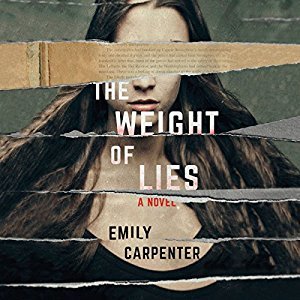 In this gripping, atmospheric family drama, a young woman investigates the forty-year-old murder that inspired her mother’s bestselling novel, and uncovers devastating truths—and dangerous lies.
Reformed party girl Meg Ashley leads a life of privilege, thanks to a bestselling horror novel her mother wrote decades ago. But Meg knows that the glow of their very public life hides a darker reality of lies, manipulation, and the heartbreak of her own solitary childhood. Desperate to break free of her mother, Meg accepts a proposal to write a scandalous, tell-all memoir.
Digging into the past—and her mother’s cult classic—draws Meg to Bonny Island, Georgia, and an unusual woman said to be the inspiration for the book. At first island life seems idyllic, but as Meg starts to ask tough questions, disturbing revelations come to light…including some about her mother.
Soon Meg’s search leads her to question the facts of a decades-old murder. She’s warned to leave it alone, but as the lies pile up, Meg knows she’s getting close to finding a murderer. When her own life is threatened, Meg realizes the darkness found in her mother’s book is nothing compared to the chilling truth that lurks off the page.
My thoughts:
I enjoyed listening to this story on Audible. The cover and premise intrigued me and I like the idea of a woman writing a tell-all of her famous author mother and the dark secrets she holds. Meg soon finds out not everything is what it seems and there is a crazy twist to the story-line at the end. I thought it was great!
I also like the idea of the story taking place on a privately-owned island off the Georgia Coast. Lots of good description of island life. All the characters were great and had their own unique personality. That is very important in storytelling.
Meg’s investigation of a murder that took place on the island long ago was fascinating to read about and made the story chilling and tragic. I’ve rated this story four stars.
Stephanie M. Hopkins
Lady Jolene’s antagonists and how she deals with them.
As the oldest child and senior daughter to The Right Honorable, The Earl and Countess of Hampshire, Lady Jolene Markson is supposed to be able to hold her emotions in check. Nothing should upset or worry her.
Well, that’s not entirely true. There are several people and groups which annoy her to no end. Her antagonists.
At the top of this list is the Metropolitan Police Service, the Met.
As with her parents who had to deal with Bow Street and their runners, Jolene finds the Met to be useless for the most part. Frequently she points out they will find a suspect, guilty or not, and claim they have the criminal. More often than not this person hires her to prove their innocence, which she does with great regularity.
When presented with a case Lady Jolene does her best to make sure they, the Met, learn nothing of what she has found. It’s not that she wishes to make them look bad, they can do that without her assistance.
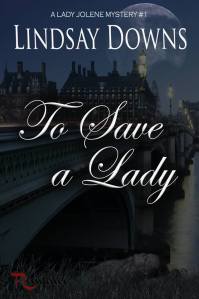 In the case set forth in To Save a Lady she easily proves to the investigating officer, Thomas Spencer, there was no way his prime suspect, Miss Julia Patrick, could have murdered the young man. He then offers his, without his superiors’ knowledge, assistance in bringing the criminal(s) to justice.
At first Lady Jolene had her reservations about allowing Spencer to partake. Her thoughts change when she notices an affection developing between him and Julia. Eventually Jolene comes to trust him but makes it very clear Spencer is the exception as she will still work to embarrass the Met.
It goes without saying, but I will anyways, her younger brothers and sisters do tend to antagonize her. With them, depending on what they do she usually doesn’t tell on them but deals with the troublesome one on her own.
Without a doubt, though, Lady Jolene’s worst antagonist is none other than The Most Honorable, The Marquis of Lange aka. Brendon.
They had first met years ago and for the most part grew up together. The reason, his parents and her godparents are His and Her Grace, The Duke and Duchess of Clarion.
For Lady Jolene his most annoying trait, sticking his nose into things that aren’t any of his business. He tries to steer her away from possible danger and she constantly resists. Even though they tend to be at each other’s throats at times it is in reality more of a love-hate-love relationship.
She does have one way, and it’s priceless, of keeping him in line. Her collie, Samson. More often than not the dog achieves the desired purpose. Annoy Brendon by his presence.
Well, my good ladies and gentlemen those are the primary antagonists in Lady Jolene’s life. Yes, Stephanie asked for five of them and I presented three. Well, actually more if you were to count her siblings, the officers at The Met along with Brendon and the years of antagonism between him and Jolene.
If I was a nice guy, of course then I wouldn’t be driving my readers crazy with red herrings and cliffhangers I would tell you a secret. Then again, if I did that then it would be a secret. You’ll have to buy To Save a Lady.
Buy Links-
About me-

I’ve been an avid reader ever since I was old enough to hold a red leather bound first edition copy of Sir Walter Scott’s The Lady of the Lake in my lap.
So, it only seemed natural at some point in my life I take up pen and paper to start writing. Over time my skills slightly improved which I attribute to my English teachers.
My breakthrough came about in the mid 1970’s when I read a historical romance written by Sergeanne Golon, Angelique. This French husband and wife team opened my eyes to the real world of fiction. Stories about romance, beautiful damsels, handsome heroes and plots which kept me hooked. Of course, being a man, I had to keep my reading hidden from others as that wasn’t appropriate reading for men.
With this new-found appreciation of the written word I took up other books and devoured them as a starving person would a plate of food. I them attempted to write again. I still wasn’t satisfied so I put it aside for years as other events entered my life.
Finally, in the early years of the new millennium I tried again to write and once again met with limited success. At least now I was able to get past the first page or two. Then, in 2006 a life changing event brought me back to my love, I took a job as a security officer. This allowed me plenty of time to read different genres.
My favourite was regency. As I poured through everyone I could get my hands on I knew this could be something I wanted to attempt.
Since 2012 when my debut regency romantic suspense released I was hooked and have, except for a few contemporaries, focused on this genre.
Since 2012 I’ve lived in central Texas. I’m also a member of Romance Writers of America and the Austin, TX chapter.
Where you can find me-
Twitter- @ldowns2966
Margaret Beaufort – The Beaufort Chronicles Books 1 – 3
Hi Stephanie, I am so happy to be part of your new series of blogs; thank you so much for including me.
As you know the characters in my books are historical figures from English history, mostly of the late medieval and Tudor period. They have all been written of before, many, many times but I enjoy adding my own version to the traditional view. Although I wouldn’t call myself a revisionist, I do like to find a different perspective. Instead of recording what they did, I like to consider why they did it. This is often difficult to judge from the outside; I like to hone in on the inner self and reveal the part of us that we often prefer to keep hidden from the world.
By far my most challenging protagonist so far has been Margaret Beaufort. Margaret appears in many novels set around the Wars of the Roses and is usually depicted as a negative character, a schemer and plotter. She has even been cast as a potential murderer of the missing princes in the Tower although my research has thrown up nothing to suggest that was so. My novels that comprise The Beaufort Chronicles illustrate the events of the Wars of the Roses through Margaret’s eyes, and trace the changes in her character as she grows from a child of eight to a woman of mature years, the mother and grandmother of kings and queens.
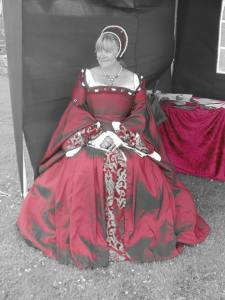
Before I began writing I had to consider why Margaret has been depicted so negatively and this research brought me to her portraits. The only surviving representations of Margaret were taken in later life, after her son won his crown. She presents a pious pose, in the attitude of prayer, or clutching a book, the symbol of great learning. I think this dour image may explain why she has not been the heroine of many novels but Margaret clearly wasn’t born old. Even old women have known youth and love. She was once young, records indicate she possessed a sense of humour, favoured red gowns, and had a great love of finery both in clothing and furnishings. Margaret’s resilience is astonishing. She puts me in mind of a beetle that can’t be crushed. Her journey from the child bride of Edmund Tudor to whom she bore a son at the age of thirteen, to the mother of the first Tudor king is really quite incredible.
At the beginning of the wars between Lancaster and York, Margaret and Henry were relatively insignificant members of the House of Lancaster. After Henry VI’s demise and the death of the Prince of Wales, Edward of Lancaster, Margaret and Henry were suddenly thrown into the spotlight. While Henry was exiled, Margaret began to fight her son’s battles – and she fought ceaselessly to that end for the rest of her life.
Under the reign of Edward IV she petitioned the king for her exiled son’s properties and titles to be restored. She was on the brink of obtaining this when Edward died suddenly in 1483 and England was cast once again into chaos. Margaret was at the centre of activities during Richard III’s acquisition of the crown, she served him loyally at first but at some point midway during his reign, she changed tack and began to plot with Elizabeth Woodville. Together they raised money and support for an army to bring Henry Tudor home. But, on the eve of the Battle of Bosworth Margaret had no idea what the outcome would be. Under house arrest she could only pray, her nerves in tatters as she waited to discover if her actions had resulted in triumph for the Tudors or in the death of her only son.
Most women, especially on the winning side, would be applauded for these actions, hailed as a heroine but Margaret is always seen rather differently. She has become the archetypal interfering mother in law, the cold hearted pious busy body, a critic of the etiquette of the royal court. To some extent these things are true but there was also another side. She was loyal, forgiving, careful of the welfare of her household, and a great benefactress of churches and colleges throughout the realm. I felt it appropriate that she be given the opportunity to present her own version of events.
Margaret prays a lot – most people did in the middle ages. She meditates. She likes to garden and is interested in healing, her still room is well supplied with remedies. She passed this habit on to her grandson, Henry VIII, who was terrified of contagion, and also liked to dose his household when they fell ill.
Margaret possessed a dry humour and I have embellished this in my books. She has a wicked wit, and when she chooses, she can make the most biting of replies. During her years of struggle she is often a victim but she plays the long game. She serves Elizabeth Woodville faithfully, gains her friendship, visits her in sanctuary and comes to know the royal children, including her future daughter in law, Elizabeth of York and the younger of the princes, Richard of Shrewsbury. After becoming involved in Buckingham’s rebellion her life was in King Richard’s hands but he chose leniency and placed her under house arrest, in the custody of her husband, Thomas Stanley. But she didn’t give up. Margaret had absolute faith that God was on her side. When the time came for her to move against Richard III, she financed Henry, risking both her security and position. Without doubt, Margaret Beaufort is the most heroic women I have ever written about.
Her insecure environment sometimes makes her prickly, defensive and seemingly proud. In public she adopts a confidence that she doesn’t really feel. Each decision she makes, she makes blindly – the reader and I are privileged by hindsight and know she will triumph but when I am writing, I have to remember Margaret was on a knife edge, in dangerous times and her life was often in peril. Throughout The Beaufort Chronicles Margaret is isolated, in conflict with the world but she is possessed of such courage and strength that she achieves all her desires. On reaching her goal however, she discovers that fate isn’t done with her just yet.
Because I write in the first person, I am in a sense, stepping into Margaret’s shoes and moving through the events of the Wars of the Roses. When I am writing I become Margaret. I don’t always stick to the traditional motivations because I am writing from the inside. Her relationships are varied. Her devotion to her son, from whom she is exiled for fourteen years until the day after Bosworth, is unswerving. Although she serves Edward IV’s queen her loyalty to Lancaster does not change but self-preservation is her only way forward. Records indicate that she and Elizabeth Woodville worked together in Henry’s cause and I have developed the relationship into a cautious friendship. She wants to trust Elizabeth but she is wary, never sure. Margaret finds it difficult to trust anyone which is not surprising when you consider her experience.
After Henry finally made good his promise to marry Elizabeth of York, Margaret’s relationship with her daughter in law develops over time into friendship and admiration. This may not have been the case had Elizabeth not been so compliant for there is no doubt that Margaret liked to be in charge. She ordered how Henry’s court should be run, how the apartments should be furnished, how the children should be raised – and Elizabeth seems not to have minded too much, although there are a few instances when she rebelled, or stood her ground.
In my books it is Margaret’s innermost thoughts and opinions that flesh her character. For instance when she encounters someone or something she shares her private opinion with the reader, criticizes manners, the style of dress, assesses each man’s loyalty to her son, their possible usefulness in her quest. In these books Margaret’s opinions are the only ones that are relevant because she is telling her own story. This way, Margaret’s experiences (hopefully) become the reader’s and her joys, happiness, fears and grief are immediate.
Her relationship with her four husbands took some consideration on my part. Margaret was first married as an infant to John de la Pole, the seven year old son of the Earl of Suffolk. After the Earl’s disgrace, the marriage was annulled and she was married instead to Henry VI’s half-brother Edmund Tudor, Earl of Richmond who was in his mid-twenties. Her second marriage took place when she was just twelve or thirteen years old. Usually the marriage would not have been consummated but Edmund could not take possession of her lands until she bore a son. I could have taken the route of an unhappy forced union but there are no records of Margaret ever showing resentment toward Edmund; she spoke gently of him and in her will she asked to be interred with him at Grey Friars in Carmarthen but the request was ignored. Had she born him any ill will I don’t think she would have asked to be laid with him. I chose to develop the relationship. Edmund is her protector, her husband, the father figure she lacked, and Margaret forms a sort of teenage crush for a man her senior by around thirteen years. Some authors have chosen to demonize Edmund Tudor and turn him into a child abuser but it was the fifteenth century – a different world, we shouldn’t judge by modern day standards.
Her third husband, Henry Stafford, was her own choice. Not a love match but chosen for protection and to prevent her being married off politically for a second time. Although her son, Henry, remained in the custody of his uncle, Jasper Tudor, she and Stafford visited him several times in Wales and sent regular letters and gifts. Stafford died from wounds sustained at the Battle of Barnet where he fought for York. Their marriage seems to have been content, with a slight breach when he declined to fight for Lancaster but supported Edward IV. During this period I allowed Margaret to become stronger, more headstrong and determined to be accepted at the Yorkist court so she could win back her son’s lands.
Stafford’s death after the Battle of Barnet left her vulnerable and, once more at the mercy of fortune hunters, she made the tactical choice of allying herself with Thomas Stanley, a powerful baron, high in the king’s favour. This opened the way for Margaret at court and all that came after. There is very little about her relationship with Stanley but it seems they were tolerant of each other. They lived apart for much of the time but visited and remained on good terms. I had some fun with this relationship. Margaret took control of my pen and showed a Thomas who was a bit of a likeable fool with an abrasive manner and little patient with the niceties of court. He reveals to Margaret a sensuous side of her nature she had previously ignored, a complexity that she wrestles to come to terms with. At the time of their marriage they needed each other, once Henry became king and Margaret was no longer in need of Stanley’s influence or protection, their relationship settles into one of irritated tolerance.
Each step Margaret takes along the path to her destiny is littered with difficulties. Even after her son has won his crown and she has the highest position at his court, she is still beset with doubt. She and Henry find it hard to trust – little wonder at the mire of treason and betrayal they have negotiated. Henry Tudor’s reign, particularly the early part, is beset with uprisings, pretenders to his throne, traitors in his court. Neither he nor his mother can rest easy. Every curtain conceals a dagger, and every closed door hides another plot against them.
At one point Henry finds some consolation. He has three sons to follow him and he has just secured the longed for alliance with Spain by marrying his heir to the Infanta, Catherine of Aragon. The Tudor dynasty is at last secure, their bloodline stretching endlessly ahead. But, one by one, the children begin to die.
Child mortality was commonplace in the middle ages but devastating nonetheless. Having already lost a daughter, Elizabeth, in 1495, tragedy struck again. First, sixteen month old baby Edmund died in 1500. The royal couple would scarcely have recovered when their pride and joy, the royal heir, Prince Arthur of Wales died at Ludlow in 1502. Henry and Elizabeth with just one son to follow them, immediately began to try for another. A daughter was born to Elizabeth in 1503 but tragically Elizabeth herself did not survive. She was taken ill a few days later and died suddenly, her newborn daughter followed soon after. Henry Tudor was left with just one son, his heir who was later crowned King Henry VIII.
The king died in 1509. Seemingly, at the age of sixty-six, Margaret’s reason for living had ended and she survived him by just two months.
About Judith:
Judith lives on the coast of Wales in the UK with her husband John. She studied creative writing and Literature at university and went on to study for a master’s degree in medieval studies. She now combines those skills to craft historical novels, short stories and essays.
Judith Arnopp website

 Layered Pages