Art in Motion: Knowledge

No thief, however skillful, can rob one of knowledge, and that is why knowledge is the best and safest treasure to acquire. ― L. Frank Baum

Interview with Author W.S. Winslow

What a pleasure it is to be chatting with Author W.S. Winslow about her new book, The Northern Reach. Winslow is a ninth generation Mainer, descended from both Pilgrims and Puritans with odd French fur trapper thrown in, a blood and guts background if there ever there was one.

Though she was born and brought up in Maine, she spent her adult life mostly in New York, where her husband and her raised their daughters. They also lived in San Francisco for five years before returning to Maine in 2019 to settle in a small town Downeast, where it is very, very quiet.

Winslow’s MFA is from NYU, and she also has an undergraduate and graduate degrees in French from the University of Maine. The Northern Reach is her first novel.

Thank you for talking with me today about your book, W.S. Please tell me a little bit about how you came to write about these characters and the time period you chose. What is the most surprising thing you discovered while writing your story?

Thanks so much for having me!

I came to these characters from an interest in the intersection of people with place and culture, especially as these things have existed, evolved and still persist in my home state of Maine. This project was partly sparked by genealogical research – my family’s origins go back to the earliest settlers in both Plymouth and Salem. When I got into the historical records, I was struck by the unmistakable similarities between my ancestors who lived 350 years ago and some of my family members today. I was also intrigued by the cultural legacy of Puritanism in a remote and demanding place like Maine.

The book has its origins in stories about my own family and the families of my friends who are from here. I’ve been lucky to know many great raconteurs over the years, and I wanted to share those stories, or fictionalized versions of them anyway. I also wanted to write about this place over a long sweep of time, from the dawn of the 20th Century to the beginning of the 21st, but I didn’t want to write a historical novel per se. What I was interested in was telling the story of a place and its people in episodes, in much the same way a patchwork quilt is stitched together.

This is my first book, so I started with no expectations. What surprised me was the way that characters would just suddenly say or do something, completely unbidden and with no warning. I think it was because at a certain point these fictional people became so real in my mind that they set up housekeeping there and just kind of got on with their lives. Even though I’d heard authors talk about that I never expected to experience it.

You certainly have quite the cast of characters! With each of their circumstances, it must have been rather dark at times to write. Is there anything in particular that helped you set the characters’ tone?

There is darkness in the book, to be sure. Maine is isolated and cold, with a short summer and a long, dark winter. It’s always been a hard place to live and consistently ranks among the poorest states in the union. Weirdly, we also have an unusually large number of wealthy people, mostly in summer, which creates a wide gulf between the haves and the have nots. This is the reality, and it’s rough for a lot of people. Looking away doesn’t help, so I leaned in.

That said, I wanted to find the humor in these stories, because Mainers can be really funny in a dry, dark way. There’s a tendency to dismiss the painful and the difficult with humor. It’s a reflexive thing, a way of keeping darkness and pain at arm’s length. Sometimes it works.

As for the book’s tone, language is everything for me. I love accents and foreign languages, but what really tickles me is the way Maine people speak, the intonation, the rhythm, the words, the austerity and understatement. I tried to work as much of that into the text as I could, mostly because writing dialogue is one of my favorite things to do. Tonally, the setting was also important, both as a character and as a place, and I hope people see the Maine I know – the cold bay, the low gray sky, the rolling blueberry fields and round topped mountains – in summer and winter.

Can you share a snippet that isn’t in the blurb or excerpt?

“Planting Tiger” comes in the middle of the book. It’s a sort of palate cleanser in that it’s lighter than the other stories, even in its treatment of grief and death. That was my favorite episode to write, because it includes one of the rare first-person narratives in the book, a “talky” passage from Earlene Baines:

I knew we were in for it when Jessie Martin showed up at Tiger’s funeral. It had been at least ten years since I laid eyes on her, but I could see she was still rougher than the back of a ditch. I can’t say I was shocked when she walked into the church, but I never expected to see her at my house. When Jessie came limping up the driveway, with her go-go boots and that mop of red hair, and introduced herself to Tino, the look on his face was priceless. I was watching from the kitchen window. Mill told me not to interfere and I didn’t, not until Vicky started hollering. She’s half Moody after all, and I never met one who didn’t like a good fight once in a while.

How long have you been writing and what advice would you give to writers who want to write a family saga?

I’m a late bloomer in that I didn’t start writing creatively until my fifties, and I’ll be a few months shy of 60 when The Northern Reach is released. So, my first piece of advice is to just do it, no matter how old you are or how many jobs you’ve had. It’s all experience, and experience fuels imagination.

Even though I started writing relatively late in life, I have always held stories in my head, and I’ve always been a reader. What I’ve found recently is the more I learn about writing, the choosier I become as a reader. Opening a book is something of a busman’s holiday, and I get a great deal out of well written books – because they’re fun to read but also because they’re instructive at the same time.

Anyone who wants to write a family saga would be well advised to start by reading some, and with the most critical eye they can manage. For episodic narratives, Sherwood Anderson’s Winesburg Ohio and Love Medicine by Louise Erdrich are good places to start. For more traditional narratives, I like Pachinko by Min Jin Lee, The Namesake by Jhumpa Lahiri, or Marilynne Robinson’s Gilead books – so many to choose from.

Where can readers buy your book?

It’s available from major booksellers like Bookshop.org, Barnes & Noble  and Amazon  , as well as your favorite local bookstore. My favorite indie is Print in Portland, Maine at  Print A Bookstore.

More Links:

W.S. Winslow’s Website/ Twitter @WSWinslow / W.S. Winslow goodreads page

Layered Pages Book Review

About the Book:

Published March 2nd 2021 by Flatiron Books

A heart-wrenching first novel about the power of place and family ties, the weight of the stories we choose to tell, and the burden of those we hide

Frozen in grief after the loss of her son at sea, Edith Baines stares across the water at a schooner, under full sail yet motionless in the winter wind and surging tide of the Northern Reach. Edith seems to be hallucinating. Or is she? Edith’s boat-watch opens The Northern Reach, set in the coastal town of Wellbridge, Maine, where townspeople squeeze a living from the perilous bay or scrape by on the largesse of the summer folk and whatever they can cobble together, salvage, or grab.

At the center of town life is the Baines family, land-rich, cash-poor descendants of town founders, along with the ne’er-do-well Moody clan, the Martins of Skunk Pond, and the dirt farming, bootlegging Edgecombs. Over the course of the twentieth century, the families intersect, interact, and intermarry, grappling with secrets and prejudices that span generations, opening new wounds and reckoning with old ghosts.

W. S. Winslow’s The Northern Reach is a breathtaking debut about the complexity of family, the cultural legacy of place, and the people and experiences that shape us.

Book Review: A Conventicle of Magpies by L.M.R. by LMR Clarke

(The Bloodskill Duology Book 1)

BooksGoSocial

Sci Fi & Fantasy

Pub Date 06 Jan 2021  

About the Book:

Rook is an unapologetic thief, determined to do anything to ensure her mother and siblings survive the squalid and dangerous streets of Stamchester.

Rook slips, like a shadow, in and out of the homes of the ruling elite, the Avanish, and steals what she needs. She feels no regret, afterall, the Avanish have enslaved her people, the Saosuíasei, and worse, have now determined the Saosuíasei to be disposable and worthy of nothing other than death. 

However, Rook is not the only shadowy figure in Stamchester. And far more deadly one haunts the filthy streets, striking fear into Avanish and Saosuíasei alike. A serial killer who drains every ounce of blood from his victims, and satisfies the elite’s demand for blood to burn in the magical art of Bloodskill and enhance their own natural, and sometimes unnatural, abilities. 

How can Rook outfox the serial killer and raise her people from the ashes left by the Avanish oppression? 

My Thoughts:

Conventicle girls never surrender.” – Rook

I stepped out of my comfort zone picking up this story and glad I did! I recommend starting with the prologue. You get a clear understanding of just how despicable the people in power AKA the rich are to people who are different from them. The prologue is written as letters between Governor Dredchain and Viscount Trass. They viewed these people as animals that needed to be dealt with swiftly. As you read on, you soon discover their plans are much more sinister and you become further absorbed in the story.

I really enjoyed getting to know a few of the characters and their quirky names. For example: Rook, Pit, Crake, Billy Drainer, and Pigeon- to name a few. That said, there are too many characters introduced and not enough information about them to form any lasting connection or impression, me thinks. Which is important, especially, in a story like this one. Though I felt like I began to know Rook pretty good seeing she is a protagonist.

There is also too many things going on in the story that I felt pushed and pulled -a bit- in different directions. Nonetheless, I kept ready on because the premise itself was so fascinating and the writing engaging! A few interesting aspects include the Victorian setting, conflicts between the characters and the bloodskill.

Fans of Neil Gailman and Suzanne Collins will enjoy this story. Not only that, Clarke gives a bird’s eye view of discrimination and the people who stand up to adversity. I look forward to reading the next book in this series!  

Stephanie Hopkins

I obtained a copy from the Publishers through NetGalley for an honest review.

Book Review: Sunflower Sisters (Lilac Girls #3) by Martha Hall Kelly

Random House Publishing Group

Ballantine Books

Historical Fiction

Pub Date 30 Mar 2021

About the Book:

Lilac Girls, the 1.7-million-copy bestselling novel by Martha Hall Kelly, introduced readers to Caroline Ferriday, an American philanthropist who helped young girls released from Ravensbruck concentration camp. Now, in Sunflower Sisters, Kelly tells the story of her ancestor Georgeanna Woolsey, a Union nurse who joins the war effort during the Civil War, and how her calling leads her to cross paths with Jemma, a young enslaved girl who is sold off and conscripted into the army, and Ann-May Wilson, a southern plantation mistress whose husband enlists.

Georgeanne “Georgey” Woolsey isn’t meant for the world of lavish parties and demure attitudes of women of her stature. So, when the war ignites the nation, Georgey follows her passion for nursing during a time when doctors considered women a bother on the battlefront. In proving them wrong, she and her sister Eliza venture from New York to Washington, D.C., to Gettysburg and witness the unparalleled horrors of slavery as they become involved in the war effort.

In the South, Jemma is enslaved on the Peeler Plantation in Maryland, where she lives with her mother and father. Her sister, Patience, is enslaved on the plantation next door and both live in fear of LeBaron, an abusive overseer who tracks their every move. When Jemma is sold by the cruel plantation mistress Anne-May at the same time the Union army comes through, she sees a chance to finally escape–but only by abandoning the family she loves.

Anne-May is left behind to run Peeler Planation when her husband joins the Union Army and her cherished brother enlists with the Confederates. In charge of the household, she uses the opportunity to follow her own ambitions and is drawn into a secret Southern network of spies, finally exposing herself to the fate she deserves.

My Thoughts:

When I began to read this story, I must confess my feelings were not completely favorable. I’ve read and studied the American Civil War for quite some years and was looking for something I haven’t read before. As the story unfolded, I became less frustrated and was intrigued with how the author portray the character’s personalities. Needless to say, she doesn’t hold back.

Kelly marvelously shows us multi-dimensional people of the time. Which is important to have a better sense of mindsets and not told just in the perspective of the people who oppose them. Yes, it can be a slippery slope in today’s social norms but it is extremely counterproductive when people’s voices-all around-are silenced. 

I was quite impressed with the realistic imagery of the Civil War background and the author’s portrayal of the evils of slavery. Heart-wrenching to say the least…

As the war continued, just about every household lost someone they loved. Death became commonplace and with Sunflower Sisters, you experience that fact, vividly.

The Civil War topic still holds to this day with powerful and emotional attitudes. There was a particular scene in the story where I felt the author was bringing up a subject that many don’t speak of openly. Powerful business men in the north of that time profited from slavery. Yes, they surely did as the sun rises. Still applies today, really. Slavery is the oldest institution in the world. The author also portrays quite a few prejudices by people in the north had towards people of color.

There was a couple themes in the story that reminded me of what C.S. Harris wrote in an interview I had with her a few years back. To turn the Civil War into a morality play in which one side equals good and the other evil serves only to distort history and perpetuate the dangerous divisions that still exist in our country over 150 years later.

Bravo, Martha Hall Kelly! You have written a story that provokes discussion and clarity on this sensitive subject. You give new meaning to the good, bad and ugly. Memorable characters and an unforgettable story that needed to be told.

Stephanie Hopkins

I obtained a copy from the Publishers through NetGalley for an honest review.

Book Review: The Northern Reach by W.S. Winslow

Published March 2nd 2021 by Flatiron Books

A heart-wrenching first novel about the power of place and family ties, the weight of the stories we choose to tell, and the burden of those we hide.

Frozen in grief after the loss of her son at sea, Edith Baines stares across the water at a schooner, under full sail yet motionless in the winter wind and surging tide of the Northern Reach. Edith seems to be hallucinating. Or is she? Edith’s boat-watch opens The Northern Reach, set in the coastal town of Wellbridge, Maine, where townspeople squeeze a living from the perilous bay or scrape by on the largesse of the summer folk and whatever they can cobble together, salvage, or grab.

At the center of town life is the Baines family, land-rich, cash-poor descendants of town founders, along with the ne’er-do-well Moody clan, the Martins of Skunk Pond, and the dirt farming, bootlegging Edgecombs. Over the course of the twentieth century, the families intersect, interact, and intermarry, grappling with secrets and prejudices that span generations, opening new wounds and reckoning with old ghosts.

My Thoughts:

First impressions are not always correct. In the beginning, I must confess the writing style and story structure threw me for a loop. When I started to feel something for a character or the family dynamic, the story moves on to the next and at times I became frustrated. Yes, I was having a rough go of it all. It was time to take a step back and reevaluate the story and purpose of the presentation and I’m glad I did.

One must remember that when reading about generational families or interconnected families-if you will, there will be multi-faceted plots. You will be taken deeply into a historical time-lines. There will be strong elements that can sway you from happy moments to darker times. In short, they evolve. Family bonds are complicated to say the least and the author marvelously portrays this fact. We might not like the characters or we will feel we are not getting enough from them but that is okay. The Northern Reach is an evocative story and will push boundaries you might not have expected to cross.

I did enjoy a quite few of the story-lines and the setting and I was intrigued with the character’s life story and I wanted to read more about them. Will we be reading more about these interesting people? I would like to very much! As the story continued, I began to have a better understanding of the set-up-if you will. There is strong character development and the setting gives you a stark, realistic view of the state of Maine and its’ towns. There is a particular social element in the story that is still considered a hot topic in today’s climate that I would really like to pick the authors brain about!

The author superbly portrays how people can make assumptions about other people and even more so in families. The Northern Reach is not a story of virtuous people, but they are down to the bone’s realistic of human nature and thought. In particular the attitudes of the Baines family and the people who marry into that family. At first, I found Edith Baines to be an intriguing woman, I soon discovered her to be just as flawed-if not more- like the rest of them. She was hardened by her life experiences and loss. Her attitude-I felt-towards her daughter-in-law Lilane was unjust. The women who made the most impression on me were Imelda, Alice, Liliane and Suzanne. I would like to read more about them.

An intriguing story wrought in hardships, cultural differences, family dysfunction, legacy and loss.

Stephanie Hopkins

I obtained a copy of this book through the publishers for an honest review.

Interview with W.S. Winslow coming up Friday, March 5th here a Layered Pages!

February: Book Round-Up

February was an absolute great month for reading. I read eleven books this month! My goal is to read 100 books this year or a minimum of one book a week. Who knows? I might surpass that goal. This is encouraging since I originally set my goal to read a book a week but I knew I could read more than that with the fabulous selection of books that are coming out and what novels I have on my shelf at home.

I am also making a point to read books that I would normally not pick up. I highly recommend getting gout of the comfort zone a bit. A whole new world will open up and you will defiantly expand your critical thinking. 

What books did you read this month and what are you looking forward to in March?

This book was out of my comfort zone a bit: A Conventicle of Magpies by L.M.R. Clarke

The Nature of Fragile Things by Susan Meissner

Re-Read: No One’s Home by D.M. Pulley

Sunflower Sisters (Lilac Girls, #3) by Martha Hall Kelly

Re-Read: That Summer by Lauren Willig

Heartbreak Hotel by Jonathan Kellerman

The Gilded Hour (The Waverly Place #1) by Sara Donati

Another book was out of my comfort zone a bit: The Never List by Koethi Zan

The Princess Spy: The True Story of World War II Spy Aline Griffith, Countess of Romanones by Larry Loftis

What a quirky fun read! 84, Charing Cross Road by Helene Hanff

This one took me a while to get through: Finding Dora Maar: An Artist, an Address Book, a Life by Brigitte Benkemoun

January Book Round-Up / Books Aplenty: March Reading Forecast

Image of the Month: Dante Gabriel Rossetti – Proserpine

Dante Gabriel Rossetti-Proserpine (1874) (Image courtesy of Wikimedia)

This month, I re-visited a book called, That Summer by Lauren Willig and quite a few memories of reading her story beforehand and previously studying the Pre-Raphaelite Brotherhood came flooding back. Then it hit me, Rossetti’s Proserpine painting (1874) is among my favorites! I quickly did an on-line search and found the picture with some information. What is extraordinary is that, before the second sleep recommended via email that I might consider featuring a painting from the Pre-Raphaelites, the very weekend I read Willig’s book. Isn’t it funny how things work out sometimes?

Victorians are known for their dramatic romantic notions, take on mortality and among other things…For instance, death was on their mind quite often to say the least. How they died and the afterlife was extremely important to them. Rightly so during the 19th century both in England and America.

Dante Gabriel Rossetti often created his art based on his own experiences in life and love. In this painting, Proserpina is the queen of the underworld and the wife of Pluto. She was abducted by Pluto and her mother Ceres cast a famine on earth until her daughter was returned. The fruit Proserpina holds represents death. Anyone who ate it had to stay in the underworld for the rest of their life. Imagine that! As the story goes, Pluto made an agreement to release Proserpine back to her mother once a year.

Rossetti founded the Pre-Raphaelite Brotherhood in 1848 along with William Holman Hunt and John Everett Millais. A group of English painters, poets and art critics who showed extraordinary talent. They formed the Brotherhood that was inspired by a rejection of the essence of art that the Royal Academy, London was promoting at the time.The members included William Holman Hunt, John Everett Millais, Dante Gabriel Rossetti, William Michael Rossetti, James Collinson, Frederic George Stephens and Thomas Woolner. Am I leaving anyone out?

They are widely known for turning back to lavish detail (such as using props), vibrant color and complex compositions. What really stands out to me are the themes and characters drawn from of literature in history, folklore and Greek mythology. You will also find these artists believed a return to nature was paramount.

Many renown authors such as Dante, Spenser, Shakespeare, Keats and Scott inspired their art. To this day these artist’s paintings are still well-known. Many of you will be familiar with Edward Burne-Jones-The Beguiling of Merlin-which is on the book cover of Possession by A.S. Byatt. The story happens to have set in a dual time-line of 19th and 20th Century. “A novel of wit and romance, at once an intellectual mystery and triumphant love story. It is the tale of a pair of young scholars researching the lives of two Victorian poets. As they uncover their letters, journals, and poems, and track their movements from London to Yorkshire—from spiritualist séances to the fairy-haunted far west of Brittany—what emerges is an extraordinary counterpoint of passions and ideas.” There was also a movie made in 2002 based on this book starring Gwyneth Paltrow, Aaron Eckhart, Jeremy Northam, Jennifer Anne Ehl, Game of Thrones Lena Headey and other notable actors. There is a particular scene where Jennifer Anne Ehl (Christabel Lamotte) is modeling for Lena Headey’s (Blanche Glover) painting and she is in a medieval custom. Very Pre-Raphaelite feel. I highly recommend both book and movie.

One can seriously go down a rabbit hole exploring Classic Literature and Art History. I haven’t even begun to scratch the surface!

See also beforethesecondsleep’s Image of the Month: Edward, the Black Prince

Stephanie Hopkins

The sources come from Wikipedia, Wikimedia (Image: Proserpine painting) the free encyclopedia and my own independent studies. The description of Possession by A.S. Byatt is from goodreads.

Be sure to take a look at January’s Image of the Month: By the Water’s Edge. I include half of a poem I have written.

Books Aplenty: March Reading Forecast

Normally, I do my best not to discuss which books I will or want to strive to read on any particular month because I believe I did that in December and I did not end up reading, The Fabric of Civilization by Virginia Postrel. Which irked me to say the least. That said, I’m thrilled with the selection of titles below and wanted to share them with you. Heck, us book bloggers love talking about books and sharing our excitement of what is to come. The year is still young and the reading forecast has been terrific thus far. I’m confident the pace will keep up.

There are thirty-one days in March, and I am hoping to read 10 books if other projects don’t get in the way. You can find all these titles on goodreads, Amazon and at other booksellers. Lets’ take a look at the covers in this slideshow. -Stephanie Hopkins

Projected March Reads

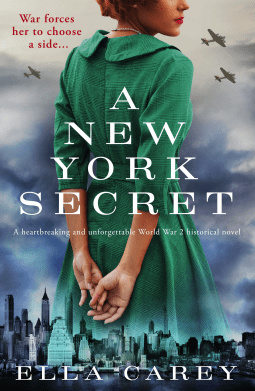
A New York Secret (Daughters of New York Book 1) by Ella Carey

The Turncoat’s Widow by Mally Becker

The Steel Beneath the Silk by Patricia Bracewell

The Fabric of Civilization by Virginia Postrel

The Thin Place by C.D. Major

Finding Napoleon by Margaret Rodenbery

The Abduction of Pretty Penny by Leonard Goldberg

The Bookseller’s Secret by Michelle Gable

The Family Plot by Megan Collins

The Necklace by Matt Witten

Book Review: Heartbreak Hotel (Alex Delaware #32) by Jonathan Kellerman

Published February 14th 2017 by Ballantine Books

About the book:

At nearly one hundred years old, Thalia Mars is a far cry from the patients that child psychologist Alex Delaware normally treats. But the charming, witty woman convinces Alex to meet with her in a suite at the Aventura, a luxury hotel with a checkered history.

What Thalia wants from Alex are answers to unsettling questions—about guilt, patterns of criminal behavior, victim selection. When Alex asks the reason for her morbid fascination, Thalia promises to tell all during their next session. But when he shows up the following morning, he is met with silence: Thalia is dead in her room.

When questions arise about how Thalia perished, Alex and homicide detective Milo Sturgis must peel back the layers of a fascinating but elusive woman’s life and embark on one of the most baffling investigations either of them has ever experienced. For Thalia Mars is a victim like no other, an enigma who harbored nearly a century of secrets and whose life and death draw those around her into a vortex of violence.

Heartbreak Hotel is classic Delaware and classic Kellerman. 

My thoughts:

The subject of human behavior has been the driving force of Alex Delaware series and Kellerman has made a name for himself. Like many others, his interest in psychology brings detective work to the forefront. Criminal Psychologists study the moral compass-or lack of-of the human mind. They strive to understand the motivations, reactions and actions of people who commit various levels of crimes.

Thirty-two books in a series is quite a feat to say the least. I appreciate and respect writers who take on the task of writing such stories. It cannot not be easy and there definitely is an art to the process. This particular genre’s depth is widely known. Some prefer to read about the subject without becoming too uncomfortable. While others want to read stories that delve deeper and darker into people’s behaviors. Kellerman’s stories are among the very few books in this genre that I began with when I was a younger reader.

I rather enjoyed the beginning of Heartbreak Hotel. With the brief yet cryptic conversation about psychopaths between Alex and Thalia that is meant to grab the reader’s attention. That in itself was nicely executed and absorbing. I liked Alex and Milo’s interviews and interactions with witnesses and suspects. Those scenes were entertaining to say the least.

Alex and Milo both likable and they work well together. Almost as they are conjoined. I guess that happens when you work closely with a person long enough. If you’ve read the other books in the series, you will know that Alex has seen far more than his fair share of tragedy that any person could fathom. How he maintains his cool is quite impressive. Alex’s every thought seems to be measured before uttering a word. To anyone. His principled and intellectual mind makes for an intriguing person but I found myself wanting more from him

While Kellerman takes us in-depth into human behavior, I felt the background story of the characters needed to be fleshed out and over half way through the book, I found it difficult to maintain my interest and remain objective. The mystery is captivating but you find the elements of the investigating and characters-in this case- Alex and Milo become all too formulaic. I swear I could almost predict what their next plan of action was going to be and what they would say next.

There was a time-several books back now-where I looked forward to reading an Alex Delaware story. But the main characters have become too comfortable in their roles. Perpetual dilly-dallying comes to mind when I read this book. Heartbreak Hotel is a vague remembrance of what was once a great series, in my opinion. I feel the series has long run its course for me to remain a fan.

Don’t allow my experience with this story sway you. Heartbreak Hotel is a good story for readers who want to stay safely in their comfort zone. No wrong in that. If you’ve never read the any of the books in the series, might I suggest you start with his earlier books?

I obtained a copy from the Publishers through NetGalley for an honest review.

Stephanie Hopkins

Book Spotlight: The Family Plot by Megan Collins

A secluded island mansion deep in the woods and a missing teen. Years after a death in the family, they make a gruesome discovery. I would say this family has been through it and then some!

Mystery/thriller stories are among my favorite genres to read! With the right elements, or pieces like a puzzle, you watch the mystery unfold and develop to the very end. Or would it be, develop and then unfold? Either way, along with other fellow readers and bloggers, I’m excited about this book coming out! Thank you, Atria Books for a copy.

Now it’s time to go grab that second cup of coffee. It is going to be a reading marathon the next two days! What are your bookish plans this weekend? Happy reading! -Stephanie Hopkins

The Family Plot by Megan Collins

Atria Books

Mystery & Thrillers

Pub Date 17 Aug 2021  

Description

When a family obsessed with true crime gathers to bury their patriarch, horrifying secrets are exposed upon the discovery of another body in his grave in this chilling novel from the author of Behind the Red Door and The Winter Sister.

At twenty-six, Dahlia Lighthouse remains haunted by her upbringing. Raised in a secluded island mansion deep in the woods and kept isolated by her true crime-obsessed parents, she has been unable to move beyond the disappearance of her twin brother, Andy, when they were sixteen.

After several years away and following her father’s death, Dahlia returns to the house where the family soon makes a gruesome discovery: buried in their father’s plot is another body—Andy’s, his skull split open with an ax.

Dahlia is quick to blame Andy’s murder on the serial killer who terrorized the island for decades, while the rest of the Lighthouses react to the revelation in unsettling ways. Her brother, Charlie, pours his energy into creating a family memorial museum, highlighting their research into the lives of famous murder victims; her sister, Tate, forges ahead with her popular dioramas portraying crime scenes; and their mother affects a cheerfully domestic facade, becoming unrecognizable as the woman who performed murder reenactments for her children. As Dahlia grapples with her own grief and horror, she realizes that her eccentric family, and the mansion itself, may hold the answers to what happened to her twin.