Jeannie Ruesch’s Facebook Launch Party for Cloaked in Danger

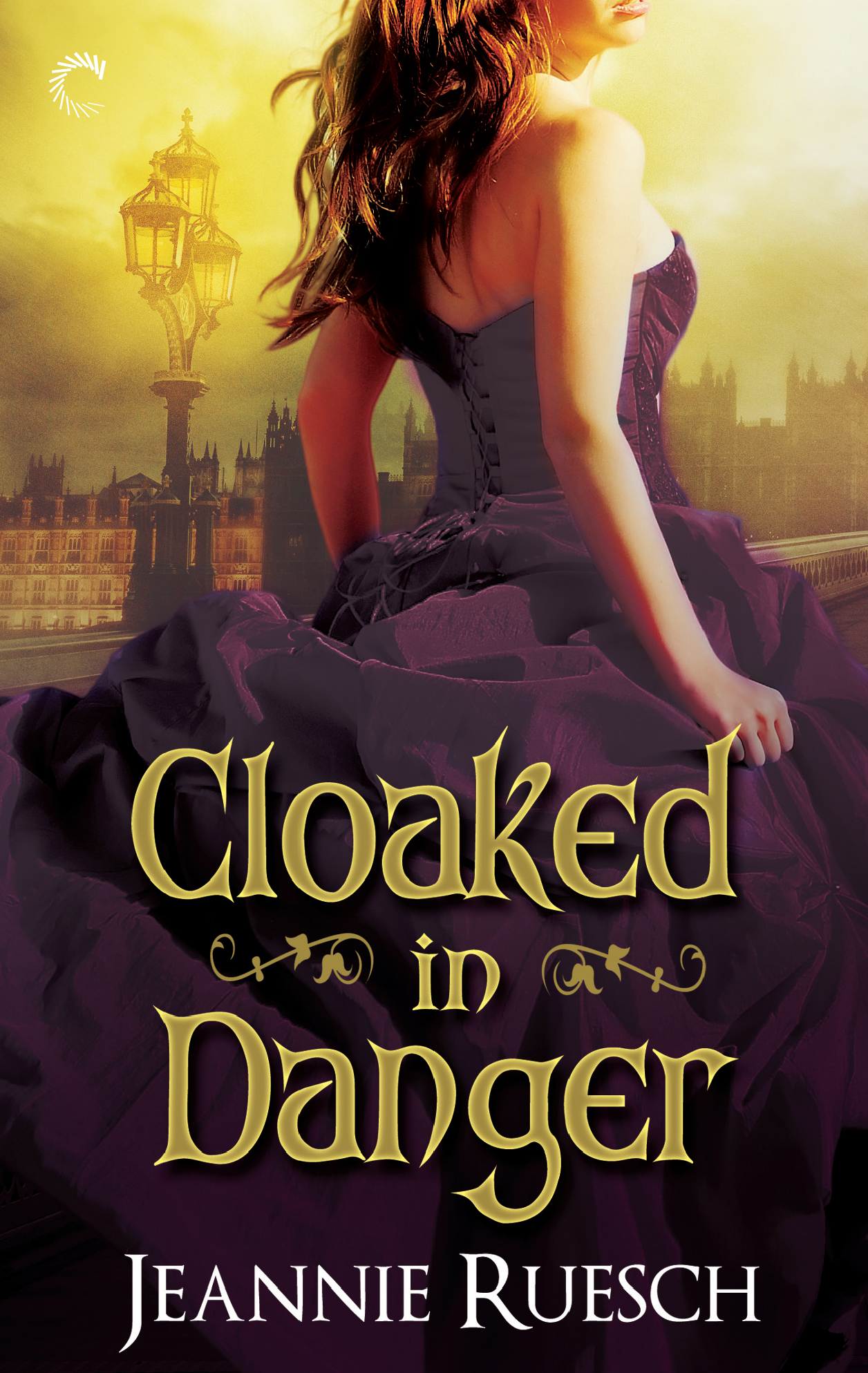
Cloaked in Danger book cover

What: Jeannie Ruesch’s Facebook Launch Party for Cloaked in Danger

When:
Monday, January 27.  3:00 – 7:00pm PST
About Cloaked in Danger
Publication Date: January 27, 2014 Carina Press eBook ASIN: B00F93X7ZI

Aria Whitney has little in common with the delicate ladies of London  society. Her famous father made his fortune hunting archaeological  treasures, and her rustic upbringing has left her ill prepared for a  life of parties and frippery. But when Gideon Whitney goes missing in  Egypt, Aria must embrace the unknown. Armed with only the short list of  highborn men who’d backed her father’s venture, she poses as a woman  looking for a husband. She doesn’t intend to find one.

Adam Willoughby, Earl of Merewood, finds London’s strangest new  debutante fascinating, but when he catches her investigating his  family’s secrets, he threatens to ruin her reputation. He doesn’t intend to enjoy it so much.

When their lustful indiscretion is discovered, Adam finds that he  regrets nothing. But now, as Aria’s father’s enemy draws near, Adam must convince his betrothed that she can trust him with her own  secrets…before it’s too late.

About Jeannie Ruesch

Jeannie Ruesch wrote her first story at the age of the six, prompting her to give up an illustrious, hours-long ambition of becoming a Dallas Cowboy Cheerleader and declare that writing was her destiny. That journey to  destiny took a few detours along the way, including a career in  marketing and design.

Her first novel, a fairy-tale like historical romance, was published  in 2009, but the darker side of life had always captivated her. So after a dinner conversation with friends about the best way to hide a dead body, she  knew she had to find a way to incorporate suspense into her writing.  (The legal outlet for her fascination.) Today, she continues writing what she loves to read – stories of history, romance and suspense. She lives in  Northern California with her husband, their son and an 80 pound lapdog lab named Cooper.

She is also the creator of the WIP Notebook, a writer’s tool to help stay organized while you write, which you can find at her website. You can also follow her on Facebook, Twitter, Goodreads and Pinterest.

Cloaked in Danger LBP Banner

Interview with Author Stuart S. Laing

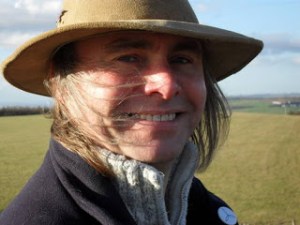
Stuart Laing

Born in 1966 and raised on the east coast of Scotland in the ancient Pictish Kingdom of Fife. Stuart has been married to the love of his life for 20 years and they have blessed with a daughter. Completing the household is a cat which is also female leaving him heavily outnumbered. He has always been fascinated by the history of Edinburgh and has spends most of his adult life studying Scottish history in all its aspects but always find himself being drawn back to the cobbled streets of the Old Town. He would urge all visitors to Scotland’s ancient capital to (briefly) venture into one of the narrow closes running down from the Royal Mile to get a flavour of how alive with mischief, mayhem, love and laughter these streets once were.

Stephanie: Thank you for chatting with me today, Stuart. It is always a pleasure. You have written so many wonderful stories. Today I want to talk with you about, The Children in the Shadows. Great title by the way. Tell me a little about your story.

Stuart: While Robert and his friends and family attend an engagement party the murder of a young girl casts a grim pall over the evening. Everyone seems convinced that the woman who carried the body into the town Guardhouse is guilty and no investigation is necessary. Robert is pressed to do what he can to help the woman and by doing so he opens up a can of worms that certain people in high office want closed for their own reasons.

The story also allowed me to shine more of a light on the female characters who come to the fore in this. I have always sought to allow them to be as strong and outspoken as they wanted to be and in TCiTS they seize the opportunity with both fair hands.

Alice Galbraith especially truly came into her own when she decides she is going to solve the crime. While this decision places her in great danger as she is kidnapped by the murderer she is not the type of girl who is prepared to set back and wait to be rescued.

Faith also plays a strong part in the book. It serves both as comfort at times of sorrow and inspiration to stay the course and bring the guilty to justice.

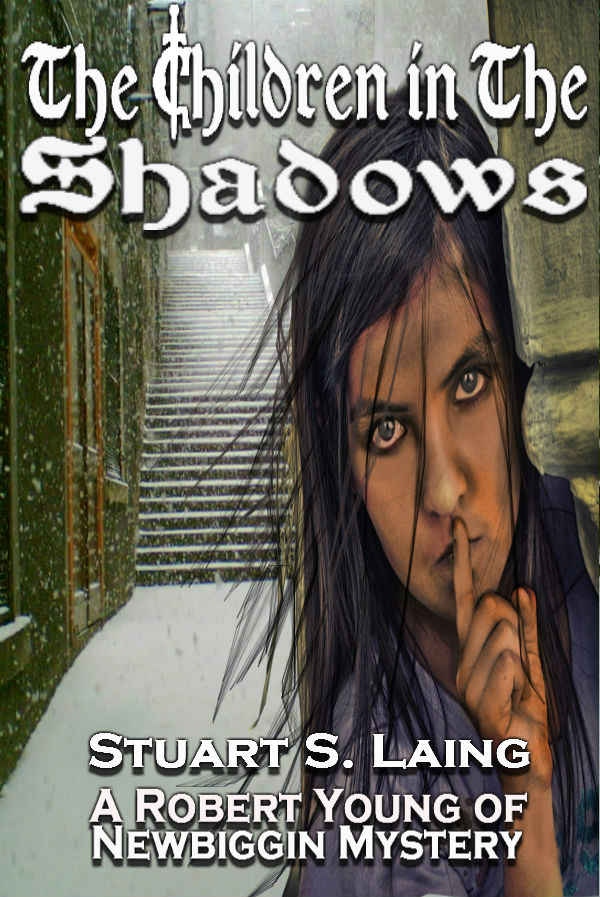
Stuarts book cover

Stephanie: What was your inspiration?

Stuart: There has been much said in the British media over recent years regarding ‘people trafficking’ and ‘economic migrants’ from Eastern Europe coming to our shores in search of a better life as though this was something new. Throughout the 18th Century people from the Scottish Highlands had been trickling southwards to find hopefully a better life in the cities of the central Lowlands. Glasgow and Edinburgh had probably hundreds of Gaels struggling to eke out a new life for themselves by 1745 alone. I took that fact and mixed it with my fictional creation of a heartless man who lures children from the Highlands with promises of a happy and wealthy future only to put them to work in the worst sort of brothel.

It was the sad fact that such places existed and the fact that the victims were hidden from sight that gave me the title. That and the fact that certain people wanted the children to remain hidden in the shadows so that their own sins would remain unseen.

Stephanie: Tell me a little about Captain Travers.

Stuart: Charles Travers is a young man aged 25. Formerly an officer in the regular army who sold his commission and returned to his hometown where he was able to secure the position of captain in Edinburgh’s Town Guard. He is looked upon as a popular figure but other than Robert has no’one he can call a true friend. His single interest is solving crimes and this has been to the detriment of his social life. He has allowed nothing else to come before that and it was through work that he first met and then became close friends with Robert. Romance has never really figured in his thoughts.

His parents died when he was a child and he had been raised by an elderly relative who passed away while he was in the army so has no family left.

It was while he was attending Kitty’s to make an arrest that he met Miss Estelle Cannonby who he fell in love with at first sight. He is convinced she is his soul mate and the woman he wishes to make his wife.

Stephanie: What is the most dangerous encounter that Robert Young, Captain Travers have had?

Stuart: For Charles it is when he corners the murderer in A Pound of Flesh in the climactic scene when he finds himself unarmed facing a desperate man armed with a pistol. He tries to persuade him to surrender but…

Robert has largely managed to avoid placing his life in real danger, although like Charles he is there when the killer is confronted in ApoF. However his luck runs out dramatically in The Children in The Shadows when he discovers the identity of the man responsible for exploiting children. Rather than wait for Charles and the Town Guard he attempts to capture the man himself trusting in his own skill with a rapier. His skills may not be all that he hoped however!

Stephanie: Out of all the characters you have written about, which one are you most partial to?

Stuart: Arghhh! Does it have to be only one? Obviously I have to say Robert Young himself as the driving force of the stories but I love his wife Euphemia who has to deal with worrying about him when he is investigating a dastardly crime while looking after two young children. I also have a real fondness for Sergeant MacIan of the Town Guard who believes in ‘traditional’ methods of policing while dear Captain Travers prefers a modern, analytical approach to a crime scene. One character who is always an absolute pleasure to write is Alice Galbraith, a high class prostitute who delights in causing mischief for Robert and Captain Travers whenever she speaks to them. She is not a malicious character in any way, more just a saucy minx with a wicked sense of humour. She really came into her own in the most recent book The Children in The Shadows where she revealed herself to be much more than just an amusing supporting character. Even as I wrote her scenes I was cheering her on.

Stephanie: Is there a scene you wrote where you burst out laughing? If so, do tell.

Stuart: There is a short scene in A Pound of Flesh where Captain Travers and Robert visit Kitty’s (a gentleman’s club for games of chance and meeting young ladies of negotiable affections) to arrest a dubious character. He is busily engaging with two ‘ladies’ in a bedroom and while they arrest him the women, naked as the day they were born, applaud their efforts while they cringe with embarrassment. It was just one of those little scenes that is both important as it leads to a break in the investigation and just amusing for the sheer awful embarrassment for the men as they try to arrest the villain while doing their best not to stare at the naked flesh on display.

Stephanie: Where in your home is your favorite place to write? Do you have a favorite coffee or tea by your side when you write?

Stuart: Normally my armchair with my netbook perched on my lap. I like the small size of the netbook compared to a full size laptop when I am writing. Now, coffee or tea? The eternal conundrum! I tend to stick with coffee when writing but a mug, never a cup, of strong tea is always welcome. Just don’t add sugar!

Stephanie: I write at my desk, living room, kitchen and sometimes in my bed early in the morning. When writing, what is your process?

Stuart: I generally work out the full plot from beginning to end before I write the first word, I even work out a chapter by chapter guide of who does what, when and where in advance. However…pretty much as soon as I get past the first chapter things start to move, if not in a completely different direction, then in a way which I had not planned in advance. Generally only the very beginning and the end will remain unchanged. The crime and the criminal will be as I planned but anything else between the first and last page tends to weave its own path. Characters have a bad habit of doing their own thing. When I am actually writing though I prefer to have the TV switched off and have music playing in the background. Mumford and Sons, Marillion and the Scottish band from the 1980’s Big Country all feature fairly regularly on my writing playlist.

Stephanie: Yes, I agree. Characters do tend to do their own thing. I have noticed a lot of writers like having music on while writing. I’m must be strange, because I need complete silence and no distractions. How many books a year on average do you read?

Stuart: A rough estimate would be somewhere in the region of 50-60 full length books a year on average. I generally read at least one novel a week and goodness only knows how many short stories!

Stephanie: That is about the amount I read. Good number of books. What advice would you give to someone who wanted to try their hand at writing?

Stuart: Do it! Work out your basic storyline, plot and main characters and then just write. It doesn’t matter if you miss words or letters or even have gaps in the plot in that first draft, just get your idea down on paper (or on the computer screen these days) Once you have written that first draft then you can go back over it and catch the things you missed first time around. The single most important piece of advice I could possibly give is simply this. Do it! And have fun while you are doing it! Is that two pieces of advice? Do it and have fun!

Stephanie: Agreed!  

What is up next for you?

Stuart: I am nearing completion of the fourth Robert Young tale, so I think it is safe to say he doesn’t die when he confronts the cad in TCiTS. It has the working title of Major Weir’s Dark Legacy and is about an ongoing argument between two elderly booksellers. When one is murdered and the other found standing over the body with a knife in hand Charles is prepared to see things as an open and shut case. His attention is focussed on an upcoming wedding and he doesn’t want any distractions to get in the way of that. Robert, at his wife’s insistence agrees to do what he can for the accused. Meanwhile a sneak thief is plaguing the town, Robert’s adopted daughter Effie has discovered boys and a demon raising lunatic from the past haunts the dark rooms of an empty mansion.

 Stephanie: How exciting!  

Is there a message you would like to give to your readers?

Stuart: I think the only message I would dare try to give to my readers is that no matter how grim things may seem at the moment, there is always a light at the end of the tunnel. With some of my characters that light is provided by their belief in Jesus Christ as their Savior. Others settle for the contents of a bottle! What I hope readers would take from my books is that our troubles, even on the darkest days can be overcome. I would suggest that faith was a better source of hope than a bottle though!

Stephanie: Where can readers buy your book?

Stuart: All three novels are available on Amazon in ebook and paperback. A short story featuring the regular cast is also available for the Kindle.

http://www.amazon.co.uk/Stuart-S.-Laing/e/B007B5H19U/ref=ntt_athr_dp_pel_1


Review: Confessions of Marie Antoinette: A novel by Juliet Grey

Confessions

Publication Date: September 24, 2013
Ballantine Books
Paperback; 464p
ISBN: 0345523903

Review:

Versailles, 1789.

The Confessions of Marie Antoinette is a deeply moving and emotional story, which provides new insights into the period during which the French royal family was held hostage and into the last moments of Marie Antoinette’s life. Juliet Grey’s story emphasizes real historical events and provides perceptive and haunting descriptions of the king and Queen’s demise. The story is told in Marie Antoinette’s point of view and Grey creates a convincing portrait of Marie and her devotion as a wife, mother, queen and the lengths she goes to protect those roles as best as she can. There are vivid and heart wrenching descriptions of the revolution and Grey gives a clear picture of rage and determination of the people.

This novel is third of a brilliant trilogy and I say that because it has been a long time since I have enjoyed a trilogy so much. As the story goes we know that Marie was a spendthrift and her subjects saw a selfish women with lots of food and clothes while others starved. However, from what I came away with in this trilogy, was that if Marie never bought that stuff those businesses would have been even worse off. I believe she truly felt she was helping them.

Writing good historical fiction is an art. Writing a master piece takes undoubted skill and talent that reaches into the very depth of the reader’s soul. Grey has accomplished both and I believe, “Confessions”, has truly changed me and brought to surface an emotion inside of me that has been quiet for some time. I was beyond deeply moved. My perceptive of Marie and the French people of that period is forever changed. Grey writes with a deep feeling of loss, betrayal, love, and devotion. I cannot express enough how I much I enjoyed reading this story. Words cannot achieve that emotion. I HIGHLY recommend to all!

Stephanie M. Hopkins

My interview with Grey is coming up tomorrow on Layered Pages. So please be sure to return! You won’t want to miss what she has to say!

Juliet Grey

Juliet Grey is the author of Becoming Marie Antoinette and Days of Splendor, Days of Sorrow. She has extensively researched European royalty and is a particular devotee of Marie Antoinette, as well as a classically trained professional actress with numerous portrayals of virgins, vixens, and villainesses to her credit. She and her husband divide their time between New York City and southern Vermont.

For more information please visit www.becomingmarie.com.  You can also find Juliet Grey on Facebook.

Link to Tour Schedule: http://hfvirtualbooktours.com/confessionsofmarieantoinettevirtualtour
Twitter Hashtag: #ConfessionsOfMATour

Banner for Confessions

Review: The Prodigal Son by Anna Belfrage

The Prodigal Son

He risks everything for his faith – but will he be able to pay the price? Safely returned from an involuntary stay on a plantation in Virginia, Matthew Graham finds the Scottish Lowlands torn asunder by religious strife. His Restored Majesty, Charles II, requires all his subjects to swear fealty to him and the Church of England, riding roughshod over any opposition. In Ayrshire, people close ranks around their evicted Presbyterian ministers. But disobedience comes at a heavy price and Alex becomes increasingly more nervous as to what her Matthew is risking by his support of the clandestine ministers – foremost amongst them the charismatic Sandy Peden. Privately, Alex considers Sandy an enervating fanatic and all this religious fervour is totally incomprehensible to her. So when Matthew repeatedly sets his faith and ministers before his own safety he puts their marriage under severe strain. The situation is further complicated by the presence of Ian, the son Matthew was cruelly duped into disowning several years ago. Now Matthew wants Ian back and Alex isn’t entirely sure this is a good thing. Things are brought to a head when Matthew places all their lives in the balance to save his dear preacher from the dragoons. How much is Matthew willing to risk? How much will he ultimately lose? The Prodigal Son is the third in Anna Belfrage’s historical time slip series, which includes the titles The Rip in the Veil and Like Chaff in the Wind.


My review:

I really admire Belfrage’s use of voice and language. She makes it so that the characters are well developed and thought provoking. And I admire how her characters interact with each other and does a good job expressing their emotions. Her dialog is also engaging and flows really well.

She gives wonderful details of the domestic life of the time the story is written in and details of what they had to endure in the regards to the government’s (Charles ll of England) unreasonable rule. There were laws or should I say-Charles ll required his subjects to conform to the Church of England- on how they were to worship which as you know made it extremely difficult on the people. And that is putting it mildly.

Mathew Graham has risked much to support and protect his minister, Sandy Peden. And his family has suffered for that. I did not always agree with him and was often times frustrated with the decisions he was making. But having said that, he is one of my favorite characters in this story. I believe Mathew truly loves his family and has adjusted quite well to the fact that his wife-Alex-is from the future. I’m sure he is more tolerate to her ideas and beliefs than what most men during that time would have been.

Sandy Peden is a pious and fanatical minister who I actually enjoyed reading about in this story. He is opinionated- thinks women have their place and feels Mathew should put his wife in that place and has no problem telling him so. It is obvious he does not approve of her one bit. But she certainly matched wit for wit with Sandy. I do admire how Sandy is a survivor and he stands by what he believes and does not give into being told how he is to worship and what organized faith he is lawfully suppose too follow. Very entertaining….he adds a lot to this story.

Alex is a strong woman who is from the future and I believe her knowledge has really helped her and yet sometimes it was a hindrance for her, I think. I do however think she adapted quite well in the 17th century for someone being so forward thinking and modern of course. She does have a stubborn streak to her but so does her husband. I really enjoyed seeing the way they interacted with each other. Their relationship is really dynamic. And I do admire their strong sense of family and values. Alex does something in this story that I truly respect her for. But I cannot tell you! You will just have to read the book to find out!

I really have enjoyed this series so far and I look forward to continuing to read them! The Graham family are definitely among my favorite families to read about! I am giving this story a four and a half star rating and I highly recommend this whole series to people who are looking for a quality written time slip.


Stephanie

Layered Pages


About the Author

anna belfrage


I was raised abroad, on a pungent mix of Latin American culture, English history and Swedish traditions. As a result I’m multilingual and most of my reading is historical – both non-fiction and fiction.

I was always going to be a writer – or a historian, preferably both. Instead I ended up with a degree in Business and Finance, with very little time to spare for my most favorite pursuit. Still, one does as one must, and in between juggling a challenging career I raised my four children on a potent combination of invented stories, historical debates and masses of good food and homemade cakes. They seem to thrive … Nowadays I spend most of my spare time at my writing desk. The children are half grown, the house is at times eerily silent and I slip away into my imaginary world, with my imaginary characters. Every now and then the one and only man in my life pops his head in to ensure I’m still there. I like that – just as I like how he makes me laugh so often I’ll probably live to well over a hundred.

I was always going to be a writer. Now I am – I have achieved my dream.

For more information, please visit Anna Belfrage’s WEBSITE.

Layered Pages latest interview with Anna Befrage : https://layeredpages.com/2013/07/09/1350/

Links to where you can purchase her stories:

http://www.amazon.com/The-Prodigal-Son-Anna-Belfrage/dp/1780885741/ref=sr_1_5?ie=UTF8&qid=1376163215&sr=8-5&keywords=The+Prodigal+Son

http://www.amazon.com/Like-Chaff-Wind-Anna-Belfrage/dp/1780884702/ref=sr_1_1?ie=UTF8&qid=1376163168&sr=8-1&keywords=like+chaff+in+the+wind

http://www.amazon.com/A-Rip-Veil-Anna-Belfrage/dp/1780882424/ref=sr_1_1?ie=UTF8&qid=1376163127&sr=8-1&keywords=A+rip+in+the+veil

Interview with Author Mona Rodriguez

Forty years in a day book cover

Hello Mona! I read Forty Years In A Day and was absolutely intrigued with your story. Could you please tell your audience about your book?

Mona: Thank you, Stephanie, for hosting us today. It’s a pleasure. Our story begins in Italy, 1900. After years of torment and neglect, Victoria and her four small children immigrate to Hell’s Kitchen, New York, to escape her alcoholic, abusive husband. On the day they leave, he tragically dies, but she does not learn of his death for several years—a secret that puts many lives on hold.

Quickly, they realize America’s streets are not paved with gold, and the limits of human faith and stamina are tested time and time again. Poverty, illness, death, kidnapping, and the reign of organized crime are just some of the crosses they bear.

Victoria’s eldest son, Vincenzo, is the sole surviving member of the family and shares a gut-wrenching account of their lives with his daughter during a visit to Ellis Island on his ninetieth birthday. He explains how the lives of he and his siblings have been secretly intertwined with an infamous Irish mob boss and ends his unsettling disclosure with a monumental request that leaves Clare speechless.

The story takes the Montanaro family through several decades, providing the reader an opportunity to stand in the shoes of a past generation and walk in search of their hopes and dreams. It is layered with the struggles and successes of each family member, illuminating the fact that human emotions have been the same throughout generations; the difference is how people are molded and maneuvered by the times and their situations.

Stephanie: Is this story based on anyone you know or who you have come across?

Mona: The characters are based on family members, both deceased and living. I’ve had this particular story churning in my head for many years, sparked by the stories of my family’s past. Forty Years In A Day begins in 1900 and follows the incredible journey of a young mother and her four children as they escape from Italy into the streets of Hell’s Kitchen, New York. That woman was my grandmother. The story ends with a woman who knows the father of her children is living a double life with another, but she loves him so much that she overlooks the arrangement rather than forfeit the man. Those were my parents. In between are the stories that I had heard from family members, intertwined with a twist of fiction and sensationalism to have some fun.


Stephanie:  Were there any challenges you faced while writing this story?

Mona: There were many challenges that I had faced undertaking this project. First and foremost, I had the idea of the story in my head before I had the skills to share it. I’m a mathematician and an environmentalist so this challenged the other side of my brain. While writing is something I always admired, to me, the passion was in the story and the writing was the vessel to get it told.

Second, people ask me how much of our book is realistic; especially family members who want to know if this is the actual story of what had happened. They try to draw a parallel between family members’ personalities and our characters’ personalities. The truth is that no one can totally piece together that puzzle of tales; there are parts to every family’s story that were pushed under the rug for fear it would tarnish the family’s reputation. The elders think they are doing their family justice by taking some of the more scandalous stories with them to the grave. When, as a writer, you realize all this, you are forced to conjure your own conclusions from the pieces of stories that you gather.

Third, I coauthored the book with my cousin Dianne Vigorito. She gave me the support and validation I needed to pursue this project. I was lucky to find a family member to work with, and she had an immediate interest in the idea. She grew up hearing the same crazy stories, some of which were almost unbelievable, that were told by our ancestors.  Working with another has taught me the power of more than one and the art of compromise.

Stephanie: Was there a particular scene you felt difficult to write?

Mona: The story of Vinny and Ava represents my parent’s story and the story that resonates closest to my heart. When they were alive, I had discovered secrets about their past that they didn’t want my siblings and me to know. When they died, I felt more compelled to delve into their past, but no one could (or would) tell me the whole story. I realized that I should have asked more questions when they were alive, been more adamant to learn the truth. I questioned aunts and uncles, but I sensed there were bits of their lives, and everyone’s in our story, that would never be unearthed. The story of Vinny and Ava is conjured from the pieces of stories I had put together, and my interpretation, especially emotionally, of what had happened between my parents.

Stephanie: What was the inspiration for your story?

Mona: We don’t realize what our ancestors went through to make life better for themselves and for us. What they faced was incredible—the living conditions, poverty, disease—and their work ethic was admirable. Although I had started with the intention of writing a story about my father’s family, it turned into a novel. There was so much more I wanted people to know about this fascinating era.


Stephanie How long did it take to write, Forty Years In A Day?

Mona: I started by writing down the stories I had heard and interviewing the elders that were still alive. It took seven years—researching, attending seminars, workshops, conferences, and reading everything from books on how to write dialogue to reading mainstream fiction and rereading classics. I also studied the history and lifestyles of the era.  Dianne and I worked on our own, and we also worked together several days a week, collaborating, rewriting, and editing. I had a story to tell and I knew it had to be told.


Stephanie: You did a fantastic job with your research. It’s truly a beautiful and thought provoking story. And I believe it’s written in such a way that the story transcends you into that period and gives you a wonderful picture of the human conditions.  


Is there a sentiment you hope readers come away with after reading your story?

Mona: Forty Years In A Day is more than an immigration story about an Italian family; it epitomizes the immigration experience and coming to America in the early 1900s. It reignites curiosity and admiration for what our ancestors had endured and accomplished to make our lives better. There are many themes that run throughout the story—the loss and rebound of hope, honesty, perseverance, forgiveness, survival, the list goes on—but I think the main theme is the importance of family. Forty Years In A Day also reminds us that every family has hidden secrets and that the choices one person makes echoes through generations.

Stephanie: The different themes in your story was well written and I felt that some of them hit home with me. Your story has given me a lot to think about. Especially about family and relationships.


Is there a character that you feel connected to in any way?

Mona: I have a connection to all the characters, but the one I admire the most is Victoria. She was an amazing woman who wanted to do the right thing for her children. Without giving away the story, I often wonder how she summoned the strength to do what she did, and if I would have been so courageous. She did it not so much for herself, but for her children. She was the ultimate mother.

Stephanie: I admired Victoria as well. She certainly pulled at my heart strings. What book project is up next for both?

Mona: There are six cousins at the end of our story. The idea is to take that next generation into the next era.

Stephanie: Ooo…I’m really looking forward to reading your next book! What advice would you give to an aspiring author?

Mona: Read the works of authors you enjoy and respect, study and practice the craft, and try to develop a personal style and formula for success.  When reading a diverse collection of books, you take away, along with the story, a little of each author’s craft.

Thank you, Mona!

About the Authors

Mona & Dianne


Mona Rodriguez coauthored Forty Years in a Day with her cousin Dianne Vigorito.
Throughout their lives, they had heard many stories from family members that
were fascinating, sometimes even unbelievable, and decided to piece together
the puzzle of tales. Through research and interviews, their goal was to create
a fictional story that follows a family through several decades, providing the
reader an opportunity to stand in the shoes of a past generation and walk in
search of their hopes and dreams. What they realize in the process is that
human emotions have been the same throughout generations – the difference is
how people are molded and maneuvered by the times and their situations.

Mona Rodriguez has her MS in environmental Management from Montclair State
University. She is presently a trustee on the board of directors of a nonprofit
foundation created to benefit a local public library and community. She lives
with their husband in New Jersey, and they have two grown sons.

For more information, please visit the official website.

http://www.fortyyearsinaday.com/

BOOK TRAILER:  http://www.youtube.com/watch?v=AfJ5p4qCzmM&feature=youtu.be

forty years in  a day tour banner

Link to Tour Schedule: http://hfvirtualbooktours.com/fortyyearsinadaytour/
Twitter Hashtag: #FortyYearsTour

Review: The Chalice by Nancy Bilyeau

the chalice

Nancy Bilyeau is building a solid series with her second book centered around Joanna Stafford, a novice who is forced to build a new life for herself after the dissolution of Dartford Priory. While the first book was very good, The Chalice is brimming with even more intrigue and insight into the clash of religion and state during the tumultuous reign of Henry VIII.

Bilyeau is able to bring the great struggle to life through her creation of conflicted characters trying to maintain their principles and beliefs in a time that is at best confused and at worst at odds with the wish of her heroine to live a simple life of devotion. The author’s scholarship is evident in the vivid detail and entwined plot lines of the story.

This last book has left me even more interested to see what will become of Joanna Stafford as she follows a tenuous path through the upheaval of her personal life in the political landscape.

Reviewed by Elizabeth Peterson Seidle

Layered Pages Review Team Member

Interview with Author Evan Ostryznuik

Stephanie: Hello Evan, thank you for chatting with me today. Please tell me about your book, “Of Fathers and Sons.”

Evan: A pleasure to be here. Well, the novel takes place in 1395 in northern Italy, where tensions among the great regional powers were running high – the schism in the Catholic Church had not yet closed; Florence and Milan were gearing up for another war; Venice was starting to show interest in the mainland; in other words, there was a fine balance of power in the region and just about any conflict could ignite a war that would engulf the whole peninsula. The ruler of the strategically located Marquisate of Ferrara had just died and left a minor in his place. This uncertainty was enough to attract the attention of the great powers, and each of them knew that the territory’s occupation by one or another power would tip that fragile balance. Also, the Este family was popular as wise rulers and excellent soldiers, and so keeping them as an ally was good policy. This is the broad picture. Specifically, the story is about how that minor, the twelve-year-old Niccolo d’Este, fought his uncle and tried to overcome his own insecurities and challenges. And the English Free Company arrives to help.

evans book

Stephanie: Sounds really fascinating and I enjoy reading novels that take place during that time period in history. What was your inspiration for this story?


Evan: The inspiration for this story came from the Este Inheritance itself, which included not just land and lakes, but also a legacy of strong and wise rule. The boy had a lot to live up to. Until this time, the city of Ferrara and its surrounding area comprised more or less a backwater in Italian politics, but the Este family was able transform this marginal territory into one of the great Renaissance centers, politically, socially and culturally. They introduced a number of administrative innovations that secure their, fostered economic progress, and patronized progressive thinkers. The events of 1395, specifically the civil war between the two main branches of the Este family, were pivotal in this regard. Not just the fate of the city was involved, but also the legacy of the Este family, since had things turned out differently, Ferrara would have likely taken another direction or been absorbed by one of the neighboring powers. There was a lot riding on this war.

Also, the fact that a child on the cusp of adolescence was at the heart of intrigue gave me a change to pursue writing about the High Middle Ages from a different angle. Character interactions have to be plotted with especial care to make them convincing, juvenile understanding and expectations had to be considered and integrated into the plot, and even parents must be found a role. In some ways, Geoffrey Hotspur is just a boy himself.

Stephanie: How long did it take you to write this novel?

Evan: Since Of Fathers and Sons is a part of a series, I could say that they novel can be traced back to the literary birth of Geoffrey Hotspur 3-4 years ago. It grew out of the great mass of research I did on the 14th-15th centuries. The actual setting of this story down on paper took about a year, after several fits and starts. While I have the story lodged in my head, finding the right voice required several shots at the target.

Stephanie: What was some of the research involved?

Evan: I was fortunate to get my hands on a few key texts that really helped bring to life the Este clan and the Marquisate of Ferrara, which meant that I had few gaps to fill with what I like to call ‘oblique research’. By this I mean reading up on related period settings, families, events, and the like and making educated assumptions about how my story might have looked like. All genuine historians do this, since the historical record is never close to being complete or satisfying. I always find the researching for a novel a lot of fun, whether access is easy or difficult. I not only learn so much about the people and the period, but so many ideas for the novel manifest themselves from the research – details, information, relationships, and even dialog just pour themselves into the gaps of the story’s structure. I think, like most writers, I could spin the story out indefinitely and it would be no less engrossing.

Stephanie: What are some of the fictional aspects?

Evan: The two leaders of the English Free Company are fictional, or rather they are composites of a number of historical personages. To some degree, they are archetypes. Just read Chaucer! As a result, their journey is necessarily fictional, although the setting and the major events of their adventure are well grounded in historical reality. The point is to reflect the zeitgeist as closely as possible through an independent literary agent. No historical figure was ever able to visit all the great moments of their time! Geoffrey Hotspur and his companion can do that and bring both the events and those who truly made them to vibrant light.

Stephanie: What intrigues you the most about Geoffrey Hotspur and John of Gaunt?

Evan: What most intrigues me about these men is their relationship to fatherhood and patriarchy. Hotspur is an orphan of unknown provenance and a ward of Gaunt, while the great duke had a troubled relationship with his own son, the eventual King Henry IV and was poor father figure to the last Plantagenet king, his nephew Richard II. The tensions inherent in patriarchal relationships, particularly in the Middle Ages, are some of the main themes of the English Free Company series. Geoffrey in particular is troubled by it, for reasons of fear and insecurity, and as a result many of his decisions and views are strongly colored by this question. Both men had strong determined characters, yet long-term success always seemed to elude them. Family was crucial, but difficult. The role of the father was particularly important at this time and crucial in the lives of his sons. A poor or unsuccessful father could have dire consequences for the entire family and its descendants.

Stephanie: Will there be a third book in this series?

There will be a third, fourth and fifth book of the series! The next adventure of Geoffrey Hotspur follows hard on the heels of this one, but takes place in exotic locales in the Outremer, or the Levant. 1396 was the year of the very last European Crusade in the Holy Land, and there is no way Geoffrey is going to miss it! Hospitaller knights, Hungarian lords, Grand Constables of France, and poor squires with gather to drive the Ottoman Turks out of Christendom.

Stephanie: How exciting! What is the most challenging aspect of writing Historical Fiction?

Evan: The most challenging aspect of writing Historical Fiction is filling in the blank spots. Finding the stories is easy. The historical record is by nature fragmentary, especially for the Middle Ages, and so I must make convincing, educated assumptions about so many things. Some are inferred, such as personal motivations, based on the historical consequences. For example, battlefield tactics, which are crucial to my novels, have been recorded, but the application of these tactics by this or another company sometimes require backward projection based on the result of the battle or the observations of contemporary chroniclers. On more than one occasion I have had to delete large chunks of text because what I wrote either could not fit in with what History had to say or was contradicted by a newly discovered piece of research.

Stephanie: When did you first begin to write and knew you wanted to be an author?  

Evan: Funny enough, in elementary school I began creating stories through pictures with no words attached. I would take a sheet of 8.5X11 and draw a scene of…whatever. Then I would take more paper and draw the same collection of figures and setting in another way, and again, until I had a sort of film that I would tape together to produce a single visual narrative. This was fun until the teacher said enough was enough and I had to get back to work. Proper writing I did not start until college, when I would write short stories and vignettes from my life, mainly for myself, but also for others to be amused. I continued writing these vignettes until after I completed my doctorate at Cambridge, when I gave myself that challenge of writing a novel based on my interests in history. I did, and no one wanted to publish it. However, the very process of writing generated many other ideas for different novels and stories, which I found very gratifying. Now, the ideas are running out of control!

Stephanie: What advice would you give to someone who wanted to write in this genre?

Evan: Getting the facts straight is the most obvious suggestion, but if I hard to offer a single piece of key advice regarding historical fiction, I would have to say that the writer had better make sure that his or her story cannot take place at any other era. Otherwise, it loses its purpose. What I mean by that is that character, setting, motivations, mentality, even speech needs to be grounded in the historical period. Always fear anachronisms. If the work is sloppy or unconvincing, the author will swiftly lose credibility. This threat is particularly great for historical fiction because nothing can be taken for granted. The reader wants to believe he or she is proverbially going back in time. Other genres have their own challenges, but they are less dependent on good, hard technical research. Fantasy and science fiction can have whatever set of internally logical rules they want; contemporary fiction is easy to portray by virtue of direct experience; detective novels have well established structures. For historical fiction, you are only as good as your research and your ability to transfer it convincingly to the blank page.

Stephanie: What is your favorite quote?

Evan: This is a tough question because I live in fear of unconscious plagiarism. But one that has stuck with me for its humor and hard truth is a few words attributed to Oscar Wilde: “Be yourself; everyone else is already taken.”

Stephanie: Evan, it was an honor to chat with you! Thanks!

evanEvan Ostryzniuk was born and raised on the prairies of western Canada. After graduating   from the University of Saskatchewan with a B.A. in History and Modern Languages and an M.A. in Modern History, Evan crossed the ocean to do post-graduate work at the University of Cambridge, concluding four years of research with a doctoral thesis on the Russian Revolution. He then found his way to Eastern Europe, where he took up positions as a magazine editor, university lecturer and analyst in the financial services sector before rising in the ranks of the local publishing industry to become Editor-in-Chief of a popular weekly.

Evan Ostryzniuk currently resides in Kyiv, Ukraine near a very large candy factory. He has travelled extensively, including the locations of his novels. Of Fathers and Sons: Geoffrey Hotspur and the Este Inheritance is his second novel.

http://www.evanostryzniuk.com/[SH1]

Link to Tour Schedule: http://hfvirtualbooktours.com/offathersandsonsvirtualtour/
Twitter Hashtag: #FathersAndSonsTour

evans tour banner