Reader’s Log 052: Biblical Fiction

Written by Biblical Scholars Part I

My top favorite genre is Historical Fiction and I’m always on the lookout for Biblical Fiction. Though through the years I’ve read several but I haven’t really delved in this genre like I should.

Dr. Carmen Joy Imes is an Old Testament Scholar whose work I’ve been following and this summer she has been conducting a summer reading series on Youtube about the books she recommneds and they are fantastic for in-depth biblical knowledge and spiritual growth. In one of her videos I mentioned “The Lost Letters of Pergamum” by Bruce W. Longenecker that I have and she said she was going to do a historical fiction recommendation video for that genre and that it was one of the books she is going to talk about. When she uploaded the video, I clicked on it so fast! What is unique about her recommendations for this genre is that the books are written by Biblical Scholars which this tells me that these books are well researched. I am familiar with a few of the author names and had not realized they wrote historical fiction. Be sure to watch Dr. Imes recommendation videos. She gives great commentary on why she recommends them.

The first book I have listed during the intertestamental period and I’ve read a several of nonfiction works on this time period and love it! I was thrilled she included this book on her list and can’t wait to read it.
Day of Atonement: A Novel of the Maccabean Revolt by David DeSilva

In the blank pages between Malachi and Matthew, the course of an entire nation was changed . . .

His brother, the high priest Honiah, enjoyed the authority of the high priesthood, and all-important decisions needed his approval. But it was Jason who was shaping the future of Jerusalem and with it, all Judea. He breathed in again, imagining that he could feel the wave of destiny impelling him forward toward his vision as he exhaled . . .

The Greeks have taken over the world, but Jerusalem is still the same backwater city Jason has always known. He wants to help his hometown rise to a new age of prosperity and influence. If that means stretching the terms of the city’s divine covenant, so be it. But how far is he willing to go to achieve Greek greatness for this Jewish city? It will take the willingness of a handful of Jews to die rather than violate the covenant in order to turn the tide back to God.

Written by an internationally recognized expert in the period between the Testaments, Day of Atonement invites readers into Judea during the tumultuous years leading up to the Maccabean Revolt. It was this pivotal decade that reminded Jews of the centrality of the covenant to their national security and taught them that the covenant was worth dying for. The story is so foundational, it is still told every year at Hanukkah. The lessons learned during this turbulent time also shed light on just what was at stake in the ministry of Jesus, whose radical message seemed to threaten the covenant once again.

I have been looking into stories about women in the Bible and the next three books listed look fantastic!  
Phoebe: A Story by Paula Gooder

Sometime around 56 AD, the apostle Paul wrote to the church in Rome. He entrusted this letter to Phoebe, whom he describes as the deacon of the church at Cenchreae and a patron of many. But who was this remarkable woman?

Biblical scholar and popular author and speaker Paula Gooder imagines Phoebe’s story―who she was, the life she lived, and her first-century faith―and in doing so opens up Paul’s world, giving a sense of the cultural and historical pressures that shaped his thinking and the faith of the early church. After the narrative, Gooder includes an extensive notes section with comments on the historical context, biographical details, cultural practices, and more. Rigorously researched, this is a book for anyone who wants to engage more deeply and imaginatively with Paul’s theology.

Priscilla: The Life of an Early Christian by Ben Witherington III

Who was Priscilla?

Readers of the Bible may know her as the wife of Aquila, Paul’s coworker, or someone who explained baptism to Apollos. Biblical references to Priscilla spark questions: Why is she mentioned before her husband? Does the mention of her instruction of Apollos mean that women taught in the church? What is her story?

Ben Witherington addresses these questions and more. In this work of historical fiction, Priscilla looks back on her long life and remembers the ways she has participated in the early church. Her journey has taken her to Ephesus, Corinth, and Rome, and she’s partnered with Paul and others along the way.

Priscilla’s story makes the first-century world come alive and helps readers connect the events and correspondence in different New Testament books. Witherington combines biblical scholarship and winsome storytelling to give readers a vivid picture of an important New Testament woman.

A Week in the Life of a Greco-Roman Woman (A Week in the Life Series) by Holly Beers

A young wife meets her daily struggles with equanimityand courage. She holds poverty and hunger at bay, fights to keep her child healthy and strong, and navigates the unpredictability of her husband’s temperament. But into the midst of her daily fears and worries, a new hope appears: a teaching that challenges her society’s most basic assumption. What is this new teaching? And what will it demand of her?

In this gripping novel, Holly Beers introduces us to the first-century setting where the apostle Paul first proclaimed the gospel. Illuminated by historical images and explanatory sidebars, this lively story not only shows us the rich tapestry of life in a thriving Greco-Roman city, it also foregrounds the interior life of one courageous woman―and the radical new freedom the gospel promised her.

The next two look great and I can’t wait to read them. About the middle of next year or towards the end I’m take a journey forward to the 1st century again so these will be perfect. This whole entire list of books is perfectly really. As I read each one, I will be sure to post about what I thought of the stories and if I would recommend them to my readers.
A Week in the Life of a Roman Centurion (A Week in the Life Series) by Gary M. Burge

Enter a world of warfare and treachery, of duty and honor, of love and loyalty, interwoven with the inner workings of a Roman centurion’s household. And then trace it as the road curves toward little Capernaum.

Follow the story of Appius, a proud centurion, and Tullus, his scribe and slave. From a battle with the Parthians, through a tragic personal crisis, to the gladiator arena at Caesarea Maritima, their tale finally leads to the backwater village of Capernaum on the shores of Galilee. There, in a culture not their own and during a week they will never forget, they encounter a Jewish prophet from Nazareth.

A Week in the Life of a Roman Centurion gives us a first-century view of the world of the Gospels. In entertaining historical fiction, splashed with informative sidebars and images, we capture a view of Jesus’ world from the outer framework looking in.
Killing a Messiah: A Novel by Adam Winn

As Passover approaches, the city of Jerusalem is a political tinderbox. Judah, a resistance leader, plots to overthrow the Roman occupation. Eleazar and his father, the high priest Caiaphas, seek peace in the city at all costs. Pilate, the Roman governor, maneuvers to keep order (and his own hold on power). Caleb, a shopkeeper, is reluctantly caught up in the intrigue. When rumors start spreading about the popular prophet Jesus, hailed by many as the Messiah, Roman and Jewish leaders alike fear unrest and violence during the upcoming festival. Then, in the midst of this tension, unexpected alliances emerge.

In Killing a Messiah, New Testament scholar Adam Winn weaves together stories of historical and fictional characters in a fresh reimagining of the events leading up to Jesus’ execution. Based on what we know of the first-century context, Winn’s narrative offers compelling explanations for gaps in the Gospel accounts. The social, political, and religious realities of Jesus’ world come to life and shed new light on our reading of the biblical texts. In a city full of political entanglements, espionage, and competing interests, the blame for the crucifixion is complex and can’t land on just a single party. It takes more than one to kill a messiah.

Stephanie
Reader’s Log 042: Books on Cyrus the Great

Ancient history is fascinating and so relevant to our present time. Once one takes a deep give into cultures and the rise and falls of civilizations, you see patterns of these events more clearly. This has been my experience since I’ve started this journey and I see so many events that are happening today in a different light. This has led me to read more about the Persian, Hellenistic, and the Hasmonean periods to the the beginning of the Roman period BC. Over my lifetime I feel like I’ve only done surface studies of these periods and I want to be more than just a generalist of these histories. Since I’ve decided to go this route, I realize I need to be a bit more methodical in my research. Which isn’t always easy since there are so many paths in the details one uncovers that can easily lead you down a rabbit hole!

Today, I thought I would share three books about Cyrus the Great that I have on my wish-list. I’ve always been intrigued by him, particularly because he freed the Jews from their Babylonian exile.

I’m curious about comparing these books as well as seeing what each writer has to say about Cyrus. Most likely, I will take my time with these readings and take breaks.

Stephanie

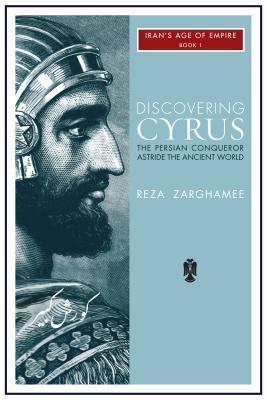
Discovering Cyrus: The Persian Conqueror Astride the Ancient World by Reza Zaghamee

Some of the most fascinating human epochs lie in the borderlands between history and mystery. So, it is with the life of Cyrus the Great, founder of the Persian Empire in the sixth century BCE. By conquest or gentler means, he brought under his rule a dominion stretching from the Aegean Sea to the Hindu Kush and encompassing some tens of millions of people. All across this immense imperium, he earned support and stability by respecting local customs and religions, avoiding the brutal ways of tyranny, and efficiently administering the realm through provincial governors. The empire would last another two centuries, leaving an indelible Persian imprint on much of the ancient world. The Greek chronicler Xenophon, looking back from a distance of several generations, wrote: “Cyrus did indeed eclipse all other monarchs, before or since.” The vision of the biblical prophet known as Second Isaiah anticipates Cyrus’ repatriation of Jews living in exile in Babylon with these words of the Lord: “He is my shepherd and will accomplish all that I please.”

Despite what he achieved and bequeathed, much about Cyrus remains uncertain. Persians of his era had no great respect for the written word and kept no annals. The most complete accounts of his life were composed by Greeks. More fragmentary or tangential evidence takes many forms – among them, archaeological remains, administrative records in subject lands, and the always tricky stuff of legend.

Given these challenges, Discovering Cyrus: The Persian Conqueror Astride the Ancient World is a remarkable feat of portraiture. In his vast sweep, Reza Zarghamee draws on sources of every kind, painstakingly assembling detail, and always weighing evidence carefully where contradictions arise. He describes the background of the Persian people, the turbulence of the times, and the roots of Cyrus’ policies. His account of the imperial era itself delves into religion, military methods, commerce, court life, and much else besides. The result is a living, breathing Cyrus standing atop a distant world that played a key role in shaping our own.

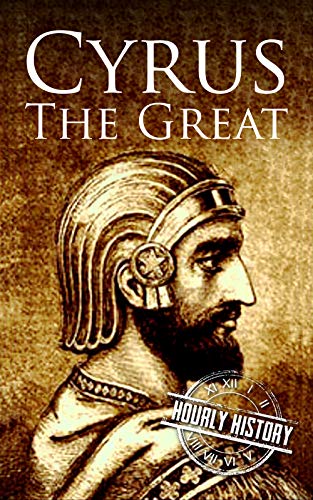
Cyrus the Great: A Life from Beginning to End by Hourly History

Cyrus II of Persia was one of the greatest leaders that the world had ever known; he was the one in whose footsteps other empire builders would follow. From Alexander the Great to countless Roman emperors and Ottoman sultans—it was the mighty shoes of Cyrus that they all attempted to fill.

More than merely a successful conqueror, Cyrus the Great is known just as much for being a great liberator as he is known for his conquests. He was even credited in the Bible as the one who freed the Jews from their long-held Babylonian exile. By the time of his death, Cyrus controlled more land and people than anyone before him. Under his dominion were countless principalities, nationalities, ethnicities, and religions of all kinds. In contrast to many other powerful rulers, Cyrus did not seek to oppress his subjects or interfere with their way of life, religions, or local customs. It is for this reason that, as great as his temporal conquests may have been, the benevolence of Cyrus the Great’s leadership stands as his greatest attribute of all.

The life of Cyrus the Great remains as an unparalleled testament in the annals of history.

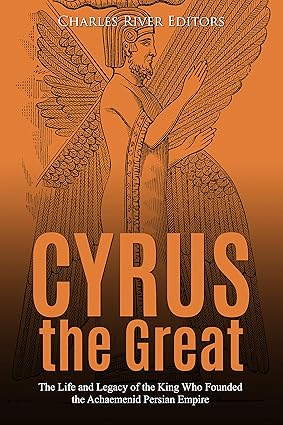
Cyrus the Great: The Life and Legacy of the King Who Founded the Achaemenid Persian Empire by Charles River Editors

“I am Cyrus the king, an Achaemenian.” – An inscription found at the Persian capital of Pasargadae

At one point in antiquity, the Achaemenid Persian Empire was the largest empire the world had ever seen, but aside from its role in the Greco-Persian Wars and its collapse at the hands of Alexander the Great, it has been mostly overlooked. When it has been studied, the historical sources have mostly been Greek, the very people the Persians sought to conquer. Needless to say, their versions were biased.

It was not until excavations in the region during the 20th century that many of the relics, reliefs, and clay tablets that offer so much information about Persian life could be studied for the first time. Through archaeological remains, ancient texts, and work by a new generation of historians, a picture can today be built of this remarkable civilization and their most famous leaders.

When considering this empire’s rulers, the two most often referenced are Xerxes, the leader of the Persian invasion of Greece which caused the heroic sacrifice of the Spartans and their allies at Thermopylae, or Cyrus the Great, the man who created the empire. While he was one of the most influential men in the ancient world, research on Cyrus the Great is simultaneously fascinating and frustrating. The Persians’ ancestors did not write (in fact, in their epic poems and myths, they claim that it was something taught to man by demons and therefore something to be avoided), and though the Iranians had taken up writing in their governmental and administrative functions by the time Cyrus lived, the kings still did not learn to write. Put simply, it was considered a functional skill, but not of the greatest importance.

As a result, while plenty of ancient sources mention the great Persian king, Persian sources themselves are rare, and those sources that do exist, such as the Babylonian Chronicle, are largely dry and state only the basic facts and large events. By contrast, Greek sources about Cyrus embrace the artistic aspect of their work so highly that the accuracy often comes into question, and sometimes deep scrutiny is necessary to attempt to separate the fact from the fiction. In the end, the full truth about Cyrus and his reign may never be truly understood.

Of course, this reality has deepened the mystique that surrounds Cyrus even to this day, and it has elevated his status from conqueror and king to enlightened humanist monarch and ideal ruler. In fact, a modern misconception based on the Cyrus Cylinder has labeled him the first proponent of civil rights, though this is somewhat of an exaggeration. The argument hinges on the Cylinder being a unique artifact in listing the ideology by which Cyrus intended to rule, but it equally ignores the fact that such declarations were commonplace among kings of the ancient Near East and more a tool of monarchal propaganda than a sweeping declaration of human rights.

That said, Cyrus was a fair and rational leader, particularly compared to the many brutal kings and warlords of ancient times. The high praise he received, even from his enemies, must certainly not be dismissed, and the admiration directed toward him came from many other exceptional individuals, including Alexander the Great, a bitter enemy of the empire Cyrus founded. Whatever the underlying issues, the incredible achievements of Cyrus distinguish him as one of the greatest kings in history, and his life, conquests, reforms, and rule continue to be of great interest over 2,500 years later.

Cyrus the Great: The Life and Legacy of the King Who Founded the Achaemenid Persian Empire looks at the life of the Persian leader and the major legacy he left. Along with pictures depicting important people, places, and events, you will learn about Cyrus the Great like never before.

Reader’s Log 040: Book Spotlight

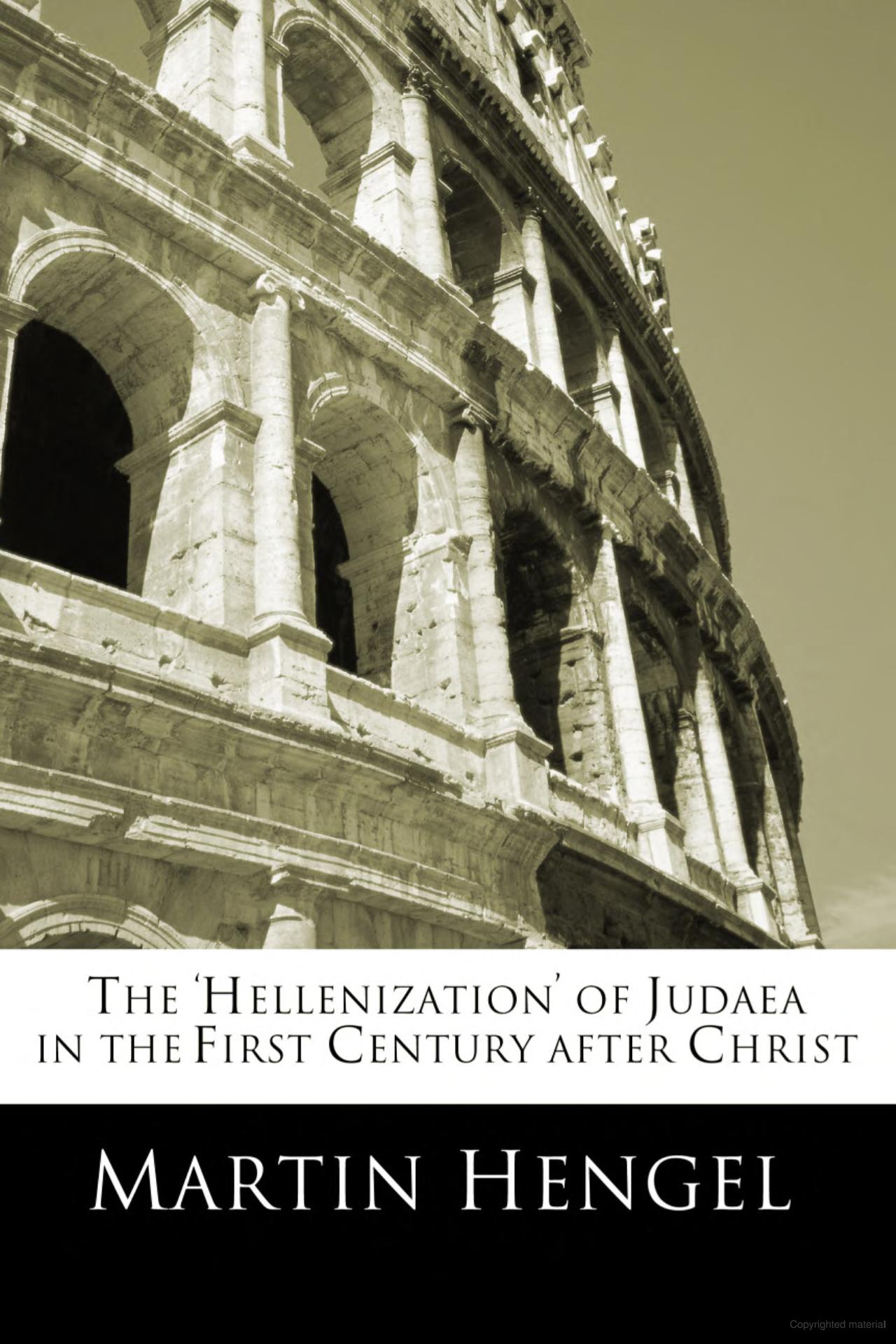
The ‘Hellenization’ of Judaea in the First Century after Christ by Martin Hengel

I’ve had this copy in my personal library for about three years now and I almost forgot I had it! I came across it while organizing my books by topic. Hengel’s work is absolutely brilliant and I’m delighted to be reading my copy again. This first time I read it, I mostly did surface reading and now I’m taking a deeper study of its text, highlighting passages and taking notes. It is my goal to read all of Hengel’s work.

Stephanie

Book Description: This short but highly significant study is the first real sequel to Professor Martin Hengel’s classic and monumental work Judaism and Hellenism. It demonstrates from a wealth of evidence, much of it made readily available here for the first time, that in the New Testament period Hellenization was so widespread in Palestine that the usual distinction between ‘Hellenistic’ Judaism and `Palestinian’ Judaism is not a valid one and that the word `Hellenistic’ and related terms are so vague as to be meaningless. The consequences of this for New Testament study are, of course, considerable. Martin Hengel was Professor of New Testament and Early Judaism in the University of Tuebingen.

Reader’s Log 038: A Weekend of Reading and Reflection

A Reader’s Voice

Yesterday, I blogged about my upcoming books I’ve selected and that post is a start in blogging about what I’m reading and why. In the past couple of years or so, certain themes in stories have weighed heavily on my mind. Not only that but if the themes and content is something I should be reading as a follower of Christ. I’ve always read widely but was cautious about content and my Christian conventions. However, I’ve agreed to review books that I wasn’t fully aware of its content and have done my best to honor those commitments keeping in mind that I’m not reading a biblical world view on morality and so forth. I have noticed in the past few years that a particular genre from certain authors I once enjoyed reading has become darker and too graphic in human nature to say the least which-I admit-reflects much of the world we live in today. This is not pointing fingers or making accusations towards others but a reflection on my own choices I make about reading material that I want to chose to read or omit from my life.

I’ve also reflected on the issue of how readers and reviewers on NetGalley are given information about the books we choose to read. I believe there is not enough information about its content and NetGalley should provide more information about any disclaimers of content we should be aware of since we are making a commitment to read said books. Yes, I am aware of the argument if that were the case, there would be so many books not selected to read because of the disclaimers and that wouldn’t be fair to the author and so on…I was onboard with that argument for a long time but I am no longer. After all, movies come with ratings and provide disclaimers.

I realize I haven’t always been consistent in my reviews to point out any content that people need to be aware of if they need or want to avoid for various reasons.

More times than not, I felt trapped into reading said books and recently I’ve rejected two books and stated my reasons to the publishers with respect of course. This may be difficult for many readers and authors to hear but as a long-standing book blogger, my experience as a book reviewer and reader needs to be voiced even at the risk of losing subscribers.

Christians are encouraged to engage with secular books-including fiction for an understanding of the world but we should also be discerning and cautious. That is true for secularist as well. For anyone in society really.

I have read many books that dealt with sensitive and difficult topics in such a way to make the story readable to a wide audience without compromising the readers convictions of what they can read without feeling uneasy or question if this is something they should be reading in the first place. My thanks to writers who weaves the story thus. I have more thoughts on this topic and may share more at a later time.

Stephanie

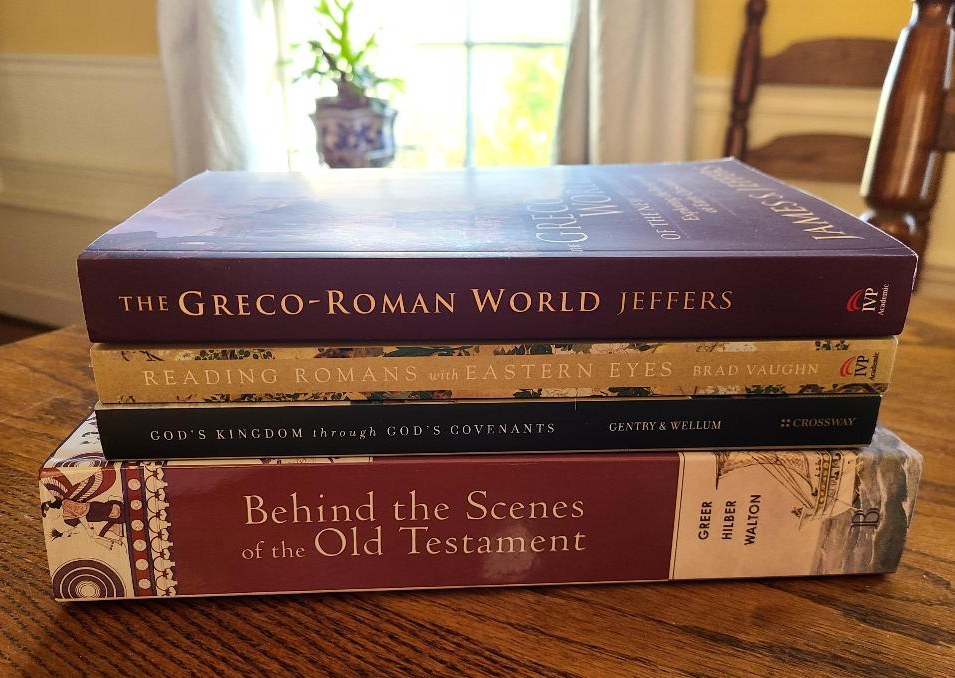
Reader’s Log 033: Cultural and Biblical Background Studies Book Haul

At Christmas time I got four books on my cultural and biblical background study wish-list and super excited about them. Some of you may know I have been studying biblical cultural backgrounds for a more in-depth look at the ancient world for a while now. As modern-day people we tend to look at biblical scripture, ancient society’s ideas and norms and beliefs with modern day eyes. It helps to have a better look at how things were for a clearer and richer understanding of the Bible and the early Christian’s lives. It is most likely that if you are a seminary student getting a BA in Religious Studies, you may be reading some if not all these books. If not, I highly recommend you read them.  

I’m currently reading the first book mention below and it is wonderful. There is so many facts I already know about the Greco-Roman period in the 1st and second 2nd period but they are being expanded on in this book. After I read and study all of these books, I will be ordering four more from my wish-list. Most likely it will be next year. However, I’m thinking about creating a master wish-list of books for these types of studies and post them. That may be a useful resource for those of you who are interested.

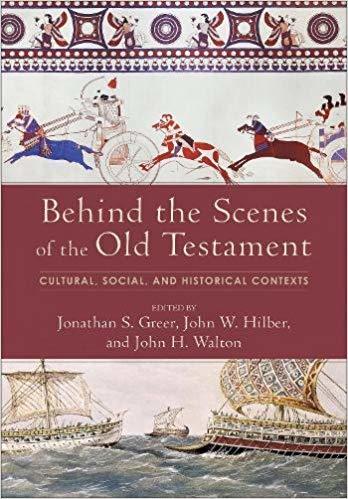
Side note: The Behind the Scenes of the Old Testament: Cultural, Social, and Historical Contexts book is heavy like a text book. Aren’t the covers lovely!

Stephanie

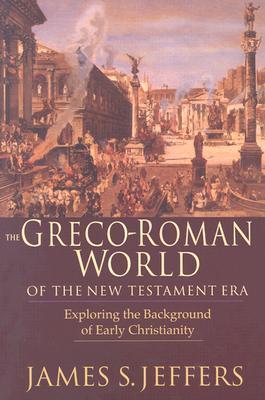
The Greco-Roman World of the New Testament Era: Exploring the Background of Early Christianity by James S. Jeffers

What was life like for first-century Christians? Imagine a modest-sized Roman home of a well-to-do Christian household wedged into a thickly settled quarter of Corinth. In the lingering light of a summer evening, men, women and children, merchants, working poor and slaves, a mix of races and backgrounds have assembled in the dimly lit main room are spilling into the central courtyard. This odd assortment of gathered believers–some thirty in number–are attentive as the newly arrived and travel-weary emissary from Paul reads from the papyrus scroll he has brought from their apostolic mentor. But if you were to be transported to this scene you would perhaps be overwhelmed by a flood of unexpected difference. The voice of the reader recedes as through open windows the din and clamor of the city assaults your ears. Hooves clunk and cart wheels grind and echo from the street while drivers shout, vendors call and neighbors gather and converse. And later, as you accompany a family through darkened and dangerous streets to their third-story tenement apartment, you might try to mask your shock at the cramped and unsafe conditions. In the Greco-Roman World of the New Testament Era James Jeffers provides an informative and scenic tour of daily life during the time of Jesus and the apostles. He affords “you-are-there” glimpses of everything from legal codes to dinner foods, from social hierarchy to apartment living, from education to family dynamics. His eye-opening book will advance your understanding of the New Testament and early Christianity and enrich your reading and application of the Bible.

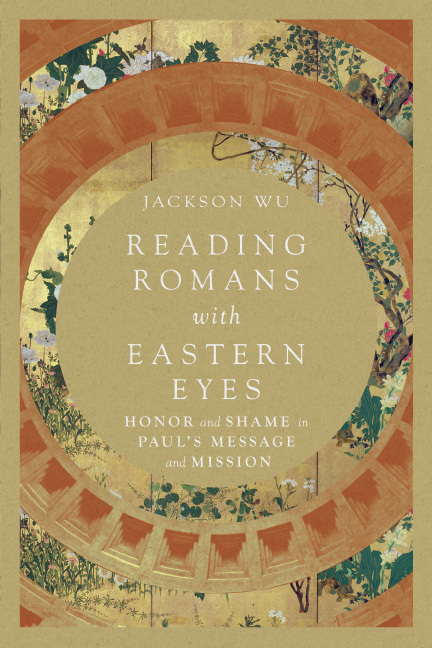
Reading Romans with Eastern Eyes: Honor and Shame in Paul’s Message and Mission by Jackson Wu

Combining research from Asian scholars with his many years of experience living and working in East Asia, Jackson directs our attention to Paul’s letter to the Romans. He argues that some traditional East Asian cultural values are closer to those of the first-century biblical world than common Western cultural values. In addition, he adds his voice to the scholarship engaging the values of honor and shame in particular and their influence on biblical interpretation.

As readers, we bring our own cultural fluencies and values to the text. Our biases and backgrounds influence what we observe—and what we overlook. This book helps us consider ways we sometimes miss valuable insights because of widespread cultural blind spots.

In Reading Romans with Eastern Eyes, Jackson demonstrates how paying attention to East Asian culture provides a helpful lens for interpreting Paul’s most complex letter. When read this way, we see how honor and shame shape so much of Paul’s message and mission.

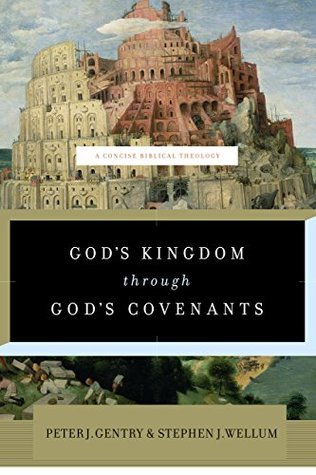
God’s Kingdom through God’s Covenants: A Concise Biblical Theology by Peter J. Gentry, Stephen J. Wellum

In this abridgement of the groundbreaking book Kingdom through Covenant, a biblical scholar and a theologian offer readers an accessible overview of the overarching structure of the Bible. Tracing the significance of the concept of “covenant” through both the Old and New Testaments, this book charts a middle way between covenant theology and dispensationalism―exploring the covenantal framework undergirding the history of redemption.

Behind the Scenes of the Old Testament: Cultural, Social, and Historical Contexts by Jonathan S. Greer (Editor), John W. Hilber (Editor), John H. Walton (Editor)

This authoritative volume brings together a team of world-class scholars to cover the full range of Old Testament backgrounds studies in a concise, up-to-date, and comprehensive manner. With expertise in various subdisciplines of Old Testament backgrounds, the authors illuminate the cultural, social, and historical contexts of the world behind the Old Testament. They introduce readers to a wide range of background materials, covering history, geography, archaeology, and ancient Near Eastern textual and iconographic studies.

Meant to be used alongside traditional literature-based canonical surveys, this one-stop introduction to Old Testament backgrounds fills a gap in typical introduction to the Bible courses. It contains over 100 illustrations, including photographs, line drawings, maps, charts, and tables, which will facilitate its use in the classroom.

Reader’s Log 031: Last Light over Galveston by Jennifer L. Wright

Book Spotlight

Excited to receive an ARC of this book!

Pub Date Aug 12 2025 by Tyndale House Publishers

Christian | Historical Fiction | Romance

Description:

Amid the 1900 Galveston hurricane, one woman’s perseverance is tested in this captivating story from the author whose work has been called “intelligent and arresting” (Foreword Reviews) and “historical fiction as it is meant to be told” (Library Journal).

I walked until I could go no farther, until open water was all I could see.

Galveston, Texas. September 1900. Only months ago, Kathleen McDaniel returned from finishing school in Switzerland to her family home in New York’s Hudson Valley with a future of promise and privilege set before her. But one horrific event shattered her picturesque life. Now she has fled as far as the train line and a pocketful of money would take her, finding refuge at the St. Mary’s Orphan Asylum on Galveston Island, where she helps the nuns care for their young charges and prays her past will not find her. Despite her tenuous standing at the orphanage—and the grief and betrayal that drove her from home—Kathleen slowly begins to make friends. There is Emily, the novice nun she rooms with; Maggie, the tempestuous young girl who only bonds with Kathleen; and Matthew, a kind, handsome man recently employed by Isaac Cline at Galveston’s office of the US Weather Bureau.

Then in one fateful day, Kathleen’s fragile new life begins to crack as it becomes clear that she can’t run far enough to escape the reach of her former life. Meanwhile, as troubling news about a storm crossing the Gulf from Cuba swirls in the Weather Bureau offices, Matthew holds fast to Cline’s belief that no hurricane can touch Galveston. But as darkness falls on the island, Kathleen must gather her courage and reach for a strength beyond her own if she—and those she loves—are to survive.

Reader’s Log 029: Church History

For a while now, I’ve taken a deeper dive into Church history including the early church, Protestantism, Eastern Orthodoxy and other church denominations. I’ve also been study cultural backgrounds of ancient Judaism, the intertestamental period and Hellenistic Jews of the first century. It’s a lot to unpack. I know. I do happen to have a method and organization of my study and notes. Before I took this journey, I had mostly done surface studies and reading on these subjects.

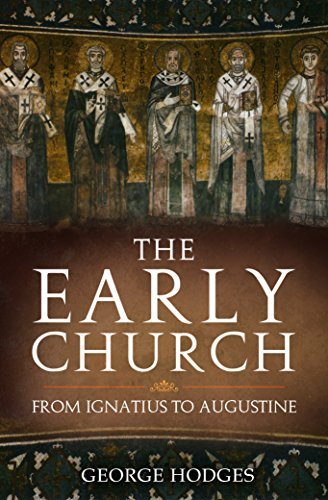
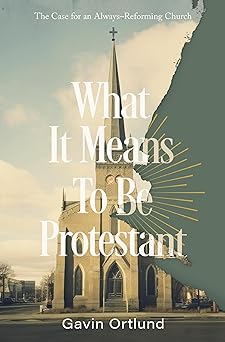
I’m currently reading/studying, “The Early Church: From Ignatius to Augustine by George Hodges and up next I be reading, “What It Means to Be Protestant: The Case for an Always-Reforming Church by Gavin Ortlund, I follow Ortlund’s teachings on YouTube and it is a goal of mine to read all his written works.  

I highly recommend this journey.

Stephanie Hopkins

The Early Church: From Ignatius to Augustine by George Hodges

In the first century A.D., the roots of the early Church began to spread across the Roman world.

But who were its leaders?

And how did it survive through waves of hostility and oppression?

George Hodges, in this fascinating history, explains how the early Church developed from its lowly and persecuted origins of the first century through to becoming the main religion of the Roman Empire and the various kingdoms that succeeded it.

Hodges provides a full picture of the Roman Empire and its religion at this time, explaining how the Church was able to gain a foothold, how heresy nearly tore it apart and how many men and women sacrificed their own lives to protect the faith.

He uncovers why by the third century the Church began to develop into a settled and definite organization, with leaders, like Cyprian and Cyril, who assisted their followers, convened at gatherings like the Council of Nicaea to agree on doctrinal matters and how monasticism developed in both the East and West.

Finally, Hodges explains how the Church was able survive the collapse of the Roman Empire, a state that had begun to protect and support the Church after Constantine’s conversion in 312. The Church was forced to contend with the power vacuum of the tumultuous fourth and fifth centuries and to make allies and convert the pagans who were threatening them.

The Early Church: From Ignatius to Augustine is a brilliant history of the late Roman Empire and how the Christian Church developed within it.

George Hodges was an American theologian and dean of the Episcopal Theological School at Cambridge Massachusetts. The Independent stated that many of his works were reissued during his lifetime due to “the high esteem in which his religious messages are held by the reading public.” This work was first published in 1915 and he died in 1919.

What It Means to Be Protestant: The Case for an Always-Reforming Church by Gavin Ortlund

These days many evangelicals are exploring the more sacramental, liturgical, and historically-conscious church traditions, including Roman Catholicism and Eastern Orthodoxy. This hunger for historical rootedness is a welcome phenomenon–but unfortunately, many assume that this need can only be met outside of Protestant contexts.??

In What it Means to Be Protestant, Gavin Ortlund draws from both his scholarly work in church history and his personal experience in ecumenical engagement to offer a powerful defense of the Protestant tradition. Retrieving classical Protestant texts and arguments, he exposes how many of the contemporary objections leveled against Protestants are rooted in caricature. Ultimately, he shows that historic Protestantism offers the best pathway to catholicity and historical rootedness for Christians today??

In his characteristically charitable and irenic style, Ortlund demonstrates that the 16th century Reformation represented a genuine renewal of the gospel. This does not entail that Protestantism is without faults. But because it is built upon the principle of semper reformanda (always reforming), Protestantism is capable of reforming itself according to Scripture as the ultimate authority. This scholarly and yet accessible book breaks new ground in ecumenical theology and will be a staple text in the field for many years to come.

Book Stacks: A Never Ending Journey of Discovery, Collecting and Reading

I wouldn’t have it any other way.

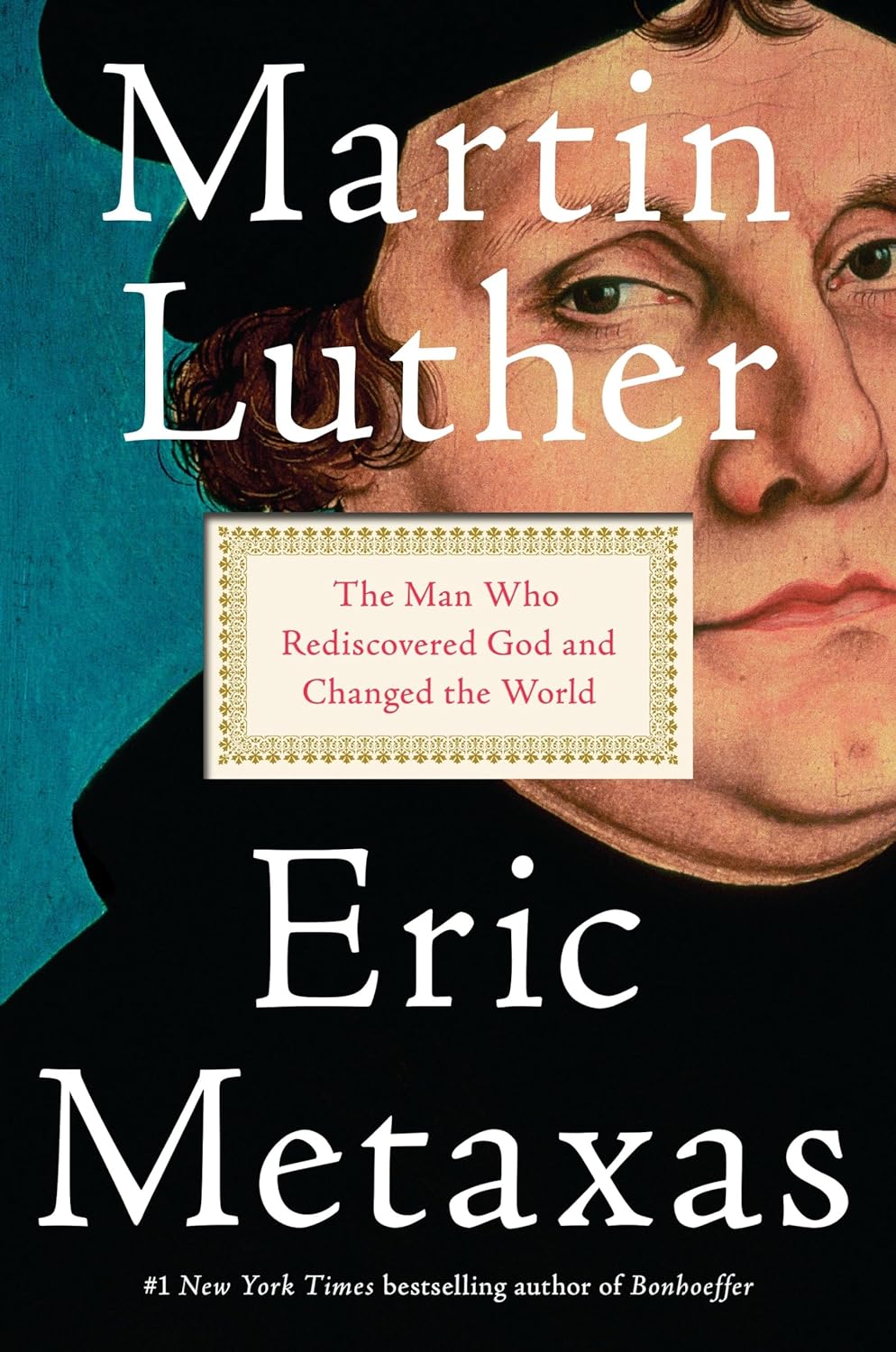
Some of you may know I’m currently reading, Martin Luther: The Man Who Rediscovered God and Changed the World by Eric Metaxas and I’m enjoying the biography so much, I’m taking my time and reading slowly through the pages. I’ve already marked quite a few passages for my annotating. Metaxas’s detailed account of Martin’s life and the period is exceptionally written. As I have been reading this book, I decided I must read all his works and shortly after, I remembered I have a paperback copy of, Amazing Grace: William Wilberforce and the Heroic Campaign to End Slavery! I will be reading that story next! I’ve had that book a few years and I know the history through other sources. I do remember leafing through its pages and reading a bit here and there. I had intended to read it straight away and I’m not sure what happened! No time like the present, I say. Maybe it was meant to be. Regardless, I’m delighted to already own two of Metaxas’s works.

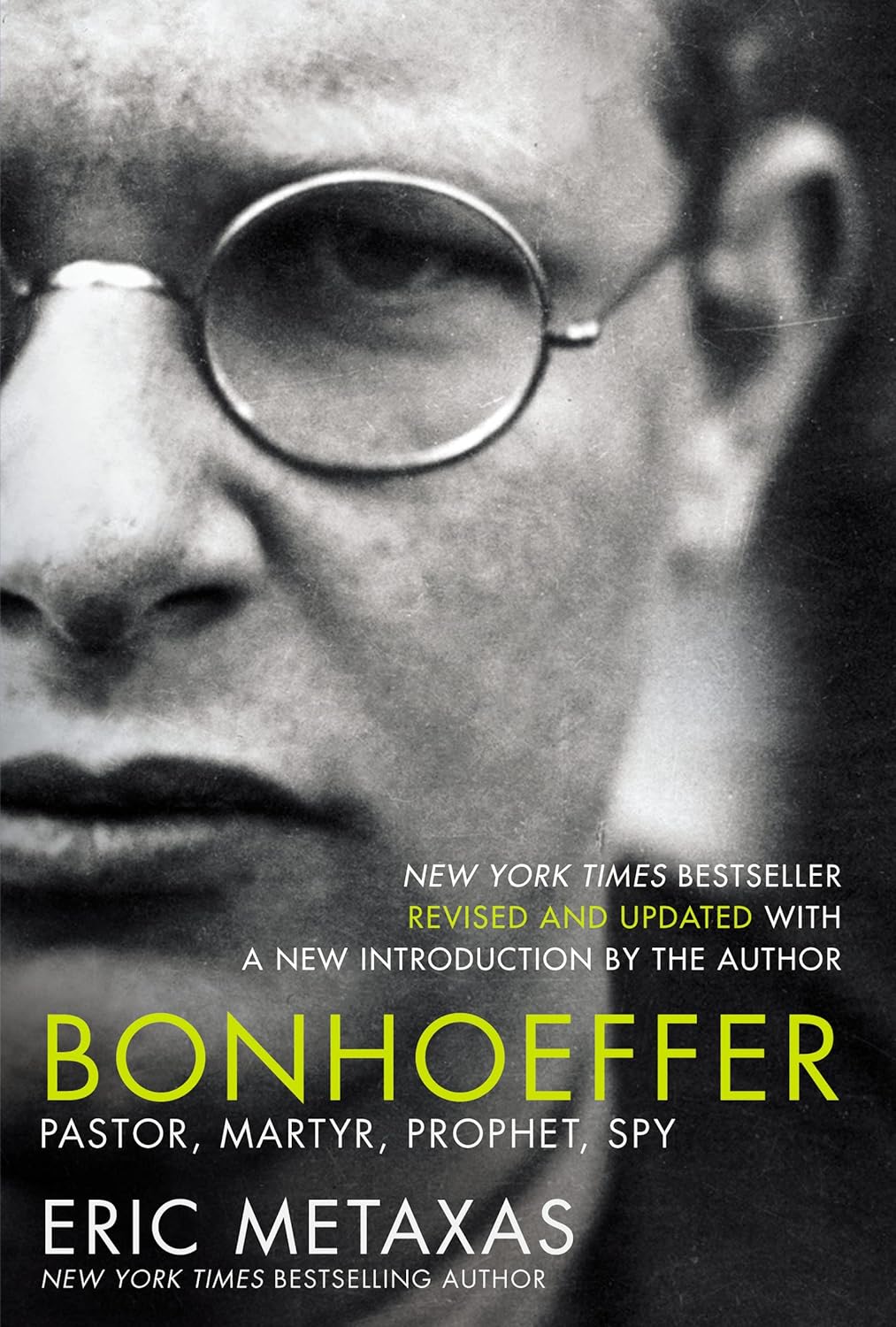
After reading both books mentioned above, there are two other books I’ve already chosen to read. I discovered and Bonhoeffer: Pastor, Martyr, Prophet, Spy and Letter to the American Church on YouTube. Metaxas’s channel and his guest appearance at churches and various interviews suddenly appeared this past Tuesday on my feed. Algorithms are useful at times, interesting and a bit unsettling all at the same time.

Stephanie

Bonhoeffer: Pastor, Martyr, Prophet, Spy

Who better to face the greatest evil of the 20th century than a humble man of faith?

As Adolf Hitler and the Nazis seduced a nation, bullied a continent, and attempted to exterminate the Jews of Europe, a small number of dissidents and saboteurs worked to dismantle the Third Reich from the inside. One of these was Dietrich Bonhoeffer, a pastor and author.

In this New York Times bestselling biography, Eric Metaxas takes both strands of Bonhoeffer’s life–the theologian and the spy–and draws them together to tell a searing story of incredible moral courage in the face of monstrous evil.

In Bonhoeffer, Metaxas presents the fullest account of Bonhoeffer’s life, including his:

  • heart-wrenching decision to leave the safe haven of America to return to Hitler’s Germany
  • involvement in the famous Valkyrie plot and in “Operation 7,” the effort to smuggle Jews into neutral Switzerland
  • lifelong dedication to sharing the tenets of his faith

This edition, revised and with a new introduction from the author, shares the deeply moving story through previously unavailable documents, including personal letters, detailed journal entries, and firsthand personal accounts to reveal never-before-seen dimensions of Bonhoeffer’s life and work.

Letter to the American Church

In an earnest and searing wake-up call, the author of the bestseller Bonhoeffer: Pastor, Martyr, Prophet, Spy warns of the haunting similarities between today’s American church and the German church of the 1930s. Echoing Bonhoeffer’s prophetic call, Eric Metaxas exhorts his fellow Christians to repent of their silence in the face of evil before it is too late.

“Silence in the face of evil is itself evil.

Not to speak is to speak.

Not to act is to act.

God will not hold us guiltless.”

Can it really be God’s will that His children be silent at a time like this? Decrying the cowardice that masquerades as godly meekness, Eric Metaxas summons the Church to battle.

The author of a bestselling biography of Dietrich Bonhoeffer, Metaxas reveals the haunting similarities between today’s American Church and the German Church of the 1930s. Echoing the German martyr’s prophetic call, he exhorts his fellow Christians to repent of their silence in the face of evil.

An attenuated and unbiblical “faith” based on what Bonhoeffer called “cheap grace” has sapped the spiritual vitality of millions of Americans. Paying lip service to an insipid “evangelism,” they shrink from combating the evils of our time. Metaxas refutes the pernicious lie that fighting evil politicizes Christianity. As Bonhoeffer and other heroes of the faith insisted, the Church has an irreplaceable role in the culture of a nation. It is our duty to fight the powers of darkness, especially on behalf of the weak and vulnerable.

Silence is not an option. God calls us to defend the unborn, to confront the lies of cultural Marxism, and to battle the globalist tyranny that crushes human freedom. Confident that this is His fight, the Church must overcome fear and enter the fray, armed with the spiritual weapons of prayer, self-sacrifice, and love.

About the Author:

Eric Metaxas is the #1 New York Times bestselling author of BonhoefferMartin LutherIf You Can Keep It, Miracles, Seven Women, Seven Men, and Amazing Grace. His books have been translated into more than twenty-five languages. His writing has appeared in the Wall Street Journal, the New York Times, and the New Yorker, and Metaxas has appeared as a cultural commentator on CNN, Fox News, and MSNBC. He is the host of The Eric Metaxas Radio Show, a daily nationally syndicated show aired in 120 U.S. cities and on TBN. Metaxas is also the founder of Socrates in the City, the acclaimed series of conversations on “life, God, and other small topics,” featuring Malcolm Gladwell, Ambassador Caroline Kennedy, Baroness Caroline Cox, and Dick Cavett, among many others. He is a senior fellow and lecturer at large at the King’s College in Manhattan, where he lives with his wife and daughter.

Biographies & Memoirs

On January 19th I posted about a few selected non-fiction books I have added to my wish-list. There are too many to count and not enough time in the hours of a day that direct our attention elsewhere! A bibliophile’s struggle one might often say. This topic is an enjoyable pastime to discuss among fellow book lovers and I’m delighted to be sharing this book blog entry with you.

This past weekend I began reading Martin Luther by Eric Metaxas and I’m enjoying his telling of Luther a great deal. I wanted to read a highly regarded biography on Luther and was delighted to find a copy at Half Price Books. I was fortunate to obtain a hardback that is in excellent condition. Below you will find the description of the Luther book and a few other titles that may pique your interest.

Martin Luther: The Man Who Rediscovered God and Changed the World by Eric Metaxas

 Description

On All Hallow’s Eve in 1517, a young monk named Martin Luther posted a document he hoped would spark an academic debate, but that instead ignited a conflagration that would forever destroy the world he knew. Five hundred years after Luther’s now famous Ninety-five Theses appeared, Eric Metaxas, acclaimed biographer of the bestselling Bonhoeffer: Pastor, Martyr, Prophet, Spy and Amazing Grace: William Wilberforce and the Heroic Campaign to End Slavery, paints a startling portrait of the wild figure whose adamantine faith cracked the edifice of Western Christendom and dragged medieval Europe into the future. Written in riveting prose and impeccably researched, Martin Luther tells the searing tale of a humble man who, by bringing ugly truths to the highest seats of power, caused the explosion whose sound is still ringing in our ears. Luther’s monumental faith and courage gave birth to the ideals of liberty, equality, and individualism that today lie at the heart of all modern life.

Ben & Me

In Search of a Founder’s Formula for a Long and Useful Life by Eric Weiner

Pub Date 11 Jun 2024 

Description

New York Times bestselling author Eric Weiner follows in the footsteps of Benjamin Franklin, mining his life for inspiring and practical lessons in a book that’s part biography, part travelogue, part personal prescription.

Ben Franklin lingers in our lives and in our imaginations. One of only two non-presidents to appear on US currency, Franklin was a founder, statesman, scientist, inventor, diplomat, publisher, humorist, and philosopher. He believed in the American experiment, but Ben Franklin’s greatest experiment was…Ben Franklin. In that spirit of betterment, Eric Weiner embarks on an ambitious quest to live the way Ben lived.

Not a conventional biography, Ben & Me is a guide to living and thinking well, as Ben Franklin did. It is also about curiosity, diligence, and, most of all, the elusive goal of self-improvement. As Weiner follows Franklin from Philadelphia to Paris, Boston to London, he attempts to uncover Ben’s life lessons, large and small. We learn how to improve a relationship with someone by inducing them to do a favor for you—a psychological phenomenon now known as The Ben Franklin Effect. We learn about the printing press (the Internet of its day), early medicine, diplomatic intrigue and, of course, electricity. And we learn about ethics, persuasion, humor, regret, appetite, and so much more.

At a time when history is either neglected or contested, Weiner argues we have much to learn from the past and that we’d all be better off if we acted and thought a bit more like Ben did, even if he didn’t always live up to his own high ideals. Engaging, smart, moving, quirky, Ben & Me distills the essence of Franklin’s ideas into grounded, practical wisdom for all of us.

Drawn Testimony

My Four Decades as a Courtroom Sketch Artist

by Jane Rosenberg

Pub Date 13 Aug 2024

Description

A penetrating, compulsively readable memoir about the four-decade career of America’s top courtroom sketch artist, for fans of Lab Girl and Working Stiff

Jane Rosenberg is America’s pre-eminent courtroom sketch artist. For over forty years, she’s been at the heart of the story, covering almost every major trial that has passed through the New York justice system. From mob bosses to fallen titans of finance, terrorists and sex abusers, corrupt cops and warring entertainment icons, she has drawn them all.

In Drawn Testimony, Rosenberg brings us into the high-stakes, dramatic world of her craft, where art, psychology and courtroom drama collide. Over the course of her legendary career, Jane has had a front row seat to some of the most iconic and notorious moments in our nation’s recent history, sketching everything from Tom Brady’s deflate-gate case, to John Lennon’s murder trial to cases against Ghislaine Maxwell, John Gotti, Harvey Weinstein and most recently, the indictment against former President Donald Trump. Readers will learn how she has honed her unique powers of perception, but also what her portraits reveal, not only about her subjects, but about the human condition in general.

Fearless, fascinating and gorgeously written, Drawn Testimony captures the unique career of an artist whose body of work depicts history as it’s happening.

My Roman History

A Memoir

by Alizah Holstein

Pub Date 25 Jun 2024 

Description

In this exquisite and profound memoir, a medieval historian traces her lifelong obsession with Rome and the encounters with the city’s past and present that became fulcrum points in her life

From the time she first felt called to its gates as a high school student fascinated by Dante and Italian thanks to a life-changing teacher, Rome has been a fixed star around which Alizah Holstein’s life has rotated—despite the fact that she bears no Italian heritage, and has never lived there long enough to call it home. 

In this kaleidoscopic yet intimate memoir, her shifting relationship to a vibrant city layered with human history becomes a lens on why we look to the past, on the mysteries of affinity and desire, and on what it means to grow up. Holstein weaves the stories of Romans past and present, and encounters with the city of historical figures from Petrarch to Freud, into the narrative of her evolution from a curious student abuzz with the thrill of discovery, to a lonely researcher in a city to which she feels she belongs despite knowing no one, to an ambitious young historian struggling to find her place in the halls of academia. Following a trail of memories—that first taste of a tartufo cioccolato in Piazza Navona, the ancient walls of the Via Appia blurring from the back of a motorcycle, the smudge of ink on a manuscript left by a scribe’s hand over seven hundred years before—she explores what it means to be romana, Roman—and to find solace and self-knowledge in the presence of the past.

An enveloping, original, and deeply resonant account, set against one of the world’s most beguiling cities, of the unexpected things that give our lives meaning, My Roman History is a profound depiction of the winding path to self-realization, which—much like history itself—is mysterious, captivating, and ever-unfolding.

Wish-List: Books on the Christian Faith

I’ve been on the search for books on Systematic Theology, further Biblical teachings of Christ’s ministry and Christian application with a non-Calvinistic view point and came across Norman L. Geisler. I found information saying he is considered “moderate Calvinist,” and that he is not a “Five Point Calvinist.” I find that to be somewhat reassuring in my search for the reading material I’m looking for. I am definitely willing to give his books a read. You see, I’m not a Calvinist nor am I a protestant. That said, I am not closed minded from reading different viewpoints; I’m just looking for particular studies for the moment. Mater of fact, I respect and listen to a lot of what protestants have to say.

Also, I’m planning on reading the books in my father’s library on Systematic Theology as well as adding to my own library.

First, what is Systematic Theology according to Oxford Languages? The theology is “a form of theology in which the aim is to arrange religious truths in a self-consistent whole.” In a nutshell, the systematic view is to give an orderly format of the doctrines of Christian faith. And let me tell you, I have seen and heard many different viewpoints. Below are a few books by Geisler that I’m interested in reading.

The Big Book of Christian Apologetics: An A to Z Guide (A to Z Guides) 

The Big Book of Christian Apologetics is a comprehensive resource designed to equip motivated believers with information to help defend and explain their faith. Examining nearly every key issue, person, and concept related to Christian apologetics, this book clarifies difficult biblical passages, clearly explains various philosophical systems and concepts, examines contemporary issues and challenges, and offers classic apologetic arguments, all with the aim of giving readers the background to intelligently and persuasively talk about their Christian faith with skeptics. An expertly abridged version of the Baker Encyclopedia on Christian Apologetics, this resource brings leading apologist Norman L. Geisler’s seminal work to the masses.

A Popular Survey of the New Testament 

Understanding the New Testament is a daunting but exciting task. Our world is so different from that of the first century. Yet it is important to understand the context and content of the New Testament if we are to be faithful followers. Now in paper, this survey addresses the who, what, where, when, why, and how questions that readers of the Bible may have, such as: How can we tell if what is written in the New Testament is true history or just mythology? When were these books written and why? and What can today’s believers get out of letters addressed to people who lived two millennia ago? Written in an easy, informal style, this survey is accessible and enjoyable to anyone who wants to better understand the New Testament.

Defending Inerrancy: Affirming the Accuracy of Scripture for a New Generation

According to the authors, the doctrine of inerrancy has been standard, accepted teaching for more than 1,000 years. In 1978, the famous “Chicago Statement” on inerrancy was adopted by the Evangelical Theological Society, and for decades it has been the accepted conservative evangelical doctrine of the Scriptures. However, in recent years, some prominent evangelical authors have challenged this statement in their writings.

Now eminent apologist and bestselling author Norman L. Geisler, who was one of the original drafters of the “Chicago Statement,” and his coauthor, William C. Roach, present a defense of the traditional understanding of inerrancy for a new generation of Christians who are being assaulted with challenges to the nature of God, truth, and language. Pastors, students, and armchair theologians will appreciate this clear, reasoned response to the current crisis.

Note: Also, I would like to mention a book of his I’ve had on my wish-list and at first, the author’s name escaped my memory. I’m delighted to know he has written the book along with Frank Turek of whom I know his work.

I Don’t Have Enough Faith to Be an Atheist (Foreword by David Limbaugh) 

Geisler and Turek argue that Christianity requires the least faith of all worldviews because it is the most reasonable. A valuable aid to those interested in examining the reasonableness of the Christian faith.