PORTRAIT OF A CONSPIRACY IS AN HISTORICAL MYSTERY, BUT IT’S ALSO A TOUR OF FLORENCE

Welcome Donna Russo Morin to Layered Pages! 

Thank you so very much for hosting me today. It’s always a pleasure to have a chance to chat with bloggers and their readers.

PORTRAIT OF A CONSPIRACY: Da Vinci’s Disciples has its historical basis rooted firmly in truth…one of the greatest conspiracies of the 15th century, a conspiracy that reached all the way to the Vatican. An assassination plot history now calls the Pazzi Conspiracy. With such a firm historical foundation, it allowed me to immerse myself fully in the city of Florence, as it was in 1478. And thanks to the many resources, both paper and virtual, the details of the setting found their way onto my page. It even allowed me to create a map, something I’ve always wanted to do.
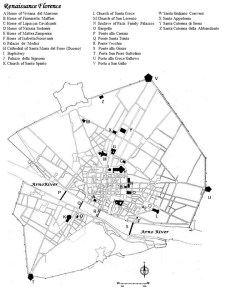
Renaissance Florence map

Today, I’d like to share some of those remarkable architectural delights with you.

We must start where the story starts, where the assassination takes place: in Brunelleschi’s Duomo. In truth the Gothic style basilica, part of the complex of Cattedrale di Santa Maria del Fiore (Saint Mary of the Flowers Cathedral), was originally designed by Arnolfo di Cambio. Built on the ruins of the 7th century Santa Raparata Church, construction on the new structure began in 1296; it wasn’t complete, as it stands today—as it was in 1478—until 1436.

 

Duomo collage

The exterior façade is a checkerboard of marble using three different colors and strains of the opulent stone. Only in comparison, can the inside be called rather plain. By far one of its most enchanting features is the mosaic pavements that cover the floor.

But it is the dome itself that has always made the Duomo not only one of the greatest tourist attractions in the world, but one of its most innovative. Using buttresses was forbidden in Florence, for it was a favored technique of their enemies to the north. Creating an unsupported dome had never been done before. Only a Renaissance genius such as Filippo Brunelleschi (1377-1446) would dare attempt it. For decades, Florentines feared it would fall upon their heads, especially during times of unrest, when they believed the wrath of God would strike the dome, burying any beneath in a fatal rubble. Today, the golden-bricked dome is one of Florence’s most recognized monuments and dominates the skyline.

Palazzo della Signoria collage

Giuliano de’ Medici is murdered. His brother, the powerful Lorenzo de’ Medici survives. But he would never be the same again. He sets out on a rampage of vengeance that would eventually find close to one hundred executed. Lorenzo’s preferred method of eliminating his enemies…throwing them out a window of the Palazzo della Signoria (now known as the Palazzo Vecchio), a rope wrapped around their throats.

The government palace is made of solid rusticated stonework and is enhanced with two rows of Gothic windows. It is from these windows that the Otto, the eight that ruled the police forces of Florence, flung the Medici enemies.

Built in 1299 by the citizens of the original Florence commune, it has been enlarged and enriched by decorative details in the many years since. It is at one of the main entrances to the palace that Michelangelo’s David originally stood. This most famous sculpture has since been replaced with a copy when the original was damaged in one of Florence’s many military challenges.

Santo Spirito collage

The secret society of women artists that inhabit Portrait of a Conspiracy are a product of my imagination only. Santo Spirito, the church in whose sacristy the woman have their ‘secret studio’ is very real.

The Basilica of the Holy Spirit (simply known as Santo Spirito) is located in the Oltrarno quarter of the city, in 15th century Florence, one of the wealthiest sections of the city.  The original structure was also built in the 13th century. The existing structure was also designed by Brunelleschi after it suffered both physical and spiritual ruin during a period of the city’s civil unrest. The first cornerstones of the building, the pillars, were delivered ten days before Brunelleschi’s death. His followers Antonio Manetti, Giovanni da Gaiole, and Salvi d’Andrea completed the work begun by the master.

Santo Spirito will play a major role in all volumes of the Da Vinci’s Disciples trilogy. It is not only the home of this secret art society, it is the location of some of their most decisive challenges.

I hope you enjoyed this little tour of Florence. You’ll find more, including the actual names of the streets as they existed in the 15th century, within the pages of my books.

Book Blurb:
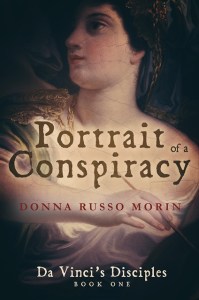
02_The-Portrait-of-Conspiracy

One murder ignites the powderkeg that threatens to consume the Medici’s Florence. Amidst the chaos, five women and one legendary artist weave together a plot that could bring peace, or get them all killed. Seeking to wrest power from the Medici family in 15th Century Florence, members of the Pazzi family drew their blades in a church and slew Giuliano. But Lorenzo de Medici survives, and seeks revenge on everyone involved, plunging the city into a murderous chaos that takes dozens of lives. Bodies are dragged through the streets, and no one is safe. Five women steal away to a church to ply their craft in secret. Viviana, Fiammetta, Isabetta, Natasia, and Mattea are painters, not allowed to be public with their skill, but freed from the restrictions in their lives by their art. When a sixth member of their group, Lapaccia, goes missing, and is rumored to have stolen a much sought after painting as she vanished, the women must venture out into the dangerous streets to find their friend and see her safe. They will have help from one of the most renowned painters of their era the peaceful and kind Leonardo Da Vinci. It is under his tutelage that they will flourish as artists, and with his access that they will infiltrate some of the highest, most secretive places in Florence, unraveling one conspiracy as they build another in its place. Historical fiction at its finest, Donna Russo Morin begins a series of Da Vinci’s disciples with a novel both vibrant and absorbing, perfect for the readers of Sarah Dunant.

“A riveting page-turner unlike any historical novel you’ve read, weaving passion, adventure, artistic rebirth, and consequences of ambition into the first of a trilogy by a masterful writer at the peak of her craft.” -C. W. Gortner, author of The Confessions of Catherine de’ Medici and The Vatican Princess

 Amazon | Barnes & Noble | Books-a-Million | IndieBound

 About the Author

03_Donna Russo Morin (2)

Donna Russo Morin is the award winning of author of historical fiction. A graduate of the University of Rhode Island, she lives near the shore with her two sons, Devon and Dylan, her greatest works in progress.

Donna enjoys meeting with book groups in person and via Skype chat. Visit her website at www.donnarussomorin.com; friend her on Facebook and follow her on

Twitter@DonnaRussoMorin.

 Blog Tour Schedule

Tuesday, May 10
Review at Unshelfish
Review at The Maiden’s Court

Wednesday, May 11
Spotlight at Passages to the Past

Thursday, May 12
Review at CelticLady’s Reviews

Friday, May 13
Review at Let Them Read Books
Review at With Her Nose Stuck In A Book

Monday, May 16
Review at Just One More Chapter
Interview at A Literary Vacation

Tuesday, May 17
Review at Seize the Words

Wednesday, May 18
Review at Flashlight Commentary
Review at Oh, for the Hook of a Book

Thursday, May 19
Review at Worth Getting in Bed For
Interview at Flashlight Commentary

Friday, May 20
Guest Post at Layered Pages
Interview at Oh, for the Hook of a Book

Monday, May 23
Review at Broken Teepee

Tuesday, May 24
Review at #redhead.with.book
Interview at Reading the Past

Wednesday, May 25
Review at Book Lovers Paradise

Thursday, May 26
Review at Puddletown Reviews

Friday, May 27
Review at The True Book Addict

Monday, May 30
Review at A Bookish Affair

Tuesday, May 31
Guest Post at A Bookish Affair

Wednesday, June 1
Review at The Book Connection

Thursday, June 2
Review at Book Nerd
Review at Bookramblings

Friday, June 3
Review at Beth’s Book Nook Blog

Giveaway

To enter to win an eBook of PORTRAIT OF A CONSPIRACY by Donne Russo Morin please enter the giveaway via the GLEAM form below. FIVE copies are up for grabs!

Rules

– Giveaway ends at 11:59pm EST on June 3rd. You must be 18 or older to enter.
– Giveaway is open INTERNATIONALLY.
– Only one entry per household.
– All giveaway entrants agree to be honest and not cheat the systems; any suspect of fraud is decided upon by blog/site owner and the sponsor, and entrants may be disqualified at our discretion
– Winner has 48 hours to claim prize or new winner is chosen.

Direct Link to enter giveaway click here
04_Portrait of a Conspiracy_Blog Tour Banner_FINAL

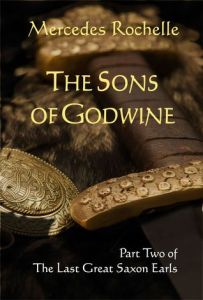
The Sons of Godwine: Part Two of The Last Great Saxon Earls by Mercedes Rochelle

02_The Sons of Godwine

Publication Date: March 7, 2016
Sergeant Press
eBook & Print; 306 Pages

Genre: Historical Fiction

Emerging from the long shadow cast by his formidable father, Harold Godwineson showed himself to be a worthy successor to the Earldom of Wessex. In the following twelve years, he became the King’s most trusted advisor, practically taking the reins of government into his own hands. And on Edward the Confessor’s death, Harold Godwineson mounted the throne—the first king of England not of royal blood. Yet Harold was only a man, and his rise in fortune was not blameless. Like any person aspiring to power, he made choices he wasn’t particularly proud of. Unfortunately, those closest to him sometimes paid the price of his fame.

This is a story of Godwine’s family as told from the viewpoint of Harold and his younger brothers. Queen Editha, known for her Vita Ædwardi Regis, originally commissioned a work to memorialize the deeds of her family, but after the Conquest historians tell us she abandoned this project and concentrated on her husband, the less dangerous subject. In THE SONS OF GODWINE and FATAL RIVALRY, I am telling the story as it might have survived had she collected and passed on the memoirs of her tragic brothers.

This book is part two of The Last Great Saxon Earls series. Book one, GODWINE KINGMAKER, depicted the rise and fall of the first Earl of Wessex who came to power under Canute and rose to preeminence at the beginning of Edward the Confessor’s reign. Unfortunately, Godwine’s misguided efforts to champion his eldest son Swegn recoiled on the whole family, contributing to their outlawry and Queen Editha’s disgrace. Their exile only lasted one year and they returned victorious to London, though it was obvious that Harold’s career was just beginning as his father’s journey was coming to an end.

Harold’s siblings were all overshadowed by their famous brother; in their memoirs we see remarks tinged sometimes with admiration, sometimes with skepticism, and in Tostig’s case, with jealousy. We see a Harold who is ambitious, self-assured, sometimes egocentric, imperfect, yet heroic. His own story is all about Harold, but his brothers see things a little differently. Throughout, their observations are purely subjective, and witnessing events through their eyes gives us an insider’s perspective.

Harold was his mother’s favorite, confident enough to rise above petty sibling rivalry but Tostig, next in line, was not so lucky. Harold would have been surprised by Tostig’s vindictiveness, if he had ever given his brother a second thought. And that was the problem. Tostig’s love/hate relationship with Harold would eventually destroy everything they worked for, leaving the country open to foreign conquest. This subplot comes to a crisis in book three of the series, FATAL RIVALRY.

Available at Amazon

TOSTIG REMEMBERS

Not long after we were comfortably housed in Flanders, Judith and I attended church with Matilda, Baldwin’s only surviving daughter, and her ladies. Matilda was a tiny thing, but a spirited little bundle of energy nonetheless, and very pretty. She would have fit under Judith’s chin. But she was the pride and joy of her parents, well-educated and very conscious of her lineage; her mother was the king of France’s sister, and Baldwin’s ancestors have ruled Flanders since the ninth century.

It had been raining that day and the sun was just peeking from the clouds as we finished the services in the church of St. Donation, which stood only about 400 meters from the castle. As we were leaving, Matilda led her little procession; I was far back in the crowd when the commotion began. Women were screaming, arms were waving, and people were pushing into each other trying to fall back. By the time I elbowed my way through the door, craning my neck to see over all the heads, Matilda was lying face-down in a puddle of mud. She was sobbing for all the world like she had just taken a beating. The poor girl was covered from head to toe with muck, and her beautiful dress was ruined. As she pushed herself up by the arms, I shook the girl next to me.

“What happened?”

“It was him,” she sobbed, pointing. Looking up, I saw a somewhat disheveled man riding away. There was no time to catch up with him—not with poor Matilda in need of assistance. I ran to her side and rolled her into my arms, picking the unresisting girl up like she was a child. She put her arms around my neck, smearing mud and tears all over my tunic.

“Take…take me home,” she coughed between sobs. She didn’t need to tell me that!

By now we had drawn a crowd, but they all parted respectfully as I carried Bruges’ favorite daughter back to her father’s castle. I heard the murmurs as we passed by.

“William the Bastard,” said somebody.

“The Duke,” said another. “He must be punished.”

“Poor girl,” said a third. “He just grabbed her by the back of the neck and threw her in the mud.”

“He beat her!”

“No, he kicked her!”

“He rolled her in the mud then got on his horse.”

I was shocked. That was the Duke of Normandy?

Murmuring words of encouragement, I carried Matilda up the hill to the castle. We passed between rows of soldiers and into the citadel where her ladies ran ahead of me to prepare her chamber. I laid Matilda on a pile of covers and she rolled on her side, hiding her face. Her father rushed in the door and knelt by her bedside.

“Oh my poor child. What happened?”

At that, she sat up and threw her arms around Baldwin’s neck, covering him with mud, too. After a few moments of sobbing, she pulled herself together.

“Oh father. It was Duke William. He was waiting for me at the church. When I came out, he accused me of humiliating him! I told him I would not lower myself to marry a mere bastard, when he grabbed me and threw me into the mud. He pushed me back and forth until I was totally covered then got on his horse and rode away.”

She took a cloth from one of her ladies and blew her nose in it.

“Outrageous!” spit the Count. “I will have his head for this!”

Turning Matilda over to her women, he rose and tried to look dignified. But he was all bespattered like myself, and decided to leave the room, taking the witnesses with him. He put an arm around my shoulder.

“Thank you, Tostig. Poor girl.” He tried to straighten out his tunic then gave up. “Right before you came to Flanders, Duke William sent an embassy asking for Matilda’s hand in marriage. You can imagine how quickly she sent them packing. William was beneath her station, and a bastard on top of everything else. She is not shy, my little Matilda!” He laughed briefly. “But we weren’t expecting this!”

The more he thought about it, his face became redder and redder.

“How dare he shame my little girl! Come, Tostig. We cannot let this go unavenged!”

There is one thing I can say about Count Baldwin; he is a very decisive man. He wasted no time in calling together his scribes and composing letters to his knights and captains. He summoned his household steward and demanded an accounting of all supplies. He called for his banker so he could determine how many funds he could raise. He worked long into the night.

The following day, as Baldwin was busily giving orders, Matilda walked into the great hall, trailing her women. There were no signs of the previous afternoon’s dishevelment; in fact, she had regained her proud bearing. Everyone stopped what they were doing and stared at her.

“Father, I have made a decision,” she said evenly. “You may stop preparations for war. I have decided I will marry Duke William of Normandy.”

You could have heard a feather drop in the room. We were all stunned into silence.

“You what?” her father finally muttered.

“I will have no one else.”

Apparently used to Matilda’s strange behavior, her father leaned back and put the quill down.

“And what has brought about this change of mind?” He crossed his arms over his chest.

She appeared to think for a moment. “It must be a brave and powerful man who would dare do such a thing, right in the middle of your territory.” A brief smile flicked across her face. “I understand him better, now.”

Baldwin looked around at his courtiers. “There you have it. Cancel our preparations.” I detected a bit of sarcasm in his voice, but he was quickly obeyed. He held out a hand to Matilda.

“Come, my child. Sit beside me.”

Someone brought a chair and Matilda obliged, taking her father’s hand.

“Are you sure you want to do this?” he said gently. “He may prove to be a dangerous husband.”

“I will manage him. After all, he really didn’t hurt me.”

Baldwin didn’t even try to reason with her. Given time, he told me later, she might change her mind again.

Mercedes Rochelle

About the Author

Born in St. Louis MO with a degree from University of Missouri, Mercedes Rochelle learned about living history as a re-enactor and has been enamored with historical fiction ever since. A move to New York to do research and two careers ensued, but writing fiction remains her primary vocation. She lives in Sergeantsville, NJ with her husband in a log home they had built themselves.

For more information visit Mercedes Rochelle’s website and blog. You can also follow her on FacebookTwitter, and Goodreads.

Blog Tour Schedule

Monday, April 18
Guest Post & Giveaway at Let Them Read Books

Wednesday, April 20
Guest Post at Just One More Chapter

Friday, April 22
Excerpt & Giveaway at Queen of All She Reads

Sunday, April 24
Excerpt & Giveaway at Teddy Rose Book Reviews Plus More

Monday, April 25
Review at Book Nerd

Wednesday, May 4
Excerpt at Layered Pages

Thursday, May 5
Review at Impressions In Ink

Friday, May 13
Interview at Passages to the Past

04_The Sons of Godwine_Blog Tour Banner_FINAL (2)


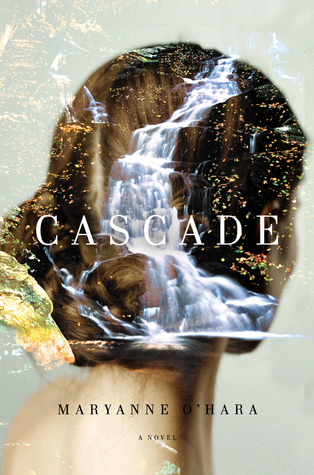
Book Review: Cascade by Maryanne O’Hara

Back in May 2013 I shared my short but to the point review of Cascade by Maryanne O’Hara. It’s such a great read I thought I would share it again! Enjoy!

Cascade

About the book:

What would you give up to become the person you knew you were meant to be?

It’s 1935, and Dez Spaulding has sacrificed her plans to work as an artist in New York to care for her bankrupt, ailing father in Cascade, Massachusetts. When he dies, Dez finds herself caught in a marriage of convenience, bound to the promise she made to save her father’s Shakespeare Theater, an especially difficult feat since the town faces almost certain flooding to create a reservoir. When she falls for fellow artist and kindred spirit Jacob Solomon, she sees a chance to escape with him and realize her New York ambitions, but her decisions will have bitter and unexpected consequences.

Fans of Richard Russo, Amor Towles, Sebastian Barry, and Paula McLain will savor this transporting novel about the eternal tug between our duties and our desires, set in New York City and New England during the uncertain, tumultuous 1930s.

*All reviews, interviews, guest posts and promotions are original works of the people involved. In order to use any part of the material from this site, please ask for permission from Stephanie M. Hopkins-Layered Pages. *

My thoughts:

Love, loss and conflicting loyalties and promises- this story sweeps you into the 1930’s, a town in Cascade, Massachusetts. Who is fighting for their very own survival of a flood that is to create a reservoir for Boston. A woman-Desdemona, who has made promises to her dying father and bound to the man she married. Yet she yearns to for a life of an artist and falls for a young Jewish man. Author Maryanne O’Hara brings you raw emotions in her characters, their lives and gives you a sense of timeless love and beauty. I have to admit when I opened the first page and started reading, I had a hard time getting into it. So I stepped away for a few days and went back to it. Because I literally had just finished a book that was set in the 19 Century and I picked this one up immediately afterwards. Not the best idea in the world. Once I picked it up again, the story drawled me in and I was memorized. I truly admire the authors writing style and her way with characterization. The story all around is just beautiful and atmospheric. I highly recommend this novel.

Book Cover Rating:

I am rating this book cover five stars! I absolutely love it! It’s stunning and true to the story.

Interview with Meredith Allard

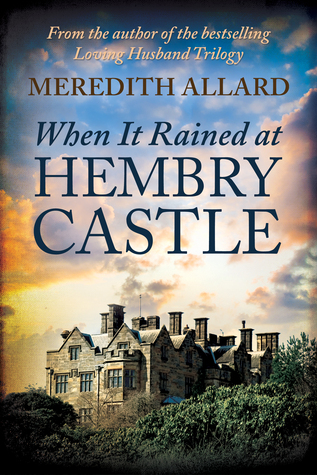
Meredith, thank you for chatting with me today about your book, When It Rained at Hembry Castle. Does Hembry Castle exist and if not, was there a real castle that was your inspiration?

Hembry Castle is very much a figment of my imagination, though two real life places served as the inspiration for the exterior: Scotney Castle and Wentworth Castle, both in England, of course. The picture on the book’s cover is of Scotney Castle. The interior of Hembry Castle was largely influenced by Pittock Mansion, which can be found in Portland, Oregon. Primarily, I used photos I found on Pinterest to help me describe the interior and exterior of Hembry Castle.

02_When-It-Rained-at-Hembry-Castle

Please tell me a little about your story.

When It Rained at Hembry Castle is a love story set in Victorian England. The novel is about Edward Ellis, a rising author, and Daphne Meriwether, the American niece of the 9th Earl of Staton. Daphne is new to England and she must learn how to live in the Downton Abbey-like world her father’s family lives in. It’s a blossoming romance for Edward and Daphne, and there’s some mystery thrown in involving Daphne’s uncle, Richard, the 9th Earl of Staton.

What are the common movements your main characters make?

All my novels are about characters who are or see themselves as outsiders in one way or another. In When It Rained at Hembry Castle, Daphne is very much an outsider, being an American in England who is unfamiliar with the aristocratic world her father grew up in. Edward is also an outsider of sorts. He’s the grandson of servants who is working hard to make his way as a writer. I think all of my main characters mean to do the right thing, but whether their choices are correct or not always remains to be seen.

What is the mood or tone your characters portray and how does this affect the story?

I think both Edward and Daphne are largely positive people. Neither one of them are prone to complaining and they try to make the best of whatever is thrown their way. I hope this adds a positive, hopeful tone to the story.

What are the emotional triggers of your characters and how do they act on them?

For Daphne, she’s triggered by her grandmother’s insistence that she conform to the aristocratic way of life. For Edward, he’s triggered by his love for Daphne and his frustration at the obstacle that is keeping them apart. Daphne humors her grandmother and on the outside she seems to be conforming, though she’s a bit of a rebel and isn’t as complacent as her grandmother thinks. Edward, in typical man fashion, does nothing, hoping the problem will go away.

What do you like most about writing stories that take place in the past?

I’ve loved history since I was in school, and I even toyed with the idea of majoring in history in college. Writing historical fiction is perfect for me because it a combination of the two things I’m most interested in—history and writing. I have a funny habit of writing stories set in times I’m not all that familiar with, which is fine because that’s part of the fun for me, researching the history. When It Rained at Hembry Castle is actually the exception to that because I was already pretty familiar with Victorian England.

Describe Victorian England in your eyes.

My knowledge of Victorian England came from my love of Dickens’ novels, which started for me in college, but when I researched the era as I was writing Hembry Castle I realized that the time was much more complicated than I first realized. Yes, there was the poverty and the darkness of Dickens’ descriptions, but it was also a time of great change. The Victorian era spanned nearly 70 years, and England in 1901 was very different than England in 1837. By the end of the Victorian era, we can begin to see inklings of the modern era that we live in today. Since Hembry Castle takes place from 1870-1872, the story is happening right in the middle of the Victorian era.

What are some of the romantic parts to the story readers can expect?

My stories tend to focus more on the falling in love aspect of romance. Edward and Daphne have a few obstacles they have to overcome in order to be together. Even acknowledging that they want to be together is the first hurdle. After they admit to themselves that they care for each other, Edward has a big secret he’s keeping from Daphne. How Daphne reacts to the secret remains to be seen.

How long did it take to write your story and where in your home do you hone in your craft?

Hembry Castle took me two years. I returned to college in 2014, and of course that takes a lot of my time. I had a lot of research to complete for this book, and it took me a little time to figure out the point of view. Normally, I write novels with either a one person or two person point of view, but I finally realized that Hembry needed to allow more characters their moment in the sun. Since I live in a small apartment, my computer is set up in my bedroom. I know they say don’t keep your work where you sleep, but oh well. I have a nice view from my bedroom window so it works for me.

What is up next for you?

Fans of my Loving Husband Trilogy will be happy to know that I’m writing the prequel to the series, called Down Salem Way. Like the first book in the series, Her Dear & Loving Husband, it takes place in Salem, Massachusetts during the Salem Witch Trials.

AMAZON US | AMAZON UK | BARNES & NOBLE | ITUNES | KOBO

03_Meredith-Allard

About the Author

Meredith Allard is the author of the bestselling novels The Loving Husband Trilogy, That You Are Here, Victory Garden, Woman of Stones, and My Brother’s Battle. Her newest release, the historical novel When It Rained at Hembry Castle, is a great read for fans of Downton Abbey.

Visit Meredith online at www.meredithallard.com. You can also connect with her on FacebookTwitterGoogle+,  Pinterest, and Goodreads.


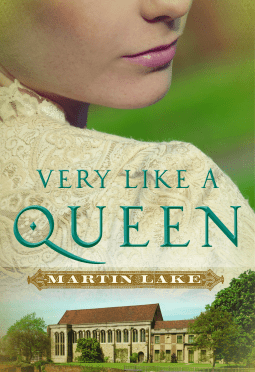
Review: Very Like A Queen by Martin Lake

Very much a queenAlice Petherton is well practiced at using her beauty and wits to survive in the Court of King Henry VIII. As the King’s favorite, she enjoys his protection, but after seeing the downfall of three of his wives, she’s determined to avoid the same fate. Alice must walk a fine line between mistress and wife.

She finds a powerful protector in Thomas Cromwell, and Alice has every reason to believe that she will continue to enjoy a life of wealth and comfort at Court…until she puts everything at risk by falling in love with a Frenchman, Nicholas Bourbon.

When Cromwell is executed, Alice loses her only ally and flees to France. There she hopes to live in peace with Nicholas. But Alice is lured into a perilous game of treason, and peace doesn’t last long. Will Alice get back the life and love she’s fought for? Or will she lose herself to the whims of a capricious monarch?

My review:

First, I’d like to thank NetGalley for providing a copy of this book. What first captured my attention was the title. I thought, how unusual and I liked it. Though with my busy schedule I read this novel in four days. I did NOT want to put it down. This is the first book I have read of Martin Lake and I am now a fan!

I love his portrayal of Cromwell! I actually like the man in this story. If you know the history, you know his demise and how Martin portrayed that was very powerful and believable. So many great men lost under Henry’s rule.

As I was reading the story I couldn’t help keep thinking that I am so glad I wasn’t alive or one of the members during King Henry VIII court. Yikes! The man’s moods were so up and down and vicious! As his health and eating habits became worse, the more suspicious and paranoid he became. What a miserable existence. One never knows what he will do to you if you made him mad!

I love Alice, though I would have liked to shake her sometimes! She couldn’t help but get herself in sticky situations! But she is a true testament of a survivor and wins the heart of many. I would like to read more about her.

There were several notable characters and locations in the story I enjoyed reading about. Nonsuch Palace, Dover Castle and the French Castles comes to mind and then there was Ralph Sadler, Suffolk. Cranmer, Norfolk-archival to Thomas Cromwell, Master Hans Holbein, Marillac, Katheryn Howard- to name a few…Brilliant character development there.

There is so much to this novel. I am adding this among my favorite Tudor stories. Truly a gem and so well written. I will be on the lookout for more books by Martin Lake!

I rated this book four stars.

Stephanie M. Hopkins

Interview with Diann Ducharme

04_Diann Ducharme_Author

I’d like to welcome Diann Ducharme today to Layered Pages to talk with me about her book, The Outer Banks House. Diann was born in Indiana in 1971, but she spent the majority of her childhood in Newport News, Virginia. She majored in English literature at the University of Virginia, but she never wrote creatively until, after the birth of her second child in 2003, she sat down to write The Outer Banks House. She soon followed up with her second book, Chasing Eternity, and in 2015 the sequel to her first novel, Return to the Outer Banks House.

Diann has vacationed on the Outer Banks since the age of three. She even married her husband of 10 years, Sean Ducharme, in Duck, North Carolina, immediately after a stubborn Hurricane Bonnie churned through the Outer Banks. Conveniently, the family beach house in Kill Devil Hills, North Carolina provided shelter while she conducted research for her historical fiction novels.

She has three beach-loving children and a border collie named Toby, who enjoys his sprints along the shore. The family lives in Manakin-Sabot, Virginia, counting down the months until summer.

For more information visit Diann Ducharme’s website. You can also follow Diann on her blog, Twitter, and Goodreads.

Diann, please tell me about your book.

Its 1868, the era of Reconstruction in North Carolina, and times are tough. Yet the barren barrier islands of the Outer Banks offer a respite for the Sinclairs, the once-wealthy plantation owners. The family of five and three servants plan to spend the summer in the newly constructed cottage, one of the first cottages on the ocean side of the resort village of Nags Head.

There, on the porch of the cottage, the 17-year-old daughter, beautiful, book-smart and boxed-in Abigail, teaches her father Nolan’s fishing guide, good-natured, ambitious and penniless 19-year-old Benjamin Whimble, how to read and write. The two come to understand, and then to love each other, despite the demands of their parents, the pursuit of prim and proper medical student Hector Newman, and Ben’s longtime relationship with sour-tongued net-mender, Eliza Dickens.

But as Abby and Ben come to learn, tackling the alphabet is the easy part of the summer. Against everything he claims to represent, Ben becomes entangled in Nolan’s Ku Klux Klan dirty work, and Abigail’s mother Ingrid, unexpectedly pregnant, reveals facets of her personality to Abigail that shed light on her growing madness and inability to mother. As Abby and Ben venture from the cottage porch to a real schoolhouse—a schoolhouse for the slowly dwindling Freedmen’s Colony on nearby Roanoke Island, they soon come face to face with her father, dressed in KKK robes and hunting a man that the entire colony of freed slaves has come to love and respect. It becomes doubtful that Abby and Ben’s newfound love will survive the terrible tragedy and surprising revelations that one hot Outer Banks night brings forth.

The Outer Banks House is the first historical fiction novel set on the Outer Banks of North Carolina in the mid-19th century. It combines history, romance and coming-of-age drama, as Abby tries to adjust to life in a post-war South. Each chapter begins with a pertinent quote from Robinson Crusoe, the novel that sparks such controversy (over slavery and racism), and finally appreciation and love, between Abby and Ben.

What are some of your interests in the Civil War?

During that post-Civil War Reconstruction era, vacation homes were starting to be built along the ocean side of the Outer Banks. The questionability of such endeavors—something at which the local “Bankers” looked askance, due to the cottages’ dangerous proximity to the sea–captivated me. I wanted to write about people that would do such dramatic things. I also enjoyed imagining women in hoop skirts, fresh from the war, hanging out at beach cottages. I didn’t know much about the Civil War, nor Reconstruction in North Carolina, but I did know about hanging out at the beach, so I learned as much as I could about that time period and blended what I knew with what I had learned.

What is some of the research that went into this story?

During my research, I read a terrific book called Time Full of Trial: The Roanoke Island Freedmen’s Colony by Patricia Click, about the Freedmen’s Colony on Roanoke Island during and after the Civil War. The book taught me everything there was to know about the Freedmen’s Colony, of which I had previously heard nothing. Learning about such a unique and unheard of aspect of the Outer Banks piqued my interest enough to use it as a major point of reference in the novel.

I also learned during my research that many residents of the Banks were pro-Union during the Civil War. As much as North Carolina is considered a southern state, it was interesting for me to know that the people of the islands didn’t necessarily hold the beliefs that were championed by people of the mainland. This fact helped me to form Ben’s character, as well as create a picture of the independent-mindedness of the people of the Banks.

I also dragged my family all over the island in the name of research. A pivotal scene occurs on the large dune system called Jockey’s Ridge, located in Nags Head. My family and I climbed the dunes several times, and it never failed to amaze me just how high they were—a giant hill made of sand! And too, a much smaller dune system exists to the north of a unique maritime forest called Nags Head Woods. The dune system, called Run Hill, is pretty much a secret to most visitors of the Banks—eerily quiet in the dead of summer. This is where I found the trees—the northernmost beginnings of Nags Head Woods—whose trunks were buried in sand. Just as my characters stumbled upon these feats of nature, so did I explore them for the first time as well. I think such exploration made the writing more believable.

Please tell me a little about Abby’s father’s work with the Ku Klux Klan.

The Ku Klux Klan was founded in 1866 as a way to reassert white southern resistance to the Republican Party’s Reconstruction-era policies that favored politician and economic equality for the newly freed blacks. The Klan extended into every southern state by 1870, including North Carolina. Nolan Sinclair, being a wealthy plantation owner, was a politically connected man before and after the war; these during Reconstruction these humiliated and temporarily hobbled politicians and former slave-owners set about righting a white supremacist agenda which eventually made its way into many southern legislatures.

Why did you choose the Outer Banks of North Carolina for your story?

The Outer Banks is a long, skinny chain of barrier islands that run along a good portion of the coast of North Carolina. One the one side, the ocean crashes against the naked sand, all drama. On the other side, the sounds caress the maritime thickets and marshland, more forgiving. I knew that I wanted to compare the two ecosystems, similar to the way in which I pit the “Bankers” against the mainlanders who build their vacation homes there.

Also, nothing there stays the same—everything is dynamic, fleeting—yet the tiny strip of land still hangs on, facing the wild weather year after year. The concept of change suited my characters as well.

I have vacationed on the Outer Banks since the age of 3, so it is a very special place for me.

Please tell me a little about the Sinclair family.

Nolan Sinclair, the once wealthy and powerful planter from Edenton, North Carolina, is fearful of losing his plantation in the Reconstruction aftermath of the Civil War. In a desperate act of assertion, he moves his family to the unusual house on the sand for the summer of 1868. His connections with the KKK threaten his otherwise peaceful summer plans at the seaside. His fiercely intelligent and aloof wife Ingrid is in the early stages of pregnancy, but she fears that her body cannot safely bear any more children. And their eldest child, 17-year-old Abby, misses her Uncle Jack, dead from an illness contracted during the Civil War. Their faithful servant, Asha, travels to the beach with them for the summer.

What are some of the fictional aspects of the story?

The setting is very real, but I had to imagine what it must have been like in 1868. Not a lot was written about the area during this time period.

What was your writing process and how long did it take to write your story?

It took me about 3 years to complete the first draft of the novel. I wrote during my second child’s naps and on weekends when my husband took over the household duties. But I was thinking about the novel at all times of the day and often at night!

What are you working on next?

I am working on a present-day novel about a once-beautiful woman, now scarred, who struggles to overcome her agoraphobia in order to regain custody of her two children. During her recovery, a love interest with a deer hunter ensues when she moves to her blind aunt’s home in the mountains of western Virginia.

02_The Outer Banks House_Cover


Buy The Outer Banks House

Amazon

Barnes & Noble

Crown Publishing

IndieBound

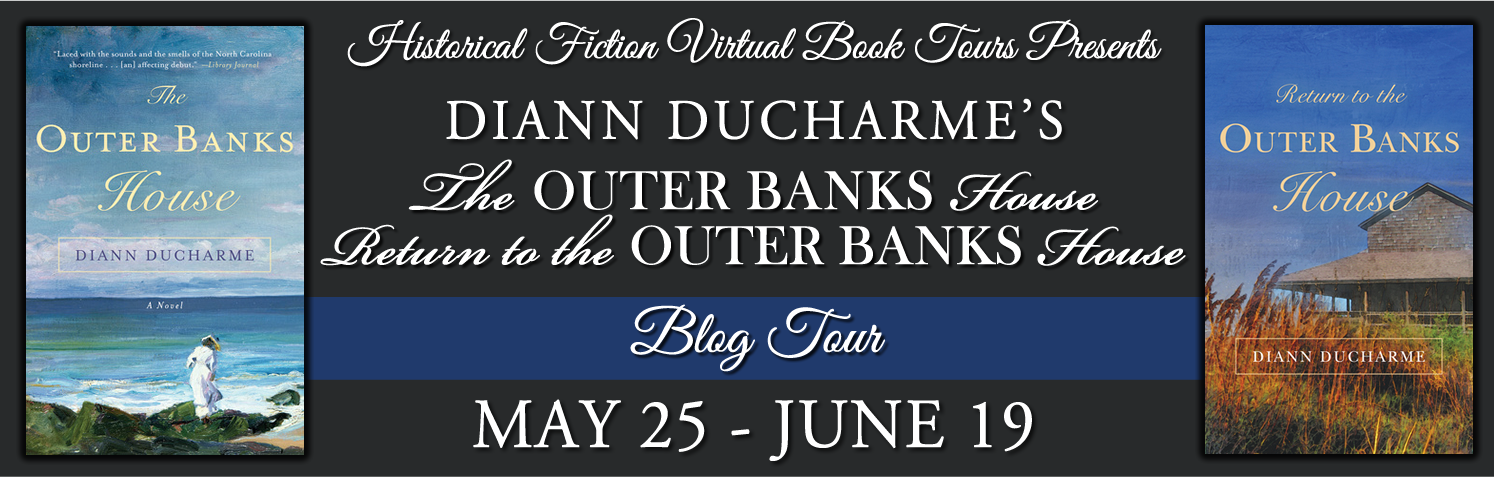
 The Outer Banks Series Blog Tour Schedule

Monday, May 25 Spotlight & Giveaway at Raven Haired Girl

Tuesday, May 26 Guest Post & Giveaway at Susan Heim on Writing

Wednesday, May 27 Review (Book One) at Back Porchervations

Thursday, May 28 Review (Book One) at In a Minute

Friday, May 29 Interview & Giveaway at Historical Fiction Obsession Spotlight at The Never-Ending Book

Saturday, May 30 Spotlight at Becky on Books

Sunday, May 31 Review (Book One) at Book Nerd

Monday, June 1 Review (Book Two) at Let them Read Books Spotlight at I’d So Rather Be Reading

Tuesday, June 2 Review (Book One) at Book Lovers Paradise

Wednesday, June 3 Review (Book Two) at Back Porchervations

Thursday, June 4 Spotlight & Giveaway (Book One) at View from the Birdhouse

Friday, June 5 Review (Both Books) at Bibliotica

Sunday, June 7 Review (Book One) at Carole’s Ramblings

Monday, June 8 Review (Book One) at Ageless Pages Reviews Guest Post at Curling Up With A Good Book

Tuesday, June 9 Review & Giveaway (Book One) at A Literary Vacation

Wednesday, June 10 Review (Both Books) at Unshelfish Spotlight at CelticLady’s Reviews

Thursday, June 11 Review (Book Two) at Book Lovers Paradise Interview at Boom Baby Reviews

Friday, June 12 Spotlight at Caroline Wilson Writes

Sunday, June 14 Review (Book Two) at Carole’s Ramblings

Monday, June 15 Review & Giveaway (Both Books) at Genre Queen

Tuesday, June 16 Interview at Books and Benches Spotlight at The Lit Bitch

Wednesday, June 17 Review (Both Books) at Luxury Reading

Thursday, June 18 Review (Book One) at Books and Benches Interview at Layered Pages

Friday, June 19 Review (Book One) at Build a Bookshelf Review (Book Two) at Ageless Pages Reviews

05_Outer Banks Series_Blog Tour Banner_FINAL


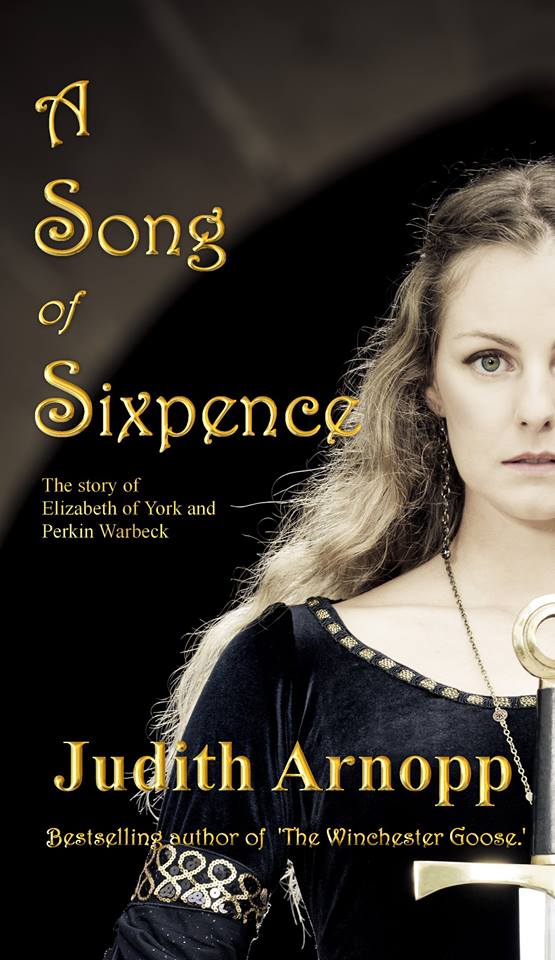
A Song of Sixpence by Judith Arnopp

JA Picture

Judith, who is from Wales in the UK, is the author of seven historical fiction novels. Her early novels, Peaceweaver, The Forest Dwellers and The Song of Heledd, are set in the Anglo-Saxon/Medieval period but her later work, The Winchester Goose, The Kiss of the Concubine, Intractable Heart and A Song of Sixpence, concentrate on the Tudor period. She is currently researching for her eighth novel about Margaret Beaufort, the mother of Henry VII. Judith is also a regular blogger and author of historical articles.

A Ssong of Sixspence By JA

Blurb of A Song of Sixpence

In the years after Bosworth, a small boy is ripped from his rightful place as future king of England.

Years later when he reappears to take back his throne, his sister Elizabeth, now Queen to the invading King, Henry Tudor, is torn between family loyalty and duty.

As the final struggle between the houses of York and Lancaster is played out, Elizabeth is torn by conflicting loyalty, terror and unexpected love.

Elizabeth must choose between supporting the man claiming to be her brother, or her husband, the king?

Set at the court of Henry VII A Song of Sixpence offers a unique perspective on the early years of Tudor rule. Elizabeth of York, often viewed as a meek and uninspiring queen, emerges as a resilient woman whose strengths lay in endurance rather than resistance.

London – Autumn 1483

Ink black water slaps against the Tower wharf where deep impenetrable dark stinks of bleak, dank death. Strong arms constrict him and the rough blanket covering his head clings to his nose and mouth. The boy struggles, kicks, and wrenches his face free to suck in a lung full of life saving breath. The blanket smothers him again. He fights against it, twisting his head, jerking his arms, trying to kick but the hands that hold him, tighten. His head is clamped hard against his attacker’s body. He frees one hand, gropes with his fingers until he discovers chain mail, and an unshaven chin. Clenching his fingers into a fist, he lunges out with a wild inaccurate punch.

With a muffled curse the man throws back his head but, keeping hold of his prisoner, he hurries onward, down narrow, dark steps, turning one corner, then another, before halting abruptly. The boy hears his assailant’s breath coming short and sharp and knows he too is afraid.

The aroma of brackish water is stronger now. The boy strains to hear mumbled voices, low and rough over scuffling footsteps. The ground seems to dip and his stomach lurches as suddenly they are weightless, floating, and he senses they have boarded a river craft. The invisible world dips and sways sickeningly as they push out from the stability of the wharf for the dangers of the river.

The only sound is the gentle splash of oars as they glide across the water, far off the clang of a bell and the cry of a boatman. He squirms, opens his mouth to scream but the hand clamps down hard again. The men draw in their breath and freeze, waiting anxiously. A long moment, a motionless pause before the oars are taken up again and the small craft begins to move silently across the surface.

River mist billows around them; he can smell it, feels it seeping through his clothes. He shivers but more from fear than cold.

He knows when they draw close to the bridge. He can feel the tug of the river; hear the increasing rush of the current, the dangerous turbulence beneath. Surely they will not shoot the bridge, especially after dark. Only a fool would risk it.

The boy wriggles, shakes his head, and tries to work his mouth free of the smothering hand. He strains to see through the blinding darkness but all is inky black. The boat gathers pace and, as the noise of the surging river becomes deafening, the man increases his hold, a hurried prayer rumbling in his chest.

The whole world is consumed in chaos, rushing water, clamouring thunder, biting cold. In the fight for survival, the boy continues to battle fruitlessly for breath, struggle for his freedom. The body that holds him hostage tenses like a board and beneath the boy’s ear beats the dull thud of his assailant’s heart. The blanket is suffocating hot, his stomach turning as the boat is taken, surging forward, spinning upward before it is hurled down again, between the starlings, shooting uncontrollably beneath the bridge.

Then suddenly, the world is calmer. Somehow the boat remains upright on the water. It spins. He hears the men scrabble for the oars, regain control and his captor relaxes, breathes normally again. Exhausted and helpless, the boy slumps in the soldier’s arms, his fight defeated.

All is still now; all is quiet. The oars splash, the boat glides down river, and soon the aroma of the countryside replaces the stench of the city.

His clothes are soaked with river water; his stomach is empty, his body bruised and aching. Defeated and afraid, the man releases his hold and the boy lies still in the bottom of the boat.

He sleeps.

The world moves on.

Much later, waking with a start, the boy hears low, dark whisperings; a thick Portuguese accent is answered by another, lighter and less certain. This time when he blinks into the darkness, he notices a faint glimmer of light through the coarse weave of the blanket. He forces himself to lie still, knows his life could depend upon not moving but his limbs are so cramped he can resist no longer. He shifts, just a little, but it is too much. His kidnapper hauls him unceremoniously from the wet wooden planks.

The boy’s legs are like string. He stumbles as they snatch off his hood and daylight rushes in, blinding bright. He blinks, screwing up his face, blinking at the swimming features before him, fighting for focus. He sees dark hair; a heavy beard; the glint of a golden earring, and recognition and relief floods through him.

“Brampton!” he exclaims, his voice squeaking, his throat parched. “What the devil are you doing? Take me back at once.”

Brampton tugs at the boy’s tethered arms, drawing him more gently now to the bench beside him.

“I cannot. It is unsafe.”

“Why?” As his hands are untied the boy rubs at each wrist in turn, frowning at the red wheals his bonds have left behind. His Plantagenet-bright hair glints in the early morning sun, his chin juts forward in outrage. “If my father were here…”

“Well, he is not.”

Brampton’s words lack respect, but the boy knows him for a brusque, uncourtly man.

“But where are you taking me? What is happening?”

“To safety, England is no longer the place for you.”

The boy swallows, his shadowed eyes threatening tears. Switching his gaze from one man to the other, he moistens his lips, bites his tongue before trusting his breaking voice. “Where is my brother? Where is Edward?”

Brampton narrows his eyes and looks across the misty river. He runs a huge, rough hand across his beard, grimaces before he replies and his words, when they come, spell out the lost cause of York.

“Dead. As would you be had I left you there.”

Links

Amazon Author Page

Author Website

Author Blog

Facebook

JA Banner


Sunday Book Highlight

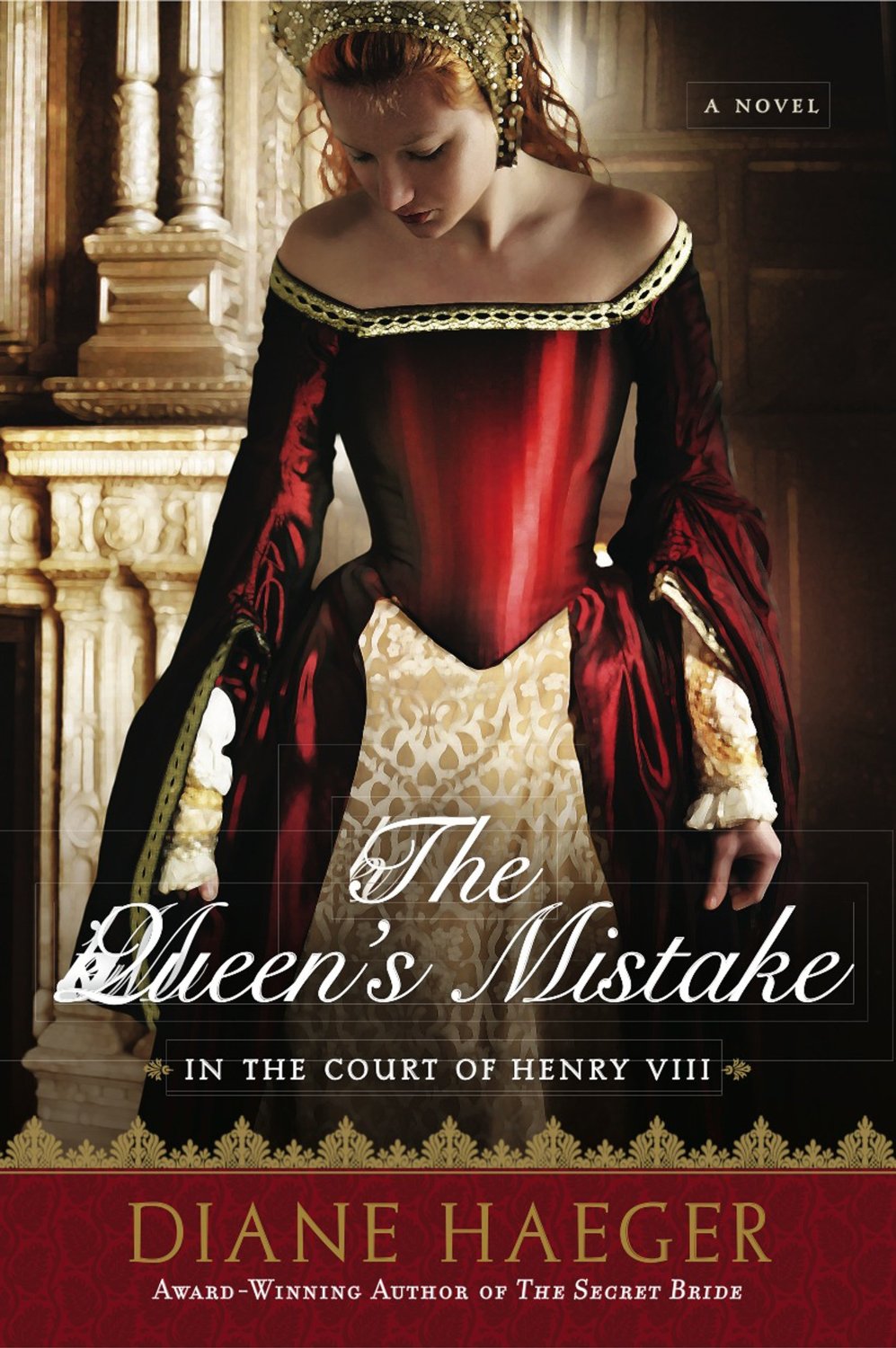
The Queens Mistake

When the young and beautiful Catherine Howard becomes the fifth wife of the fifty-year-old King Henry VIII, she seems to be on top of the world. Yet her reign is destined to be brief and heartbreaking, as she is forced to do battle with enemies far more powerful and calculating than she could have ever anticipated in a court where one wrong move could mean her undoing. Wanting only love, Catherine is compelled to deny her heart’s desire in favor of her family’s ambition. But in so doing, she unwittingly gives those who sought to bring her down a most effective weapon, her own romantic past. The Queen’s Mistake is the tragic tale of one passionate and idealistic woman who struggles to negotiate the intrigue of the court and the yearnings of her heart.

**********

Catherine stood in the courtyard of Horsham, putting on her riding gloves and gazing into the dry-lipped, scowling expression of her grandmother, who had come out grudgingly to bid her farewell. A cool breeze blew across the gently rolling terrain as Catherine curtsied properly to the woman who had been more keeper than relation.

“Remember,” the dour old woman finally said, “you’re going to court with nothing beyond your passable looks and your Howard name. If you are very, very fortunate, you may become a maid of honor, but your personal state of poverty keeps you no better than the girls with whom you shared that dormitory, unless you do something bold about it. Never forget that.”

Catherine had an overwhelming urge to make a face just then or to say something spiteful in response. She had been aching to do that for years, and yet she had always been forced into compliance.

“I understand, my lady grandmother.”

Agnes arched a silver brow. “Do you? Are you certain?”

It would be impossible not to understand your contempt of me, she thought. “I do,” she said instead.

“Do you also understand, somewhere in that empty head of yours, how that lark to seduce not one but two of my servants could put you in jeopardy of never making any sort of important match at court?”

“How would anyone discover such a thing, and why would anyone care about the indiscretions of a country girl from Sussex?”

The report came tumbling out like marbles rolling across her tongue before she even knew what was happening. She stood frozen, but refused to drop her gaze from the dowager duchess’s cold stare. But this time Agnes would not dare to hit her, not when her soft skin and smooth face were the only chance in the world to regain the Howard standing. Catherine knew it and belligerently took full advantage. The silence stretched on. Catherine still did not break her gaze.

“So you do have something of your cousin Anne Boleyn in you, after all.”

“Thank you, Grandmother.”

“Pray only hope it is not the part that landed her on the Tower Green, separated from her head.”

Catherine felt a shiver deep in her chest, but she would not show it. “Everyone here wishes me well, as I do them. They will speak against me to no one.”

“A spurned heart is a dangerous thing.”

She was not certain whether her grandmother meant Henry Manox or Francis Dereham.

“They shall marry one day and forget the past, just as I plan to do.”

“And for your sake, and for the family’s sake, I shall pray for that, since the alternative could be ghastly.”

Suddenly, before she could say anything more, the old woman drew something from a pocket in her blue slashed bell sleeve. A ruby suspended from a silver chain glittered in the sunlight through the clouds as she held it out to Catherine.

“My husband, the duke, gave this to your mother on her wedding day. He thought it might bring her luck. It quite obviously brought her no benefit. So, since I have no use for it…”

Her words fell away as she awkwardly offered the chain to Catherine. She reached out her hand and took the precious piece of the past her grandmother offered. She had so few things by which to remember her mother. There was no painted likeness, no letter. Only one linen-and-lace chemise had been left to her—one Catherine greedily guarded. Now there was this personal offering from a woman with whom she had felt no personal connection at all before now. As they stood near the entrance to the manor, a breeze whistled softly through the bough of evergreen trees above them.

“Did she wear it?” Catherine’s voice was shallow, and she could barely force herself to speak.

“Out of duty to him, whenever she visited my husband, yes, Jocasta wore it prominently.”

So at least it had touched her skin. It had been a part of her mother, Catherine thought. Not it offered a connection to the only time in her life when she had been the recipient of real affection. Catherine placed the necklace at her own throat and clasped it behind her neck without breaking with her grandmother’s gaze. She vowed she would always wear it to remind herself of what she had lost upon her mother’s death, when she was forced to this sheltered, verdant countryside. There had been no love or affection for her here, but she would try to find that again at court… If some courtier, suitable to her uncle’s purposes might actually come to love her. She had been training herself for a long time to find just that.

 anne-girard

Diane Haeger, who also writes as Anne Girard, is the author of 15 historical novels, most of them based on true stories from history. Her stories are drawn from a range of countries and eras including the French Renaissance, Georgian England, the American Civil War, to a series called In The Court of Henry VIII. Her most recent novel, Madame Picasso, details an early love affair in Paris between the famous artist and his muse. Her next novel, to be published later this year, is Platinum Doll, about 1930’s movie star Jean Harlow. Haeger holds a bachelor’s degree in English literature and a master’s degree in clinical psychology. She lives in California with her husband and children.

Website


Interview with Author Susan Spann

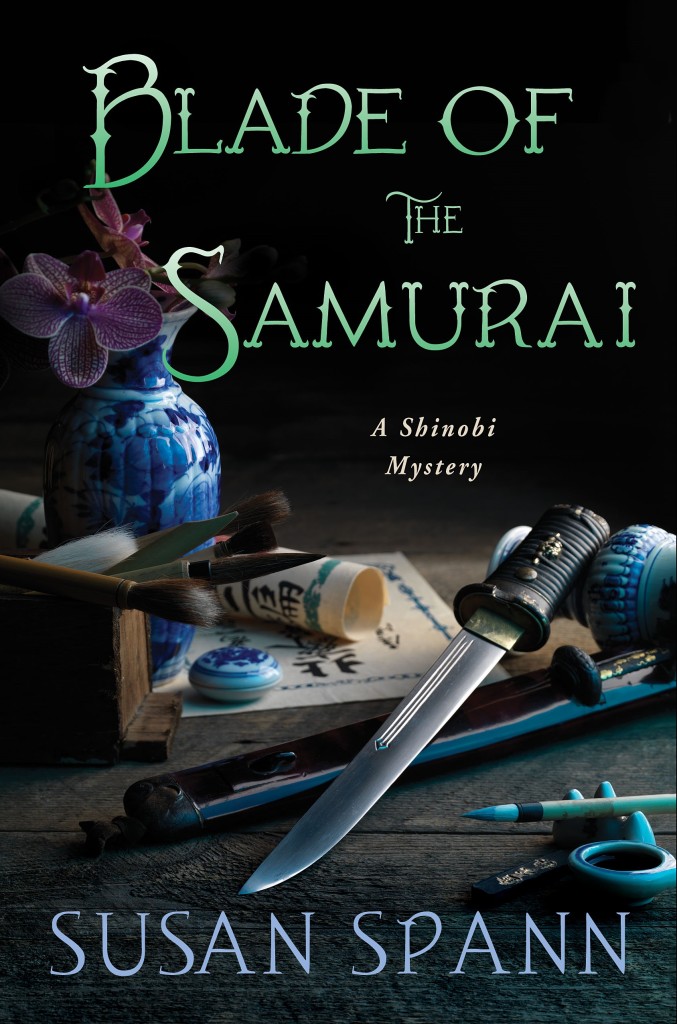
Blade-of-the-Samurai-677x1024

June, 1565: Master ninja Hiro Hattori receives a pre-dawn visit from Kazu, a fellow shinobi working undercover at the shogunate. Hours before, the Shogun’s cousin, Saburo, was stabbed to death in the Shogun’s palace. The murder weapon: Kazu’s personal dagger. Kazu says he’s innocent, and begs for Hiro’s help, but his story gives Hiro reason to doubt the young shinobi’s claims.

When the Shogun summons Hiro and Father Mateo, the Jesuit priest under Hiro’s protection, to find the killer, Hiro finds himself forced to choose between friendship and personal honor.

The investigation reveals a plot to assassinate the Shogun and overthrow the ruling Ashikaga clan. With Lord Oda’s enemy forces approaching Kyoto, and the murderer poised to strike again, Hiro must use his assassin’s skills to reveal the killer’s identity and protect the Shogun at any cost. Kazu, now trapped in the city, still refuses to explain his whereabouts at the time of the murder. But a suspicious shogunate maid, Saburo’s wife, and the Shogun’s stable master also had reasons to want Saburo dead. With the Shogun demanding the murderer’s head before Lord Oda reaches the city, Hiro and Father Mateo must produce the killer in time … or die in his place.

Hello Susan! Welcome to Layered Pages and thank you for chatting with me today.

After reading your book description, I don’t think I have read a story quite like this one. What sets your story apart from others in this genre?

Susan: First: thank you for inviting me here today. I appreciate the opportunity to chat with you!

I think the key difference is my detective, Hiro. He’s a shinobi (aka “ninja” – shinobi is the actual Japanese pronunciation of the word), which is something I hadn’t seen in detective fiction before. As a trained assassin, Hiro has a better understanding of forensics than most people who lived in medieval Japan, which gives him a special ability to look at a crime scene and deduce what might have happened there. I love “translating” forensics back through the centuries, and seeing the facts through Hiro’s eyes.

Stephanie: Your story looks really involved and you have quite a cast of characters….was there any challenges writing your story or keeping up with what each character was doing?

Susan: It’s definitely a challenge to keep up with a pack of liars—and generally speaking, every character in a mystery novel is a liar (to one degree or another). I usually write two outlines for each novel, one that shows the “onstage” action the reader sees on the page, and the other to keep track of the “offstage” action—so I know when a character is lying and when he’s telling the truth!

Stephanie: Did you use an outline for your story?

Susan: I do! In fact, I use two. Once I start writing, however, the characters take on a life of their own, so the finished novel usually has some fairly significant departures from the version that appeared in the outlines. So far, I’ve never changed the murderer’s identity—but several of the subplots ended up very different from my original plans.

Stephanie: Which character are you partial to?

Susan: I love Hiro and Father Mateo—no surprise there—but looking only at Blade of the Samurai, my favorite character from that novel is probably Ichiro, a young samurai who’s the son of the murder victim. Ichiro wasn’t in my original outline—he “rode onstage” in the first draft and I loved him too much to cut him out again. He captured my heart for many reasons, and I hope readers will like him too.

Stephanie: Please tell me about your research and conflicting opinions/interpretations from historians? If so, how did you deal with it?

Susan: When historical facts conflict, I try to find a reasonable version of the “truth” and go with it. Ultimately, historical fiction is still fiction, and though I try very hard to avoid significant errors, in the end we all have to write the best novels we can and accept that even in modern non-fiction, differing viewpoints and errors happen.

When I divert from historical fact, I try to add notes to that effect on my website, to help readers separate “fact from fiction” – but I try very hard not to change anything that’s historically significant.

Stephanie: What era does your story take place in and why did you chose this period and culture?

Susan: The Shinobi Mysteries are set in the mid-16th century (Blade takes place in 1565), which the Japanese refer to as the “Muromachi Era.” In the West, we consider it the medieval age. Japan was ruled by an emperor, though the shogun was in charge of the military, and had become the actual head of the government too.

I chose this era for a couple of reasons. First, the real, historical ninjas were at the peak of their strength in the 16th century. During that time, the shinobi clans were powerful forces within Japan, as spies and assassins for hire. The mid 16th century was also the time when foreigners (particularly Portuguese traders and Jesuits) were first making inroads in Japan, and that clash of cultures makes an interesting backdrop for fiction. This was also a tumultuous period in Japanese history, when many warlords vied to become the shogun. Taking all of those things together, it seemed like a great time to set a mystery series!

Stephanie: Did you face any challenges writing a murder scene?

Susan: I consider the murder scene a pivotal part of the novels—it’s the fountain from which the rest of the story flows—so I always take a lot of time in planning and writing it. The murders in my novels happen offstage, but before I write the novel itself, I actually write the scene in which the murder happens, to set the details in my mind and to help establish which clues the killer left behind. Those scenes I keep to myself, of course, but they’re just as important—if not more so—than the pages which do become part of the novels.

Stephanie: Who long did it take for you to write your story and where in your home do you like to write?

Susan: I write the first draft of a novel in 30 days, but that’s only the start of the process. That initial draft gets two full rounds of revisions before I insert the chapter breaks, and then two more (five drafts total) before it goes to my college-age son, who is my alpha reader. After I integrate his comments (and run another draft on my own) Draft 6 or 7 goes to my critique partners, and then draft 8 (or sometimes 9) gets sent to my agent for comment. By the time that first draft gets to my editor at Minotaur, it’s been through 9-10 rounds of revision, at least. The entire process takes about nine months.

Stephanie: Do you need complete silence and alone time to write or can you write surrounded by noise and a few people in the room?

Susan: It depends on the draft. I typically write first drafts in silence, and alone (though I can work in a coffee shop, if the need arises). Noise bothers me less now than it used to, though my favorite environment for writing and editing is definitely my home office, with the burble of my reef aquarium as the soundtrack.

Stephanie: What are you currently working on?

Susan: I’ve finished the third Shinobi Mystery, Flask of the Drunken Master, which is scheduled for publication in July 2015, and I’m currently revising the fourth book, Blood of the Outcast. It’s a wonderful thing to spend more time with Hiro and Father Mateo!

Stephanie: Thank you, Susan!

Susan: Thank you for having me here today!

Susan-Spann-1-300x267

Susan Spann acquired her love of books and reading during her preschool days in Santa Monica, California. As a child she read everything from National Geographic to Agatha Christie. In high school, she once turned a short-story assignment into a full-length fantasy novel (which, fortunately, will never see the light of day).

A yearning to experience different cultures sent Susan to Tufts University in Boston, where she immersed herself in the history and culture of China and Japan. After earning an undergraduate degree in Asian Studies, Susan diverted to law school. She returned to California to practice law, where her continuing love of books has led her to specialize in intellectual property, business and publishing contracts.

Susan’s interest in Japanese history, martial arts, and mystery inspired her to write the Shinobi Mystery series featuring Hiro Hattori, a sixteenth-century ninja who brings murderers to justice with the help of Father Mateo, a Portuguese Jesuit priest. When not writing or representing clients, Susan enjoys traditional archery, martial arts, horseback riding, online gaming, and raising seahorses and rare corals in her highly distracting marine aquarium. Susan lives in Sacramento with her husband, son, three cats, one bird, and a multitude of assorted aquatic creatures.

For more information please visit Susan Spann’s website and blog.  You can also find her on Facebook and Twitter.

Blade of the Samurai Blog Tour Schedule

Monday, July 7 Spotlight & Giveaway at Passages to the Past

Tuesday, July 8 Review at Closed the Cover

Wednesday, July 9 Review at Staircase Wit Guest Post & Giveaway at So Many Precious Books, So Little Time

Thursday, July 10 Review at Boolover Book Reviews

Monday, July 14 Review at Bibliophilia, Please

Wednesday, July 16 Review at Buried Under Books

Thursday, July 17 Spotlight at Reviews by Molly

Friday, July 18 Review at History Undressed

Monday, July 21 Review at Oh, For the Hook of a Book

Tuesday, July 22 Review at Judith Starkston Interview at Oh, For the Hook of a Book

Wednesday, July 23 Review at The True Book Addict

Thursday, July 24 Interview at Layered Pages

Monday, July 28 Guest Post & Giveaway at Historical Fiction Connection

Tuesday, July 29 Review at Flashlight Commentary

Wednesday, July 30 Review at Princess of Eboli

Thursday, July 31 Review at A Fantastical Librarian

Friday, August 1 Review at Reading the Ages

Susan Spann Book Tour Banner


Interview with Author Cara Langston

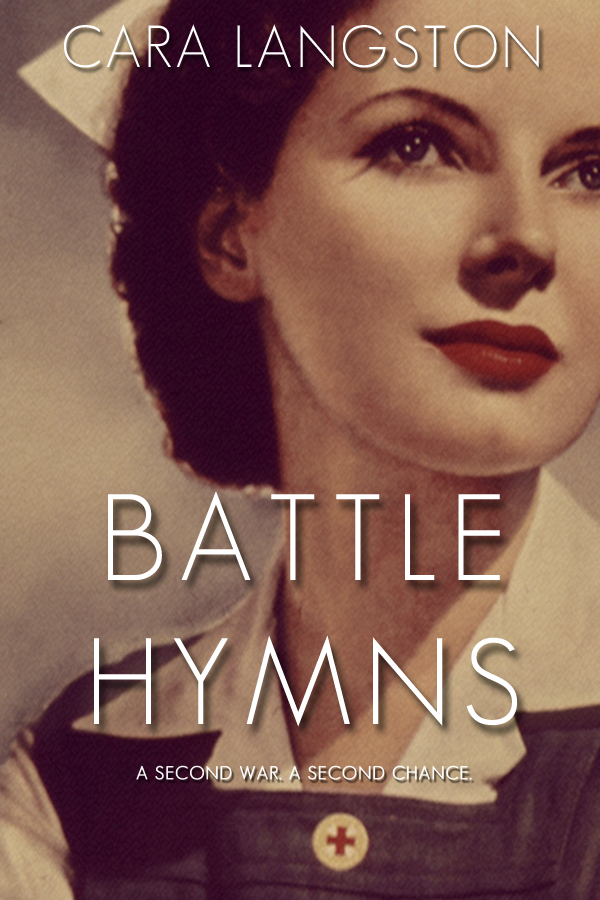
02_Battle Hymns

Stephanie: Hello Cara! Thank you for chatting with me today. First off I would like to say I love your book title. Please tell me about your story and how you chose your title.

Cara: Thanks for having me here at Layered Pages!

Battle Hymns is the story of a young woman, Charlotte Donahue, whose life is forever changed by the attack on Pearl Harbor and the entrance of the United States into World War II. Her fiancé, Nick, enlists in the Army, and while Charlotte waits for him to return so they can marry, she volunteers as a nurses’ aide with the American Red Cross. It’s here she develops a passion for nursing and meets a wounded fighter pilot, Will, who helps her cope with many of the emotions that arise from Nick’s deployment.

Choosing the title was easy once Battle Hymns was on the short list, but I have to credit one of my friends for suggesting it in the first place. I love the title. It’s wistful, romantic, and clues readers into the war’s prominent role in the story. It also reflects the dichotomy of some of my themes—head vs. heart, home vs. career, life vs. death, etc.

Stephanie: Is this your first published work? And how did you come up with the premise?

Cara: Battle Hymns is my first published work. I’ve written other fictional pieces, but those manuscripts will never see the light of day if I can help it.

When I start brainstorming a new story, I generally begin with the time period or setting. In the case of Battle Hymns, I chose the 1940s after listening to a lot of classic Christmas music during the holiday season. It’s the only time of the year you can hear Bing Crosby, Irving Berlin, Judy Garland, and Lena Horne on the radio! The story blossomed from there as I developed characters that fit the time period.

Stephanie: Did you have to do a lot of research about the Second World War?

Cara: I certainly did a lot of research. My Google search history over the past five years is probably quite a sight. Thankfully we live in an era where so much useful information is posted online. You have to separate the wheat from the chaff, so to speak, but it’s an invaluable resource. I was able to read love letters from soldiers, view photos of the Army Medical Center in 1942, and study digitized non-fiction books that delved into certain WWII battles.

Stephanie: What interest you most about the period your story takes place in?

Cara: The people who lived through World War II sacrificed so much for the cause, whether they supported it from home or fought on the front lines. The U.S. has been a wartime nation for most of my adulthood, and yet as a civilian, it doesn’t affect my everyday life the way it affected Charlotte’s in 1943. We no longer have conscription and rationing.  The “total war” sacrifice is unique in that way. It’s what has always drawn me to this time period and one of the main reasons I wanted to tell this story.

Stephanie: What was your writing process like for this story?

Cara: I began writing this story nearly five years ago when I was in college. I finished half of the first draft in about seven months. Then I started my first full-time job, and Battle Hymns sat unfinished on a USB drive for two years. I picked it up again in 2012 when I moved to Texas with my husband and was between jobs for three months. Suddenly having that much free time gave me the motivation to finish the first draft. After that, it took about another year for re-writes, professional editing, formatting, and publishing.

Stephanie: Please tell me why you write historical fiction and if you have come across any challenges in this genre.

Cara: I write historical fiction because I love to read historical fiction, and I like to read historical fiction because it’s simultaneously entertaining and educational. With each book I read, I learn something new. I think it’s important to be knowledgeable about our history. Many lessons can be learned from it.

The most challenging aspect of writing historical fiction, I think, is finding the right balance between historical accuracy and conforming to 21st century values for your reader. For example, certain types of bigotry were more prevalent seventy years ago than today; how much of that should be portrayed?

Stephanie: What advice could you give to an aspiring author?

Cara: My advice would be not to rush your writing process. Eventually you get to the point where you’ve been working on the book for so long, and you get excited about the prospect of publishing, finding readers, having a cover design, etc. But you need to polish the final product before it can be marketed, so spend as much time as you need to get the story as perfect as it can be.

Stephanie: Where in your home do you like to write and how often do you write?

Cara: I’ve been moving too often to have a favorite place to write! My husband and I bought our first house together only three months ago, and although we have an office in which I plan to write, we haven’t purchased a desk just yet, so I write at the dining room table. I have a full-time job so I don’t write often enough. Lately I’ve been so busy that I’ve only gotten in 3-4 hours a week of writing time. At this rate it’ll take me another five years to finish my next novel!

Stephanie: Who are your influences and did you always know you wanted to be a writer?

Cara: I think I read too wide a variety of genres and authors to have any particular influences, at least none that come to mind. Instead I’m trying to develop my own style.

I haven’t always wanted to be a writer. When I was in high school, I wanted to be a journalist. Then I joined the school newspaper, and the advisor was so terrible that I swore off all writing after that. I convinced myself that I was an awful writer, so with the exception of necessary school essays, I avoided writing at all costs. It’s one of the primary reasons I decided to major in Finance in college. But throughout all this, I remained an avid reader, and eventually enough time passed that I was able to view writing more favorably. Now I love it!

Buy the Book

Apple iBooksBarnes & Noble (Nook)Smashwords

About the Author

03_Cara Langston

Cara is a novelist of historical fiction. She has two novels in the works. Battle Hymns is a historical romance set in Washington, D.C. from 1941 to 1943. It will be published on June 3, 2014. The Glassmaker’s Wife is a historical romance set in 1925 Chicago and is still very much in progress.

Cara has been an avid reader – especially of historical fiction, classics, and mystery novels – since she was young. She read all of the American Girl books when she was in 5th grade, even though her parents could not afford to buy her a doll. In middle school, she was obsessed with the only two Ann Rinaldi books in the school library. They taught her about the 1770 Boston Massacre and the Salem Witch Trials before her history classes ever did. And that was when Cara’s love of historical fiction was born. She didn’t begin writing, though, until her senior year at the University of Georgia, where she studied Finance and had already committed to a career in the corporate world. One day she will be able to quit working for The Man and focus on her writing. Until then, it pays the bills.

When she’s not writing or working, Cara enjoys drinking red wine, watching bad television, doing genealogical research, obsessing over the Duchess of Cambridge’s every outfit, and finding the best guacamole in Texas. Cara currently lives in Dallas, Texas with her husband and their dog.

For more information please visit Cara Langston’s website. You can also connect with her on FacebookTwitter, Goodreads, and Pinterest.

Virtual Book Tour Schedule

Monday, June 2 Review at History From a Woman’s Perspective Spotlight & Giveaway at Passages to the Past

Tuesday, June 3 Review at Booktalk & More

Wednesday, June 4 Review at Closed the Cover

Thursday, June 5 Interview at Closed the Cover

Friday, June 6 Review at 100 Pages a Day

Monday, June 9 Review at A Bibliotaph’s Reviews

Tuesday, June 10 Review at Lit Nerd

Wednesday, June 11 Interview at Lit Nerd

Friday, June 13 Review at History Undressed

Monday, June 16 Review at Flashlight Commentary

Tuesday, June 17 Interview at Flashlight Commentary

Wednesday, June 18 Review at Ageless Pages Reviews Interview at Layered Pages

Friday, June 20 Review at Too Fond Beth

Battle Hymns_Tour Banner_FINAL