Reader’s Log 042: Books on Cyrus the Great

Ancient history is fascinating and so relevant to our present time. Once one takes a deep give into cultures and the rise and falls of civilizations, you see patterns of these events more clearly. This has been my experience since I’ve started this journey and I see so many events that are happening today in a different light. This has led me to read more about the Persian, Hellenistic, and the Hasmonean periods to the the beginning of the Roman period BC. Over my lifetime I feel like I’ve only done surface studies of these periods and I want to be more than just a generalist of these histories. Since I’ve decided to go this route, I realize I need to be a bit more methodical in my research. Which isn’t always easy since there are so many paths in the details one uncovers that can easily lead you down a rabbit hole!

Today, I thought I would share three books about Cyrus the Great that I have on my wish-list. I’ve always been intrigued by him, particularly because he freed the Jews from their Babylonian exile.

I’m curious about comparing these books as well as seeing what each writer has to say about Cyrus. Most likely, I will take my time with these readings and take breaks.

Stephanie
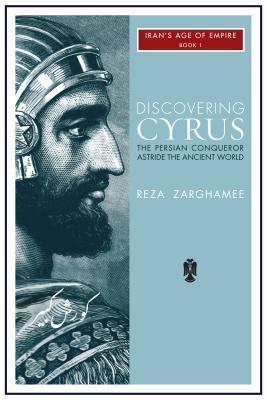
Discovering Cyrus: The Persian Conqueror Astride the Ancient World by Reza Zaghamee

Some of the most fascinating human epochs lie in the borderlands between history and mystery. So, it is with the life of Cyrus the Great, founder of the Persian Empire in the sixth century BCE. By conquest or gentler means, he brought under his rule a dominion stretching from the Aegean Sea to the Hindu Kush and encompassing some tens of millions of people. All across this immense imperium, he earned support and stability by respecting local customs and religions, avoiding the brutal ways of tyranny, and efficiently administering the realm through provincial governors. The empire would last another two centuries, leaving an indelible Persian imprint on much of the ancient world. The Greek chronicler Xenophon, looking back from a distance of several generations, wrote: “Cyrus did indeed eclipse all other monarchs, before or since.” The vision of the biblical prophet known as Second Isaiah anticipates Cyrus’ repatriation of Jews living in exile in Babylon with these words of the Lord: “He is my shepherd and will accomplish all that I please.”

Despite what he achieved and bequeathed, much about Cyrus remains uncertain. Persians of his era had no great respect for the written word and kept no annals. The most complete accounts of his life were composed by Greeks. More fragmentary or tangential evidence takes many forms – among them, archaeological remains, administrative records in subject lands, and the always tricky stuff of legend.

Given these challenges, Discovering Cyrus: The Persian Conqueror Astride the Ancient World is a remarkable feat of portraiture. In his vast sweep, Reza Zarghamee draws on sources of every kind, painstakingly assembling detail, and always weighing evidence carefully where contradictions arise. He describes the background of the Persian people, the turbulence of the times, and the roots of Cyrus’ policies. His account of the imperial era itself delves into religion, military methods, commerce, court life, and much else besides. The result is a living, breathing Cyrus standing atop a distant world that played a key role in shaping our own.
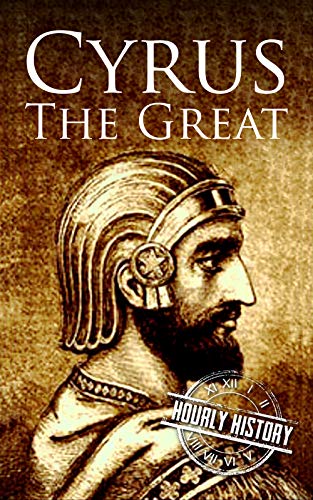
Cyrus the Great: A Life from Beginning to End by Hourly History

Cyrus II of Persia was one of the greatest leaders that the world had ever known; he was the one in whose footsteps other empire builders would follow. From Alexander the Great to countless Roman emperors and Ottoman sultans—it was the mighty shoes of Cyrus that they all attempted to fill.

More than merely a successful conqueror, Cyrus the Great is known just as much for being a great liberator as he is known for his conquests. He was even credited in the Bible as the one who freed the Jews from their long-held Babylonian exile. By the time of his death, Cyrus controlled more land and people than anyone before him. Under his dominion were countless principalities, nationalities, ethnicities, and religions of all kinds. In contrast to many other powerful rulers, Cyrus did not seek to oppress his subjects or interfere with their way of life, religions, or local customs. It is for this reason that, as great as his temporal conquests may have been, the benevolence of Cyrus the Great’s leadership stands as his greatest attribute of all.

The life of Cyrus the Great remains as an unparalleled testament in the annals of history.
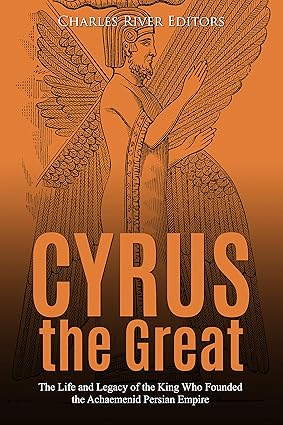
Cyrus the Great: The Life and Legacy of the King Who Founded the Achaemenid Persian Empire by Charles River Editors

“I am Cyrus the king, an Achaemenian.” – An inscription found at the Persian capital of Pasargadae

At one point in antiquity, the Achaemenid Persian Empire was the largest empire the world had ever seen, but aside from its role in the Greco-Persian Wars and its collapse at the hands of Alexander the Great, it has been mostly overlooked. When it has been studied, the historical sources have mostly been Greek, the very people the Persians sought to conquer. Needless to say, their versions were biased.

It was not until excavations in the region during the 20th century that many of the relics, reliefs, and clay tablets that offer so much information about Persian life could be studied for the first time. Through archaeological remains, ancient texts, and work by a new generation of historians, a picture can today be built of this remarkable civilization and their most famous leaders.

When considering this empire’s rulers, the two most often referenced are Xerxes, the leader of the Persian invasion of Greece which caused the heroic sacrifice of the Spartans and their allies at Thermopylae, or Cyrus the Great, the man who created the empire. While he was one of the most influential men in the ancient world, research on Cyrus the Great is simultaneously fascinating and frustrating. The Persians’ ancestors did not write (in fact, in their epic poems and myths, they claim that it was something taught to man by demons and therefore something to be avoided), and though the Iranians had taken up writing in their governmental and administrative functions by the time Cyrus lived, the kings still did not learn to write. Put simply, it was considered a functional skill, but not of the greatest importance.

As a result, while plenty of ancient sources mention the great Persian king, Persian sources themselves are rare, and those sources that do exist, such as the Babylonian Chronicle, are largely dry and state only the basic facts and large events. By contrast, Greek sources about Cyrus embrace the artistic aspect of their work so highly that the accuracy often comes into question, and sometimes deep scrutiny is necessary to attempt to separate the fact from the fiction. In the end, the full truth about Cyrus and his reign may never be truly understood.

Of course, this reality has deepened the mystique that surrounds Cyrus even to this day, and it has elevated his status from conqueror and king to enlightened humanist monarch and ideal ruler. In fact, a modern misconception based on the Cyrus Cylinder has labeled him the first proponent of civil rights, though this is somewhat of an exaggeration. The argument hinges on the Cylinder being a unique artifact in listing the ideology by which Cyrus intended to rule, but it equally ignores the fact that such declarations were commonplace among kings of the ancient Near East and more a tool of monarchal propaganda than a sweeping declaration of human rights.

That said, Cyrus was a fair and rational leader, particularly compared to the many brutal kings and warlords of ancient times. The high praise he received, even from his enemies, must certainly not be dismissed, and the admiration directed toward him came from many other exceptional individuals, including Alexander the Great, a bitter enemy of the empire Cyrus founded. Whatever the underlying issues, the incredible achievements of Cyrus distinguish him as one of the greatest kings in history, and his life, conquests, reforms, and rule continue to be of great interest over 2,500 years later.

Cyrus the Great: The Life and Legacy of the King Who Founded the Achaemenid Persian Empire looks at the life of the Persian leader and the major legacy he left. Along with pictures depicting important people, places, and events, you will learn about Cyrus the Great like never before.
Book Review: The King’s Messenger by Susanna Kearsley

Publish date:  March 4, 2025 by Sourcebooks Landmark

1613:  King James – sixth of Scotland, first of England, son of Mary, Queen of Scots – has unified both countries under one crown. But the death of his eldest son, Henry, has plunged the nation into mourning, as the rumors rise the prince was poisoned.

Andrew Logan’s heard the rumors, but he’s paid them little heed. As one of the King’s Messengers he has enough secrets to guard, including his own. In these perilous times, when the merest suggestion of witchcraft can see someone tortured and hanged, men like Andrew must hide well the fact they were born with the Sight.
 
He’ll need all his gifts, though, when the king sends Andrew north to find and arrest Sir David Murray, once Prince Henry’s trusted courtier, and bring him a prisoner to London to stand trial before the dreaded Star Chamber.
 
My thoughts:

In 1613, Andrew Logan- King James’s Messenger- is given the task of arresting David Murray and bringing him back to England to stand trial.

Logan is a man of duty while holding true to a moral compass and discipline despite the pressures and opinions from his peers. I began to see this about Logan early on and was curious on how this task at the King’s demand would play out. His convictions to do right by others at his own peril had me cheering for him. Without giving too much away, I will say that Logan exemplifies the best of what a king’s messenger ought to be.

I must confess it isn’t often I read historical fiction stories that take place in the 1700s regarding King James’s – sixth of Scotland court. What do I mean by that? I have read a couple books and articles about King James and there was always something about his character and ruling I disliked or mistrusted-if you will. I was curious on how Kersley would depict him and I was surprised-in a good way-by her characterization of him. It I how I imagined him to be.

For me, the story really took off when Logan and others began their dangerous journey to arrest Sir David Murray. The interactions and growing camaraderie between the characters made the story all the more praise worthy and heart-felt in my eyes.

I must confess, I had my doubts upfront about the theme of, “Born with the Sight.” Will it overpower the story? How will it be dealt with and weaved through the story and will it be heavy handed? Kearsley’s out depiction of the Sight was balanced and well-drawn out and I was quite relieved.

What a wonderfully woven historical story with a fantastic cast of characters and a suburb historically depiction of court life, perilous duty and adventure. This is my top favorites of Kersley’s work and seeing as I have been a bit critical of her stories in the past, I’m giving The King’s Messenger five stars.   

Be sure to read the author’s notes at the end. You won’t be disappointed and you will learn a few historical details that will enhance your thoughts on the story.  

Stephanie  

I received a review copy from the publishers through NetGalley for an honest review.

Book Review: Babylonia by Costanza Casati

Pub Date Jan 14 2025 bySOURCEBOOKS Landmark

When NetGalley added, “Babylonia” by Costanza Casati and I read the description, I was completely elated and was thrilled to be accepted a review copy. I knew when I first discovered this story, it would be special. Casati did not disappoint.

Semiramis was orphaned as a baby and grew up in Mari, a village located in Eber-Nari. Her upbringing was wrought with abuse by her adopted- father who shepherd of the village-and the boys of the town. She longed to escape the cruelty of life she was given. When she is at a marriageable age, she has a chance of escape when Onnes- the new governor- of Eber-Nari arrives to her village. Onnes notices something in Semiramis that has captivated him and he wants her to become his wife. He takes her to the capital of the Assyrian empire-Kalhu-and she soon discovers her life in the capitol will not be as easy to say the least.

Semiramis’s ascent to a throne was extraordinary told and when she becomes entangled in a love triangle of two powerful men-her husband and the King-and experiences war, politics and betrayal, she must fight for very survival.

Casati leads the reader through the tragic events unfolding and to the rise of power Assyria’s one and only female ruler. The blend of mythology and the ancient world of Assyria empire and the interactions with other kingdoms including the Babylonians is stunningly and beautifully told. The reader is transported to time and place and your senses are heightened by the sights and sounds of the characters daily lives, past experiences and the wars they wage on each other. You feel the character’s depth in their journey of life, love and conflicts with each other.

My only problem with the story is that I didn’t want it to end. I wanted to read about Semiramis’s time as ruler. I rated this this story five stars.

I highly recommend the reader to read the author’s notes at the end. I will most assuredly be adding a physical copy to my book stacks.

My thanks to the publishers for an ARC through NetGalley for an honest review.

Stephanie

Reader’s Log 029: Church History

For a while now, I’ve taken a deeper dive into Church history including the early church, Protestantism, Eastern Orthodoxy and other church denominations. I’ve also been study cultural backgrounds of ancient Judaism, the intertestamental period and Hellenistic Jews of the first century. It’s a lot to unpack. I know. I do happen to have a method and organization of my study and notes. Before I took this journey, I had mostly done surface studies and reading on these subjects.

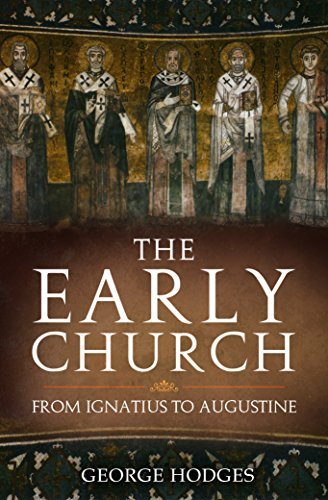
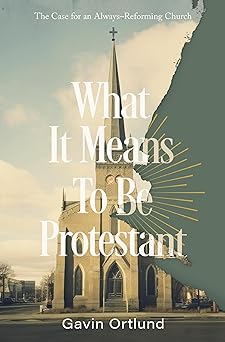
I’m currently reading/studying, “The Early Church: From Ignatius to Augustine by George Hodges and up next I be reading, “What It Means to Be Protestant: The Case for an Always-Reforming Church by Gavin Ortlund, I follow Ortlund’s teachings on YouTube and it is a goal of mine to read all his written works.  

I highly recommend this journey.

Stephanie Hopkins

The Early Church: From Ignatius to Augustine by George Hodges

In the first century A.D., the roots of the early Church began to spread across the Roman world.

But who were its leaders?

And how did it survive through waves of hostility and oppression?

George Hodges, in this fascinating history, explains how the early Church developed from its lowly and persecuted origins of the first century through to becoming the main religion of the Roman Empire and the various kingdoms that succeeded it.

Hodges provides a full picture of the Roman Empire and its religion at this time, explaining how the Church was able to gain a foothold, how heresy nearly tore it apart and how many men and women sacrificed their own lives to protect the faith.

He uncovers why by the third century the Church began to develop into a settled and definite organization, with leaders, like Cyprian and Cyril, who assisted their followers, convened at gatherings like the Council of Nicaea to agree on doctrinal matters and how monasticism developed in both the East and West.

Finally, Hodges explains how the Church was able survive the collapse of the Roman Empire, a state that had begun to protect and support the Church after Constantine’s conversion in 312. The Church was forced to contend with the power vacuum of the tumultuous fourth and fifth centuries and to make allies and convert the pagans who were threatening them.

The Early Church: From Ignatius to Augustine is a brilliant history of the late Roman Empire and how the Christian Church developed within it.

George Hodges was an American theologian and dean of the Episcopal Theological School at Cambridge Massachusetts. The Independent stated that many of his works were reissued during his lifetime due to “the high esteem in which his religious messages are held by the reading public.” This work was first published in 1915 and he died in 1919.

What It Means to Be Protestant: The Case for an Always-Reforming Church by Gavin Ortlund

These days many evangelicals are exploring the more sacramental, liturgical, and historically-conscious church traditions, including Roman Catholicism and Eastern Orthodoxy. This hunger for historical rootedness is a welcome phenomenon–but unfortunately, many assume that this need can only be met outside of Protestant contexts.??

In What it Means to Be Protestant, Gavin Ortlund draws from both his scholarly work in church history and his personal experience in ecumenical engagement to offer a powerful defense of the Protestant tradition. Retrieving classical Protestant texts and arguments, he exposes how many of the contemporary objections leveled against Protestants are rooted in caricature. Ultimately, he shows that historic Protestantism offers the best pathway to catholicity and historical rootedness for Christians today??

In his characteristically charitable and irenic style, Ortlund demonstrates that the 16th century Reformation represented a genuine renewal of the gospel. This does not entail that Protestantism is without faults. But because it is built upon the principle of semper reformanda (always reforming), Protestantism is capable of reforming itself according to Scripture as the ultimate authority. This scholarly and yet accessible book breaks new ground in ecumenical theology and will be a staple text in the field for many years to come.

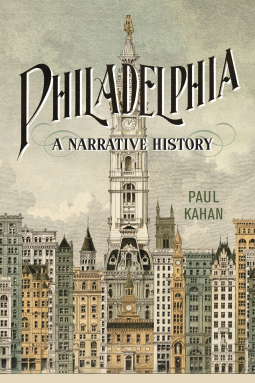
Book Review: Philadelphia by Paul Kahan

Philadelphia is the epicenter of our nation’s creation.

My enthusiasm for American history is long standing and it has been a goal of mine to further study the history and development of all fifty states and territories individually, including notable cities and towns. To my delight, the discovery of this book was perfect timing. Learning more about Philadelphia has been high on my list for some time.

Paul Kahan presents the reader with a sweeping narrative of the city’s history beginning with the Lenape tribe who inhabited the land that became Philadelphia all the way through the twenty-first century. Highlighting individuals who made their mark on the city’s history and delves into cultural diversity of the people and explore its uniqueness of what the city offers that makes Philadelphia stand out.  

As I got a few chapters in, I quickly realized that I had only scratched the surface of Philadelphia origins and history. I found myself taking pages of notes and jotting down questions I had regarding several notable people and details I did not previously know. For example: Charles Dickens visited the city. The city is home to the first natural history museum in the United States. Philadelphia remained the world’s leading publishing center and had several subscription libraries. In 1850, Philadelphia was still home to a few enslaved people. The first hospital was in Philadelphia and so on… There are a few people mentioned I’m looking forward to learning more about: Folklorist and Humorist Charles Godfrey Leland, William Hamilton, John Bill Rickets, Cecil B. Moore and Cherelle Parker.

This book is packed full of information and at times, I felt a few topics or mentions jump from one to the other too quickly without being fleshed out. Personally, I wanted to have a bigger picture of certain elements of history. Though, by reading Kahan’s account, I understand the direction he chose to go with, and nor did my opinions on that score take away from how much I enjoyed reading his narrative. I will say that while this book is educational and excellent, the dense information provided may be slightly overwhelming to readers who are not used to reading such material. I do recommend taking your time with this book. You’ll be glad you did.

As for the information of the history provided in this book, I can only attest to a few of its accuracies on account that I chose to read this book wanting to go more in-depth with the timeline of the city’s growth and to the contribution of culture, architecture, city planning, science, political arena, and government formed through the centuries. Kahan meets all those points, and it is apparent that the research and time that went into writing this account of Philadelphia’s history, ever-growing culture and diversity is quite extensive. I respect Kahan’s intellectual ability to provide readers with this profound selection of work.

I’m delighted to have chosen Kahan’s book to read as I have learned tremendously from its pages, and it has provided me with a comprehensive source for further study and reference. I will be adding a physical copy of this book to my history stacks.

Stephanie

Pub Date Oct 29 2024 by University of Pennsylvania Press

Hardback: 424 pages

For more information about this book and Kahan’s work please visit Kahan’s website HERE or by typing: http://www.paulkahan.com

I obtained an ARC from the publishers through NetGalley for an honest review.  

Biographies & Memoirs

On January 19th I posted about a few selected non-fiction books I have added to my wish-list. There are too many to count and not enough time in the hours of a day that direct our attention elsewhere! A bibliophile’s struggle one might often say. This topic is an enjoyable pastime to discuss among fellow book lovers and I’m delighted to be sharing this book blog entry with you.

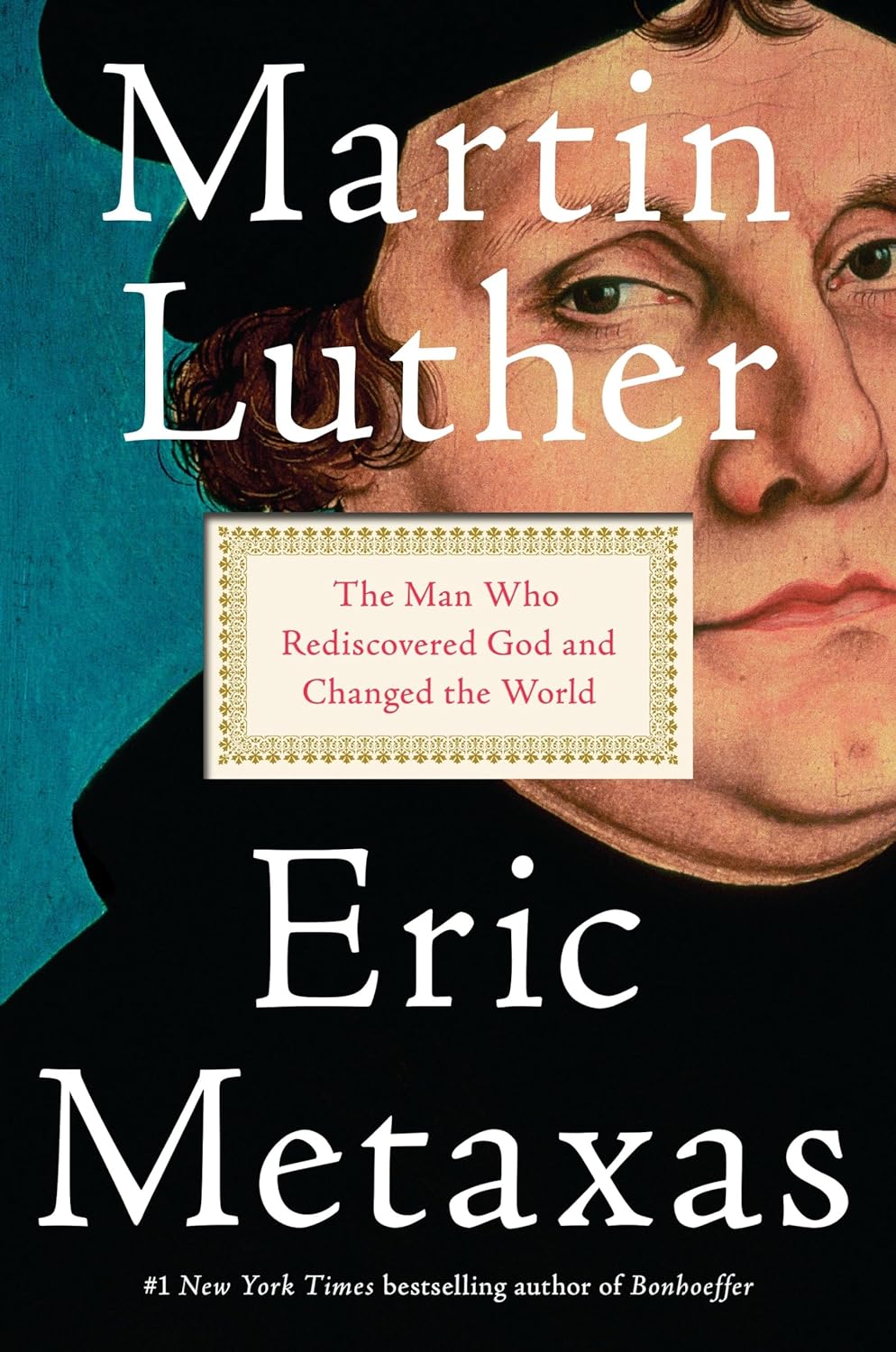
This past weekend I began reading Martin Luther by Eric Metaxas and I’m enjoying his telling of Luther a great deal. I wanted to read a highly regarded biography on Luther and was delighted to find a copy at Half Price Books. I was fortunate to obtain a hardback that is in excellent condition. Below you will find the description of the Luther book and a few other titles that may pique your interest.

Martin Luther: The Man Who Rediscovered God and Changed the World by Eric Metaxas

 Description

On All Hallow’s Eve in 1517, a young monk named Martin Luther posted a document he hoped would spark an academic debate, but that instead ignited a conflagration that would forever destroy the world he knew. Five hundred years after Luther’s now famous Ninety-five Theses appeared, Eric Metaxas, acclaimed biographer of the bestselling Bonhoeffer: Pastor, Martyr, Prophet, Spy and Amazing Grace: William Wilberforce and the Heroic Campaign to End Slavery, paints a startling portrait of the wild figure whose adamantine faith cracked the edifice of Western Christendom and dragged medieval Europe into the future. Written in riveting prose and impeccably researched, Martin Luther tells the searing tale of a humble man who, by bringing ugly truths to the highest seats of power, caused the explosion whose sound is still ringing in our ears. Luther’s monumental faith and courage gave birth to the ideals of liberty, equality, and individualism that today lie at the heart of all modern life.

Ben & Me

In Search of a Founder’s Formula for a Long and Useful Life by Eric Weiner

Pub Date 11 Jun 2024 

Description

New York Times bestselling author Eric Weiner follows in the footsteps of Benjamin Franklin, mining his life for inspiring and practical lessons in a book that’s part biography, part travelogue, part personal prescription.

Ben Franklin lingers in our lives and in our imaginations. One of only two non-presidents to appear on US currency, Franklin was a founder, statesman, scientist, inventor, diplomat, publisher, humorist, and philosopher. He believed in the American experiment, but Ben Franklin’s greatest experiment was…Ben Franklin. In that spirit of betterment, Eric Weiner embarks on an ambitious quest to live the way Ben lived.

Not a conventional biography, Ben & Me is a guide to living and thinking well, as Ben Franklin did. It is also about curiosity, diligence, and, most of all, the elusive goal of self-improvement. As Weiner follows Franklin from Philadelphia to Paris, Boston to London, he attempts to uncover Ben’s life lessons, large and small. We learn how to improve a relationship with someone by inducing them to do a favor for you—a psychological phenomenon now known as The Ben Franklin Effect. We learn about the printing press (the Internet of its day), early medicine, diplomatic intrigue and, of course, electricity. And we learn about ethics, persuasion, humor, regret, appetite, and so much more.

At a time when history is either neglected or contested, Weiner argues we have much to learn from the past and that we’d all be better off if we acted and thought a bit more like Ben did, even if he didn’t always live up to his own high ideals. Engaging, smart, moving, quirky, Ben & Me distills the essence of Franklin’s ideas into grounded, practical wisdom for all of us.

Drawn Testimony

My Four Decades as a Courtroom Sketch Artist

by Jane Rosenberg

Pub Date 13 Aug 2024

Description

A penetrating, compulsively readable memoir about the four-decade career of America’s top courtroom sketch artist, for fans of Lab Girl and Working Stiff

Jane Rosenberg is America’s pre-eminent courtroom sketch artist. For over forty years, she’s been at the heart of the story, covering almost every major trial that has passed through the New York justice system. From mob bosses to fallen titans of finance, terrorists and sex abusers, corrupt cops and warring entertainment icons, she has drawn them all.

In Drawn Testimony, Rosenberg brings us into the high-stakes, dramatic world of her craft, where art, psychology and courtroom drama collide. Over the course of her legendary career, Jane has had a front row seat to some of the most iconic and notorious moments in our nation’s recent history, sketching everything from Tom Brady’s deflate-gate case, to John Lennon’s murder trial to cases against Ghislaine Maxwell, John Gotti, Harvey Weinstein and most recently, the indictment against former President Donald Trump. Readers will learn how she has honed her unique powers of perception, but also what her portraits reveal, not only about her subjects, but about the human condition in general.

Fearless, fascinating and gorgeously written, Drawn Testimony captures the unique career of an artist whose body of work depicts history as it’s happening.

My Roman History

A Memoir

by Alizah Holstein

Pub Date 25 Jun 2024 

Description

In this exquisite and profound memoir, a medieval historian traces her lifelong obsession with Rome and the encounters with the city’s past and present that became fulcrum points in her life

From the time she first felt called to its gates as a high school student fascinated by Dante and Italian thanks to a life-changing teacher, Rome has been a fixed star around which Alizah Holstein’s life has rotated—despite the fact that she bears no Italian heritage, and has never lived there long enough to call it home. 

In this kaleidoscopic yet intimate memoir, her shifting relationship to a vibrant city layered with human history becomes a lens on why we look to the past, on the mysteries of affinity and desire, and on what it means to grow up. Holstein weaves the stories of Romans past and present, and encounters with the city of historical figures from Petrarch to Freud, into the narrative of her evolution from a curious student abuzz with the thrill of discovery, to a lonely researcher in a city to which she feels she belongs despite knowing no one, to an ambitious young historian struggling to find her place in the halls of academia. Following a trail of memories—that first taste of a tartufo cioccolato in Piazza Navona, the ancient walls of the Via Appia blurring from the back of a motorcycle, the smudge of ink on a manuscript left by a scribe’s hand over seven hundred years before—she explores what it means to be romana, Roman—and to find solace and self-knowledge in the presence of the past.

An enveloping, original, and deeply resonant account, set against one of the world’s most beguiling cities, of the unexpected things that give our lives meaning, My Roman History is a profound depiction of the winding path to self-realization, which—much like history itself—is mysterious, captivating, and ever-unfolding.

Christian Church History

In a post not too long ago, I mentioned that I’m deeply involved in Bible studies-such as theology and the early Christian church history and other history research. In the latter for example, I’m focusing much on ancient cultural backgrounds; including the Old Testament and New Testament.

What led me to do a deep dive study in early Christianity history was a YouTube video by AOC Network. The channel has a video on the early Christians and it inspired me and deeply moved me to learn more about Christians in the first and second century AD. I approached my father about this subject and we talked about specifics and he handed me a book, Church History in Plain English by Bruce L. Shelley. He also printed off summaries of information on several saints during that time. I believe from his Logos  Bible study subscription. Such a great resource that many ministers, students of theology and laypeople use. Logos in Greek means word. I also asked him if he could give me more information on the Reformers. Since then I have added quite a few books about the Reformers to my reading pile. That subject is for other blog post topics.

As I started reading Church History in Plain English and read about the Saints, I felt a strong feeling of emotion within me and I began to other sources of research on the Christian Orthodox Church. I look forward to sharing more of my spiritual journey with you all in this endeavor. For now, check out the book description for Church History in Plain English and another book on, The Religion of the Apostles (Orthodox Christianity in the First Century) by Stephen De Young I have added to my to-read pile.Many of you might be inspired to check them out.

Stephanie Hopkins

God Bless

Church History in Plain English by Bruce L. Shelley

With more than 275,000 copies sold, this is the story of the Church for today’s readers. The third edition of Shelley’s classic one-volume history of the church brings the story of Christianity into the twenty-first century. This latest edition of the book takes a close look at the rapid growth of evangelical and Pentecostal Christianity in the southern hemisphere, addresses the decline in traditional mainline denominations, examines the influence of technology on the spread of the gospel, and discusses how Christianity intersects with other religions in countries all over the world.

The concise book provides an easy-to-read guide to church history, with intellectual substance. The new edition of Church History in Plain Language promises to be the new standard for readable Church History.

The Religion of the Apostles (Orthodox Christianity in the First Century) by Stephen De Young

Rev. Dr. Stephen De Young, creator of the popular The Whole Counsel of God blog and podcast, traces the lineage of Orthodox Christianity back to the faith and witness of the apostles, which was rooted in a first-century Jewish worldview. The Religion of the Apostles presents the Orthodox Christian Church of today as a continuation of the religious life of the apostles, which in turn was a continuation of the life of the people of God since the beginning of creation.

Biographies & Memoirs

This past Sunday, I met a dear friend at a local coffee shop and what a treat it was! We talked about many topics and our mutual love for nonfiction. My friend is currently listening to Braiding Sweetgrass: Indigenous Wisdom, Scientific Knowledge and the Teachings of Plants by Robin Wall Kimmerer and she highly recommend it to me. Later on, when I got home, I sent her a picture of the nonfiction book I’m reading. The title is, The Neighborhood Project by David Sloan Wilson. I received the book as an ARC many years ago.  

This led me to further explore more nonfiction books to add to my to-read wish-list. Below are five new titles I have added. My wish is for you to be encouraged and inspired to read more and to explore nonfiction in a broader sense-if you haven’t already.

Stephanie Hopkins

The Book-Makers

A History of the Book in Eighteen Lives

by Adam Smyth

Description

The five-hundred-year history of printed books, told through the people who created them

Books tell all kinds of stories—romances, tragedies, comedies—but if we learn to read the signs correctly, they can tell us the story of their own making too. The Book-Makers offers a new way into the story of Western culture’s most important object, the book, through dynamic portraits of eighteen individuals who helped to define it.  
 
Books have transformed humankind by enabling authors to create, document, and entertain. Yet we know little about the individuals who brought these fascinating objects into existence and of those who first experimented in the art of printing, design, and binding. Who were the renegade book-makers who changed the course of history?  
 
From Wynkyn de Worde’s printing of fifteenth-century bestsellers to Nancy Cunard’s avant-garde pamphlets produced on her small press in Normandy, this is a celebration of the book with the people put back in. 

Twenty Years

Hope, War, and the Betrayal of an Afghan Generation

by Sune Engel Rasmussen

Description

An intimate history of the Afghan war—and the young Afghans whose dreams it enabled and dashed.

No country was more deeply affected by 9/11 than Afghanistan: an entire generation grew up amid the upheaval that began that day. Young Afghans knew the promise of freedom, democracy, and safety, fought with each other over its meaning—and then witnessed its collapse. In Twenty Years, the Wall Street Journal correspondent Sune Engel Rasmussen draws on more than a decade of reporting from the country to tell Afghanistan’s story from a new angle. Through the eyes of newly empowered women, skilled entrepreneurs, driven insurgents, and abandoned Western allies, we see the United States and its partners bring new freedoms and wealth, only to preside over the corruption, war-lordism, and social division that led to the Taliban’s return to power.

Rasmussen relates this history via two main characters: Zahra, who returns from abroad with high hopes for her liberated county, where she must fight to escape a brutal marriage and rebuild her life; and Omari, who joins the Taliban to protect the honor of his village and country and winds up wrestling with doubt and the trauma of war after achieving victory. We also meet Parasto, who risks her life running clandestine girls’ schools under the new Taliban regime, and Fahim, a rags-to-riches tycoon who is forced to flee. With intimate access to these and other characters, Rasmussen offers deep insight into a country betrayed by the West and Taliban alike.

Warsaw Testament

by Rokhl Auerbach, Translated by Samuel Kassow

Description

Born in Lanowitz, a small village in rural Podolia, Rokhl Auerbach was a journalist, literary critic, memoirist, and a member of the Warsaw Yiddish literary community before the Holocaust. Upon the German invasion and occupation of Poland in 1939, she was tasked by historian and social activist Emanuel Ringelblum to run a soup kitchen for the starving inhabitants of the Warsaw Ghetto and later to join his top-secret ghetto archive, the Oyneg Shabes. One of only three surviving members of the archive project, Auerbach’s wartime and postwar writings became a crucial source of information for historians of both prewar Jewish Warsaw and the Warsaw Ghetto. After immigrating to Israel in 1950, she founded the witness testimony division at Yad Vashem and played a key role in the development of Holocaust remembrance. Her memoir Warsaw Testament, based on her wartime writings, paints a vivid portrait of the city’s prewar Yiddish literary and artistic community and of its destruction at the hands of the Nazis.

The Great Mosquito Hunt and Other Adventures

by Elizabeth Manson-Bahr

Description

This book is the author’s answer to the question Who do you think you are? set in China, Russia, Egypt, Kenya, Fiji and the US during the 18th to 20th centuries. It describes the battle to discover the causes of malaria. Sir Patrick Manson, the author’s great-grandfather, known as Mosquito Manson, was the first scientist to prove that insects were vectors of disease, a discovery which led to the detection of the malarial parasite. He founded the Chinese Medical School in Hong Kong and the London School of Tropical Medicine. Among his pupils was Sun Yat-sen, the first President of modern China.

It is the story too of plagues and pandemics, of Scottish and German merchants who made their fortunes in 19th century Egypt and 18th century Russia. The author’s mother, orphaned by the Spanish flu, made her way to Africa where she served as a FANY in 1942, marrying Clinton, the third in the family line of tropical medical specialists. The chapters are interspersed with the author’s own childhood memories growing up in Fiji and Kenya.

The Demon of Unrest

A Saga of Hubris, Heartbreak, and Heroism at the Dawn of the Civil War

by Erik Larson

Description

The #1 New York Times bestselling author of The Splendid and the Vile brings to life the pivotal five months between the election of Abraham Lincoln and the start of the Civil War—a simmering crisis that finally tore a deeply divided nation in two.

One of Time’s Most Anticipated Books of the Year


On November 6, 1860, Abraham Lincoln became the fluky victor in a tight race for president. The country was bitterly at odds; Southern extremists were moving ever closer to destroying the Union, with one state after another seceding and Lincoln powerless to stop them. Slavery fueled the conflict, but somehow the passions of North and South came to focus on a lonely federal fortress in Charleston Harbor: Fort Sumter.

Master storyteller Erik Larson offers a gripping account of the chaotic months between Lincoln’s election and the Confederacy’s shelling of Sumter—a period marked by tragic errors and miscommunications, enflamed egos and craven ambitions, personal tragedies and betrayals. Lincoln himself wrote that the trials of these five months were “so great that, could I have anticipated them, I would not have believed it possible to survive them.”

At the heart of this suspense-filled narrative are Major Robert Anderson, Sumter’s commander and a former slave owner sympathetic to the South but loyal to the Union; Edmund Ruffin, a vain and bloodthirsty radical who stirs secessionist ardor at every opportunity; and Mary Boykin Chesnut, wife of a prominent planter, conflicted over both marriage and slavery and seeing parallels between them. In the middle of it all is the overwhelmed Lincoln, battling with his duplicitous secretary of state, William Seward, as he tries desperately to avert a war that he fears is inevitable—one that will eventually kill 750,000 Americans.

Drawing on diaries, secret communiques, slave ledgers, and plantation records, Larson gives us a political horror story that captures the forces that led America to the brink—a dark reminder that we often don’t see a cataclysm coming until it’s too late.

Wish-List Goodness

I’ve added a few bookish and art items to my wish-list and today I thought I’d share them with you! I hope everyone had a wonderful filled weekend and let’s get into this! As you all know, I’m into history big time. Always have been and I read a lot of material from different sources. I also read a lot of historical fiction for a variety of reasons I’ve blogged before about. Down below are three books I have recently added and hope to get to them in the near future.

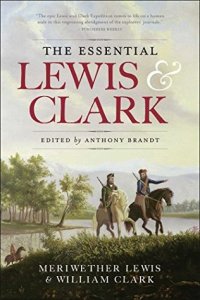
The Essential Lewis & ClarkThe Essential Lewis and Clark by Meriwether Lewis, William Clark
Published March 8th 2018 by National Geographic

With nuanced observations from the star author and historian, here are the celebrated journals documenting Lewis and Clark’s legendary expedition into the uncharted American West, abridged into a single volume and translated into modern English.

At the start of the 19th century, Meriwether Lewis and William Clark embarked on an unprecedented voyage of discovery. Their assignment was to explore the newly acquired Louisiana Territory and record the geography, flora, fauna, and people they encountered along the way. This updated edition of the captains’ journals combines historical insight from editor Anthony Brandt with the rich detail of Lewis and Clark’s original writing, as well as archival maps and artwork. An enthralling portrait of the unspoiled West, this true-life adventure story is a window to the dawning of America–from encounters with grizzly bears to councils with tribal leaders and perilous mountain crossings.

The GeneralsThe Generals: Patton, MacArthur, Marshall, and the Winning of World War II
by Winston Groom

Celebrated historian Winston Groom tells the intertwined and uniquely American tales of George Patton, Douglas MacArthur, and George Marshall – from the World War I battle that shaped them to their greatest victory: leading the allies to victory in World War II. These three remarkable men-of-arms who rose from the gruesome hell of the First World War to become the finest generals of their generation during World War II redefined America’s ideas of military leadership and brought forth a new generation of American soldier. Their efforts revealed to the world the grit and determination that would become synonymous with America in the post-war years.

Filled with novel-worthy twists and turns, and set against the backdrop of the most dramatic moments of the twentieth century, The Generals is a powerful, action-packed book filled with marvelous surprises and insights into the lives of America’s most celebrated warriors

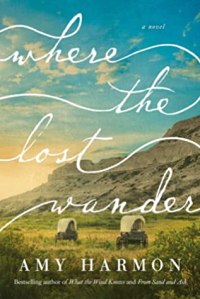
Where the Lost WanderWhere the Lost Wander by Amy Harmon

In this epic and haunting love story set on the Oregon Trail, a family and their unlikely protector find their way through peril, uncertainty, and loss.

The Overland Trail, 1853: Naomi May never expected to be widowed at twenty. Eager to leave her grief behind, she sets off with her family for a life out West. On the trail, she forms an instant connection with John Lowry, a half-Pawnee man straddling two worlds and a stranger in both.

But life in a wagon train is fraught with hardship, fear, and death. Even as John and Naomi are drawn to each other, the trials of the journey and their disparate pasts work to keep them apart. John’s heritage gains them safe passage through hostile territory only to come between them as they seek to build a life together.

When a horrific tragedy strikes, decimating Naomi’s family and separating her from John, the promises they made are all they have left. Ripped apart, they can’t turn back, they can’t go on, and they can’t let go. Both will have to make terrible sacrifices to find each other, save each other, and eventually… make peace with who they are.

 Here are three crafty supplies I have on my never-ending wish-list and it’s hard to believe I don’t have every single mixed media supply by Tim Holtz! Ha! I use his supplies a lot in my journals.

I have added Dina Wakley Media supplies to my list because have never used her mediums before and I am very interested in her Scribble Sticks. If you have used them before. Let me know what you think of them!

This weekend I made faux postage stamps and had so much fun creating them I decided I need to invest on MaGuo US Postage and Stamps Clear Stamps. I have one rubber post stamp and a clear stamp but they are both Holiday Themed. Having said that, they did do the trick for my project this weekend. I will be sharing more about the stamps I made soon! They are part of another project I worked on and want to wait to blog about them when its’ completed.

Stephanie Hopkins

Follow my Facebook Page for more great content about books, photography, paper crafting and art that you might not see on my twitter page!

***********

Images may be subjected to copyright. All book reviews, interviews, guest posts, art work, photos and promotions are originals. In order to use any text or pictures from Layered Pages, please ask for permission from Stephanie.


Cover Crush: A Castaway in Cornwall by by Julie Klassen

A Castaway in Cornwall IIThe Cover: It has been a while since I’ve posted a cover crush and the reason why is that nothing has really stood out to me. I spotted this cover on Facebook and was immediately drawn to the landscape and the cliffs. Great composition, textures and colors. This cover makes me long for the beach. Oh, and you can see the profile of the girl’s face! I’m glad her back isn’t to us.

The Story: I love the title and a story set in Cornwall is just the ticket! From reading the book description, there are a lot of interesting details and the premise sounds adventurous. -Stephanie Hopkins

About the Book:

Paperback, 448 pages

Expected publication: December 1st 2020 by Bethany House Publishers

Laura Callaway daily walks the windswept Cornwall coast, known for many shipwrecks but few survivors. She feels like a castaway, set adrift on the tides of fate by the deaths of her parents and left wanting answers. Now living with her parson uncle and his parsimonious wife in North Cornwall, Laura is viewed as an outsider even as she yearns to belong somewhere again.

When ships sink, wreckers scour the shore for valuables, while Laura searches for clues to the lives lost. She has written letters to loved ones and returned keepsakes to rightful owners. She collects seashells and mementos, and when a man is washed ashore, she collects him too.

As Laura and a neighbor care for the castaway, the mystery surrounding him grows. He has abrasions and a deep cut that looks suspiciously like a knife wound, and he speaks in careful, educated English, yet his accent seems odd. Other clues wash ashore, and Laura soon realizes he is not who he seems to be. Their attraction grows, and while she longs to return the man to his rightful home, evidence against him mounts. With danger pursuing them from every side, will Laura ever find the answers and love she seeks?

Previous Cover Crush

A cover-crush-banner