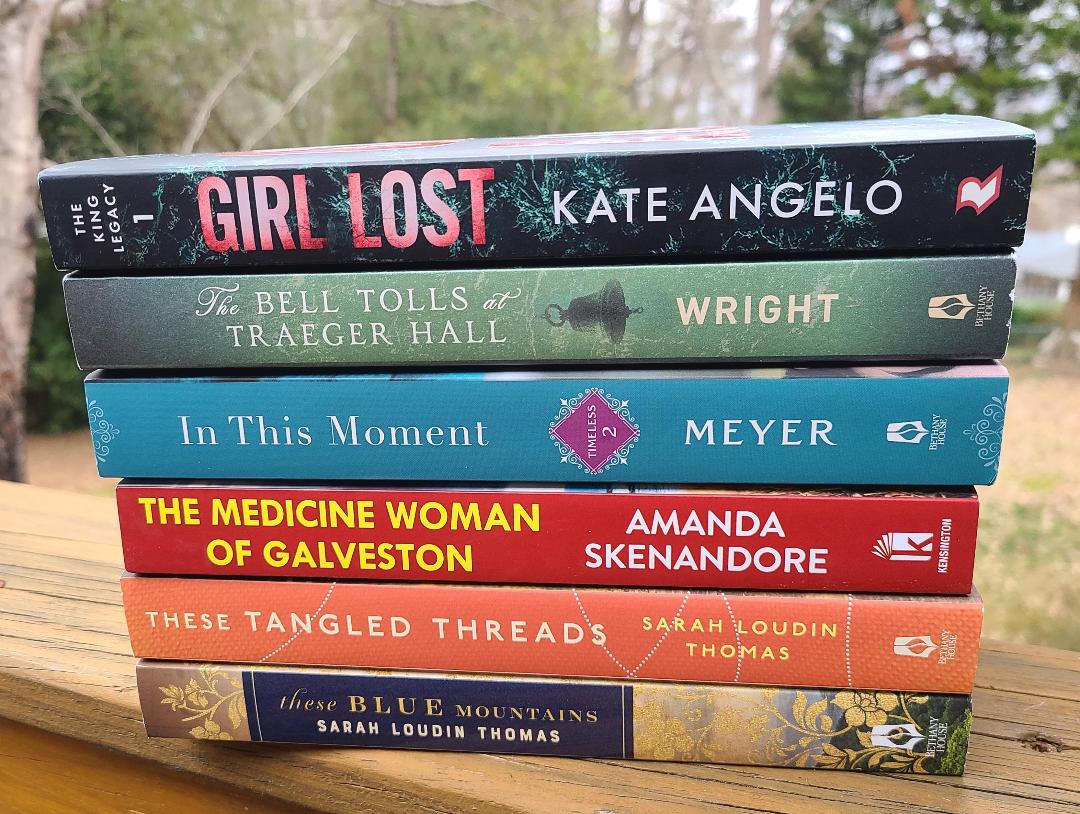
This is the second post in my Valentine book haul and I can’t wait to read them! Be sure to click on the link about the first book haul at the end of this post to check out the other books I got. Also, be sure to comment if you’ve read any of these books and if you liked them. Or if you have heard of any of these authors before and how you discovered them.
These books are a really great selection of genres.
Let’s get reading!
I love a good mystery thriller and “Girl Lost” looks like a story I would enjoy reading.
Girl Lost by Kate Angelo
(The King Legacy #1)
Published on September 23, 2025 by Revell
Luna Rosati found acceptance and a family during childhood, but when she became pregnant at seventeen, she gave the baby up for adoption and left without a word. Now a CIA counterintelligence officer, Luna wants to reconcile her fractured sense of self by finding the only blood family she has left–the teenage daughter she’s never met. Her mentor, Stryker, promises to reveal her daughter’s identity, but first Luna must meet him in the old neighborhood, the last place she wants to be. Then Stryker is captured.
Special Agent Corbin King changed his surname to escape the shadow of his convicted father serving a life sentence. When he runs into Luna, the object of his failed teenage romance, the two must put their pasts aside and work together toward a greater mission. But when they encounter a kidnapping, missing bodies, and murder, the secrets Corbin and Luna are keeping from one another are only the beginning of the threat they face with more than their own lives at stake.
When Wright’s debut novel came out a few years ago, I was an early reader and reviewer on it. I have to say I was a bit critical of the story but since then, I’ve read another book of hers and decided to read this one. Wright, certainly has a unique writing style and imaginative ideas for stories.
The Bell Tolls at Traeger Hall by Jaime Jo Wright
Published October 21, 2025 by Baker Publishing Group
In 1890, the ominous tolling of the bell announces that death has come to Traeger Hall, leaving orphaned Waverly Pembrooke to piece together the puzzle behind her uncle’s and aunt’s murders. Bound by the terms of her uncle’s eccentric will, Waverly finds herself alone in a manor shrouded by death and questioning her uncle’s paranoid motivations. A madness hovers over Traeger Hall, and Waverly–as well as the people of nearby Newton Creek–are ill-prepared for the woe that has descended on the property.
In present day Newton Creek, the whispers of a curse still cling to the century-old time capsule of Traeger Hall. When Jennie Phillips takes possession of the estate after the death of her parents, she is intent on solving the century-old mystery of the Traeger murders. Yet a modern cold case suggests that untimely deaths and mysterious occurrences still form the cornerstone of the manor. And as thorny truths surface, Jennie realizes the dark legacy threatens not only the town and the Traeger descendants . . . but also, chillingly, Jennie herself.
I finished reading “Until the Day Comes,” the first in the timeless series not too long ago. I enjoyed the premise so much, I decided not to wait too long to read the next book in the series.
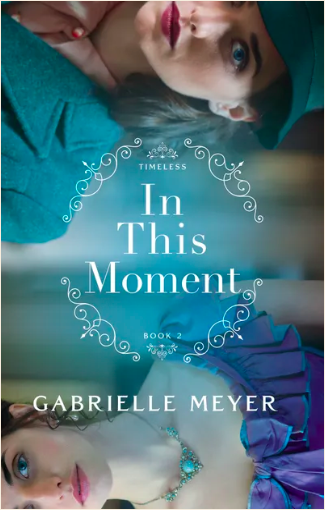
In This Moment by Gabrielle Meyer
(Timeless #2)
Published May 2, 2023 by Bethany House Publishers
Maggie inherited a gift from her time-crossing parents that allows her to live three separate lives in 1861, 1941, and 2001. Each night she goes to sleep-in one-time period and wakes up in another. Until, that is, she turns twenty-one, when she will have to forfeit two of those lives–and everyone she knows in them–forever.
In 1861, Maggie is the daughter of an influential senator at the outbreak of the Civil War, navigating a capital full of Southern spies and wounded soldiers. In 1941, she is a Navy nurse, grappling with her knowledge of the future when she’s asked to join a hospital ship being sent to Pearl Harbor. And in 2001, she’s a brilliant young medical student, fulfilling her dream of becoming a surgeon, yet unable to use her modern skills in her other paths.
While Maggie has sworn off romance until she makes her final choice, an intriguing man tugs at her heart in each era. The mysterious British gentleman. The prickly, demanding doctor. The charming young congressman. She’s drawn to each man in different ways, only complicating the impossible decision she must make, which looms ever closer.
With so much on the line, how can Maggie choose just one life to keep and the rest to lose?
Last year, I think it was, I read a historical fiction novel based on a true story that took place during the devastating hurricane in Galveston, Texas. So, this story grabbed my attention.
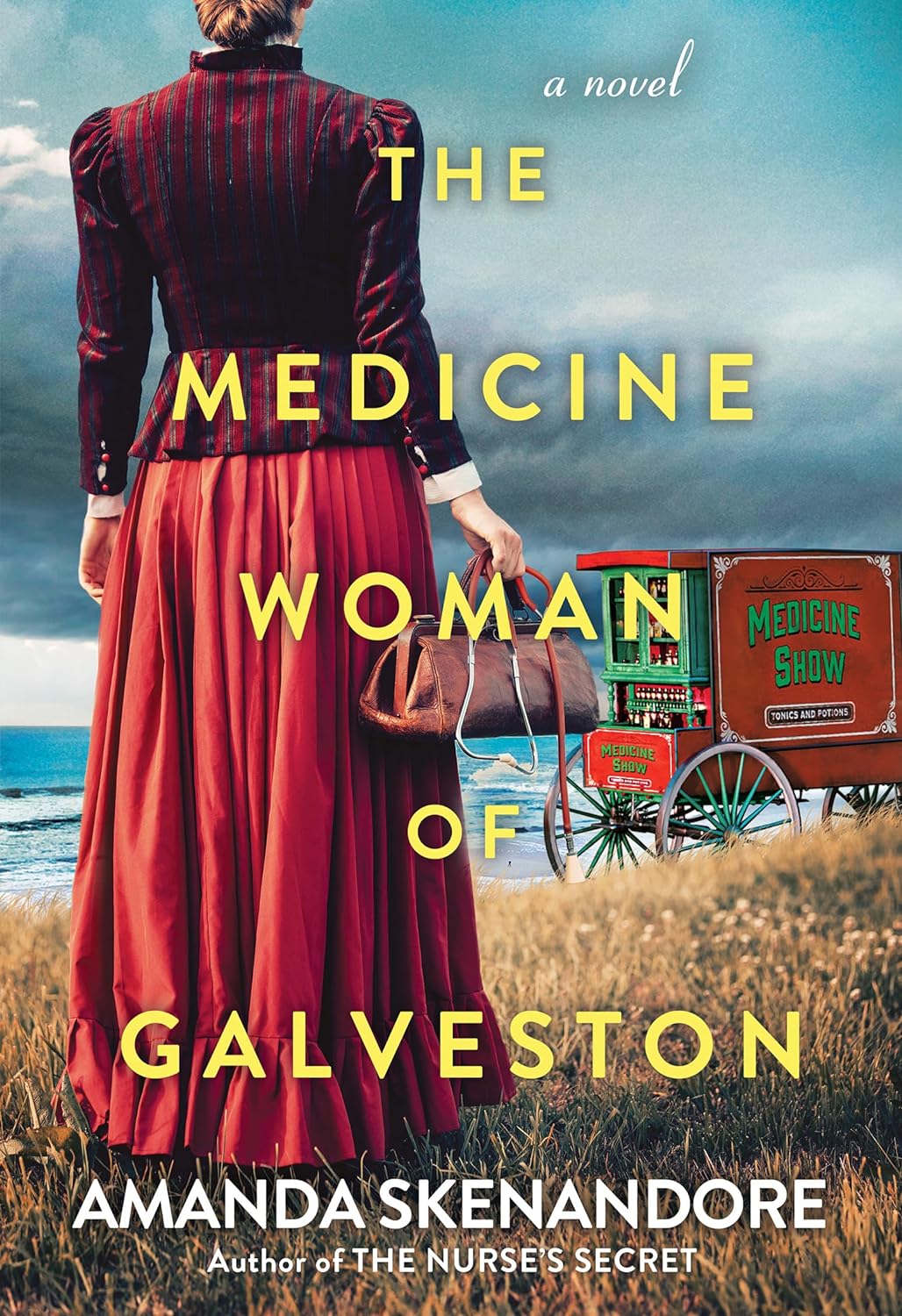
The Medicine Woman of Galveston by Amanda Skenandore
Published May 21, 2024 by Kensington
In a uniquely vivid story of women in medicine, found family, and conquering fear for readers of Kristin Hannah, Ellen Marie Wiseman, and Audrey Blake, an impoverished former doctor and her disabled son join a traveling medicine show and its family of strangers on a collision course with the deadliest natural disaster in American history – the Galveston Hurricane of 1900. From the acclaimed author of The Nurse’s Secret and The Second Life of Mirielle West.
Once a trailblazer in the field of medicine, Dr. Tucia Hatherley hasn’t touched a scalpel or stethoscope since she made a fatal mistake in the operating theater. Instead, she works in a corset factory, striving to earn enough to support her disabled son. When even that livelihood is threatened, Tucia is left with one option—to join a wily, charismatic showman named Huey and become part of his traveling medicine show.
Her medical license lends the show a pretense of credibility, but the cures and tonics Tucia is forced to peddle are little more than purgatives and bathwater. Loathing the duplicity, even as she finds uneasy kinship with the other misfit performers, Tucia vows to leave as soon as her debts are paid and start a new life with her son—if Huey will ever let her go.
When the show reaches Galveston, Texas, Tucia tries to break free from Huey, only to be pulled even deeper into his schemes. But there is a far greater reckoning ahead, as a September storm becomes a devastating hurricane that will decimate the Gulf Coast—and challenge Tucia to recover her belief in medicine, in the goodness of others—and in herself.
When I read “Biltmore Estate” in the description, that was an immediate yes for me. What a premise!
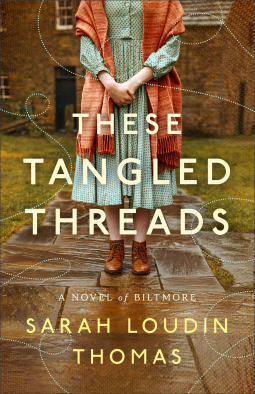
These Tangled Threads by Sarah Loudin Thomas
Published April 2, 2024 by Bethany House Publishers
Seven years ago, a hidden betrayal scattered three young friends living in the shadow of Biltmore Estate. Now, when Biltmore Industries master weaver Lorna Blankenship is commissioned to create an original design for Cornelia Vanderbilt’s 1924 wedding, she panics knowing she doesn’t have the creativity needed. But there’s an elusive artisan in the Blue Ridge Mountains who could save her–if only she can find her.
To track the mysterious weaver down, Lorna sees no other way but to seek out the relationships she abandoned in shame. As she pulls at each tangled thread from her old life, Lorna is forced to confront the wounds and regrets of long ago. She’ll have to risk the job that shapes her identity as well as the hope of friendship–and love–restored.
I seriously can’t wait to read this book. The title “These Blue Mountains” stands out to me since I live in North Georgia and many of my ancestors are from North Carolina.
These Blue Mountains by Sarah Loudin Thomas
Published July 15, 2025 by Bethany House Publishers
German pianist Hedda Schlagel’s world collapsed when her fiancé, Fritz, vanished after being sent to an enemy alien camp in the United States during the Great War. Fifteen years later, in 1932, Hedda is stunned to see Fritz’s name in a photograph of an American memorial for German seamen who died near Asheville, North Carolina. Determined to reclaim his body and bring closure to his ailing mother, Hedda travels to the US. Her quest takes a shocking turn when, rather than Fritz’s body, his casket contains the remains of a woman who died under mysterious circumstances.
Local deputy Garland Jones thought he’d left that dark chapter behind when he helped bury Fritz Meyer’s coffin. The unexpected arrival of Hedda, a long-suffering yet captivating woman, forces him to confront how much of the truth he really knows. As they work together to uncover the identity of the woman in the casket and to unravel Fritz’s fate, Hedda and Garland grow closer. But with Hedda in the US on borrowed time while Hitler rises to power in Germany, she fears she’ll be forced to return home before she can put the ghosts of her past to rest.
I have not read a Janet Oke book since the 1990’s and it was her Love Comes Softly series I read. I hadn’t realized she was still writing stories until I came across “The Pharisee’s Wife. Now I must go see what else she has written since last I read her work.
The Pharisee’s Wife by Janette Oke
Published March 11, 2025 by Tyndale Fiction
Ebook Copy
From the beloved author of Love Comes Softly comes an inspiring work of historical fiction about a young Jewish woman, plucked from obscurity and thrust on a perilous journey, only to witness the world’s most life-changing story.
Like most young women in ancient Israel, Mary has little control over her own destiny. When Enos, a rising Pharisee, sees her one day in the market—the most beautiful woman he has ever laid eyes on—and determines to make her his wife, Mary’s fate is quickly sealed. His exorbitant bride price is the only hope her parents have of escaping abject poverty, but surely the fact that such a devout and esteemed man has chosen a girl of her station must be a sign of blessing.
When Mary enters training to become the proper Pharisee’s wife, it is as though she has been abandoned in a foreign land, where one misstep could cost her greatly. That feeling only deepens when she discovers Enos is all she feared he might be, treating her merely as a prize he has won—and worse. Then rumors of a miracle-working, traveling Prophet change everything, and Mary and Enos are swept up in events that will challenge all they hold dear and forever alter both their futures.
Be sure to check Part I: Reader’s Log 064: A Valentine Book Haul Part I
Stephanie























 Layered Pages