About the Cover: I love the lady’s reflection in the water and how her red dress and bad contrast with the blue. I do wish we could see more of her face. One can tell her walk shows determination. If you look closely, you’ll notice medical instruments on either side of the book title. I do like the flourishes in the corners of the layout. It does give the image a bit of a mirror affect. Which compliments the reflection scene.
About the Book: Clearly the story takes place in the 19th century but the description of the story does not state that. I believe that needs to be added so it won’t leave readers guessing until they read the book. Another issue I have is that it doesn’t mention where the story takes place. I’m guessing, England because of the doctor’s name. Though many Americans have English names. Most likely, I could find out the time and period by seeing if there are any reviews written that state the information, but I rather wait to see if I am able to get a copy of the book for review.
I did, however, do a little digging on the name Croft. Did you know that the surname Croft, has pre 6th century origins and emerged as a notable English name? From what I read; the name originates from English northern counties
I’m really interested in the premise and I will definitely be reading this book one way or another.
Stephanie Hopkins.
Sourcebooks Landmark
Historical Fiction
Pub Date 04 May 2021
Description
The story of one woman who believed in scientific medicine before the world believed in her
Raised by the eccentric surgeon Dr. Horace Croft after losing her parents to a deadly pandemic, the orphan Nora Beady knows little about conventional life. While other young ladies were raised to busy themselves with needlework and watercolors, Nora was trained to perfect her suturing and anatomical illustrations of dissections.
Women face dire consequences if caught practicing medicine, but in Croft’s private clinic Nora is his most trusted—and secret—assistant. That is until the new surgical resident Dr. Daniel Gibson arrives. Dr. Gibson has no idea that Horace’s bright and quiet young ward is a surgeon more qualified and ingenuitive than even himself. In order to protect Dr. Croft and his practice from scandal and collapse Nora must learn to play a new and uncomfortable role—that of a proper young lady.
But pretense has its limits. Nora cannot turn away and ignore the suffering of patients even if it means giving Gibson the power to ruin everything she’s worked for. And when she makes a discovery that could change the field forever, Nora faces an impossible choice. Remain invisible and let the men around her take credit for her work, or let the world see her for what she is—even if it means being destroyed by her own legacy.
Published February 4th 2020 by Bethany House Publishers
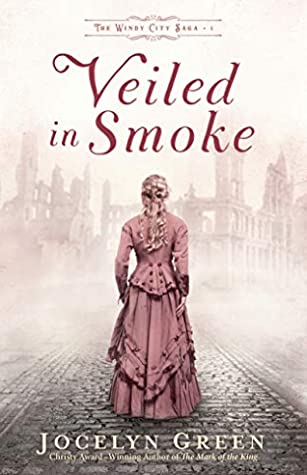
Meg and Sylvie Townsend manage the family bookshop and care for their father, Stephen, a veteran still suffering in mind and spirit from his time as a POW during the Civil War. But when the Great Fire sweeps through Chicago’s business district, they lose much more than just their store.
The sisters become separated from their father, and after Meg burns her hands in an attempt to save a family heirloom, they make a harrowing escape from the flames with the help of Chicago Tribune reporter Nate Pierce. Once the smoke clears away, they reunite with Stephen, only to learn soon after that their family friend not only died during the fire–he was murdered. Even more shocking, Stephen is charged with the crime and committed to the Cook County Insane Asylum.
Though homeless, injured, and suddenly unemployed, Meg must not only gather the pieces of her shattered life, but prove her father’s innocence before the asylum truly drives him mad.
My thoughts:
I’ve heard of the Great Fire in Chicago during that period but I don’t believe or can’t remember if I’ve read an historical fiction story that takes place during that time. I was delighted to come across, Veiled in Smoke and I had not read any of Green’s stories beforehand. Needless to say, I was unfamiliar with her work and was eager to delve in her world-building.
I have to say, while the introduction of the characters in the beginning was intriguing, the build-up to the day of the fire felt rushed and lacked a certain substance. I started to have doubts about this book but rallied on. The story didn’t take off until the fire broke out. At that very moment, I felt a shift in the structure of the storytelling and became immensely captivated. The telling of the fire itself and was outstanding and so realistic, you are completely transported to time and place.
I enjoyed reading about Meg and Sylvie’ life during this tragic event and the author does a marvelous job at creating sisterly tension and, at times, unease in their relationship. She also shows their love for each other, for their father and others.
Although different in many ways, Meg with her artistic ability and Sylvia with her love of books and independent in thought, they are both intelligent and they didn’t give up, despite their daunting predicaments. There are many life lessons to be learned with their story.
Banner by Stephanie Hopkins
Stephen’s suffering from Soldiers Heart AKA PTSD from his time as a POW in Andersonville is heartbreaking, yet, eye opening to read about. The Prison camp is reported to have been the largest prison for holding Union soldiers and its conditions are heartbreaking to say the least.
Having said that, there is a topic about how Andersonville was portrayed that I felt needed to be addressed in the story and wasn’t. I felt the subject a bit one sided and conveniently left out to drive a particular narrative about the South. The soldiers weren’t suffering entirely at the fault of people in charge of running the camps. The guards weren’t in much better shape due to the lack of supplies for all. As the war raged on, throughout the south, there was great suffering of starvation, death due to food shortages, water pollution, lack of clothing, disease, increase violence among the civilians, particularly to the females, and lack medicines. While it is known that the north managed prisons differently, both Union and Confederate, really, suffered deficiencies. There was also Lincoln’s blockade of the southern states that played a huge role in this problem.
I can’t say for certain what the author’s intentions were regarding this topic, but nonetheless, I have to say, this particular part slightly vexed me somewhat because I see this premise often in historical fiction and in our education system. That said, and to be fair, the author does give an indication of how the union prisoners treated each other in Andersonville and quite possibly she is portraying how a union solder’s mindset-at the time-probably was due to trauma experienced to drive the stories narrative. Another consideration is that writing a historical story is far more difficult than it appears. You can’t please everyone.
Years after the war, Stephen still struggles with PTSD. Then when Stephen is charged with a serious crime, that took place during the fire, and taken to the Cook Cunty Insane Asylum, would be anyone’s undoing. In one instance, when he arrived to the asylum, they reduced him to a number, stripping his identity to make him less human.
From previously reading about asylums during that period, I had already known what they were like but reading Stephen’s experience made it all too real and affected me in such a way, that even now, I’m still outraged and sadden over the ill treatment of patients in those places. It is absolutely appalling how he was treated and the lack of respect he was given for his service during the war. Even before he was put in that place. His struggles are deeply felt.
Despite what I said about the prison camp topic, I must confess that this is one of the better stories written I’ve read that takes place during post-civil war in the 19th Century. I have noted many passages that I found to be inspiring and I feel deeply about many of the characters.
Green weaves a compelling story of a family’s fight for survival and healing. She gives us a well-constructed insight into the lives of the characters, Stephen’s mental state and trauma the fire caused the city and its’ people. Overall, there are many elements to the story that make it a noble read.
Veiled in Smoke will be placed among my go-to 19th Century Historical Fiction reads and I look forward to reading the next book in this saga.
Stephanie Hopkins
I obtained a copy from the publishers through NetGalley.
Side note: If you are a fan of Little Woman by Louisa May Alcott, most likely you will enjoy this story a great deal!
Cover: I like the simplicity of the cover. The decorative frame adds a quiet elegance. The image of the yellow house is compelling in a unusual sort-of way. Though it may seem out of place to many, one might see its’ relevance and meaning.
Thoughts of the story:
I was delighted to be able to get a galley copy of The Thin Place. This book is not listed on goodreads or on Amazon in the US as of yet. Looking forward to reading and reviewing this story! -Stephanie Hopkins
The Thin Place by C D Major
Amazon Publishing UK
General Fiction (Adult) | Historical Fiction | Mystery & Thrillers
Pub Date 15 Apr 2021
Description
“I devoured this novel in a single sitting. The Thin Place will stay with you long after you turn the final page.” –Clare Mackintosh, bestselling author of After the End
She has to know the truth about Overtoun Estate, but there is a reason it has stayed buried for so long.
When journalist Ava Brent decides to investigate the dark mystery of Overtoun Estate—a ‘thin place’, steeped in myth—she has no idea how dangerous this story will be for her.
Overtoun looms over the town, watching, waiting: the locals fearful of the strange building and the secrets it keeps. When Ava starts to ask questions, the warm welcome she first receives turns to a cold shoulder. And before she knows it, Ava is caught in the house’s grasp too.
After she discovers the history of a sick young girl who lived there, she starts to understand the sadness that shrouds it. But when she finds an ominous old message etched into a windowsill, she is forced to wonder—what horrors is the house protecting? And what will it cost her to find out?
With her own first child on the way, Ava knows she should stay away. But even as her life starts to unravel, and she receives chilling threats, the house and the bridge keep pulling her back…
A few days ago, I was chatting with my good friend Lisl on the phone and she was talking about creating a blog post of her favorite things. Hello! Stop the presses! What fun! May I join? She is brilliant and our ideas turn into great conversations. Once we utter our silly and often times crazy greetings, before we know it, hours have gone by and we have gone down many rabbit holes. No joke. At some point, we usually start putting our heads together to come up with new blog topics and series. This blog topic, of favorite things, we decided on a few entertaining questions to answer.
After going through and answering these questions, I thought to myself that I would like to dig deeper into this topic. Or do I? It could be a scary place to venture. Kidding! Though I’m still pondering that it could possibly get really complex.
In Lisl’s post, she mentioned, about these things related to the lock-down many are experiencing globally and trying to find our happy place. Or how we can get to know each other more as individuals. I’ve heard many people around the world talk about how they found themselves through these troubling times and they’ve learned they have interests and talents; they otherwise would have probably never realized.
Be forewarned, some of my favorite things are subject to change at a moments notice. I have a tendency, on occasion, to be indecisive. Or is is because I love so many things? Let’s get into this, shall we?
Favorite lunchbox snack? Sugar, of course!
The chocolate variety. Possibly with peanut butter added to the mix. I don’t think I could survive without chocolate.
Favorite game to play outside? Bocce Ball
Love playing this game outdoors with family and friends! It has been far too long since the last time. It is one outdoor game I’m actually good at.
Fun fact: Did you know that Bocce’s origins date back to 5000 BC?
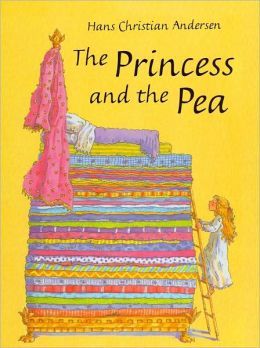
Favorite fairy tale: The Princess and the Pea
Don’t ask me why?
Favorite childhood memory? There are so many but going to the beach often was the best. Immensely grateful for growing up near the ocean. I’m always longing for the beach and try to go as much as possible.
Photo by Stephanie Hopkins
Favorite nursery rhyme? Row, Row, Row Your Boat
Probably because it involves a boat and water.
Favorite bird: Chickadee
They’re so cute and tiny!
Favorite color(s) rose? Red or White
I’m a hopeless romantic. Swoon.
Some of you history lovers may be thinking of the Tudor rose. I dare say, I could be as well.
Favorite sea creature? Does Starfish count?
They are referred to as sea stars. How cool is that!?
Favorite thing about a rainy day? Listening to the sound of rain against the windows and rooftop. There is something calming about the sound of rain fall. Great time for reflection or to gather your pillows and comfy blankets to curl of with a book(s).
Often times when I’m writing or reading, I will listen to a rain app if it’s not raining outside.
Favorite dinosaur? Velociraptor
I know, that sounds vicious and dark. But I have a perfectly good reason why they are my favorite. Honest. Might write about it in another blog post.
Favorite fictional place you’d want to visit?
Middle Earth in Lord of the Rings.
Oh, for so many reasons. Narnia comes in second or sometimes first.
Favorite road to drive on?
There are so many wonderful roads in my State. Choose one?
Goodness, that is simply impossible. I would have to say the back roads to Dahlonega from the Ball Ground area are a treasure. This is ridiculous because I really can’t choose a particular road in North Georgia. Also, the roads in the Blue Ridge Mountains are spectacular. One doesn’t mind getting lost driving along those back roads. Watch out for Dear and other wild animals, such as, Squirrels! I swear, they seem to have a death wish.
Favorite things about America? Life, liberty and the pursuit of happiness.
Freedom of expression, individualism, opportunity, diverse cultures and freedom to live by your faith in God.
Favorite 80’s song? Oh, heavens. There are a lot of 80’s favorites! I have to choose just one? What is the fun in that?
U2: With or Without You
Or Free Fallin by Tom Petty. Hmm…Okay, lets go with, With or Without You. Sigh. Not a fair question at all.
Favorite music genre(s)? I have several favorite music genres, depending on my mood. For everyday purposes: Classical music and 90’s Alternative.
Favorite American Classic movie? Picking just one classic movie is like asking someone to pick just one favorite book or one favorite song. Impossible!
All About Eve, comes to mind. I never get tired of watching that one. It’s brilliant and the cast of characters…swoon. The film came out in 1950 and, and, and Betty Davis and Anna Baxter co-stars in it! Love!
BUT, if I had to choose a favorite film period, it would be the 1940’s. Oh, for so many reasons. I think this causes for a blog post about the film industry in the 1940’s. Yes, I think I will.
Favorite Leonardo DiCaprio movie? How can I even…
If I had to choose the best acting, he performed in a movie, it would have to be, Shutter Island. I think. I’m torn. Because of his acting in, What’s Eating Gilbert Grape? and a couple of others. Hmm…
Perhaps, many of you will disagree with me on this one. I would probably would disagree with myself too.
Favorite Harry Potter movie? Harry Potter and the Chamber of Secrets (set in 1992-93)
Favorite celebrity? Ryan Reynolds Swoon. Fanning myself over here. I know you must be thinking, really Stephanie? I can’t help it. .
Favorite craft?
Abstract by Stephanie Hopkins
I’m a mixed media artist and I appreciate the essence of crafting as a whole. My Main go-to craft is collage because of its form and I use it quite often in my journals and ephemera making. I’m also an abstract painter and my current focus is creating new paintings and exploring different techniques. Truly, I can’t answer this question by naming one form of craft. Surely many will understand this.
Favorite thing to cook?
Breakfast
Favorite comfort food?
Most foods that are related to pie or stews.
Favorite Asian dish?
Crispy Honey Chicken with Fried Rice though I try real hard to stick to a plant based diet. Alas, I’m failing miserably right now. Though I’m totally blameless, of course.
Favorite ice cream flavor? Rocky Road
Favorite season? Autumn
Favorite holiday? Christmas
Foreign country: Scotland. I’ve never been and one day I will journey there. Might blog about this more.
Favorite TV show: Currently, Miss Scarlet and the Duke. Oh, and Sanditon.
Period shows and movies are my favorite.
I will say I long for more period shows that takes place in America. That I can tolerate and not cringe at every inaccuracy. Don’t think me a snob. I’m a history enthusiast, particular and I can not abide certain liberties concerning real-life events, social norms, objects not of the period, manner of dress and people. History is interesting enough without it being distorted. Though do not mistaken that I’m not aware when it comes to historical, there are allowances for artistic license-if you will. There are so many ways to look at this topic. Maybe we shall another time.
Instrument: Always, Classical Piano. I keep having this strange feeling I might have said something else once?
One of my favorites played on the piano, “Moonlight Sonata” by Beethoven.
Bach/Gonoud – Ave Maria is another great one! Okay, there are a lot of classical favorites played on the piano.
Have you listened to, Chopin – Preludes, Op. 28: No. 15 “Raindrop”? A must!
Swoon.
I seem to be doing a lot of swooning lately. Have you noticed?
Way to Relax: Reading, crafting, sewing and long walks in the woods.
This was so much fun! What are your favorite things? -Stephanie Hopkins
This year’s reading started off with a bang! I got through ten books and that is a current record for me. It has been a long time since I’ve read that many in a month. This is encouraging since my goal is to read 100 books this year. Who knows? I might surpass that goal. My original goal was to read a book a week but I knew I could read more than that with the great selection of books that are coming out and what novels I have on my shelf at home.
I am also making a point to read books that I would normally not pick up. Two of the books are young adults’ books. I must confess, I didn’t enjoy them as much as I thought I would. The story-telling just wasn’t to my taste and I struggled to stay focused. Having said that, I’m not giving up the genre. My daughter has a few on her shelf that I want to give a go at.
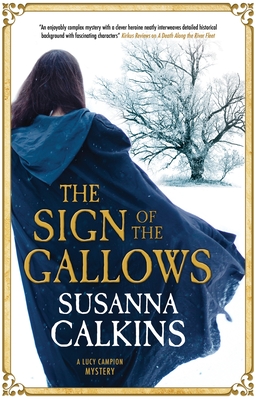
Today I’m sharing the books I read this month. Two of them where audio books I listened to through YouTube. Three of the books I’ve read before and I’ve read them more than four times! There will be four books reviews in total. My review for, The Garden of Spite and The Signs of the Gallows will be posted next week.
Last but not least, Robert Frost’s Selected Poems, which I adore. If you want to practice writing poetry, read Frost and other poets. Reading Poetry teaches language, ideas and meaning. Writing poetry allows us to explore the world that reaches beyond the limitations of our senses. There is a whole other world out there that poetry gives us. One can say that about reading it as well. The subject of poetry is an endless delight of wonders. -Stephanie Hopkins
Images may be subjected to copyright. In order to use art images or any content on Layered Pages platform, please ask permission from Stephanie Hopkins
Coming up tomorrow at Layered Pages: Image of the Month and Poetry!
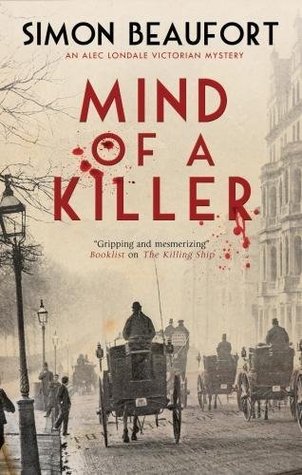
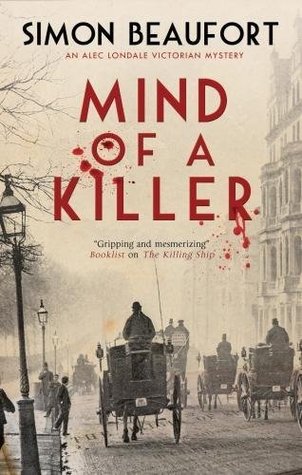
In London 1882, a new reporter for the Pall Mall Gazette, Alec Londale, comes across a house fire, that is not uncommon in those times, approaches the scene to watch the firemen hard at work to prevent the fire from spreading to the other houses. Looking around for someone to tell him who lives there and how the fire started, he approaches a woman, asking her questions. A body has been discovered. Alex begins to take notes and shortly after speaking with the first woman, another woman, who appears distraught, approaches him and ask him to meet her at a later date. She has information for him that can’t be shared at the scene. Alex is unobservant to her emotions and what she is saying or not saying. It is quite clear to him what she is and he dismisses her from his mind. Alex is young and is portrayed as a naive and green around the quills-if you will- about the ins and outs of being a reporter.
When the post-mortem on the fire victim comes back as something other than an accident, it isn’t long before a second body is found and this time the person’s throat is cut and then the bodies start to pile up.
Alex’s feisty female colleague, Hula Friederrichs is assigned to help him investigate the case. He isn’t happy about it but he needs all the help he can get! The further they investigate, they delve into the mystery and start to uncover a conspiracy so sinister, that it takes them to the upper classes of Victorian Society. The threat of their own lives become a reality as they get closer to the murder plot and they begin to question whom can they trust.
My fascination with the Victorian era’s class-based society, the stereotypes and double standards of the period, journalism, and the murder mystery genre prompted me to read this book. Those elements combined make for a gripping story. There is also the fact, I’m always curious how writers today portray the culture of the period.
Darwin’s theories are introduced in the story and taken to an unspeakable dark and evil height that will have you wondering how far will these people go to advance their objective. I don’t think I have ever been so thoroughly taken back by a theme that pushes the boundaries of this nature. In fact, it makes this story all too realistic and chilling.
Highly entertaining, and a thought-provoking read.
Stephanie Hopkins
I obtained a copy of Mind of a Killer from the publishers through NetGalley for an honest review.
Last year my Goodreads challenge was to read twenty fiction books. I surpassed that goal and read thirty. However, I read more than thirty books. Beyond that was research books for my writing project and other research projects. I did not count those on goodreads because I’m continually referring to them.
The fiction books below are my top favorite reads, though not in a particular order. This year’s reading goal is much bigger. I will be talking about that more a little later on. What were your favorite 202 reads? -Stephanie Hopkins
Top Favorites
Dreamland by Nancy Bilyeau
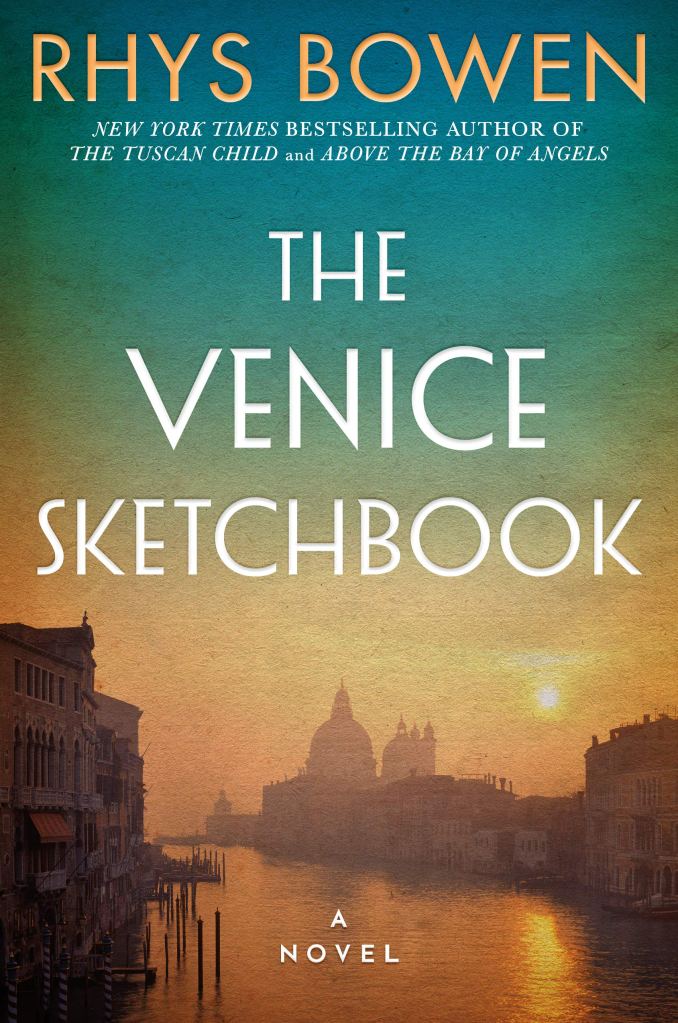
The Venice Sketchbook by Rhys Bowen
The Lost Village by Camilla Sten
Migrations by Charlotte McConaghy
The Jane Austen Society by Natalie Jenner
The Drowning Kind by Jennifer McMahon
Be sure to check these titles out on Goodreads and Amazon!
Favorite Covers:
Here are my favorite covers out of the bunch. Which covers do you like?
I discovered Madam C.J. Walker a few years ago during my in-depth study of 19th Century Post Civil War. I thought at the time that it would be wonderful to watch a movie or read a book based on her life. I wanted to know more about this woman. Her story needs to be told. To my delight, I learned that Author Erica L. Ball wrote about Walker and have added the book to my reading list. I have not read any of Ball’s published works but have learned that she is a professor of History and Black Studies. Very cool. -Stephanie Hopkins
About the book:
Rowman & Littlefield
Biographies & Memoirs | History | Nonfiction (Adult)
Pub Date 15 Jan 2021
Description
Madam C. J. Walker—reputed to be America’s first self-made woman millionaire—has long been celebrated for her rags-to-riches story. Born to former slaves in the Louisiana Delta in the aftermath of the Civil War, married at fourteen, and widowed at twenty, Walker spent the first decades of her life as a laundress, laboring in conditions that paralleled the lives of countless poor and working-class African American women. By the time of her death in 1919, however, Walker had refashioned herself into one of the most famous African American figures in the nation: the owner and president of a hair-care empire and a philanthropist wealthy enough to own a country estate near the Rockefellers…
In this biography, Erica Ball places this remarkable and largely forgotten life story in the context of Walker’s times.
We live in an extraordinary quirky world that often times we forget to pause in our busy lives to notice. During these times many cannot venture outside-another great reason to pick up a book-so we are bringing our explorations to you.
I’m obsessed with history and cultures from all walks of like. A particular favorite of mine-because I read and write stories in the time period-is nineteenth century history in America. Did you know that many of our expressions and slang come from what many considered forgotten or overlooked? Today we are taking a look at a few quirky slang words and phrases from the nineteenth century and perhaps, we will find a few similar to our modern-day slang. But before we do, and without going too much in-depth on this subject, lets’ look at its definition and a minuscule of the development.
Many slang words and phrases were brought to America from other countries and thus been adopted. Subcultures blending and becoming our main culture-if you will. Slang is ingrained in Americans’ and many don’t realize they are using it or where it comes from or how it evolves. Truth be told, it is difficult to say where exactly it all originated from.Often times, the meaning of the words change or the word can be used for different purposes.. For example: In the American Civil War Era, the word, “Dictator,” means: “The nickname of a 13-inch seacoast MORTAR mounted on a railroad flatcar and utilized during the siege of Petersburg. A.k.a the Petersburg Express.” In today’s society, “Dictator,” is commonly known as a country governed by a Dictator. Another example is, “Dresser,” The usage of this word during the American Civil War Era meant: “A volunteer or medical student assigned the task of dressing wounds. Today we associate the word as a piece of furniture that has drawers to hold clothing, house items and etc…
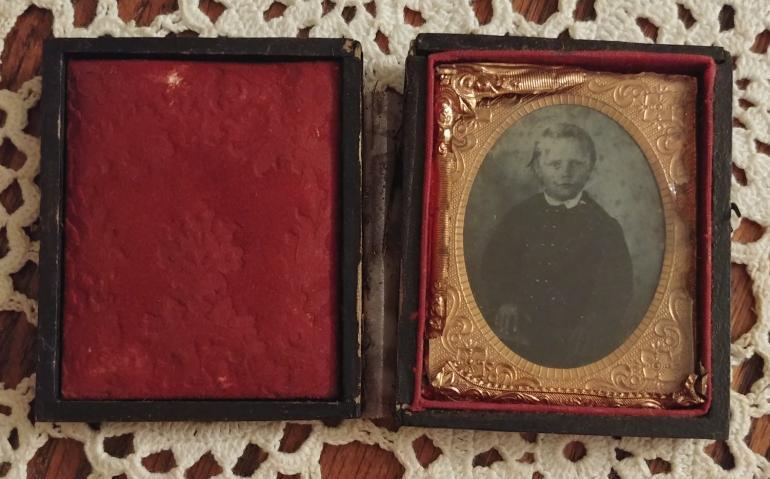
19th Century Family Heirloom
According to Britannica: “Slang, unconventional words or phrases that express either something new or something old in a new way. It is flippant, irreverent, indecorous; it may be indecent or obscene. Its colorful metaphors are generally directed at respectability, and it is this succinct, sometimes witty, frequently impertinent social criticism that gives slang its characteristic flavor. Slang, then, includes not just words but words used in a special way in a certain social context. The origin of the word slang itself is obscure; it first appeared in print around 1800, applied to the speech of disreputable and criminal classes in London. The term, however, was probably used much earlier. The term, however, was probably used much earlier.” Click on the Britannica site to read more about it their interpretation.
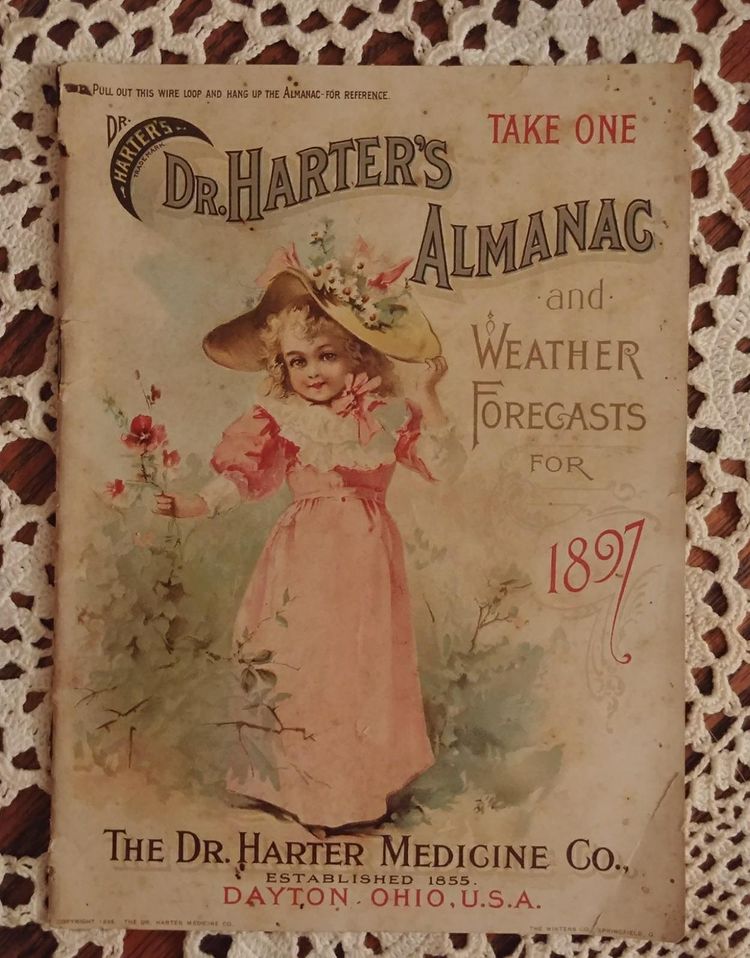
19th Century Family Heirloom
19th Century Slang and phrases used in America
Here are a few quirky slang and phrases you probably have never heard of:
Hornswoggling, Honey-fuggling, Give me jesse, Bottom fact, Hang up one’s fiddle, To give up, See the elephant, gallnipper, Go the whole hog: to go all the way, Acknowledge the corn, and I’ll Hang up my fiddle.
Here are a few that you might know:
Humbug, Dad-blame it, You can sass me, You cussed scalawag, How came you so, they’re “Fixin’ to” do it, Carryings-on, Crazy as a loon, Almighty, grit, Bad egg, balderdash, dude (a dandy), and Over yonder.
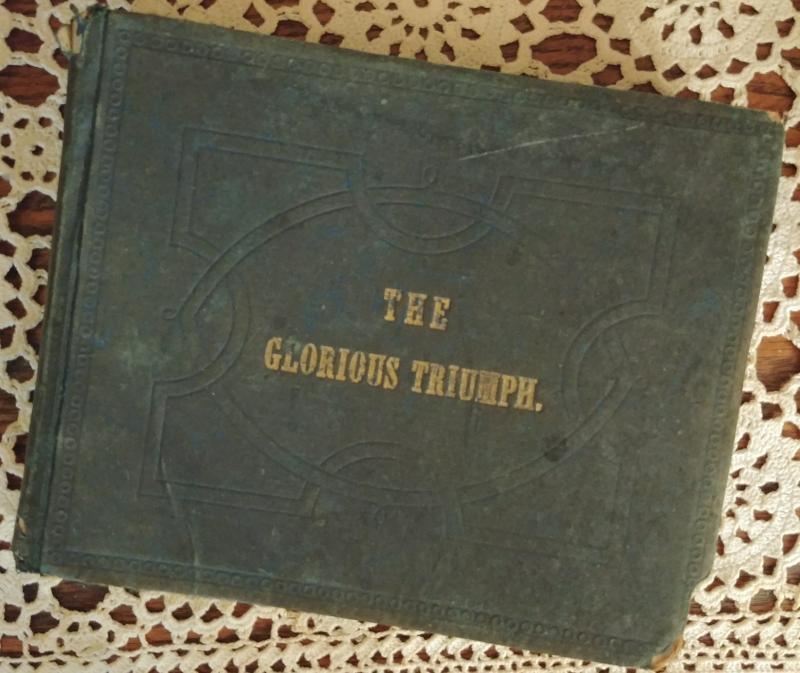
19th Century Family Heirloom
Meanings of a few:
Grit: guts; courage; toughness.
Hang up one’s fiddle: to give up.
Go the whole hog: to go all the way.
Almighty: huge
Bad egg: a bad person; a good-for-nothing person.
My personal favorites (Southerners Use):
A-hootin’ and a-hollerin’, Bless your heart, Fixin’ to, I reckon, Hold your horses, Well, I declare, Heavens to Betsy, and Hush your mouth, Water under the bridge, Hogwash, Stuff and nonsense.
Mind your own beeswax – started as a retort in the 1700’s. I remember using that phrases often as a child. Ha!
I’ve only scratched the surface of this fascinating and quirky topic and what a subject to explore!One can go down a rabbit hole with this.What are a few quirky slang words and phrases from the nineteenth century that you know? -Stephanie Hopkins
Images may be subjected to copyright. In order to use art images or any content on Layered Pages platform, please ask permission from Stephanie Hopkins
I’ve committed 2021 to be a year of catching up-somewhat-on my back list of books that have been patiently waiting on me. Well, maybe not too patiently. The new year brings new reading goals, habits and a fresh start on many things. This week, I have pondered the idea of adding more novellas to my ever-growing pile of books I want to absorb.
There are various opinions about reading novellas. Some say it is a waste of time and leaves you unsatisfied, but I beg to differ. I admire the writer who takes on the task of weaving a story with fewer words. Often times when having read a six-hundred-page novel, I wanted more. So, there you are. It is not, in truth, about the number of pages but what you make of them and allowing your imagination to explore the what-ifs. -Stephanie Hopkins
Our Souls at Night by Kent Haruf
Published May 28th 2015 by Alfred A. Knopf
A spare yet eloquent, bittersweet yet inspiring story of a man and a woman who, in advanced age, come together to wrestle with the events of their lives and their hopes for the imminent future.
In the familiar setting of Holt, Colorado, home to all of Kent Haruf’s inimitable fiction, Addie Moore pays an unexpected visit to a neighbor, Louis Waters. Her husband died years ago, as did his wife, and in such a small town they naturally have known of each other for decades; in fact, Addie was quite fond of Louis’s wife. His daughter lives hours away in Colorado Springs, her son even farther away in Grand Junction, and Addie and Louis have long been living alone in houses now empty of family, the nights so terribly lonely, especially with no one to talk with.
Their brave adventures – their pleasures and their difficulties – are hugely involving and truly resonant, making Our Souls at Night the perfect final installment to this beloved writer’s enduring contribution to American literature
Season of Migration to the North by Tayeb Salih
Published January 1st 1970 by Heinemann (first published 1966)
After years of study in Europe, the young narrator of Season of Migration to the North returns to his village along the Nile in the Sudan. It is the 1960s, and he is eager to make a contribution to the new postcolonial life of his country. Back home, he discovers a stranger among the familiar faces of childhood—the enigmatic Mustafa Sa’eed. Mustafa takes the young man into his confidence, telling him the story of his own years in London, of his brilliant career as an economist, and of the series of fraught and deadly relationships with European women that led to a terrible public reckoning and his return to his native land.
But what is the meaning of Mustafa’s shocking confession? Mustafa disappears without explanation, leaving the young man—whom he has asked to look after his wife—in an unsettled and violent no-man’s-land between Europe and Africa, tradition and innovation, holiness and defilement, and man and woman, from which no one will escape unaltered or unharmed.
Season of Migration to the North is a rich and sensual work of deep honesty and incandescent lyricism. In 2001 it was selected by a panel of Arab writers and critics as the most important Arab novel of the twentieth century.
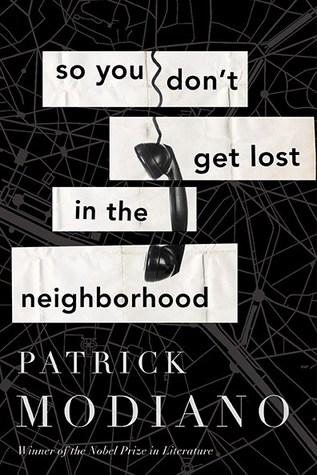
So You Don’t Get Lost in the Neighborhood by Patrick Modiano, Euan Cameron (Translation)
Published September 15th 2015 by Houghton Mifflin Harcourt
A haunting novel of suspense from the winner of the 2014 Nobel Prize in Literature
In the stillness of his Paris apartment, Jean Daragane has built a life of total solitude. Then a surprising phone call shatters the silence of an unusually hot September, and the threatening voice on the other end of the line leaves Daragane wary but irresistibly curious. Almost at once, he finds himself entangled with a shady gambler and a beautiful, fragile young woman, who draw Daragane into the mystery of a decades-old murder. The investigation will force him to confront the memory of a trauma he had all but buried.
With So You Don’t Get Lost in the Neighborhood Patrick Modiano adds a new chapter to a body of work whose supreme psychological insight and subtle, atmospheric writing have earned him worldwide renown — including the Nobel Prize in Literature. This masterly novel, now translated into twenty languages, penetrates the deepest enigmas of identity and compels us to ask whether we ever know who we truly are.
The Lifted Veil by George Eliot
The Penelopiad by Margaret Atwood
The Slow Regard of Silent Things by Patrick Rothfuss