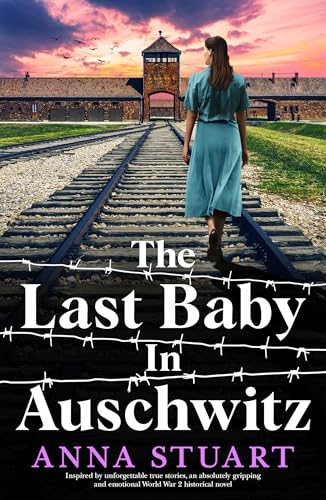
The Last Baby in Auschwitz is inspired by true stories of the Holocaust and I was completely taken out of my comfort zone reading this book and confronted with the darkest realities of the camps; I’ve never felt quit this way before with such an unrelenting force of emotions while reading stories of the Holocaust, and I’ve read a lot of them. I experienced all the emotions of sorrow, loss, anger, horror, rage… Anna Stuart doesn’t hold back with the evils of the Nazis and their total lack of humanity and cruelty. The intensity of what was happening was so strong, I literally felt physically sick and there were a few times I had to take a step back from the book.
I deeply felt as if I wasn’t a mere reader, or just an observer reading about the history, but a family member listening to the experiences of love one’s tragedies and the terrifying horrors and loss they endured, it was truly heartbreaking.
I highly recommend this story to all and to those who haven’t taken the time to know more about the war.
I’ve rated this story five stars which doesn’t seem fitting. I would rate the story with millions of stars.
Stephanie
About the Book:
Auschwitz, 1945: My baby’s thin cry pierces the cold, frosty night. I rock him gently in my arms, willing him to be quiet. Because if anyone hears my newborn, he could be snatched from me – or worse. We’re so close to freedom now and I pray that soon I will walk out of the iron gates with my precious son…
Naomi Demetriou has survived three years behind the walls of Auschwitz. Torn apart from her family, every breath could be her last. She’s learnt to survive by secretly trading the clothes she’s forced to sort through in exchange for food. But when an SS officer singles her out, her life becomes even harder. And then she discovers she’s pregnant…
With the support of the kind and brave women in Barrack 24, Noami does the impossible and gives birth to a tiny baby boy. Hiding in the shadows, Naomi vows to do whatever it takes to keep baby Isaac safe. With rumours circulating of an Allied invasion, she prays the camp will soon be liberated so she can return to her home by the Greek sea with her son.
But the day comes when Naomi hears heavy footsteps and the harsh voice of an SS guard. ‘Out! Now! You can’t take anything with you!’ She’s shoved into a line of people being marched out of the iron gates. Thick snow falls around them. Tears sting in Naomi’s eyes.
It all happened so fast. And she was unable to grab the bundle of blankets containing her little boy…
Side Bar:
This story contains extreme violence, cruelty, and sexual assaults.
Thank you, Bookouture for an ARC through NetGalley for an honest review.
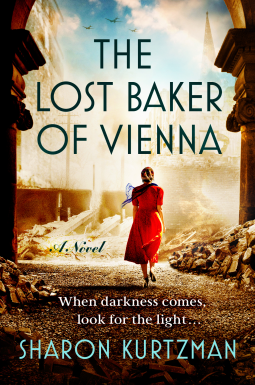
In 2018, Zoe Rosenzweig is reeling after the loss of her beloved grandfather, a Holocaust survivor. She becomes obsessed with finding out what really happened to her family during the war.
Vienna, 1946: Chana Rosenzweig has endured the horrors of war to find herself, her mother, and her younger brother finally free in Vienna. But freedom doesn’t look like they’d imagined it would, as they struggle to make a living and stay safe.
Despite the danger, Chana sneaks out most nights to return to the hotel kitchen where she works as a dishwasher, using the quiet nighttime hours to bake her late father’s recipes. Soon, Chana finds herself caught in a dangerous love triangle, torn between the black-market dealer who has offered marriage and protection, and the apprentice baker who shares her passions. How will Chana balance her love of baking against her family’s need for security?
My Thoughts:
It is not often I read an historical fiction story of the aftermath of in months or year post World War II. I wonder how often people think about the dangers the Jewish people still faced during that time or how they had to completely rebuild their lives. There is also the fact that they were at the mercy of the allied forces and not all of them were honorable people to say the least. The Lost Baker of Vienna focuses on what the Rosenzweigs’ family experienced during and after the war.
The Lost Baker of Vienna is a dual timeline weaved with mystery, love, survival, loss, and rebuilding life after the horrors of war.
I was fully immersed in this story and the outcome. Wonderful character development and the author portrayed a realistic reality to the post war era. As I understand it, this story is inspired by her own family’s experience after the war which makes this story even more impactful.
I rated this book five stars.
Stephanie
I obtained an ARC through NetGalley from the publisher for an honest review.
For many years now, I’ve been quietly studying Islam starting with its origins to the present day and have maybe told two or three people in my acquaintance. When it comes to religions, cults and religious laws and culture, I tend to do deep dives into these areas. After all, studying religions is the backbone of knowing about civilizations and cultures throughout history. In all honestly, you can’t have one without the other. I discovered Raymond Ibrahim’s works a while ago and I’ve been following his interviews and his YouTube channel. I tend to do this with scholar’s and historian’s nonfiction works I’m considering reading. That is to say, I want to know a bit about their background before I invest my time and money. I do read books on said topics from writer’s I might disagree with or hold a different religious background. I’m looking forward to reading the three books listed below in the near future for further study and I’m curious about the takeaways I will have from them. The Two Swords of Christ is coming out in November of this year.
Stephanie
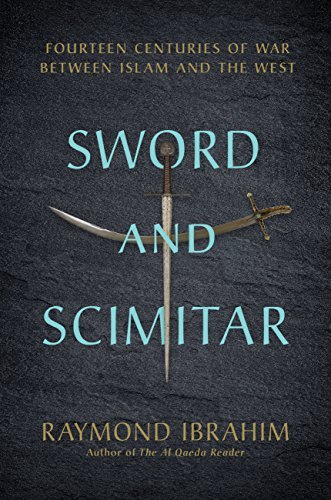
Sword and Scimitar: Fourteen Centuries of War between Islam and the West by Raymond Ibrahim, Victor Davis Hanson (Foreword)
A sweeping history of the often-violent conflict between Islam and the West, shedding a revealing light on current hostilities
The West and Islam–the sword and the scimitar–have clashed since the mid-seventh century, when, according to Muslim tradition, the Byzantine emperor rejected Prophet Muhammad’s order to abandon Christianity and convert to Islam, unleashing a centuries-long jihad on Christendom.
Sword and Scimitar chronicles the significant battles that arose from this ages-old Islamic jihad, beginning with the first major Islamic attack on Christian land in 636, through the occupation of the Middle East that prompted the Crusades and the far-flung conquests of the Ottoman Turks, to the European colonization of the Muslim world in the 1800s, when Islam largely went on the retreat–until its reemergence in recent times. Using original sources in Arabic, Greek, Latin, and Turkish, preeminent historian Raymond Ibrahim describes each battle in vivid detail and explains the effect the outcome had on larger historical currents of the age and how the military lessons of the battle reflect the cultural faultlines between Islam and the West.
The majority of these landmark battles are now forgotten or considered inconsequential. Yet today, as the West faces a resurgence of this enduring Islamic jihad, Sword and Scimitar provides the needed historical context to understand the current relationship between the West and the Islamic world, and why the Islamic State is merely the latest chapter of an old history.
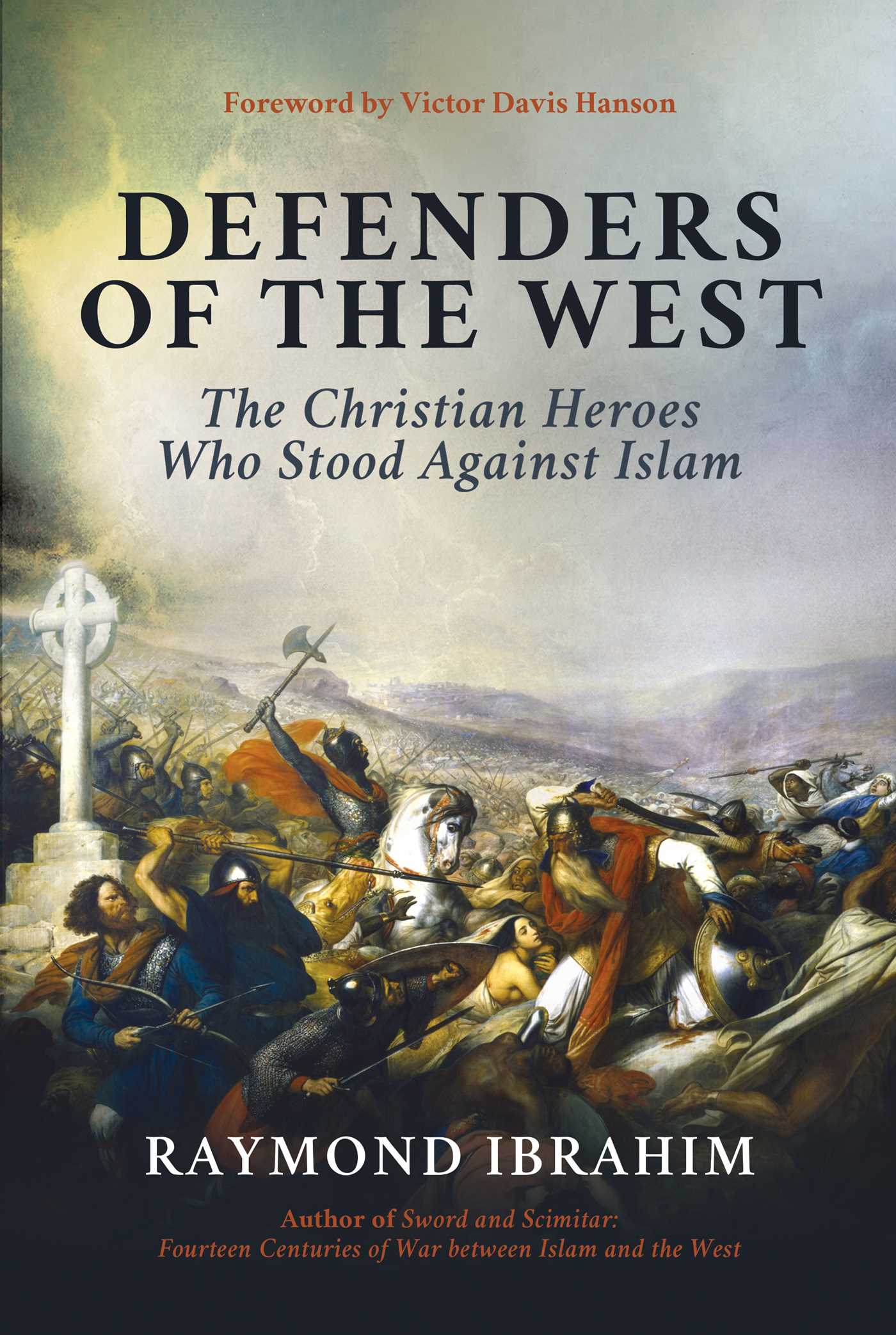
Defenders of the West: The Christian Heroes Who Stood Against Islam by Raymond Ibrahim
A riveting account of the lives and epic battles of eight Western defenders against violent Islamic jihad that sheds much-needed light on the enduring conflict with radical Islam.
In Defenders of the West, the author of Sword and Scimitar follows up with vivid and dramatic profiles of eight extraordinary warriors—some saints, some sinners—who defended the Christian West against Islamic invasions. Discover the real Count Dracula, Spain’s El Cid, England’s Richard Lionheart, and many other historical figures, whose true and original claim to fame revolved around their defiant stance against jihadist aggression. With sixteen full color pages of photos and illustrations, Defenders of the West is an instructive and inspiring read. Whereas Sword and Scimitar revolved around decisive battles, this book revolves around decisive men.
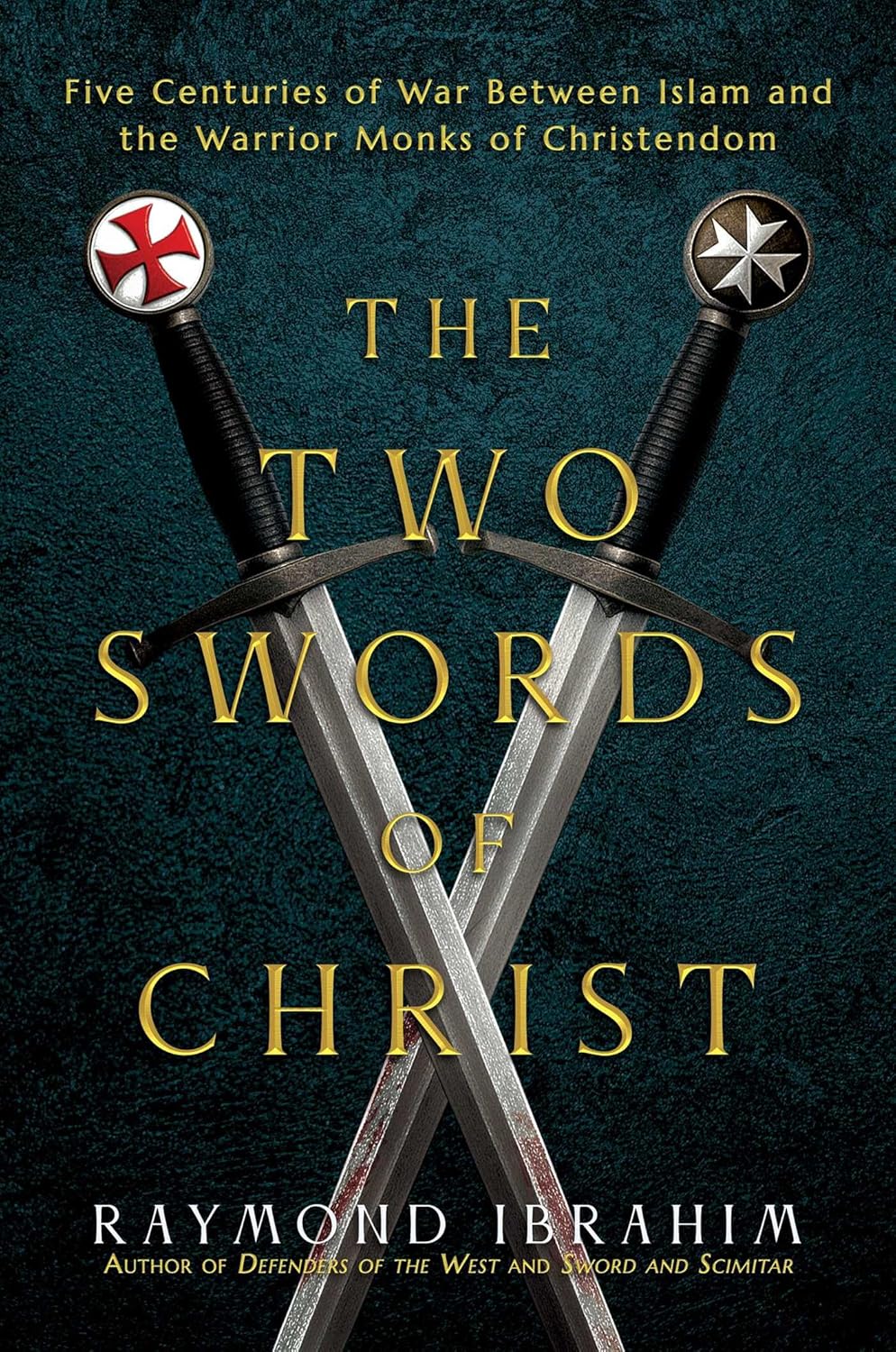
The Two Swords of Christ: Five Centuries of War between Islam and the Warrior Monks of Christendom by Raymond Ibrahim
Pub Date: November 25, 2025 and is available for pre-order on Amazon.
The definitive account of the warrior-monks who stood as Christendom’s shield against centuries of relentless Islamic aggression and a superlative example of Muscular Christianity for an era marred by effete and effeminized forms of the faith.
In this magisterial history, Raymond Ibrahim chronicles the long and brutal conflict between Islam and the West through the eyes and lives of Christendom’s original commando forces: the knights of the Temple and Hospital. These warrior monks, whose unprecedented fusion of piety and militancy remains unmatched to this day, played a pivotal—though overlooked if not suppressed—role in defending Christian civilization against the onslaught of Islamic forces during the Crusades and beyond.
Drawing on an exhaustive study of primary sources, and infused with his signature blend of rigorous scholarship and compelling storytelling, Ibrahim’s groundbreaking work far transcends the typical constraints of modern academic retellings, debunks widely held myths (such as the persistent claim that the Templars evolved into the Freemasons), and uncovers the theological foundation that gave rise to and provided justification for these military orders. In line with Christ’s now ignored directive that “two swords” are “enough” (Luke 22:38), these two brotherhoods wielded both spiritual and martial power to safeguard the faith.
WARNING: Brimming with epic battles, stunning heroism, and self-sacrificial martyrdom against the savage hordes of Islam, The Two Swords of Christ—the third installment of Ibrahim’s trilogy (following Sword and Scimitar and Defenders of the West)—stands as his fiercest and most violent narrative to date.
About Author:
(Bio and Picture from goodreads)
RAYMOND IBRAHIM is a widely published author, public speaker, and Middle East and Islam expert. His books include Crucified Again: Exposing Islam’s New War on Christians (2013) and The Al Qaeda Reader (2007). His writings, translations, and observations have appeared in a variety of publications, including Fox News, Financial Times, Jerusalem Post, Los Angeles Times, New York Times Syndicate, United Press International, USA Today, Washington Post, Washington Times, and Weekly Standard; scholarly journals, including the Almanac of Islamism, Chronicle of Higher Education, Jane’s Islamic Affairs Analyst, Middle East Quarterly, and Middle East Review of International Affairs; and popular websites, such as American Thinker, the Blaze, Bloomberg, Christian Post, FrontPage Magazine, Gatestone Institute, the Inquisitr, Jihad Watch, NewsMax, National Review Online, PJ Media, VDH’s Private Papers, and World Magazine. He has contributed chapters to several anthologies and been translated into various languages.
Ibrahim guest lectures at universities, including the National Defense Intelligence College, briefs governmental agencies, such as U.S. Strategic Command and the Defense Intelligence Agency, provides expert testimony for Islam-related lawsuits, and has testified before Congress regarding the conceptual failures that dominate American discourse concerning Islam and the worsening plight of Egypt’s Christian Copts. Among other media, he has appeared on MSNBC, Fox News, C-SPAN, PBS, Reuters, Al-Jazeera, Blaze TV, CBN, NPR, and dozens of radio interviews.
Ibrahim’s dual-background—born and raised in the U.S. by Coptic Egyptian parents born and raised in the Middle East—has provided him with unique advantages, from equal fluency in English and Arabic, to an equal understanding of the Western and Middle Eastern mindsets, positioning him to explain the latter to the former. His interest in Islamic civilization was first piqued when he began visiting the Middle East as a child in the 1970s. Interacting and conversing with the locals throughout the decades has provided him with an intimate appreciation for that part of the world, complementing his academic training.
Raymond received his B.A. and M.A. (both in History, focusing on the ancient and medieval Near East, with dual-minors in Philosophy and Literature) from California State University. There he studied closely with noted military-historian Victor Davis Hanson. He also took graduate courses at Georgetown University’s Center for Contemporary Arab Studies—including classes on the history, politics, and economics of the Arab world—and studied Medieval Islam and Semitic languages at Catholic University of America. His M.A. thesis examined an early military encounter between Islam and Byzantium based on arcane Arabic and Greek texts.
Ibrahim’s resume includes serving as Associate Director of the Middle East Forum and working as a Reference Assistant at the Near East Section of the Library of Congress, where he was often contacted by, and provided information to, defense and intelligence personnel involved in the fields of terrorism and area studies, as well as the Congressional Research Service.
He resigned from both positions in order to focus exclusively on researching and writing and is currently a Shillman Fellow at the David Horowitz Freedom Center, an associate fellow at the Middle East Forum, a Hoover Institution Media Fellow (2013), and a CBN News contributor.
When NetGalley added, “Babylonia” by Costanza Casati and I read the description, I was completely elated and was thrilled to be accepted a review copy. I knew when I first discovered this story, it would be special. Casati did not disappoint.
Semiramis was orphaned as a baby and grew up in Mari, a village located in Eber-Nari. Her upbringing was wrought with abuse by her adopted- father who shepherd of the village-and the boys of the town. She longed to escape the cruelty of life she was given. When she is at a marriageable age, she has a chance of escape when Onnes- the new governor- of Eber-Nari arrives to her village. Onnes notices something in Semiramis that has captivated him and he wants her to become his wife. He takes her to the capital of the Assyrian empire-Kalhu-and she soon discovers her life in the capitol will not be as easy to say the least.
Semiramis’s ascent to a throne was extraordinary told and when she becomes entangled in a love triangle of two powerful men-her husband and the King-and experiences war, politics and betrayal, she must fight for very survival.
Casati leads the reader through the tragic events unfolding and to the rise of power Assyria’s one and only female ruler. The blend of mythology and the ancient world of Assyria empire and the interactions with other kingdoms including the Babylonians is stunningly and beautifully told. The reader is transported to time and place and your senses are heightened by the sights and sounds of the characters daily lives, past experiences and the wars they wage on each other. You feel the character’s depth in their journey of life, love and conflicts with each other.
My only problem with the story is that I didn’t want it to end. I wanted to read about Semiramis’s time as ruler. I rated this this story five stars.
I highly recommend the reader to read the author’s notes at the end. I will most assuredly be adding a physical copy to my book stacks.
My thanks to the publishers for an ARC through NetGalley for an honest review.
Acquiring books and reading them are entirely two different hobbies. I must say in the last few years, I have been working on curating my home library and working out what criteria I want to set to grow my stacks.
In this book stack series, I’m sharing books I’ve previously read and reviewed from NetGalley and want to obtain a physical copy for my home library.
I reviewed, “Good Time Coming” by C.S. Harris in September of 2016 and I was deeply moved by this story. I feel my review did not do the story justice and I want to go back and read it again to update my thoughts and to-of course-add a physical copy to my book stacks. Interestingly enough, ever since I’ve been on the lookout for the book at used bookstores and have never come across a copy. I have noticed-I’m not surprised-that there are a few readers that misunderstand the story and the author’s intentions in writing about the subject of what civilians in Mississippi went through during the war. Harris doesn’t leave any women out no matter their class, status in society, or age. What I mean to say is that there is a diversity of women in this book that are tied together by war, uncertain of their fate and the utter despair and savagery of war. Today many people still don’t want to address this part of the American Civil War because then it will force one to admit that we tend to look at things with prejudice. Harris is a brave woman to write this story and I admire her greatly for her spirit of persistence in bringing Good Timing Coming to the public.
Stephanie Hopkins
About the Book:
A powerful tale of the survival of the women and children left behind during the American Civil War by the author of the Sebastian St Cyr mysteries.”
It’s the beginning of the American Civil War and the Union army is sailing down the Mississippi, leaving death and destruction in its wake. The graceful river town of St. Francisville, Louisiana, has known little of the hardships, death, and destruction of the War. But with the fall of New Orleans, all changes. A Federal fleet appears on the Mississippi, and it isn’t long before the depredations and attacks begin.
For one Southern family the dark blue uniform of the Union army is not the only thing they fear. A young girl stops a vicious attack on her mother and the town must pull together to keep each other safe. But a cryptic message casts doubt amongst the town s folk. Is there a traitor in the town and can anybody be trusted?
Twelve-year-old Amrie and her family have never felt entirely accepted by their neighbors, due to their vocal abolitionist beliefs. But when Federal forces lay siege to the nearby strongholds of Vicksburg and Port Hudson, the women and children of St. Francisville find themselves living in a no man’s land between two warring armies. Realizing they must overcome their differences and work together to survive, they soon discover strengths and abilities they never knew they possessed, and forge unexpected friendships.
As the violence in the area intensifies, Amrie comes to terms with her own capacity for violence and realizes that the capacity for evil exists within all of us. And when the discovery of a closely guarded secret brings the wrath of the Federal army down on St. Francisville, the women of St. Francisville, with whom Amrie and her mother have shared the war years many deprivations and traumas, now unite and risk their own lives to save them.
Acquiring books and reading them are entirely two different hobbies. I must say in the last few years, I have been working on curating my home library and working out what criteria I want to set to grow my stacks.
In this book stack series, I’m sharing books I’ve previously read and reviewed from NetGalley and want to obtain a physical copy for my home library.
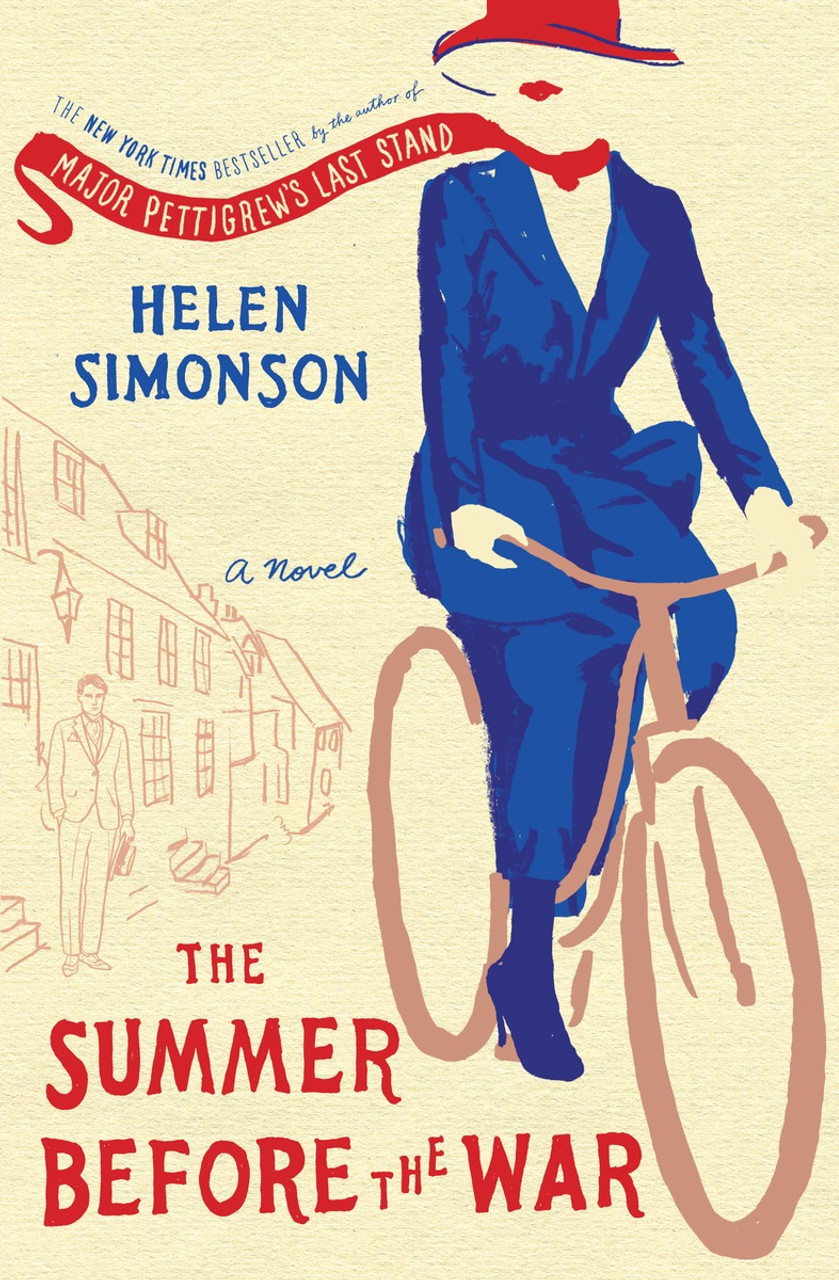
I reviewed, “The Summer Before the War” by Helen Simonson back in March of 2016 and remember enjoying it very much. At that time, I had not read many stories centered around World War I and this story inspired me to study the history more in-depth.
I believe this book will be a nice addition to my home library. I also would like to read the book again-of course. I’m curious as to what I would think of the story now.
Stephanie Hopkins
The Summer Before the War
by Helen Simonson
Pub Date: Mar 22 2016 by Random House
About the Book:
East Sussex, 1914. It is the end of England’s brief Edwardian summer, and everyone agrees that the weather has never been so beautiful. Hugh Grange, down from his medical studies, is visiting his Aunt Agatha, who lives with her husband in the small, idyllic coastal town of Rye. Agatha’s husband works in the Foreign Office, and she is certain he will ensure that the recent saber rattling over the Balkans won’t come to anything. And Agatha has more immediate concerns; she has just risked her carefully built reputation by pushing for the appointment of a woman to replace the Latin master.
When Beatrice Nash arrives with one trunk and several large crates of books, it is clear she is significantly more freethinking—and attractive—than anyone believes a Latin teacher should be. For her part, mourning the death of her beloved father, who has left her penniless, Beatrice simply wants to be left alone to pursue her teaching and writing.
But just as Beatrice comes alive to the beauty of the Sussex landscape and the colorful characters who populate Rye, the perfect summer is about to end. For despite Agatha’s reassurances, the unimaginable is coming. Soon the limits of progress, and the old ways, will be tested as this small Sussex town and its inhabitants go to war.
Paris, 1943. The scent of fresh baguettes hangs in the air as Coralie unbolts the door to her bakery with trembling fingers. She must get out of the city. Hiding her precious leather recipe book inside her coat, she promises never to let the secret locations of the people she worked tirelessly to save fall into German hands…
Present day. Raven is unhappy about being shipped off to the other side of the country for the summer to stay with the mysterious French grandmother she barely knows. And discovering a tattered, leather-bound book with yellowed pages full of handwritten recipes and coded numbers, she is stunned.
Her grandmother has never baked for her. And she refuses to talk about Paris, or the past. Flipping through the book, a faded photograph of a laughing couple falls out. As Raven scans the writing on the back she can scarcely believe her eyes…
What really happened in that tiny French bakery all those years ago? And could this forgotten recipe book finally bring healing to a woman still haunted by wartime secrets? Or has Raven’s discovery shattered any chance of bonding with hergrandmother, before her time runs out?
My thoughts:
I have read many world war II historical novels over the last two decades and I must say, “The Resistance Bakery”, is now at the top of my list of favorites. There are some stories that are so engaging, thought provoking, and so brilliantly told, one can’t exactly find the right words to express their appreciation for such immersive story-telling. This is one of those stories in my opinion.
One of the many topics explored in this story I admire Curham depicting is of forbidden love or love in the most dire and dangerous scenarios-if you will- and the consequences that results either in its tragic end or happy ends and new beginnings.
I must say she also touches greatly on relationships and interactions between people that we consider the enemy or evil at best during war and afterwards. It is certainly a taboo subject and even today more times than not, people still can’t have an open and honest conversation about the subject. You see, Curham brings humanity to the table and gives you food for thought. No pun intended. In this story, not everything is cut and dry and often times not everything is what it seems. I respect that aspect of the story and it allows us to know-as humans-how wrong or misinformed our personal assumptions and beliefs can be towards a person or people and the situation they’re in themselves. This just goes to show that our hearts will deceives us.
Curham’s descriptions of the pastries Coralie baked activated my senses of wonderful scents and imagination of being transported to a bakery so much so I immediately thought of the French bakery not four miles from my home and the delectable treats it has to offer. This just goes to show how atmospheric this story is told.
I love a good resistance story and a French one to boot. There is suspense, mystery, secrets, courage, forgiveness, love, laughter, music, sorrow, anger, danger, heroism, and then some… A truly beautiful story. I will be thinking about, “The Resistance Bakery” for a very long time.
Stephanie Hopkins
I reviewed an ARC of this book from the publishers through NetGalley for an honest review.
A few years ago now, Atria Books sent me an ARC of The Princess Spy by Larry Loftis to review and I immensely enjoyed the story. Since then I haven’t had a chance to look at Loftis other works and I’ve recently discovered another book by him I would like to read and have added it to my reading wish-list plus, The Hiding Place by Corrie Ten Boom. I can’t wait to read them! They look so good. I have a feeling I will be shedding quite a few tears reading them. World War II stories do that to me. Let me know in the comment area if you’ve read these stories!
Stephanie Hopkins
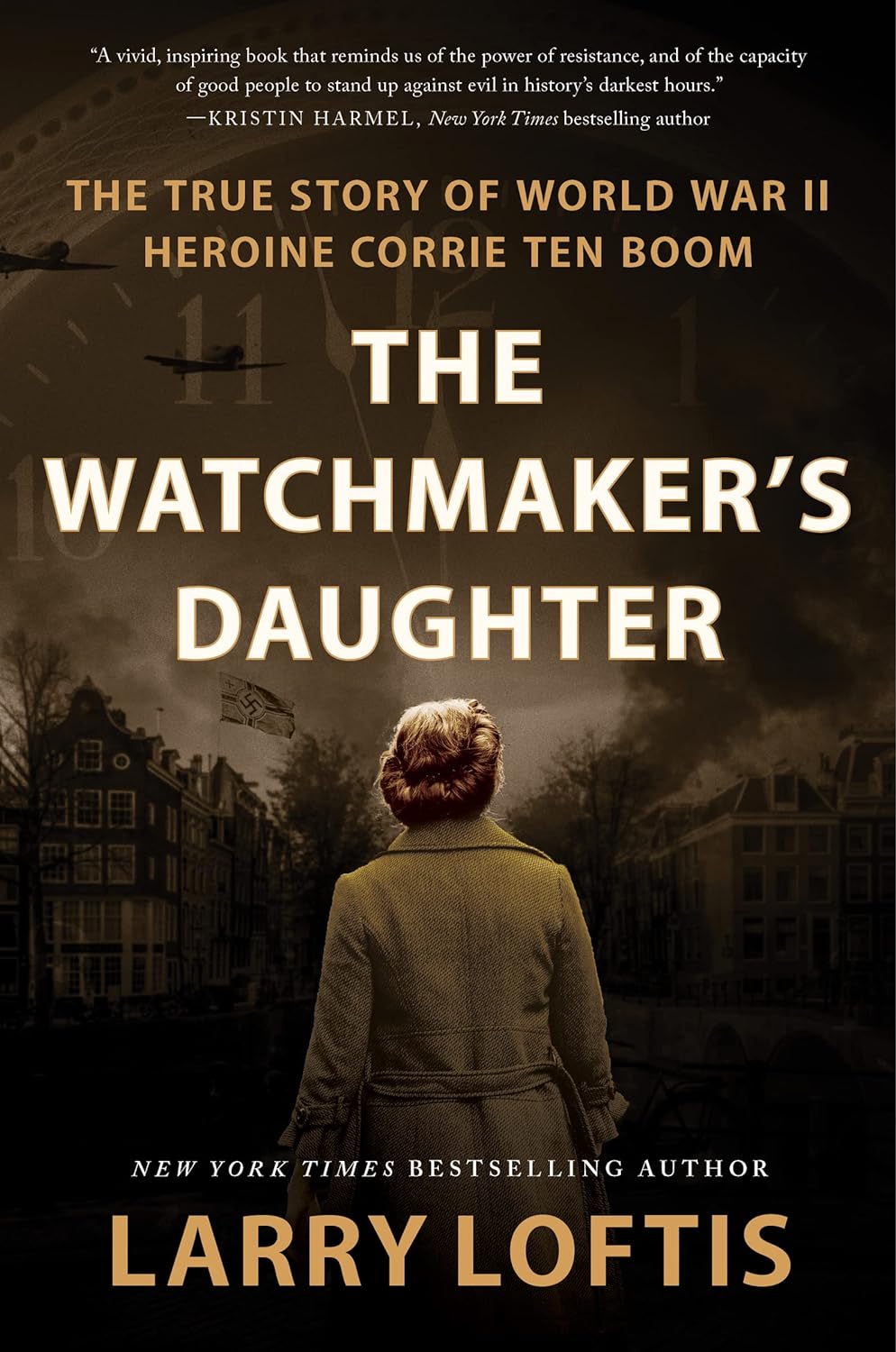
The Watchmaker’s Daughter: The True Story of World War II Heroine Corrie ten Boom by Larry Loftis
About the book:
INTERNATIONAL BESTSELLER
New York Times bestselling author and master of nonfiction spy thrillers Larry Loftis writes the first major biography of Corrie ten Boom, a Dutch watchmaker who saved the lives of hundreds of Jews during WWII—at the cost of losing her family and being sent to a concentration camp, only to survive, forgive her captors, and live the rest of her life as a Christian missionary.
The Watchmaker’s Daughter is one of the greatest stories of World War II that readers haven’t heard: the remarkable and inspiring life story of Corrie ten Boom—a groundbreaking, female Dutch watchmaker, whose family unselfishly transformed their house into a hiding place straight out of a spy novel to shelter Jews and refugees from the Nazis during Gestapo raids. Even though the Nazis knew what the ten Booms were up to, they were never able to find those sheltered within the house when they raided it.
Corrie stopped at nothing to face down the evils of her time and overcame unbelievable obstacles and odds. She persevered despite the loss of most of her family and relied on her faith to survive the horrors of a notorious concentration camp. But even more remarkable than her heroism and survival was Corrie’s attitude when she was released. Miraculously, she was able to eschew bitterness and embrace forgiveness as she ministered to people in need around the globe. Corrie’s ability to forgive is just one of the myriad lessons that her life story holds for readers today.
Reminiscent of Schindler’s List and featuring a journey of faith and forgiveness not unlike Unbroken, The Watchmaker’s Daughter is destined to become a classic work of World War II nonfiction.
The Hiding Place by Corrie Ten Boom, Elizabeth Sherrill, and John Sherrill
“Every experience God gives us . . . is the perfect preparation for the future only He can see.”–Corrie ten Boom
About the book:
Corrie ten Boom was a Dutch watchmaker who became a heroine of the Resistance, a survivor of Hitler’s concentration camps, and one of the most remarkable evangelists of the twentieth century. In World War II she and her family risked their lives to help Jews and underground workers escape from the Nazis, and for their work they were tested in the infamous Nazi death camps. Only Corrie among her family survived to tell the story of how faith ultimately triumphs over evil.
Here is the riveting account of how Corrie and her family were able to save many of God’s chosen people. For 35 years millions have seen that there is no pit so deep that God’s love is not deeper still. Now The Hiding Place, repackaged for a new generation of readers, continues to declare that God’s love will overcome, heal, and restore.
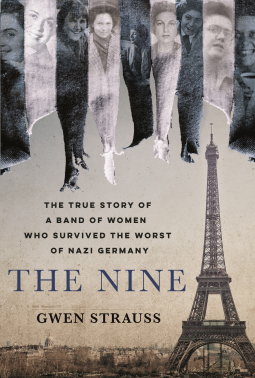
Congrats to Gwen Strauss’s book publication of, “The Nine”
(The True Story of a Band of Women Who Survived the Worst of Nazi Germany!”)
About the book:
St. Martin’s Press
History
Pub Date 04 May 2021
“This haunting account provides yet more evidence not only of the power of female friendship but that the often-unrecorded courage and resilience of ordinary women must be honoured and celebrated. It’s a most inspiring read…Utterly gripping.” —Anne Sebba, author of Les Parisiennes
The Nine follows the true story of the author’s great aunt Helene Podliasky, who led a band of nine female resistance fighters as they escaped a German forced labor camp and made a ten-day journey across the front lines of WWII from Germany back to Paris.
The nine women were all under thirty when they joined the resistance. They smuggled arms through Europe, harbored parachuting agents, coordinated communications between regional sectors, trekked escape routes to Spain and hid Jewish children in scattered apartments. They were arrested by French police, interrogated and tortured by the Gestapo. They were subjected to a series of French prisons and deported to Germany. The group formed along the way, meeting at different points, in prison, in transit, and at Ravensbrück. By the time they were enslaved at the labor camp in Leipzig, they were a close-knit group of friends. During the final days of the war, forced onto a death march, the nine chose their moment and made a daring escape.
Drawing on incredible research, this powerful, heart-stopping narrative is a moving tribute to the power of humanity and friendship in the darkest of times.
Expected publication: March 12th 2021 by Bookouture
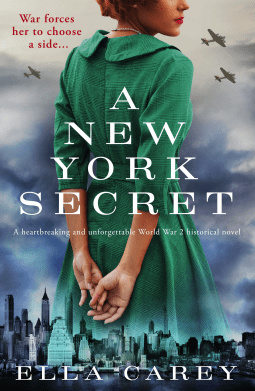
War forces her to choose a side…
1942, New York. As war rages in Europe, Lily Rose is grateful for her perfect life: a wealthy family who love her and a dream job working uptown as a restaurant chef. Times are changing for women and Lily is determined to run her own kitchen one day. She hopes handsome Tom Morelli, son of Sicilian immigrants, will be at her side. Together they work late, dreaming up delicious meals for New Yorkers struggling with wartime rationing and the threat of sons and sweethearts being called up…
Then Tom receives a devastating telegram that changes everything: he is drafted to fight in Italy.
Suddenly alone, Lily turns to her parents for support. But when her mother finds out about Tom, she is furious. When the war ends, Lily’s duty is to marry the man picked for her, keep house and raise children. They give her a heartbreaking ultimatum: end her relationship with Tom or lose her family and inheritance forever.
In the middle of the war, Lily is left in an impossible position. Will she choose to stay with her family and live the safe life she has always known, or will she follow her heart and her dreams?
My thoughts:
Often times we only read stories about war in the midst of battles and evasions. Ella Carey gives us a story about the families back home and the affect war has on them and the sacrifices they have to make. Like any war, people on the home front are thrust into uncertainties and adjusting to a new way of life, even if temporary. Is it really temporary?
Women were called to do “mens’ work” and this fact alone opened many opportunities and gave women a sense of pride and validity. We have much to thank them for…
Rationing food, gas and clothing became part of the necessary means and people had to find creative and alternatives to these commodities. While these things were taking place, there was also fear that gripped the nation for their love ones off fighting on the front lines.
These themes are woven throughout the story in an engrossing way that captivates the reader and gives one an appreciation for sacrifices that are made for the good of community.
I was completely enthralled with Lily’s strength and following her life during this period in history. All the characters, really, have a special role that gives this story depth and purpose.
What fun it was to read about the restaurant kitchen life and its culture.
A New York Secret is most definitely a thought-provoking, emotional story that portrays courage, hard choices, family, friendships in unlikely places and adversity.
Stephanie Hopkins
I obtained a copy from the Publishers through NetGalley for an honest review.





 Layered Pages