Saturday Sunday: Layered Pages Book Review

The Ghost of Madison Avenue by Nancy Bilyeau

My thoughts of the story:

The Gilded Age has always been a fascination for me and I consider New York City the center stage of the era for the most part. The era brings us impressive architecture and bigger than life people who inspired greatness. Morgan Library and the man who brought us its glory plays part in this glamorous and magical story.

Bilyeau brings us a new tale of not only J.P. Morgan and is magnificent library and museum but what seems an other-worldly Irish-American lady, Helen O’ Neil.  Helen is hired by stunning Belle da Costa Greene to conserve Morgan’s artifacts.  Soon after Helen begins her work, strange things begin to happen and her life takes a turn that finds herself in a most unusual event-if you will.

Bilyeau is one of my favorite writers and she has the talent to bring readers new content to the table. This story alone has deepened my fascination with the Gilded Age and wanting to know more about J.P. Morgan. My only problem with this story is that it ended and I wanted to read more about the characters lives. Bilyeau in my opinion is artistic with her writing. Having said I had a problem with the story ending, she ended the story with a feeling of rightness and the closeness of family.

The Ghost of Madison Avenue is beautifully told, atmosphereic and rich with unique people and history.

Stephanie Hopkins

The Ghost of Madison Avenue 4 F3More About The Story:

Kindle Edition, 108 pages
Published December 11th 2019 by Amazon

Helen O’Neill, part of a tight-knit Irish-American family in the Bronx, is only too happy to report to work at the spectacular private library built on Madison Avenue by millionaire financier J. P. Morgan. The head librarian, the brilliant and beautiful Belle da Costa Greene, had hired Helen away from the Metropolitan Museum of Art after she witnessed Helen’s unusual talent with handling artifacts.

Helen soon discovers the Morgan Library is a place like no other, with its secret staircases, magical manuscripts, and mysterious murals. But that’s nothing compared to a person Helen alone sees: a young woman standing on Madison Avenue, looking as if she were keeping watch. In learning the woman’s true link to the Morgan, Helen must face the pain of her own past. She finds herself with a second chance at happiness that could only happen on Christmas Eve—if she has the courage

Relevant Links: 

Read about The Secrets of J.P. Morgan’s Private Library

The Morgan Library & Museum 

Nancy Bilyeau’s Amazon Page 


Cover Crush: Echoes of the Runes: A sweeping, epic tale of forbidden love by Christina Courtenay

I don’t read romance stories often but this one looks fantastic and I adore the cover! The title and premise isn’t too shabby either. I find the color blue popping up everywhere and the cast of hues are terrific!

Reading the description, one can tell it is much more than a romance and it looks to be full of adventure and all sorts of imagery. Adding this book to my 2020 to-read wish-list!

Echoes of the Runes A sweeping, epic tale of forbidden loveExpected publication: March 5th 2020

Their love was forbidden. But echoed in eternity.

When Mia inherits her beloved grandmother’s summer cottage, Birch Thorpe, in Sweden, she faces a dilemma. Her fiance Charles urges her to sell and buy a swanky London home, but Mia cannot let it go easily. The request to carry out an archaeological dig for more Viking artifacts like the gold ring Mia’s grandmother also left her, offers her a reprieve from a decision – and from Charles.

Whilst Mia becomes absorbed in the dig’s discoveries, she finds herself drawn to archaeologist Haakon Berger. Like her, he can sense the past inhabitants whose lives are becoming more vivid every day. Trying to resist the growing attraction between them, Mia and Haakon begin to piece together the story of a Welsh noblewoman, Ceri, and the mysterious Viking, known as the ‘White Hawk’, who stole her away from her people in 869 AD.

As the present begins to echo the past, and enemies threaten Birch Thorpe’s inhabitants, they will all have to fight to protect what has become most precious to each of them…

*******

Cover Crush is a weekly series that originated by Erin at Historical Fiction Reader 

Other book bloggers who participated in the great cover crushes series. 

Magdalena at A Bookaholic Swede
Colleen at A Literary Vacation
Heather at The Maiden’s Court
Holly at 2 Kids and Tired

(All book reviews, interviews, guest posts and promotions are originals. In order to use any text or pictures from Layered Pages, please ask for permission from Stephanie.)

Cover Crush banner

Lost Arts: Did you know?

ClothesI have been thinking a lot lately about what my favorite part of reselling is and it is packaging up sales with care, seeing the joy it brings to my clients and knowing I saved another item from the landfills. We as consumers are bombarded with fast fashion by the clothing industry and we have lost our sense of appreciation for what we have and what goes into the producing of such items. Did you know that It takes 2,700 Liters of water to make one T-Shirt?

Could you survive if shelter, clothes, food, water weren’t readily available to you? It is a question I ask myself often.  -Stephanie

*********

On the book front, I received this book in the mail on Tuesday from a dear friend and it is so fitting for the subject matter above.

The Lost Art Of Hearth and HomeAbout the book:

The Lost Arts of Hearth and Home is not about extreme, off-the-grid living. It’s for city and suburban dwellers with day jobs: people who love to cook, love fresh natural ingredients, and old techniques for preservation; people who like doing things themselves with a needle and thread, garden hoe, or manual saw.

Ken Albala and Rosanna Nafziger Henderson spread the spirit of antiquated self-sufficiency throughout the household. They offer projects that are decidedly unplugged and a little daring, including:

* Home building projects like rooftop food dehydrators and wood-burning ovens
* Homemaking essentials, from sewing and quilting to rug braiding and soap making
* The wonders of grain: making croissants by hand, sprouting grains, and baking bread
* Adventures with meat: pickled pig’s feet, homemade liverwurst, and celery-cured salami

Intended for industrious cooks and crafters who aren’t afraid to roll up their sleeves, The Lost Arts of Hearth and Home will teach you the history and how-to on projects for every facet of your home, all without the electric toys that take away from the experience of making things by hand.

*********

Follow my closet @artsycouture42 and  use my code: ARTSYCOUTURE42 to get a free $10 credit when signing up for Poshmark!

Layered Pages Other Links:

Twitter 

Facebook Page 

Instagram

Linkedin

Pinterest 


Layered Pages: Art Of Journaling

Layered Pages Journal Banner

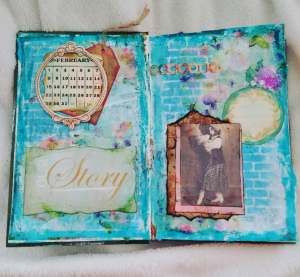
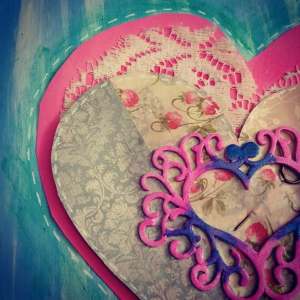
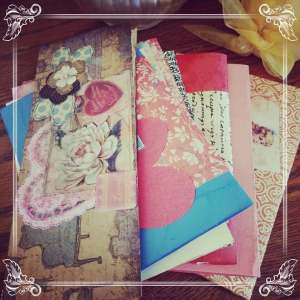
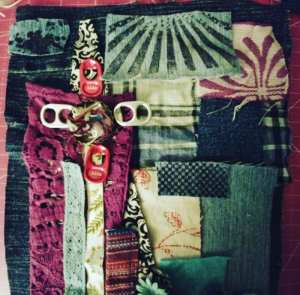
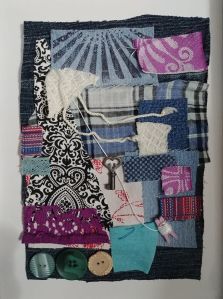
Every year I journal events, moments, thoughts, poems and what not. For 2020, I decided to make an art journal made from my fabric scraps. Each page will be a hand stitched pouch that I can put photos of my art and my writings. The pictures show the fabric pages I have created thus far.

When I’m jotting down my thoughts on paper, my mind brings me back to the story, “Possession by A.S. Byatt.” The thought of my journals being discovered a hundred or so years later…

The journals, letters and poems unearthed in the story “Possession” are by two literary sleuths. How romantic is that?! I highly recommend you read the story and watch the movie based on the book. The actors who star in the film are Gwyneth Paltrow, Aaron Eckhart, and Jeremy Northam. I’ve watched that movie a dozen times throughout the years while my imagination runs wild!

The art of journaling comes from your heart. It is what you make of the moment of thought and self expression. -Stephanie

PossessionAbout the book:

Possession is an exhilarating novel of wit and romance, at once an intellectual mystery and triumphant love story. It is the tale of a pair of young scholars researching the lives of two Victorian poets. As they uncover their letters, journals, and poems, and track their movements from London to Yorkshire—from spiritualist séances to the fairy-haunted far west of Brittany—what emerges is an extraordinary counterpoint of passions and ideas.

Quotes from Possession:

“My Solitude is my Treasure, the best thing I have. I hesitate to go out. If you opened the little gate, I would not hop away—but oh how I sing in my gold cage.”

― A.S. Byatt, Possession

“Think of this – that the writer wrote alone, and the reader read alone, and they were alone with each other.”

― A.S. Byatt, Possession

“…words have been all my life, all my life–this need is like the Spider’s need who carries before her a huge Burden of Silk which she must spin out–the silk is her life, her home, her safety–her food and drink too–and if it is attacked or pulled down, why, what can she do but make more, spin afresh, design anew….”

― A.S. Byatt, Possession


A Glimpse At Layered Pages 2020 Reads

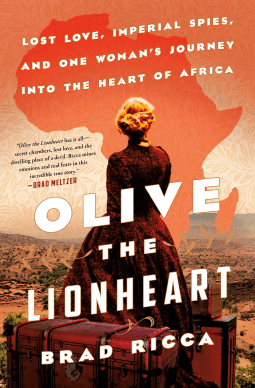
MeToday I’m highlighting a few books I’m planning on reading this year. There are seven listed here and three of them are for review but excited to be reviewing them and the others I have on my to-read wish-list. This year I’m not putting any stresses on my reading and art projects. Though I do have quite a lot of books to review I’m not worried. Also, I’m creating a few art pieces inspired by these book covers. Anyhow, I do have several art books on my reading list as well that I will be sharing throughout the year. I hope you have a beautiful day! -Stephanie

THe Gold LEtterThe Gold Letter by Lena Manta

Fenia Kantartzi, a Greek living in Germany, inherits a small fortune from her grandfather, a man she never knew. While working on the property, Fenia comes upon old letters and begins to learn of an intergenerational story of unfulfilled loves of her mother and grandmother. Between the letters and the tale told to her by her cousin Melpo, Fenia puts together a story of generations and learns her true paternity.

But will the knowledge Fenia gains be enough to help her recover from the legacy of heartache and abuse she endured in her childhood? Bestselling author Lena Manta captivates again with her sweeping saga of individual lives caught in the rapids of history.

Women Talking by Miriam ToewsWomen Talking by Miriam Toews 

One evening, eight Mennonite women climb into a hay loft to conduct a secret meeting. For the past two years, each of these women, and more than a hundred other girls in their colony, has been repeatedly violated in the night by demons coming to punish them for their sins. Now that the women have learned they were in fact drugged and attacked by a group of men from their own community, they are determined to protect themselves and their daughters from future harm.

While the men of the colony are off in the city, attempting to raise enough money to bail out the rapists and bring them home, these women—all illiterate, without any knowledge of the world outside their community and unable even to speak the language of the country they live in—have very little time to make a choice: Should they stay in the only world they’ve ever known or should they dare to escape?

Based on real events and told through the “minutes” of the women’s all-female symposium, Toews’s masterful novel uses wry, politically engaged humor to relate this tale of women claiming their own power to decide.

Dreamland by Nancy BilyeauDreamland by Nancy Bilyeau

The year is 1911 when twenty-year-old heiress Peggy Batternberg is invited to spend the summer in America’s Playground.

The invitation to the luxurious Oriental Hotel a mile from Coney Island is unwelcome. Despite hailing from one of America’s richest families, Peggy would much rather spend the summer working at the Moonrise Bookstore than keeping up appearances with New York City socialites and her snobbish, controlling family.

But soon it transpires that the hedonism of nearby Coney Island affords Peggy the freedom she has been yearning for, and it’s not long before she finds herself in love with a troubled pier-side artist of humble means, whom the Batternberg patriarchs would surely disapprove of.

Disapprove they may, but hidden behind their pomposity lurks a web of deceit, betrayal and deadly secrets. And as bodies begin to mount up amidst the sweltering clamour of Coney Island, it seems the powerful Batternbergs can get away with anything…even murder.

Sin EaterThe Sin Eater by Megan Campisi

The Sin Eater walks among us, unseen, unheard
Sins of our flesh become sins of Hers
Following Her to the grave, unseen, unheard
The Sin Eater Walks Among Us.

For the crime of stealing bread, fourteen-year-old May receives a life sentence: she must become a Sin Eater—a shunned woman, brutally marked, whose fate is to hear the final confessions of the dying, eat ritual foods symbolizing their sins as a funeral rite, and thereby shoulder their transgressions to grant their souls access to heaven.

Orphaned and friendless, apprenticed to an older Sin Eater who cannot speak to her, May must make her way in a dangerous and cruel world she barely understands. When a deer heart appears on the coffin of a royal governess who did not confess to the dreadful sin it represents, the older Sin Eater refuses to eat it. She is taken to prison, tortured, and killed. To avenge her death, May must find out who placed the deer heart on the coffin and why.

Code Name HeleneCode Name Helene Ariel Lawhon 

Told in interweaving timelines organized around the four code names Nancy used during the war, Code Name Hélène is a spellbinding and moving story of enduring love, remarkable sacrifice and unfaltering resolve that chronicles the true exploits of a woman who deserves to be a household name.

It is 1936 and Nancy Wake is an intrepid Australian expat living in Paris who has bluffed her way into a reporting job for Hearst newspaper. She is fighting to cover the disturbing reports of violence coming out of Vienna and Berlin when she meets the wealthy French industrialist Henri Fiocca. No sooner does Henri sweep Nancy off her feet and convince her to become Mrs. Fiocca than the Germans invade France and she takes yet another name: a code name.

As LUCIENNE CARLIER she smuggles people and documents across borders under the guise of an oblivious mistress. Soon enough the Gestapo hears of a female operative with a remarkable ability to evade capture, and Nancy earns a new nickname: THE WHITE MOUSE. But this one carries with it a five-million-franc bounty on her head. Forced to escape France and leave Henri behind for the safety of both of them, Nancy enters training with the Special Operations Executives, who transform her into Hélène. Finally, with mission in hand, Nancy is airdropped back into France as the deadly MADAM ANDRÉ. She soon becomes one of the most powerful leaders in the French Resistance, known for her ferocious wit, her signature red lipstick, and her ability to summon weapons straight from the Allied Forces. But no one can protect Nancy if the enemy finds out these four women are one and the same, and the closer to liberation France gets, the more exposed she–and the people she loves–will become.

The Bass RockThe Bass Rock by Evie Wyld 

In 1720s Scotland, a priest and his son get lost in the forest, transporting a witch to the coast to stop her from being killed by the village.

In the sad, slow years after the Second World War, Ruth finds herself the replacement wife to a recent widower and stepmother to his two young boys, installed in a huge house by the sea and haunted by those who have come before.

Fifty years later, Viv is cataloguing the valuables left in her dead grandmother’s seaside home, when she uncovers long-held secrets of the great house.

Three women, hundreds of years apart, slip into each other’s lives in a novel of darkness, violence and madness.

LABYRINTH OF ICE by Buddy LevyLabyrinth of Ice: The Triumphant and Tragic Greely Polar Expedition by Buddy Levy

In July 1881, Lt. A.W. Greely and his crew of 24 scientists and explorers were bound for the last region unmarked on global maps. Their goal: Farthest North. What would follow was one of the most extraordinary and terrible voyages ever made.

Greely and his men confronted every possible challenge—vicious wolves, sub-zero temperatures, and months of total darkness—as they set about exploring one of the most remote, unrelenting environments on the planet. In May 1882, they broke the 300-year-old record, and returned to camp to eagerly await the resupply ship scheduled to return at the end of the year. Only nothing came.

250 miles south, a wall of ice prevented any rescue from reaching them. Provisions thinned and a second winter descended. Back home, Greely’s wife worked tirelessly against government resistance to rally a rescue mission.

Months passed, and Greely made a drastic choice: he and his men loaded the remaining provisions and tools onto their five small boats, and pushed off into the treacherous waters. After just two weeks, dangerous floes surrounded them. Now new dangers awaited: insanity, threats of mutiny, and cannibalism. As food dwindled and the men weakened, Greely’s expedition clung desperately to life.

Labyrinth of Ice tells the true story of the heroic lives and deaths of these voyagers hell-bent on fame and fortune—at any cost—and how their journey changed the world.

Saturday Sunday: Weekend Vibes

tea cup image

Photo by Stephanie Hopkins

I want to thank you all for your support and visiting Layered Pages. Have a bless weekend. See you on Monday!

“We always have to choose to live our lives to the fullest.  No one is better or worse than anyone else.  We are different and beautiful.” ~ Mattie Stepanek

Cover Crush & Collage: The Camera Never Lies by David Rawlings

Tha Camera Never Lies

Book Collage by Stephanie Hopkins

I spotted this book on Facebook  and the title, colors of the background and the premise intrigued me. I have an older mix media art piece I created on Canvas that I thought would be perfect for a collage of this book. I took my image and the book cover and made digital art with them. I did sharpen and added a few little mediums to really make it pop. I think it turned out pretty cool.


The Camera Never LiesThe Camera Never Lies

by David Rawlings

Daniel, Kelly, and Milly appear to be the perfect family. But an old camera will expose secrets no one wants developed.

Daniel Whitely is a successful marriage counselor and bestselling author, yet his own marriage is in crisis and his daughter is drifting further away each day. To make matters worse, the deadline for his second book has come and gone, and he still hasn’t written a single word.

When Daniel inherits an old camera from his grandfather, he notices an inscription on the bottom: “No matter what you think you might see, the camera never lies.”

Daniel begins using the camera, but every time he develops his photos, they threaten to reveal secrets that could sabotage both his marriage and his career—exposing him as a fraud and destroying the life he has worked so hard to build.

He’s faced with a choice: keep his secrets and save his career or come clean and possibly save his family. Which will he choose? Which would you choose?

*****

Cover Crush banner

Cover Crush is a weekly series that originated by Erin at Historical Fiction Reader 

Other book bloggers who participated in the great cover crushes series. 

Magdalena at A Bookaholic Swede
Colleen at A Literary Vacation
Heather at The Maiden’s Court
Holly at 2 Kids and Tired

(All book reviews, interviews, guest posts and promotions are originals. In order to use any text or pictures from Layered Pages, please ask for permission from Stephanie.)

The Secrets of J.P. Morgan’s Private Library

By Nancy Bilyeau

On March 27, 1902, leading architect Charles McKim had an appointment to see John Pierpont Morgan in Manhattan. Any time J.P. Morgan beckoned, people came running. He was the most powerful banker in America, the financier of railroads and the U.S. Steel purchase. That day McKim was astounded—and excited—to learn that Morgan wanted him to design a new building but not an office or bank. It was to be a private library to hold the banker’s overflowing collection of rare books, ancient treasures, sculptures, and paintings.

The library was planned for next door to Morgan’s house on Madison Avenue and 36th Street, McKim learned. As for its design, this was to be no simple collection of rooms to house books and other valuables. In his voracious collecting of valuables, Morgan seems to have seen himself as a Medici prince. So his library reflected that: McKim was hired to design an Italian Renaissance wonder built with Italianate marble, its rotunda boasting ceiling frescoes painted by Harry Siddons Mowbray that were fit for a cathedral.

1. Pierpont Morgan's StudyMorgan had so much to house there. He collected Old Masters paintings and sculptures, tapestries, Regency furniture, bronzes, jewelry, armor, metalwork, illuminated manuscripts, Gutenberg bibles, ancient Babylonian cylinder seals, and medieval metalwork with gold.

And then there were the books. He bought Charles Dickens’ original manuscript of A Christmas Carol, with the author’s revision notes in the margin. Morgan owned the sole surviving manuscript of John Milton’s Paradise Lost, Henry David Thoreau’s journals, Thomas Jefferson’s letters to his daughter Martha, and rare letters to Jane Austen and Charlotte Bronte.

One of his most cherished acquisitions was the Lindau Gospels. Its importance was suggested by the designation it held: M1.  The gospels were written by monks in the 9th century and the jeweled covers were considered the finest treasures of the Carolingian age. The way Morgan acquired it was significant. His scholarly nephew, Junius Spencer Morgan, sent a telegram in code to him in July 1899 saying that the Lindau Gospels, in the possession of the Earl of Ashburnham, could be purchased, and the British Museum could not meet the asking price. “Morgan could: he paid 10,000—nearly $50,000—for something that would be valued at millions if it came on the market a century later,” wrote Jean Strouse in Morgan: American Financier.

6-Pierpont-Morgans-LibraryJunius Spencer was also the person who told the banker about a prospective librarian: a young brilliant woman named Belle da Costa Greene, who was then working at the Princeton University library. Once she came to work for Morgan at his library in 1906, she took charge and not only cataloged his acquisitions but helped him pursue new purchases.

Morgan loved his private library so much that he spent most of his time there instead of the bank office at 23 Wall Street. He worked out of his study, also known as the West Room. As Herbert Satterlee, Morgan’s son-in-law and first biographer, later recalled, “No one could really know Mr. Morgan at all unless he had seen him in the West Room. This was because the room expressed his conception of beauty and color in varied and wonderful forms.” The study had an antique wooden ceiling, stained glass windows, and red damask silk covering the walls.

Much of Morgan’s collection of books was stored in the main library room. The walls, reaching to a height of thirty feet, were lined floor to ceiling with triple tiers of bookcases fashioned of bronze and inlaid Circassian walnut. Above were ceiling frescoes, many of them showing astrological figures. Morgan was a member of the mysterious Zodiac Club in New York, which never had more or less than twelve members. Morgan is believed to have met with astrologers as well as psychics.

Another remarkable feature of the main room was two secret winding staircases that allowed people to move between the levels of bookshelves and balconies. Two staircases, concealed behind bookcases at the corners of the room, could only be revealed by pulling a certain lever.

And this was but one of the secrets contained in J.P. Morgan’s sumptuous, magical private library…

Article written by Author and Editor Nancy Bilyeau

********

Nancy BNancy Bilyeau is the author of the historical thrillers “The Blue” and “Dreamland” and the Tudor mystery series “The Crown,” “The Chalice,” and “The Tapestry.” She is a magazine editor who has lived in the United States and Canada.

In “The Blue,” Nancy drew on her own heritage as a Huguenot. She is a direct descendant of Pierre Billiou, a French Huguenot who immigrated to what was then New Amsterdam (later New York City) in 1661. Nancy’s ancestor, Isaac, was born on the boat crossing the Atlantic, the St. Jean de Baptiste. Pierre’s stone house still stands and is the third oldest house in New York State.

Nancy, who studied History at the University of Michigan, has worked on the staffs of “InStyle,” “Good Housekeeping,” and “Rolling Stone.” She is currently the deputy editor of the Center on Media, Crime and Justice at the Research Foundation of CUNY and a regular contributor to “Town & Country” and “Mystery Scene Magazine.”

Nancy’s mind is always in past centuries but she currently lives with her husband and two children in New York City.

Twitter

Facebook

Website

Amazon 

The Ghost of Madison Avenue 4 F3From the author of The Blue and the Joanna Stafford trilogy—a compelling mystery set in the faded glory of New York’s Gilded Age.

In this unforgettable story, bestselling author Nancy Bilyeau takes readers to J. P. Morgan’s private library in December 1912, when two very different people haunted by lost love come together in an unexpected way.

Helen O’Neill, part of a tight-knit Irish-American family in the Bronx, is only too happy to report to work at the spectacular private library built on Madison Avenue by millionaire financier J. P. Morgan. The head librarian, the brilliant and beautiful Belle da Costa Greene, had hired Helen away from the Metropolitan Museum of Art after she witnessed Helen’s unusual talent with handling artifacts.

Helen soon discovers the Morgan Library is a place like no other, with its secret staircases, magical manuscripts, and mysterious murals. But that’s nothing compared to a person Helen alone sees: a young woman standing on Madison Avenue, looking as if she were keeping watch. In learning the woman’s true link to the Morgan, Helen must face the pain of her own past. She finds herself with a second chance at happiness—if she has the courage.

From the author of The Blue, the Joanna Stafford trilogy, and the soon-to-be published Dreamland, set in 1911 Coney Island, comes The Ghost of Madison Avenue, a story both thrilling and moving.

Praise for Nancy Bilyeau’s Fiction

“Nancy Bilyeau’s passion for history infuses her books”
—Alison Weir, bestselling historian and novelist

On The Ghost of Madison Avenue:

“The Gilded Age splendors of the Morgan Library come to life in this wonderful, warm-hearted tale of Christmases past, present, and future. Bilyeau weaves a wealth of gorgeous period detail into her ghost story of old New York, delivering genuine chills, family drama, and poignant romance with equal skill. A gorgeous holiday treat!”
—Mariah Fredericks, author of Death of a New American

On Dreamland:

“This fast-paced, engrossing novel from Bilyeau … gives readers an up-close and personal view of New York’s Gilded Age”
Library Journal, starred review

“Beautifully written and impeccably researched, Dreamland is a rollicking ride.”
—Fiona Davis, author of The Chelsea Girls

“A marvelous book!”
—Ellen Marie Wiseman, author of What She Left Behind

On The Blue:

“Definitely a winner!”
—Kate Quinn, author of The Alice Network

“Fascinating”
—Ian Rankin, international bestseller

On the Joanna Stafford Trilogy:

“All the ingredients of the best historical fiction … will satisfy even the most ardent mystery fans.”
—Deborah Harkness, author of A Discovery of Witches

“Bilyeau deftly weaves extensive historical detail throughout, but the real draw of this suspenseful novel is its juicy blend of lust, murder, conspiracy and betrayal.”
Oprah Magazine

A New Year Of Layered Pages

Me2019 was an interesting year to say the least and I took a much-needed break from book reviewing among other things…I am slowly getting back in book reviewing but on a different scale altogether. I read 25 books in 2019 and hope to read the same amount for 2020! I have amazing mix media projects coming up for the year and I look forward to revealing them as the new year continues.

Today I want to share three highlight books I read in 2019.

Where the Crawdads SingHow long can you protect your heart?

For years, rumors of the “Marsh Girl” have haunted Barkley Cove, a quiet town on the North Carolina coast. So in late 1969, when handsome Chase Andrews is found dead, the locals immediately suspect Kya Clark, the so-called Marsh Girl. But Kya is not what they say. Sensitive and intelligent, she has survived for years alone in the marsh that she calls home, finding friends in the gulls and lessons in the sand. Then the time comes when she yearns to be touched and loved. When two young men from town become intrigued by her wild beauty, Kya opens herself to a new life – until the unthinkable happens.

Perfect for fans of Barbara Kingsolver and Karen Russell, Where the Crawdads Sing is at once an exquisite ode to the natural world, a heartbreaking coming-of-age story, and a surprising tale of possible murder. Owens reminds us that we are forever shaped by the children we once were, and that we are all subject to the beautiful and violent secrets that nature keeps.

***

I Was Anastasia

Countless others have rendered their verdict. Now it is your turn.

Russia, July 17, 1918
Under direct orders from Vladimir Lenin, Bolshevik secret police force Anastasia Romanov, along with the entire imperial family, into a damp basement in Siberia where they face a merciless firing squad. None survive. At least that is what the executioners have always claimed.


Germany, February 17, 1920

A young woman bearing an uncanny resemblance to Anastasia Romanov is pulled shivering and senseless from a canal in Berlin. Refusing to explain her presence in the freezing water, she is taken to the hospital where an examination reveals that her body is riddled with countless, horrific scars. When she finally does speak, this frightened, mysterious woman claims to be the Russian Grand Duchess Anastasia.

Her detractors, convinced that the young woman is only after the immense Romanov fortune, insist on calling her by a different name: Anna Anderson.
As rumors begin to circulate through European society that the youngest Romanov daughter has survived the massacre, old enemies and new threats are awakened. With a brilliantly crafted dual narrative structure, Lawhon wades into the most psychologically complex and emotionally compelling territory yet: the nature of identity itself.
The question of who Anna Anderson is and what actually happened to Anastasia Romanov creates a saga that spans fifty years and touches three continents. This thrilling story is every bit as moving and momentous as it is harrowing and twisted.

***

The Turn of the Key

Page-turning psychological thriller

When she stumbles across the advert, she’s looking for something else completely. But it seems like too good an opportunity to miss: a live-in nanny position, with a staggeringly generous salary. And when Rowan arrives at Heatherbrae House, she is smitten by the luxurious ‘smart’ home fitted out with all modern conveniences, by the beautiful Scottish Highlands, and by this picture-perfect family.

What she doesn’t know is that she’s stepping into a nightmare – one that will end with a child dead and her in a cell awaiting trial for murder.

She knows she’s made mistakes. But, she maintains, she’s not guilty – at least not of murder. Which means someone else is.

Full of spellbinding menace, The Turn of the Key is a gripping modern-day haunted house thriller from the Agatha Christie of our time.

***

I am continuing to sell fashion on Poshmark and I’m working on additions to my business as well. Can’t wait to share more.

Follow my closet @artsycouture42 and use my code: ARTSYCOUTURE42 to get a free $10 credit when signing up for Poshmark! www.poshmark.

Happy New Year!

Stephanie


History Surrounds Us With Stuart S. Laing

It is always a pleasure to have Author and history enthusiast Stuart S. Laing visit Layered Pages. He talks with me about the images he captures of Edinburgh and gives us a glimpse of it’s fascinating history! 

Stuart, I have been enjoying the photos of Edinburgh you have been posting on social media. Even though I haven’t had the chance to visit the city, it is on my bucket list! When you find an image to photograph, what is going through your mind?

Stuart

Stuart S. Laing

Thank you, and I would love to give you a guided tour around town one day. As to taking photos I think it just comes down to being in the moment. I love the architecture of the Old Town, the history surrounding you, and the energy of the people both local and visitors from all corners of the world. Trying to capture just a hint of that is such fun. But I am strictly of the point and click school of photography.

The architecture is certainly breathtaking!  You really do have a great eye for imagery. Which I believe is part of your story telling in books. What do you characters have to say about that?

I think Robert Young would agree with you. He would point out that the more you can see, the more you can know. A shady character like Shug Nicholls would prefer people not go prying into what he and his old adversary, Sergeant MacIan of the Town Guard, get up too. What I try to achieve with words is to paint the reader into the scene so they can be there and feel the cobbled streets beneath their feet and catch a waft of the stink from open sewers or the sweet aroma of perfumed ladies as they pass by.

I notice you choose a black and white medium for your pictures. Is there a particular reason why?

I think the benefit of black and white is it brings an element of doubt into a picture, was it taken yesterday or 50 years ago? It’s my attempt to try to capture the timelessness of a city which seems to never change on the surface but in reality has been in constant motion as old buildings crumble and new ones rise. The thing which saves Edinburgh from the anonymity which besets so many city centres is the fact that in large the centre of town has managed to escape the concrete and glass monstrosities of so many other old cities.

Edinburgh 6What do you love most about Edinburgh?

The simple answer is everything. As I mentioned earlier it’s the history, the buildings, the noise and the hustle and bustle. I know that many locals decry events which fill the centre of town such as the

Festival Fringe which draws tens of thousands daily throughout August but I actually love the crowds. I think that many forget that until the development of the New Town from the 1760s onwards, Edinburgh was largely shoehorned into a space smaller than many modern city parks. It was this which led to Edinburgh Old Town being home to the first skyscrapers as builders went up rather than out. So, for me, seeing those crowds is simply an echo of the past when the Royal Mile was home to shops, coffeehouse, stalls, animals, horses and carts all competing for space. These days there is little risk of having a cow squash your foot under its hoof so people probably should count their blessings

Edinburgh IIHow often do you get a chance to visit the city?

I try to get across as often as possible, and normally at least several times a year. Having a membership of Historic Scotland allows me unlimited entry to Edinburgh Castle which provides another excuse to pop over.


Edinburgh 7

Cowgate before the ‘improvements’ of the 1860s

What have you discovered on your adventures to be the most surprising?

Probably that despite all the changes Edinburgh has faced, urban planners, great fires, which destroyed a large area of the Royal Mile meaning that parts of the New Town are actually older than parts of the Old Town, is the fact that you can take the map of town drawn in the 1740s and use it to guide you through the streets, closes and wynds (alleyways) today. Even when regeneration meant the slum dwellings of the Cowgate were obliterated in the name of progress in the 1860s, the new homes and shops were all built on the footprint of what they replaced. It is still remarkably easy to walk from the Royal Mile to the south side of town following the exact same route you would have taken in the 15th, 16th, 17th or 18th century. That is what constantly inspires me to keep going back.

Edinburgh 4Describe Edinburgh to me from your mind.

Edinburgh, to me, is a strange combination of what you see and what you feel. When I stand on the cobbles by St Giles Cathedral in the very heart of town I don’t only see the beauty of the church before me but, in my mind, I also see the tall, grim walls of the old Tolbooth which once stood here, its location marked by brass markers set in the cobbles. It was here that William Burke, one half of the murderous duo with William Hare, met his end in 1829 on gallows built where the Tolbooth had once stood. It was from the Tolbooth that Captain Porteous of the Town Guard was seized by a mob who would lynch him in the Grassmarket. However it was also here where stalls once stood ran by women selling their wares such as home weaving and hand knitted clothes, fresh wild flowers and vegetables to the people of town. Nearby the famous poet Allan Ramsay operated the first circulating library which opened in 1725. That is what fascinates me about Edinburgh, the constant mixture between beauty and darkness. It was the city of Enlightenment when Scotland led the world in the advancement of science while at the same time huge crowds would gather in good humoured revelry to watch the public hangings in the street. The city itself presents visitors with its split personality. On one hand you have the cramped, towering tenements with the warren of narrow alleys running under and between them where every Close tells its own story and where you can get a taste of how the city once looked and felt, and occasionally smelled as you venture down them. Meanwhile only a short walk away you discover the elegance, charm and open, broad streets of the Georgian New Town where upmarket retailers and fashionistas can be found sipping artisan coffees in the streets where Robert Louis Stevenson grew up. That is what keeps drawing me back again and again. The dual nature of a city where everything changes and nothing does. If that doesn’t make sense you need to visit and spend a day just walking the streets and let some of fair Edina’s spirit work its way into your heart.

Stuart, thank you!

And thank you for allowing me to share my love of Auld Reekie with you. And remember that invite for a guided tour is always open.

Thank you, everyone for visiting Layered Pages today. Stay tuned for our follow up post about History Surrounds Us coming soon here at Layered Pages! -Stephanie

More About Stuart: 

Born and raised on the east coast of Scotland in the ancient Pictish Kingdom of Fife Stuart grew up looking across the Firth of Forth towards the spires and turrets of the city of Edinburgh and its castle atop its volcanic eyrie.

He has always been fascinated by the history of Auld Reekie and has spend most of his life studying Scottish history in all its aspects whenever he finds the time between family, work and the thousand and one other things that seek to distract him.
Despite the vast panorama of Scotland’s history he always find himself being drawn back to the cobbled streets of the Old Town. Those streets have provided the inspiration for his stories and characters.

He would urge all visitors to Scotland’s ancient capital to (briefly) venture into one of the narrow closes running down from the Royal Mile to get a flavour of how alive with mischief, mayhem, love and laughter these streets once were.

Stuart’s Facebook Pages where you can find more images from him and information about his stories HERE.

****

(All book reviews, interviews, guest posts and promotions are originals. In order to use any text or pictures from Layered Pages, please ask for permission from Stephanie Hopkins)