
On a blustery April 7, 1844, Joseph Smith stepped to the podium to address the congregation gathered for the general conference. Smith’s friend, Elder King Follett, had died a month earlier from accidental injuries. As Joseph scanned the more than twenty thousand gathered on the banks of the Mississippi, they expected he would eulogize his friend’s tragic death. Smith splayed his arms and said, “May the Lord strengthen my lungs and stay the winds.”
Smith went on to deliver his most important sermon. In Richard Lyman Bushman’s book Joseph Smith: Rough Stone Rolling, he notes that literary critic Harold Bloom called the sermon ‘one of the truly remarkable sermons ever preached in America’. As Smith concluded, the clouds had parted, sun shone on Nauvoo, and the winds had been stayed. Within three months of his eloquence, an angry mob murdered Smith and his brother while they were in a Carthage jail cell.
In The Believers in the Crucible Nauvoo, amid controversy swirling in Nauvoo on 26 May 1844, George Taggart reflected on his prophet’s words delivered earlier. Below is the relevant part of the chapter.
************
As George waited to hear from Joseph Smith, he reflected. Several weeks earlier, he had attended a general conference, which occurred shortly after the death of Elder King Follett. Joseph took the occasion to speak about death in general rather than eulogize his friend’s tragic demise. George had hoped for inspiration since at the time he was still grieving his father’s and Oliver’s deaths. He received more, which now replayed as he waited.
On that day, Joseph approached the podium as dark clouds loomed and trees swayed. He gripped his lapels and said. “May the Lord strengthen my lungs and stay the winds.” The leaves continued to flap, yet George heard every word Joseph had said.
“God himself was once as we are now, an exalted man, who sits enthroned in yonder heavens. If the veil were rent today, and God was made visible, you would see him like a man — like yourselves.”
When George first heard those words, he was confused. “How can I or any man become a God?” But as quickly as he had questioned, the Prophet answered.
“When you climb a ladder, you must begin at the bottom and ascend step by step until you arrive at the top; and so it is with the principles of the gospel—you must begin with the first, and go on until you learn all the principles of exaltation.”
As the Prophet continued to expound, George reflected on his life. He had taken his first step toward exaltation when he was baptized, and his father’s and brother’s deaths had brought him higher up the ladder, closer to God. “Am I becoming more Godlike?” He had pondered, still unconvinced and hoping for answers.
“The mortal body has a beginning and an end. Thus, here is your eternal life; to know the only wise and true God. Learn to be Gods yourselves by going from a small degree to another, from grace to grace, from exaltation to exaltation, until you sit in glory with those who sit enthroned in everlasting power.”
As Joseph continued, George had realized mortal existence is brief and the spirit is eternity, a spirit the same as God. As the sermon ended, the clouds had parted, creating darkness on either side of the blue skies above Nauvoo; and the winds had been stayed. As George left, he had an enriched view on living his life – as he was now, God once was; and as God is now, he could be.
Soon after Joseph’s King Follett sermon, the apostates had proclaimed Joseph a fraud saying, “Mortal men becoming Gods is utter blasphemy.” The apostates’ rhetoric continued, and William Law, the most outspoken, accused Joseph of adultery, creating deeper church schisms and fanning anti-Mormon flames. The hullabaloo that followed continued to trouble George.
Now as Joseph arose to speak, George prayed he would respond and vanquish the apostates’ mistruths. Joseph’s stride lacked its usual vigor. His smile seemed contrived. He appeared as beset upon as George was feeling. He didn’t grip the podium with authority, but slouched, using it as a crutch. His opening remarks were barely audible. George feared his Prophet’s recent tribulations had taken their toll. But Joseph cleared his throat, and a vigor came into his voice. . . .
By Alfred Woollacott
Previously published on My Four Legged Stool
About the Author:
Alfred Woollacott, III retired from KPMG after a career spanning 34 years, choosing to reside full time at his summer residence on Martha’s Vineyard. Being “45 minutes from America” and with a 50 – 60 hour per week void to fill, he began dabbling into his family history. His dabbling grew into an obsession, and he published several genealogical summaries of his ancestors. But certain ones absorbed him such that he could not leave them. So he researched their lives and times further while evolving his writing skills from “just the facts ma’am” to a fascinating narrative style. Thus with imagination, anchored in fact and tempered with plausibility, a remote ancestor can achieve a robust life as envisioned by a writer with a few drops of his ancestor’s blood in his veins.
When not writing, Al serves on several Boards, and keeps physically active with golf, tennis, and hockey. He and his wife of 44 years, Jill, have four children and ten grandchildren.
Layered Pages Interview with Alfred Woollacott HERE
Alfred’s second book. The Believers In Crucible Nauvoo is on sale for 99 cents on the Amazon Kindle for a short time. Get your copy today!
About the Book:
From the author of The Immigrant, another stimulating novel that will linger with you regardless of your faith or beliefs.
After enduring early parental deaths, Naamah Carter discovers renewed meaning to her strong Christian beliefs through Joseph Smith’s testaments. His following in Peterborough, New Hampshire flourishes, yet Naamah, her beloved Aunt Susan, and other believers suffer family strife and growing community resentment. She leaves her unfriendly situation and journeys to Nauvoo to be among thousands building their Prophet‘s revelation of an earthly Zion on a Mississippi River promontory. There, her faith is tested, enduring loss of loved ones and violence from those longing to destroy Nauvoo. With the western exodus imminent, she faces a decision that runs counter to her soul and all she holds sacred – whether to become Brigham Young’s plural wife.
This meticulously researched novel weaves the momentous events of Joseph Smith’s martyrdom and Brigham Young’s succession with Naamah’s story and offers differing perspectives to create a mosaic of Nauvoo, the crucible out of which arose today’s Church of Jesus Christ of the Latter-day Saints.
 My Sweet Vidalia by Deborah Mantella
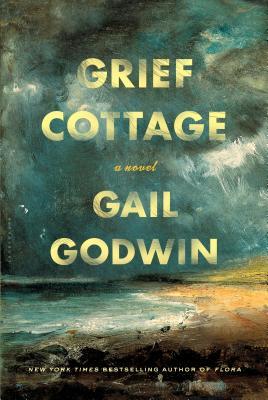 Grief Cottage by Gail Godwin
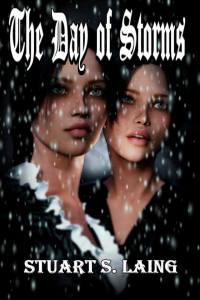 There followed a tense ten minutes. The sisters sat, hands clutching each other, horrified as they realised their very lives were in deadly peril through stumbling unwittingly into this viper’s nest of smugglers. The smugglers themselves were equally silent as they drank their ale and brandy. Only the baleful looks they cast towards the young women spoke of their cruel intentions. When Bobbie finally returned, stamping snow off his boots, with a cold smile on his face what little hope still lingering in the women’s hearts withered and died. He sneered in their direction as he said, “George has seen no’one else enter the village but for the coach. There’s no tracks in the snow either. They’re on their own.”
 About the Author:


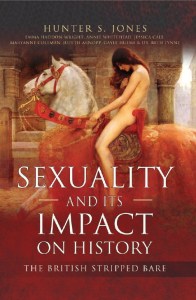
 Emma Haddon-Wright is from Plymouth UK and a lover of all things macabre & mysterious. She has a BA (Hons) Medieval to Modern European History. She is devoted to her family, history and is thrilled to be included in Sexuality & Its Impact on History: The British Stripped Bare! You can find her on Twitter
 Annie Whitehead spends her life researching and writing about Anglo-Saxon history; the kingdom of Mercia in particular. She is an editor for English Historical Fiction Authors, the winner of the Historical Writers’ Association/Dorothy Dunnett Award, and is a member of the Royal Historical Society. She’s written three novels set in Mercia, blogs at Casts Light upon the Shadow, and was a previous Independent Author Network Book of the Year Finalist. She is currently writing a history of Mercia to be published in the autumn of 2018. Find Annie online at her
 Jessica Cale is a romance author, editor, and historian based in North Carolina. Originally from Minnesota, she lived in Wales for several years where she earned a B.A. in History and an MFA in Creative Writing while climbing castles and photographing mines for history magazines. She kidnapped (“married”) her very own British prince (close enough) and is enjoying her happily ever after with him in a place where no one understands his accent. She is the editor of
 Maryanne Coleman lives in the English countryside and can be found mainly digging in archives, or her garden. Her passions are King Arthur, Shakespeare and Kit Marlowe. She has many degrees, mainly in English Literature, Tudor History, and Elizabethan Theatre. She isn’t online, so no need to look for her. Although she may often be found at Heathrow Airport waiting on a flight to the French Riviera.
 where she gained a B.A. in English and Creative Writing, and a Masters in Medieval History. Her first novel, Peaceweaver was published in 2009, quickly followed by two others. Her best-selling Tudor novel, The Winchester Goose lead her to create five more novels covering the lives of Anne Boleyn, Katheryn Parr and Elizabeth of York. The King’s Mother is the third book in The Beaufort Chronicles a trilogy following the fascinating life of Margaret Beaufort. She is researching her eleventh novel. Judith’s non-fiction work has been published in various historical anthologies and she is active online at her
 Gayle Hulme was born and brought up in Glasgow, Scotland and after many years of soaking up island life in Jersey, Channel Islands she returned to Scotland via historic Warwickshire, England. Back in bonnie Scotland she now enjoys hanging out with husband Paul, son Jamie and two silly, but adorable dogs, Millie and Spot. Weekdays are spent motivating women as a group fitness instructor. She spends weekends travelling the UK investigating dusty corners of historical castles, palaces and museums. Her passions and fascinations are hugely diverse. In the morning she could be reading about her favourite royal heroine Queen Anne Boleyn and by the afternoon she might be at Ibrox Stadium cheering on the Glasgow Rangers FC. By evening she could be away with the fairies or learning about ancient Hawaiian wisdom. Find her
 Dr. Beth Lynne is a freelance editor and author. She has a Bachelors in English (SUNY Albany), Masters in Elementary Education, Special Education (LIU/CUNY Queens), Education Administration, and a doctorate in Education Leadership (Rowan University). Originally from New York, Beth worked as a teacher in the New York City Public Schools before moving to New Jersey, where she worked teaching social studies, science, math, and English to a variety of grade levels. She decided to pursue her passion and self-published four books on Amazon. During this time, she discovered her forte was editing. Thus, BZ Hercules, named after her pets at the time, was born! Beth devoted herself to the art of examining the work of others, creating e-books and print books. This venture has been so successful it enabled her to retire from teaching in 2017. Beth currently lives in sunny Florida with her husband, daughter, and several pets. Contact Beth at her
 Hunter S, Jones is passionate about the history of romance, science and music, a.k.a. sex, drugs and rock & roll. She has a popular history blog, and is a historian for Past Preservers Casting. When she isn’t writing, talking or tweeting about kings, queens and rock stars, she’s living the dream in Atlanta, Georgia with her Scottish born husband. Find out more at her



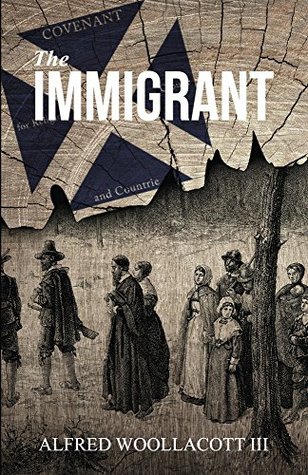 A historical saga that covers a winter of 1650/1651 journey of John Law, a young Scotsman captured by the English Lord Cromwell’s forces in seventeenth century Scotland during “The Battle of Dunbar”. He survives a death march to Durham, England and is eventually sent to Massachusetts Bay Colony as an indentured servant, arriving aboard the ship “Unity” that was carrying around 150 prisoners of war from different Scottish clans. Now an outcast, and in the sanctuary of the new colony, John starts over as an immigrant in a Puritan theocracy. He is first indentured to the Saugus Iron Works and then to Concord as a public shepherd in West Concord (now Acton). The young man faces obstacles often beyond his control, and his only ally is his faith. After his indenture is served he struggles a near lifetime to obtain title to his promised land. From start to finish “The Immigrant” is an intoxicating journey that follows the travails of John, his faith in God, his good wife and growing family.

