Discovering Lost Lists

Today’s List Not Lost, Yet

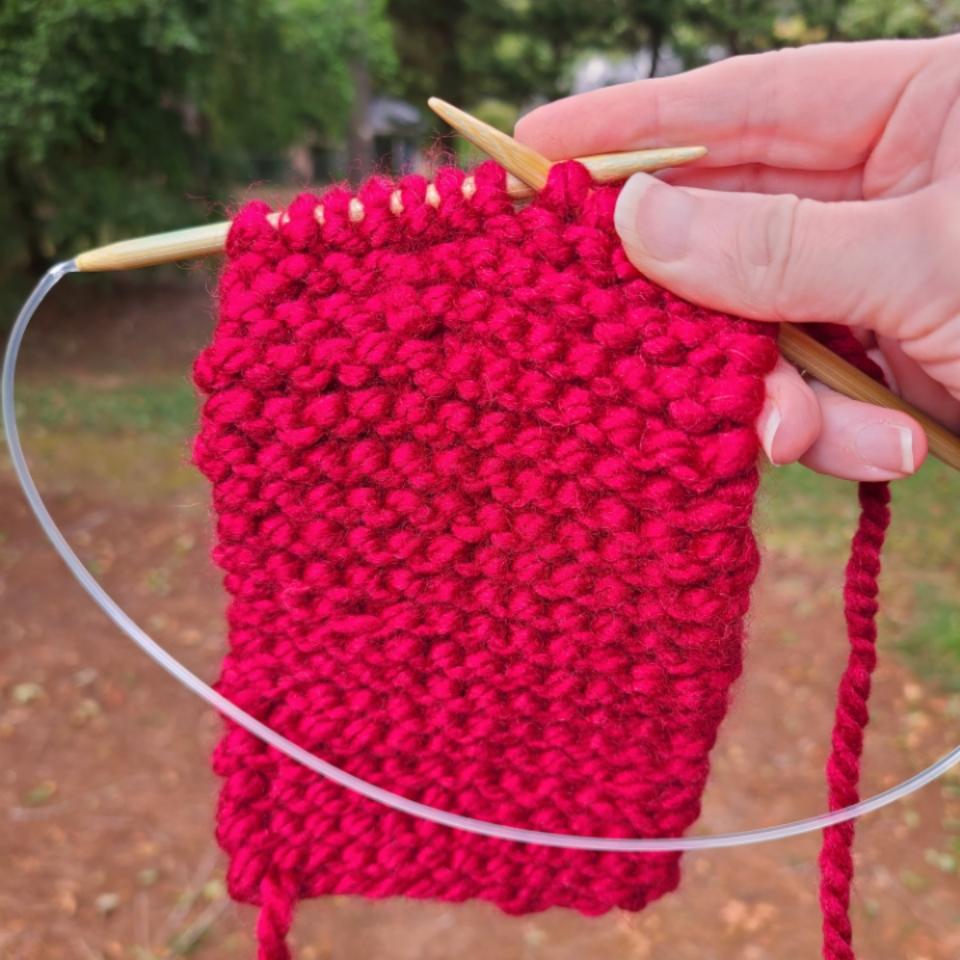
Lists are fun to write. Especially, lists about what you want to write about. My lists normally contain stories I want to write, blog posts, books I want to read, books to review, daily or weekly to-dos and so on… I try my best to keep the list updated, but not always. I actually skip a day or two. Okay, I’ve been known to skip a week or even a month. Yikes! I know. Is it unreasonable for me to say that we’ve all probably done that? Afterall, writers are known for their procrastination’s. I like to journal in the morning to start my day and sometimes I compile my list there. Not always, mind you. Months, even years down the road, I will find loose sheets of paper with lists on them scattered in odd places. I love organization but it is not my strong suite in a couple areas. Did I just write that out loud? Finding lists, you write years later in odd places is actually fun. When you read them, you’re either eye rolling, laughing or thinking how far you’ve come in your writing. Same goes for reading journals you’ve kept over the years. They’re always full of surprises.

Past written lists can even spark forgotten memories and give you more material to write about. Like this blog post for example. The list I found was one I write last September on a pink notepad and it contained blog post topics I want to write about. Did I accomplish those tasks? Err… not exactly but in my defense, I was busy making books to use as journals and paper-crafting. No time like the present to tackle that forgotten list. What is on that list, you ask. Well, I wrote about regular blog posts I used to post and new ones I wanted to start. For example, cover crushes. I loved writing about book covers that catch my eye and I’ve sorely neglected that series. I’m still in the thinking stages about bring that back and if there are any changes, I want to make to it. Other items on the list mentions daily blog posts, regular monthly themes of writing and crafting. I’ve also added to that list! I want to write more about my journey of continual education and what I discover on that-at times-rocky road. I have to remind myself to pace myself. There is so much material and I want to read and study it all at once! I want to know everything about everything. An impossible undertaking, I know. I digress.

Lists are important to me. Are they important to you? Do you relate to my thoughts on the subject? Have you found forgotten lists from years past?

Stephanie Hopkins

Book Titles that Stand Out

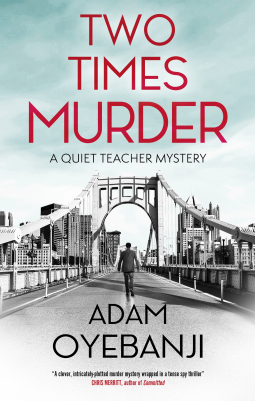
Not only does the design of a book help catch a reader’s eye but the title does as well. I’m drawn to clever book titles and how the writer decides what to caption the story. Often times, when I’m reading a book, I look for the phrase in the story or a situation that the writer was inspired to use to create the title.

Titles matter in the scheme of things when it comes to not only selling a book, but by giving a reader’s imagination of what is inside. What and how the story is weaved and so begins the world building.

In this post, I’m sharing three book titles I came across recently that has captured my interest. -Stephanie Hopkins

The Lost Chapter by Caroline Bishop

Pub Date May 3rd 2022 

England, present day.

At eighty years old, Florence Carter is content with her life. A widow in her twilight years, she spends her days making intricate lino prints in the company of her dog and cat, and her neighbors’ daughter Alice, a shy young woman troubled by a recent trauma. But when ​Flo learns that a long-lost friend has written a novel based on their time at finishing school, she’s forced to confront a secret from her past…

France, 1957.

In post-war Lyon, Florence and Lilli meet at a strict finishing school for girls. Florence—or Flo as she’s known—is a demure young Englishwoman who is expected to enter society and make a good marriage. Lilli, meanwhile, is a brash American with an independent spirit and thirst for adventure. Despite their differences, they forge a firm friendship that promises to last a lifetime—until a terrible betrayal tears them apart.
Now, as Flo reads Lilli’s book, she struggles to separate fact from fiction. Desperate for answers, she decides to take a road trip to France to find Lilli, and she invites Alice and her mother Carla to join her, in hopes the change of scenery will lift their spirits. But when they reach Lyon, it’s Flo who needs help as the buried truth from long ago threatens to overwhelm her.

The Lost Chapter is a poignant novel about the power of friendship and a beautiful reminder that it’s never too late to start writing a different story.

Hook Them or Lose Them (An Author’s Guide to Catching Readers on Page One) by D. Leitao

Pub Date 25 Apr 2022 

Description

Yes, you can hook your readers from page one.

This book is based on a workshop I gave a while ago. Even as I was preparing the workshop, trying to distill the essence of crafting hooky stories in simple, easy-to-understand concepts, I was amazed.

Nobody had ever explained this to me.

Most of the books and courses on writing and structure don’t really touch on that. Truly. You could do all the steps in Save the Cat and totally miss how to hook readers because this information simply isn’t there.

I realized I had found something special; an easy way to help writers identify what works and doesn’t for their beginning paragraphs, and how to get the readers hooked in their stories. And that’s why I’m putting it in this book; because I think my explanation can help writers.

When I say help, I truly mean help, I don’t mean tying writers down with another concept that might stifle their creativity. This book is not about sticking your writing into a box or following rigid rules. While it provides tips and techniques to help you craft stories that readers won’t quit, the advice is simple, easy, and flexible enough not to hinder your writing style or dampen your inspiration. Still, it should quench many of your doubts on whether your writing is hooky or not, so that you can spend more time creating and less time worrying.

I’ll also provide you with advice for beginnings and examples of efficient first paragraphs so that you’ll never again freak out wondering how to start your book. Instead, you’ll feel confident that you can hook your reader from the first page.

The Shell and the Octopus – A Memoir by Rebecca Stirling

Pub Date 26 Jul 2022

Description

This is the story of Rebecca Stirling’s childhood: a young girl raised by the sea, by men, and by literature. Circumnavigating the world on a thirty-foot sailboat, the Stirling’s spend weeks at a time on the open ocean, surviving storms and visiting uncharted islands and villages. Ushered through her young life by a father who loves adventure, women, and extremes, Rebecca befriends “working girls” in the ports they visit (as they are often the only other females present in the bars that they end up in) and, on the boat, falls in love with her crewmate and learns to live like the men around her. But her driven nature and the role models in the books she reads make her determined to be a lady, continue her education, begin a career, live in a real home, and begin a family of her own. Once she finally gets away from the boat and her dad and sets to work upon making her own dream a reality, however, Rebecca begins to realize life is not what she thought it would be—and when her father dies in a tragic accident, she must return to her old life to sift through the mess and magic he has left behind.

In the Moment of Writing

As someone who is an enthusiast journal writer and notetaker, I’m constantly thinking about my next page. What do I mean by that? When I’m thinking about my next page of writing, I’m thinking of the potential of the words that will fill that blank space. What will they say? What will I discover? I Imagine words slowly building and gradually increasing in speed as my mind suddenly unfolds with inspiration and thought. Those first few words tend to be a warm up or hesitate meanings of uncertainty. Writers shouldn’t be fearful to admit that or find fault with the admission. Even if you don’t consider yourself a writer and you are new to the craft. Even the seasoned writers must keep in practice or at times, they find it difficult to get those words down.

There are many books on writing and there are some great ones and not so great ones. I’ve read lots of them. Natalie Goldberg’s Wild Mind and Writing Down the Bones are without a doubt my favorites. Especially, Wild Mind (Living the Writer’s Life.) I can’t say enough about the book and the inspiration and encouragement it gives me. I can’t tell you how many times I’ve read its passages and each time, her words spark new ideas and excitement in the craft. As I’m typing this blog post, Wild Mind is sitting encouragingly right above my keyboard cheering me on. “Keep going, you’re doing great!” She shouts. I shyly smile and keep typing while my heart and mind fills with confidence.

Even if what you wrote is not the grit of what you want to express, keep writing and then maybe go back to it after it has had time to rest. Or, read it out loud and you’ll get a better feel for it that way.

Ask yourself what you want to write about. Is it a memory? A recent event, what you ate that day, or a personal experience? Whatever it is, get it down no matter how it reads on paper. After-all, if all you are doing is thinking about it instead of expressing it on paper, your writing voice will continue to stay locked up, undiscovered. Start writing today, start right now and you’ll open a whole new world. Stephanie Hopkins

Book Review: Educated by Tara Westover

About the book:

Tara Westover was 17 the first time she set foot in a classroom. Born to survivalists in the mountains of Idaho, she prepared for the end of the world by stockpiling home-canned peaches and sleeping with her “head-for-the-hills bag”. In the summer she stewed herbs for her mother, a midwife and healer, and in the winter, she salvaged in her father’s junkyard.

Her father forbade hospitals, so Tara never saw a doctor or nurse. Gashes and concussions, even burns from explosions, were all treated at home with herbalism. The family was so isolated from mainstream society that there was no one to ensure the children received an education and no one to intervene when one of Tara’s older brothers became violent.

Then, lacking any formal education, Tara began to educate herself. She taught herself enough mathematics and grammar to be admitted to Brigham Young University, where she studied history, learning for the first time about important world events like the Holocaust and the civil rights movement. Her quest for knowledge transformed her, taking her over oceans and across continents, to Harvard and to Cambridge. Only then would she wonder if she’d traveled too far, if there was still a way home.

Educated is an account of the struggle for self-invention. It is a tale of fierce family loyalty and of the grief that comes with severing the closest of ties. With the acute insight that distinguishes all great writers, Westover has crafted a universal coming-of-age story that gets to the heart of what an education is and what it offers: the perspective to see one’s life through new eyes and the will to change it.

My thoughts:

While reading this story, I had immediate emotions but often times they were fleeting on particular themes as I read through the pages. My opinions vary on Tara’s family dynamics, her lack of formal education to being accepted at one of the most prestigious college in the world is strange to me. Not only that, but her troubles weren’t adding up. I guess I mean to say is that in context, her explaining or telling of trauma, oftentimes wasn’t making much sense. I understand that memories can be tricky and that is one of the reasons why when one reads memoirs, one must take that into account. After-all, when a situation evolving several people, you’ll often times come across different perspectives. Therein lies the problem I was having on the direction I wanted to go with this review. That said, after talking over it with a friend, I decided to direct my attention to the family’s or in Tara’s case, idea of what is a survivalist.

The Merriam-Webster definition of a survivalist: a person who advocates or practices survivalism.

especially: one who has prepared to survive in the anarchy of an anticipated breakdown of society…

More times than not, I hear people say or I read on social media that survivalists are nothing but a bunch of paranoid conspiracy theorist nuts. That couldn’t be further from the truth and in the case of Tara’s family, they’re not survivalists and I will get to why they’re not in the truest sense, shortly.

Life can throw many curve balls as we all should know by now but many choose to ignore! To name a few….

Weather: Hurricanes, ice and snow storms, floods, tornadoes, earthquakes, mudslides, droughts, and so on…
Power outages
Loss of job and income
A sudden disability or injury
A neighbor or community in need.
Nuclear war or war in general. – Though I doubt the US would be nuked because our natural resources in this country are too valuable. An EMP is more likely. Just thinking out loud here.
Food and medical supply shortages
Wildfires
Inflation
EMPS
Economic recession or a great depression.

The reality is that you cannot fully depend on the government, their response time to crisis or the infrastructure as a whole to take care of you, nor should you. Consumers who are solely dependent on the establishment will not survive if the infrastructure fails and it is a real possibility that it will happen.

I believe our pioneers, even our living relatives that lived through the depression era in the early twentieth century, would look on us with disappointment and how spoiled, dependent and brainwashed we’ve become. Don’t mistake my harsh words as unkindness or a negative outlook on life but look at it as a teachable moment of awareness.  

Self-reliance is to be admired and it takes a lot of know-how, courage and strength to be thus. So, let’s get out of the mind set, if you’re a survivalist who lives off the grid as much as possible, or that you do for yourself and family, that you must be some uneducated extremist or belong to a cult. Some of the most intelligent and well-read, highly educated, level-headed people I know are survivalists. Also, there is a widely misconception that survivalists and preppers only live off grid and do not seek medical attention at hospitals or clinics. You’d be surprised on how many live in highly populated areas such as suburbs, cities and are actively participates in society.

Marginalizing survivalists or dismissing the need for self-sustaining or readiness and choosing not to be prepared for any type of emergency is a special brand of ignorance and dangerous to say the least. A good way to look at prepping, or having an emergency plan and knowing how to survive when the tough gets going is another form of insurance you shouldn’t go without.

The survivalists, in the truest sense, main priority is the well-being of their person and their love ones. We did not see this in Tara’s family’s case. Tara’s father does not fit the mold of a true survivalist, nor did he take into consideration the health, safety and education of his family. He was reckless, controlling, neglectful, abusive, narcissistic and sorely misguided and unwise in quite a few of areas. While a few of his beliefs about government, mistrust of the medical industry has merit, his reaction to them and how he dealt with it or lack of, is dysfunctional, toxic, dangerous and it is shown throughout the story.

There are too many shocking situations in this story to name and every single person’s role in this story left an unsettlingly feeling with me. Despite my misgivings, I’m glad I read this story and learned a great deal from it.

A big thank you to Lisl for sending me this book to read. It was quite an experience!

Stephanie Hopkins

A Better Understanding of Political and Social Controversies of Our Times

I’ve known about Thomas Sowell for a few years now and have listened to many of his interviews’ and recently started listening to his audio books on YouTube. I first became interested in his work on two scores. The first, his research on the history of slavery and two, his journey with Marxism in his twenties. His clear cut, intellectual thoughts are enlightening to say the least. He reacts on information rather than feelings. Sowell’s writings should be mandatory study in the school system.

His lectures on the history of slavery validated a passage I read on the subject over fifteen years ago. I was over at a friend’s house, scrap-booking and mentioned what I had read about slavery in Africa and the said “friend” proceeded to shut me down and was appalled at what I had stated. I was taken back by her reaction and to my dismay, I dropped the subject entirely. It is as if she thought I had some sort of agenda in what I said and refused to have an objective conversation. Though, I dare say, she did not have an intelligent response at anytime. In hindsight, I should have asked her about her sources and why she is dismissing my discovering.

I’m currently re-reading, The Communist Manifesto by Karl Marx & Engels (which is pure propaganda in my opinion but an important to read) and have just started, The Naked Communist by W. Cleaon Skousen. After I read those books and finish listening to Sowell’s audio books, I want to purchase a few of his physical books for further study.

Here are the titles I want to acquire by Sowell:

Intellectuals and Society

Economic Facts and Fallacies

The Housing Boom and Bust

A Conflict of Visions: Ideological Origins of Political Struggles

Black Rednecks and White Liberals

The Quest for Cosmic Justice

Bio:

Thomas Sowell is an American economist, social commentator, and author of dozens of books. He often writes from an economically laissez-faire perspective. He is currently a senior fellow of the Hoover Institution at Stanford University. In 1990, he won the Francis Boyer Award, presented by the American Enterprise Institute. In 2002 he was awarded the National Humanities Medal for prolific scholarship melding history, economics, and political science.

Sowell was born in North Carolina, where, he recounted in his autobiography, A Personal Odyssey, his encounters with Caucasians were so limited he didn’t believe that “yellow” was a hair color. He moved to Harlem, New York City with his mother’s sister (whom he believed was his mother); his father had died before he was born. Sowell went to Stuyvesant High School, but dropped out at 17 because of financial difficulties and a deteriorating home environment. He worked at various jobs to support himself, including in a machine shop and as a delivery man for Western Union. He applied to enter the Civil Service and was eventually accepted, moving to Washington DC. He was drafted in 1951, during the Korean War, and assigned to the US Marine Corps. Due to prior experience in photography, he worked in a photography unit.

After his discharge, Sowell passed the GED examination and enrolled at Howard University. He transferred to Harvard University, where he graduated magna cum laude with a Bachelor of Arts degree in Economics. He received a Master of Arts in Economics from Columbia University, and a Doctor of Philosophy in Economics from the University of Chicago. Sowell initially chose Columbia University because he wanted to study under George Stigler. After arriving at Columbia and learning that Stigler had moved to Chicago, he followed him there.

Sowell has taught Economics at Howard University, Cornell University, Brandeis University, and UCLA. Since 1980 he has been a Senior Fellow of the Hoover Institution at Stanford University, where he holds a fellowship named after Rose and Milton Friedman.

Bio and picture used from goodreads

Book Titles That Stand Out

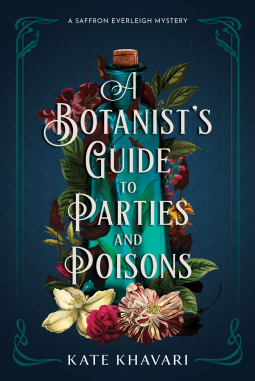
Not only does the design of a book help catch a reader’s eye but the title does as well. I’m drawn to clever book titles and how the writer decides what to caption the story. Often times, when I’m reading a book, I look for the phrase in the story or a situation that the writer might have decided on to use.

Titles matter in the scheme of things when it comes to not only selling a book, but by giving a reader’s imagination of what is inside. What and how the story is weaved and so begins the world building.

In this post, I’m sharing three book titles I came across recently that has captured my interest.. -Stephanie Hopkins

The Messy Lives of Book People by Phaedra Patrick

Have you ever wished you were someone else?

Mother of two Liv Green barely scrapes by as a maid to make ends meet, often finding escape in a good book while daydreaming of becoming a writer herself. So, she can’t believe her luck when she lands a job housekeeping for her personal hero, mega bestselling author Essie Starling, a mysterious and intimidating recluse. The last thing Liv expected was to be the only person Essie talks to, which leads to a tenuous friendship.

But when Essie dies suddenly, a devastated Liv is astonished to learn of her last wish: for Liv to complete Essie’s final novel. But to do so Liv will have to step into Essie’s shoes, and as Liv begins to write, she uncovers secrets from the past that reveal a surprising connection between the two women–one that will change Liv’s own story forever…

The Myth of Perpetual Summer

Tallulah James’s parents’ volatile relationship, erratic behavior, and hands-off approach to child rearing set tongues to wagging in their staid Mississippi town, complicating her already uncertain life. She takes the responsibility of shielding her family’s reputation and raising her younger twin siblings onto her youthful shoulders.

If not for the emotional constants of her older brother, Griff, and her old guard Southern grandmother, she would be lost. When betrayal and death arrive hand in hand, she takes to the road, headed to what turns out to be the not-so-promised land of Southern California. The dysfunction of her childhood still echoes throughout her scattered family, sending her brother on a disastrous path and drawing her home again. There she uncovers the secrets and lies that set her family on the road to destruction.

Catching Broken Fish by Matthew Stewart Simon

It starts with understanding the paradigm of others and the words we choose.

More than ever we live in a world in constant conflict, and Christians are not exempt from the battleground. In fact, we are as broken as the next person, our own tragedies, mistakes, and poor choices shaping us, leading us to rely on Christ even more. As believers walking out our faith daily, facing our own challenges, we travel a road with weary and even lost souls-but that route is a target-rich environment for those who would use Christ’s message to revive God’s mission of grace on earth.

Blogger Matt Simon believes there’s a track to healing, and it begins with believers choosing to encourage, uplift, and offer words and acts of kindness to those who cross their paths. In his devotional Catching Broken Fish, based on Matthew 4:18, the author inspires each of us to step out of our comfort zones and to embrace being examples of God’s love. Using illustrations drawn from his own life as a farmer and school bus driver, Matt takes the reader on a humble trek of discernment and serving-products, he discovered, of his own failure and growth. He invites you to practice discipleship with him, no matter where you are in your life journey, in the belief that by uniting together in a goal to catch broken fish, we can change the destiny of the world.

Educated by Tara Westover

For those if you who follow my blog posts, you will know my first reactions to Educated by Tara Westover. I’m slowly working my way through this story while reading another book and have, in the last couple of days, introduced another book to my reading pile. My thoughts on the story unfolding vary and a few things have really stuck with me. For instance, how is it possible for Tara, without a high-school degree, to able to take the ACT and go to college? Maybe I am missing something here and she got her GED or High School Diploma. I’m not entirely sure and perhaps I should go back and reread a few passages. This is what I get for not taking notes this time around. Hmm… Maybe, it will be revealed how she was able to do so further on in the story. I’m still in the early stages of her study.

In my next blog post, I will be discussing two family members of Tara’s and an interesting theme in the story. -Stephanie Hopkins

About the book:

Tara Westover was 17 the first time she set foot in a classroom. Born to survivalists in the mountains of Idaho, she prepared for the end of the world by stockpiling home-canned peaches and sleeping with her “head-for-the-hills bag”. In the summer she stewed herbs for her mother, a midwife and healer, and in the winter, she salvaged in her father’s junkyard.

Her father forbade hospitals, so Tara never saw a doctor or nurse. Gashes and concussions, even burns from explosions, were all treated at home with herbalism. The family was so isolated from mainstream society that there was no one to ensure the children received an education and no one to intervene when one of Tara’s older brothers became violent.

Then, lacking any formal education, Tara began to educate herself. She taught herself enough mathematics and grammar to be admitted to Brigham Young University, where she studied history, learning for the first time about important world events like the Holocaust and the civil rights movement. Her quest for knowledge transformed her, taking her over oceans and across continents, to Harvard and to Cambridge. Only then would she wonder if she’d traveled too far, if there was still a way home.

Educated is an account of the struggle for self-invention. It is a tale of fierce family loyalty and of the grief that comes with severing the closest of ties. With the acute insight that distinguishes all great writers, Westover has crafted a universal coming-of-age story that gets to the heart of what an education is and what it offers: the perspective to see one’s life through new eyes and the will to change it.

What I’m Reading and Pondering

Servants of the Storm by Delilah S. Dawson

My thoughts so far:

I am deeply fascinated with Southern Gothic stories and I decided to give Servants of the Storm by Delilah S. Dawson a go. This is more of a young adult book, which I don’t normally read, but still find it compelling. I do have a few complaints but will reserve sharing those thoughts at a later time since I’m not quite at the half way mark.

About the book:

Dovey learns that demons lurk in places other than the dark corners of her mind in this southern gothic fantasy from the author of the Blud series.

A year ago, Hurricane Josephine swept through Savannah, Georgia, leaving behind nothing but death and destruction—and taking the life of Dovey’s best friend, Carly. Since that night, Dovey has been in a medicated haze, numb to everything around her.

But recently she’s started to believe she’s seeing things that can’t be real…including Carly at their favorite café. Determined to learn the truth, Dovey stops taking her pills. And the world that opens up to her is unlike anything she could have imagined.

As Dovey slips deeper into the shadowy corners of Savannah—where the dark and horrifying secrets lurk—she learns that the storm that destroyed her city and stole her friend was much more than a force of nature. And now the sinister beings truly responsible are out to finish what they started.

Educated by Tara Westover

My thoughts so far:  

I find this story fascinating and find Tara’s father to be sorely misguided in the fact that you can have your beliefs about Government, know the tools of survival, live off the land (which is important) or almost completely off grid in this case and still be educated, well-read and knowledgeable in the ways of the world through literature and self-learning without compromising your beliefs. After-all, education in many different areas gives one an advantage. Not allowing his children to learn how to read is heart breaking in my opinion. Now, I don’t believe everything I read, see or hear and that is where my critical thinking comes into play but I still need to know what is out there. I firmly believe that is a major part in our survival and it does sharpen the mind.

A few of Mark Twain’s quotes about education comes to mind.

“The man who does not read books has no advantage over the man that cannot read them.”

“It is noble to teach oneself, but still nobler to teach others – and less trouble.”

“I never let my schooling interfere with my education.”

While I believe our school system is failing and lacking in many ways, I discovered that if I wanted to be “educated” by my own terms and definitions of the word, that I needed to read as many books as I can, try new things, listen to as many people’s outlook as I can and their experiences on life. I also, look at things with a critical mind, while keeping an open mind. That is important. I consider school a jump start into one’s education. Learn the tools that are given to you and branch out from there. You should never stop learning. Tara’s parents could have home schooled their children if they did not believe in the public education system, while holding to their beliefs!

I am still in the early stages of this story and Tara is still living with her family. With the thoughts I’ve already formed about the story, I look forward to discovering more. -Stephanie Hopkins

About the book:

Tara Westover was 17 the first time she set foot in a classroom. Born to survivalists in the mountains of Idaho, she prepared for the end of the world by stockpiling home-canned peaches and sleeping with her “head-for-the-hills bag”. In the summer she stewed herbs for her mother, a midwife and healer, and in the winter, she salvaged in her father’s junkyard.

Her father forbade hospitals, so Tara never saw a doctor or nurse. Gashes and concussions, even burns from explosions, were all treated at home with herbalism. The family was so isolated from mainstream society that there was no one to ensure the children received an education and no one to intervene when one of Tara’s older brothers became violent.

Then, lacking any formal education, Tara began to educate herself. She taught herself enough mathematics and grammar to be admitted to Brigham Young University, where she studied history, learning for the first time about important world events like the Holocaust and the civil rights movement. Her quest for knowledge transformed her, taking her over oceans and across continents, to Harvard and to Cambridge. Only then would she wonder if she’d traveled too far, if there was still a way home.

Educated is an account of the struggle for self-invention. It is a tale of fierce family loyalty and of the grief that comes with severing the closest of ties. With the acute insight that distinguishes all great writers, Westover has crafted a universal coming-of-age story that gets to the heart of what an education is and what it offers: the perspective to see one’s life through new eyes and the will to change it.

This Weeks Inspirational Journey

“The starting point of discovering who you are, your gifts, your talents, your dreams, is being comfortable with yourself. Spend time alone. Write in a journal.”

— Robin Sharma

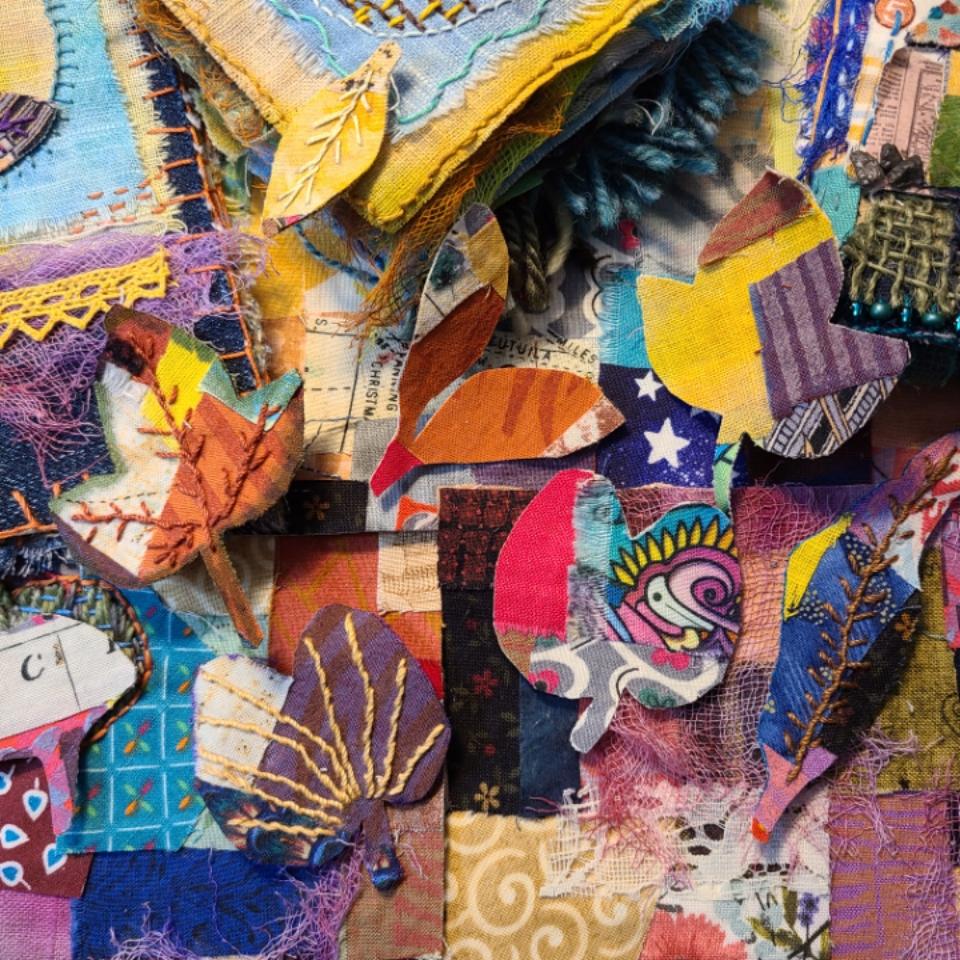
This week I have been busy making YouTube craft videos, writing, painting and reading! I’ve enjoyed every step of the way in these pursuits. My videos are geared towards paper crafting and the art of journaling.  

The images shown are just a few of what I’ve been creating this week. I’ve recently had a thought about how interesting it is when I’m crafting, the journey inspires new pieces. That in itself is rewarding to find inspiration within your own endeavors. What are a few of the ways you find inspiration in your own creations? If this something you’ve thought about before?

Please like, subscribe and hit the notification bell to my channel to get the latest videos when they are posted. Thank you!

YouTube Recent Craft Links:

Tag Tuesday | How to a Make Mini Pocket Bellyband 

Journal Cards Made Easy

Vintage Haul Unboxing | For Crafting and Journal Making 

Visit my shops by clicking on each shop.

Instagram Shop

Ebay Shop

Etsy Shop – Shop is currently on vacation mode.

At this time, I ship in the US only.

I offer discount shipping and a free gift with all purchases.

(Images are subjected to copyright. All book reviews, interviews, guest posts, art work and promotions are originals. In order to use any text or pictures from Layered Pages, please ask for permission from Stephanie Hopkins.)

Finding Your Writing Voice Through Journaling

There are several methods of journaling that I incorporate in my daily life. The one activity they all have in common is they tell a story. They hold a deep and lasting meaning of my life and the lives I see around me. Looking back on all my journals and diaries, I’ve come to realize that in this endeavor is where I discovered my true writing voice. It wasn’t from reading books, though reading helps one grow their understanding of the written word, how stories are told, other life experiences and expands on one’s vocabulary, my writing voice developed over time from writing in journals. Could have it also been from blogging? Yes, I do find blogging a form of journal writing. A record keeping of thoughts, words, expression, emotions and even those awkward sentences where I couldn’t quite express myself in the way I felt inside. Those particular words don’t always come naturally to me in public form or rather, my private journals is what speaks of my truest inner voice.

Many people want to write in their journals but their uncertainty is holding them back. They say, “I’m not a writer or I would ruin my page, or rather my beautiful journal with my awkward words and ramblings.” Those awkward words and ramblings are what drives one to become a stronger writer. You must be deliberate with your writing and in the time, you take to write. Think of all the visits you made to a library filled with books that hold millions of words. Often times, those words did not come easy to the writer. Imagine the time and deliberate ink to paper or key strokes the writer put forth to build worlds in those numerous books. Believe me, it didn’t happen overnight for them. Don’t allow that voice in your head saying, “You’re not a writer,” intimidate you. Writing is a beautiful art regardless of one’s uncertainty in the act. Write what you know, write what you see and hear. Write a word or two and keep adding words after that. Allow those words to build on each other and soon you’ll find your voice as a writer. Once you do, words will flow and writing will be like exploring space. The act will take you to limitless places.

Stephanie Hopkins