Over Memorial weekend, I read quite a bit and have been listening to an audio book while working on a few art projects. These past few days has been reflective and I’m also busy with outlining a few ancient history articles I want to write. There is much work to be done on them and I have an extensive amount of research and studying to do. I’m thrilled with this endeavor and I’m looking forward to seeing where it leads me. In this post, I’m sharing a couple short books I read and one I started two days ago. This does not include my NetGalley reads or what I’m currently listening to. That may come in a later post.
Stephanie
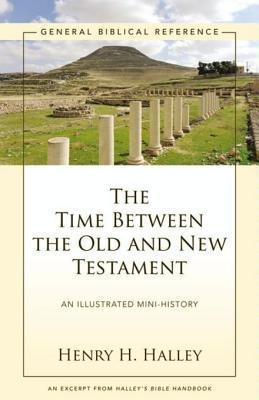
The Time Between the Old and New Testament: A Zondervan Digital Short by Henry H. Halley
First published July 24, 2012
Derived from Halley’s Bible Handbook, a world-renowned, accessible guide to the Bible now in its 25th edition, this digital short sketches the history of the time between the Old and New Testaments. The rise of the Greek and then Roman Empires, the Maccabees, Herod’s Temple, the Sanhedrin—this introduction to a fascinating era not covered in the Bible includes all of the above and more. Useful for Bible students wanting to better understand the cultural context of the New Testament and for readers interested in Middle Eastern and early European history, The Time Between the Old and New Testaments shines light on a key period in world and religious history.
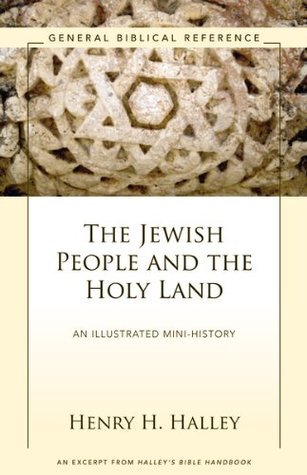
The Jewish People and the Holy Land: A Zondervan Digital Short by Henry H. Halley
First published July 24, 2012
Derived from Halley’s Bible Handbook, a world-renowned, accessible guide to the Bible now in its 25th edition, this digital short sketches the history of the Jewish people in the Holy Land from the time of Jesus until the present day. Useful for students of the Bible and church history, The Jewish People and the Holy Land will also fascinate readers wanting to better understand the historic roots of the modern state of Israel.
Currently Reading:
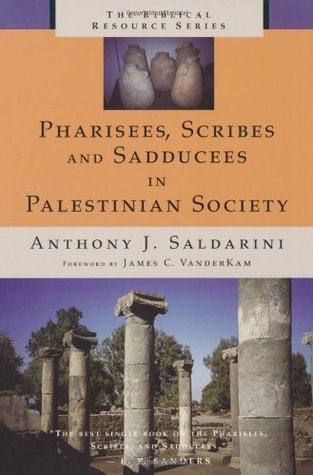
Pharisees, Scribes and Sadducees in Palestinian Society
by Anthony J. Saldarin
Widely praised in its original edition and now part of the Biblical Resource Series, this volume offers a superb discussion of the role of the Pharisees, scribes, and Sadducees in Palestinian Jewish society. Applying a sociological approach to the biblical and literary sources, Anthony Saldarini accurately portrays these three most prominent groups of educated leaders in Jewish society and describes their relationship to other Jewish social movements from 200 B.C.E. to 100 C.E. Featuring a new foreword by James C. VanderKam, Pharisees, Scribes, and Sadducees in Palestinian Society will remain a standard point of reference for the continuing study of Judaism and Christian backgrounds.
I tend to read multiple books at once due to my moods, what I’m studying or what I’m reading for pleasure. I know many say they can’t read like that but I’ve been able to do so for a long time now. Look at it this way, people usually watch multiple tv shows on a weekly basis and are able to keep up with the plots and characters without any problems. Taking notes or talking with a friend about what you’re reading is a good idea. I also like to go back a few pages sometimes to immerse myself back into the story. That said, if I’m really into a story and I don’t want to put it down or can’t wait to get back to it, I will focus on that story before moving on to the next one. I have finished a few books since the last time I blogged about books and I’m hoping to move on to a few books I’ve listed below.
I’ve had, “One Good Thing” by Georgia Hunter in my currently reading pile for quite a while now and haven’t been able to finish it. For some reason, I’m just not able to get into the story. Perhaps it is because I’ve read so many World War II stories and I’m experiencing burnout. That has happened to me before with this theme. I want to give the story a fair critique so I will be putting it aside temporary.
Side note: There are many books I’m using for study that I haven’t blogged about as of yet or I study and reference them on an ongoing basis.
Stephanie
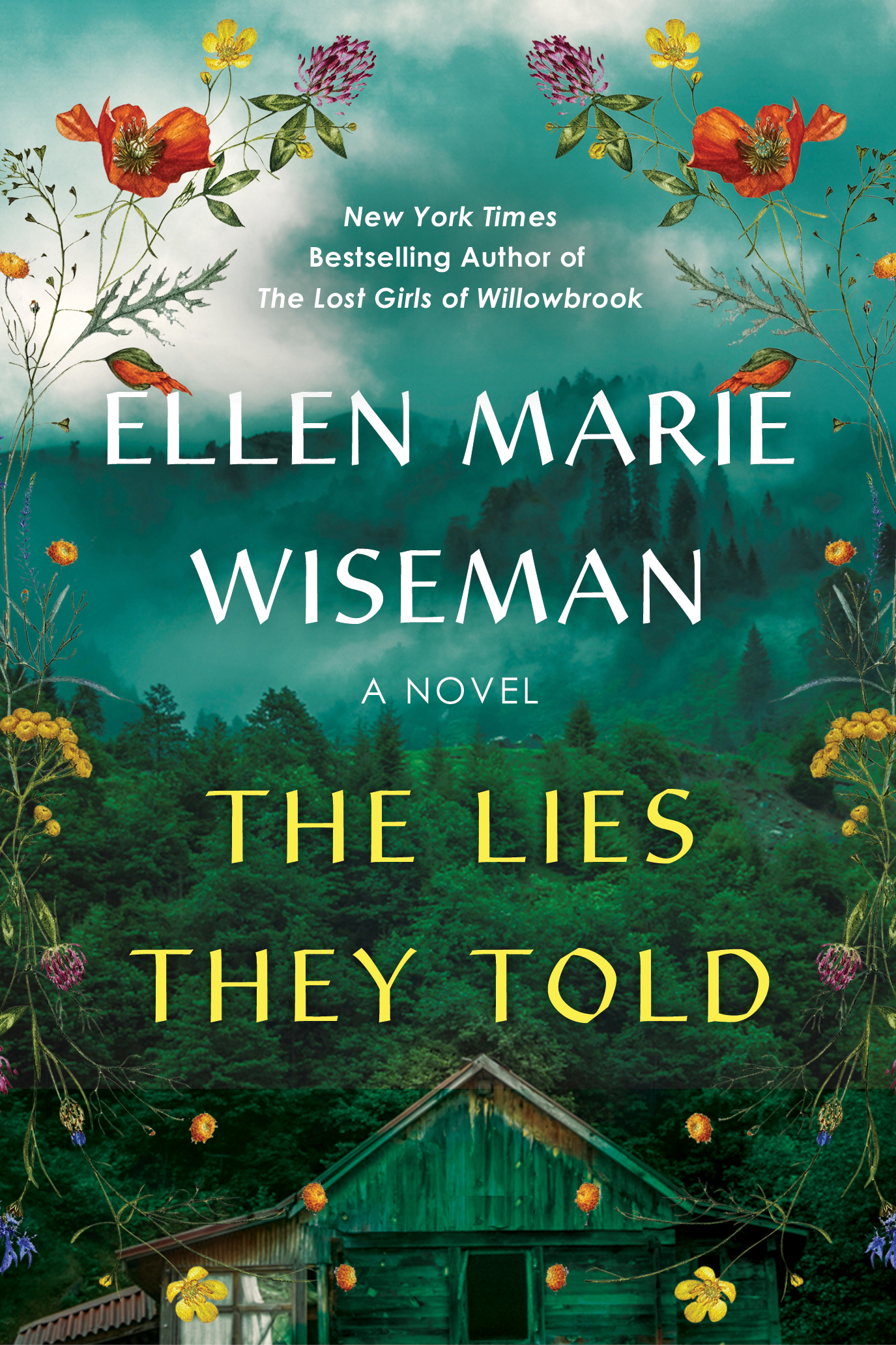
The Lies They Told by Ellen Marie Wiseman(I have an advance reader’s copy)
Pub Date Jul 29 2025
In rural 1930s Virginia, a young immigrant mother fights for her dignity and those she loves against America’s rising eugenics movement – when widespread support for policies of prejudice drove imprisonment and forced sterilizations based on class, race, disability, education, and country of origin – in this tragic and uplifting novel of social injustice, survival, and hope for readers of Susan Meissner, Kristin Hannah, and Christina Baker Kline.
When Lena Conti—a young, unwed mother—sees immigrant families being forcibly separated on Ellis Island, she vows not to let the officers take her two-year old daughter. But the inspection process is more rigorous than she imagined, and she is separated from her mother and teenage brother, who are labeled burdens to society, denied entry, and deported back to Germany. Now, alone but determined to give her daughter a better life after years of living in poverty and near starvation, she finds herself facing a future unlike anything she had envisioned.
Silas Wolfe, a widowed family relative, reluctantly brings Lena and her daughter to his weathered cabin in Virginia’s Blue Ridge Mountains to care for his home and children. Though the hills around Wolfe Hollow remind Lena of her homeland, she struggles to adjust. Worse, she is stunned to learn the children in her care have been taught to hide when the sheriff comes around. As Lena meets their neighbors, she realizes the community is vibrant and tight knit, but also senses growing unease. The State of Virginia is scheming to paint them as ignorant, immoral, and backwards so they can evict them from their land, seize children from parents, and deal with those possessing “inferior genes.”
After a social worker from the Eugenics Office accuses Lena of promiscuity and feeblemindedness, her own worst fears come true. Sent to the Virginia State Colony for the Feebleminded and Epileptics, Lena face impossible choices in hopes of reuniting with her daughter—and protecting the people, and the land, she has grown to love.
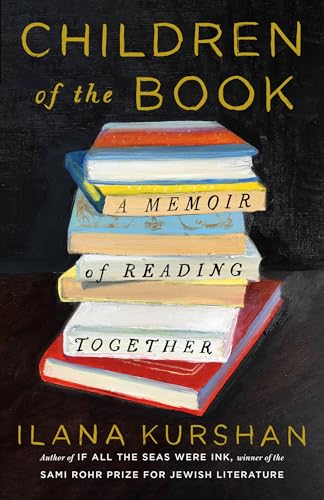
Children of the Book: A Memoir of Reading Together by Ilana Kurshan (I have an advance reader’s copy)
Pub Date Aug 26 2025
In Children of the Book, Ilana Kurshan explores the closeness forged when family life unfolds against a backdrop of reading together. Kurshan, a mother of five living in Jerusalem, at first struggles to balance her passion for literature with her responsibilities as a parent. Gradually she learns how to relate to reading not as a solitary pursuit and an escape from the messiness of life, but rather as a way of teaching independence and forging connection. Introducing her children to sacred and secular literature—including the beloved classics of her childhood—helps her become both a better mother and a better reader.
Chief among the books Kurshan reads with her children is the Five Books of Moses, known as the Torah, which Jews the world over read in synchrony as part of the liturgical cycle. In the five parts of this memoir, Kurshan explores the surprising resonances between the biblical text and her experiences as a mother and a reader – from the first picture books that create the world through language for little babies, to the moment our children begin reading on their own leaving us behind, atop the mountain, as they enter new lands without us. A testament to the enduring power of shared texts, Children of the Book celebrates the deep pleasures of books.
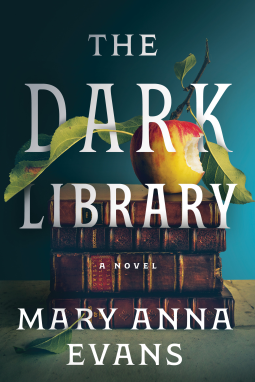
The Dark Library by Mary Anna Evans(I have an advance reader’s copy)
Pub Date Jun 24 2025
Estella Ecker has returned to Rockfall House, the last place on earth she wants to be. Years after she ran away from her overbearing father, she has been forced back home to walk in his footsteps, teaching at the college he dominated and living in the fabulous home where he entertained artists and scholars for decades—and perhaps she owns it now, because her mercurial mother has disappeared. At the center of everything—the whispers, the rumors, the secrets—is her father’s library of rare books, which she had been forbidden to touch while he was alive to stop her.
Everyone in town is watching Estella, with her dead father’s name on their lips, and no one seems to care about her missing mother. Who were her parents, really, and is the answer hidden somewhere in the depths of Rockfall House? And who will Estella be, if she gathers enough courage to find that answer? What she will discover is that no one can escape the secrets hidden in this dark library.
Suspenseful and unsettling but ultimately triumphant, The Dark Library by acclaimed author Mary Anna Evans is a compelling tale of mystery, family secrets, and the quest for truth.
Hello! I hope you all are having a lovely morning.
Having recently read, “Babylonia” by Costanza Casati and with my current studies of Biblical Culture backgrounds -which usually take years because I tend to go down rabbit holes with history studies-I decided to look at nonfiction reading of the history of the Assyrians and Babylonians. Now, growing up in Sunday School and reading the Bible, I’ve already learned quite a bit about them in the context of wars and interactions with the Hebrews one might say.
Here are three books I discovered and I’m currently reading the first one. I typically choose at least three books with subjects. I may add more the Babylonians once I’ve gotten through these. Also, Joel with Expedition Bible on YouTube has a great archaeological video on the discovery of Nineveh. Expedition Bible is among my favorite YouTube Channels. .
Have you read stories of the Assyrians and Babylonians?
Stephanie
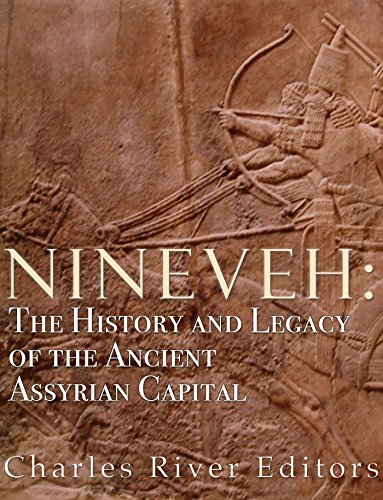
Nineveh: The History and Legacy of the Ancient Assyrian Capital by Charles River Editors
73 pages, Kindle Edition
Published- January 18, 2016 by Charles River Editors
*Includes pictures *Includes ancient descriptions of Nineveh *Includes debate over whether Nineveh was home of the Hanging Gardens of Babylon *Includes online resources and a bibliography for further reading *Includes a table of contents “I captured 46 towns…by consolidating ramps to bring up battering rams, by infantry attacks, mines, breaches and siege engines.” – Sennacherib When scholars study the history of the ancient Near East, several wars that had extremely brutal consequences (at least by modern standards) often stand out. Forced removal of entire populations, sieges that decimated entire cities, and wanton destruction of property were all tactics used by the various peoples of the ancient Near East against each other, but the Assyrians were the first people to make war a science. When the Assyrians are mentioned, images of war and brutality are among the first that come to mind, despite the fact that their culture prospered for nearly 2,000 years. Like a number of ancient individuals and empires in that region, the negative perception of ancient Assyrian culture was passed down through Biblical accounts, and regardless of the accuracy of the Bible’s depiction of certain events, the Assyrians clearly played the role of adversary for the Israelites. Indeed, Assyria (Biblical Shinar) and the Assyrian people played an important role in many books of the Old Testament and are first mentioned in the book of “And the beginning of his kingdom was Babel and Erech, and Akkad, and Calneh, in the land of Shinar. Out of that land went forth Ashur and built Nineveh and the city Rehoboth and Kallah.” (Gen. 10:10-11). Although the Biblical accounts of the Assyrians are among the most interesting and are often corroborated with other historical sources, the Assyrians were much more than just the enemies of the Israelites and brutal thugs. Among all the cities that thrived in the ancient Near East, few can match the opulence and ostentatiousness of Nineveh, the capital of the Assyrian Empire for much of the seventh century BCE. During that time, it became known for its mighty citadels, grand palaces, beautiful gardens, and even its zoos. In fact, the beauty of Nineveh, especially its gardens, impressed later writers so much that they assigned its gardens as one of the original Seven Wonders of the World, except unfortunately for Nineveh’s memory, the location was placed in Babylon. The confusion that assigned one of the Wonders of the World to Babylon instead of Nineveh is in fact a large part of Nineveh’s history – it was a great city during its time, but incessant warfare brought the metropolis to oblivion and eventually its history was forgotten or distorted. An examination of Nineveh demonstrates that in many ways it was the victim of the people who built it. When Nineveh was at its height, they controlled an empire that encompassed Egypt, Anatolia, Mesopotamia, and parts of Iran. Eventually, the Assyrians overextended themselves and their enemies overthrew them and destroyed much of their cities. Nineveh became lost for centuries, only mentioned in fragments by classical Greek historians, but modern archaeological methods were able to bring the lost city back to life in the nineteenth century. Today, through a combination of archaeological reports, classical Greek accounts, and ancient cuneiform inscriptions, the chronology of Nineveh can be reconstructed. An examination reveals that Nineveh played a vital role in the religious and political history of the ancient Near East and despite suffering immense damage at the hands of the Assyrians’ enemies, continued to function as an important city for several centuries after the Assyrian Empire collapsed.
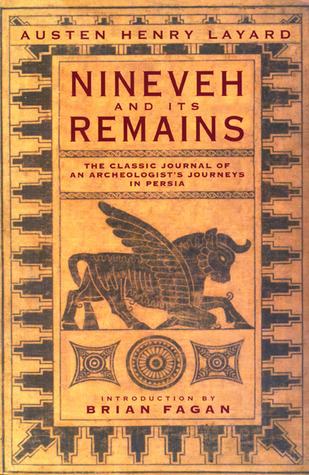
Nineveh and Its Remains by Austen Henry Layard, Brian M. Fagan (Introduction)
432 pages
First published January 1, 1849 by Lyons Pr
An intoxicating stew of compelling characters and sudden crises during the discovery of the ancient ruins of Nineveh by the foremost archeologist of his time.
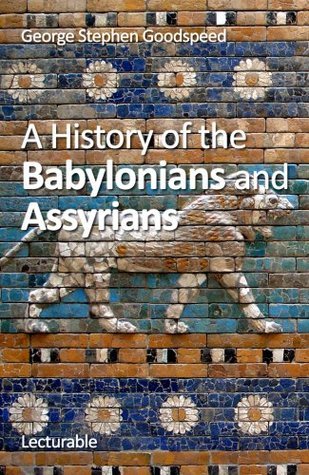
A History of the Babylonians and Assyrians by George Stephen Goodspeed
Format 295 pages, Kindle Edition
Published: January 24, 2013 by Lecturable
“Who were the people by whose energy this region was transformed into so fair and flourishing a land, at a time when elsewhere, with hardly an exception, the upward course of humanity did not yet reveal any trace of orderly and civilized conditions? What are their antecedents, and whence did they come to occupy the alluvial plain?” – George Stephen Goodspeed
“In these regions of Mesopotamia and Babylonia, so diversified in physical characteristics, the one essential unifying element was the rivers. To them a large section of the land owed its existence; the fertility and the prosperity of the whole was dependent upon them; they were the chief means of communication, the main channels of trade, the distributors of civilization. It was in recognition of this that the ancient inhabitants called the Euphrates ‘the life of the land,’ and the Tigris ‘the bestower of blessing.'” – G.S.G.
Introduction – The Lands of the Euphrates and Tigris. The Excavations in Babylonia and Assyria. The Language and Literature. Chronology and History. The City States of Babylonia and Their Unification under Babylon to 2000 B.C. – The Dawn of History. Movements toward Expansion and Unification. Civilization of Old Political and Social Life. Civilization of Old Literature, Science, Art, and Religion. The Times of Khammurabi of Babylon. 2300-2100 B.C. The Rise of Assyria and its Struggles with Kassite Babylonia – The Kassite Conquest of Babylonia and the Appearance of Assyria. 2000-1500 B.C. The Early Conflicts of Babylonia and Assyria. 1500-1150 B.C. Civilization and Culture in the Kassite Period. The Times of Tiglathpileser I. 1100 B.C. The Ascendancy of Assyria – The Ancient World at the Beginning of the First Millennium. 1000 B.C. Ashurnacirpal III and the Conquest of Mesopotamia. 885-860 B.C. The Advance into Syria and the Rise of from Shalmaneser II to the Fall Of His House. 860-745 B.C. The Assyrian Revival. Tiglathpileser III and Shalmaneser IV. 745-722 B.C. The Assyrian Empire at Its Height. Sargon II. 722-705 B.C. The Struggle for Imperial Unity. Sennacherib. 705-681 B.C. Imperial Expansion and Division. Esarhaddon. 681-668 B.C. The Last Days of Splendor. Ashurbanipal 668-626 B.C. The Fall of Assyria. 626-606 B.C. The New Babylonian (or Kaldean) Empire – The Heirs of Assyria. Nebuchadrezzar and His Successors. Babylonia under the Kaldeans. The Fall of Babylon.
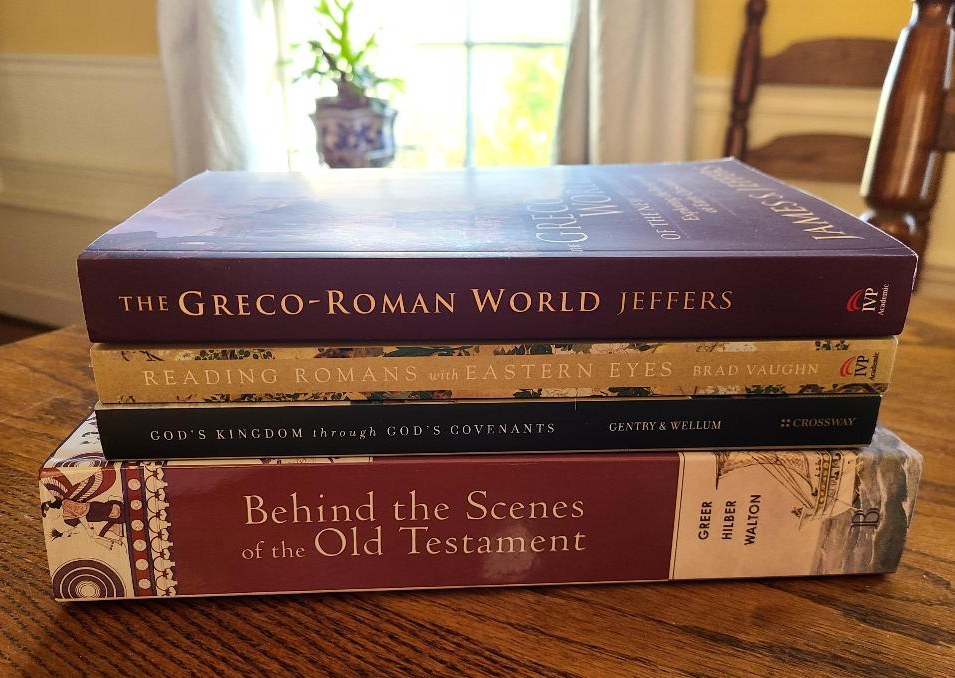
At Christmas time I got four books on my cultural and biblical background study wish-list and super excited about them. Some of you may know I have been studying biblical cultural backgrounds for a more in-depth look at the ancient world for a while now. As modern-day people we tend to look at biblical scripture, ancient society’s ideas and norms and beliefs with modern day eyes. It helps to have a better look at how things were for a clearer and richer understanding of the Bible and the early Christian’s lives. It is most likely that if you are a seminary student getting a BA in Religious Studies, you may be reading some if not all these books. If not, I highly recommend you read them.
I’m currently reading the first book mention below and it is wonderful. There is so many facts I already know about the Greco-Roman period in the 1st and second 2nd period but they are being expanded on in this book. After I read and study all of these books, I will be ordering four more from my wish-list. Most likely it will be next year. However, I’m thinking about creating a master wish-list of books for these types of studies and post them. That may be a useful resource for those of you who are interested.
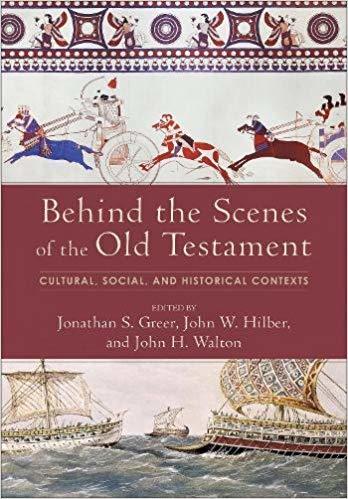
Side note: The Behind the Scenes of the Old Testament: Cultural, Social, and Historical Contexts book is heavy like a text book. Aren’t the covers lovely!
Stephanie
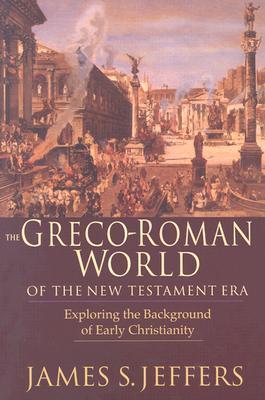
The Greco-Roman World of the New Testament Era: Exploring the Background of Early Christianity by James S. Jeffers
What was life like for first-century Christians? Imagine a modest-sized Roman home of a well-to-do Christian household wedged into a thickly settled quarter of Corinth. In the lingering light of a summer evening, men, women and children, merchants, working poor and slaves, a mix of races and backgrounds have assembled in the dimly lit main room are spilling into the central courtyard. This odd assortment of gathered believers–some thirty in number–are attentive as the newly arrived and travel-weary emissary from Paul reads from the papyrus scroll he has brought from their apostolic mentor. But if you were to be transported to this scene you would perhaps be overwhelmed by a flood of unexpected difference. The voice of the reader recedes as through open windows the din and clamor of the city assaults your ears. Hooves clunk and cart wheels grind and echo from the street while drivers shout, vendors call and neighbors gather and converse. And later, as you accompany a family through darkened and dangerous streets to their third-story tenement apartment, you might try to mask your shock at the cramped and unsafe conditions. In the Greco-Roman World of the New Testament Era James Jeffers provides an informative and scenic tour of daily life during the time of Jesus and the apostles. He affords “you-are-there” glimpses of everything from legal codes to dinner foods, from social hierarchy to apartment living, from education to family dynamics. His eye-opening book will advance your understanding of the New Testament and early Christianity and enrich your reading and application of the Bible.
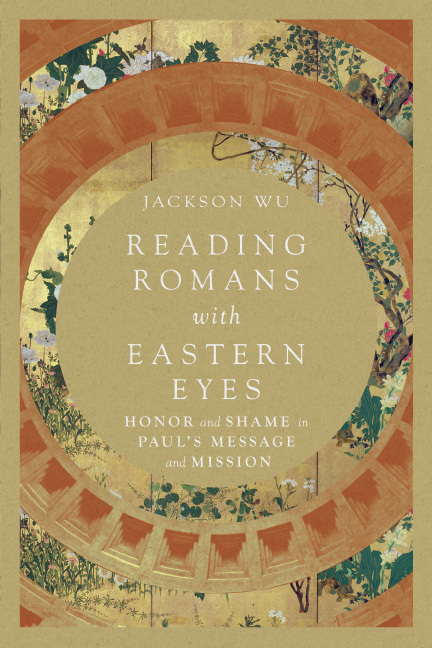
Reading Romans with Eastern Eyes: Honor and Shame in Paul’s Message and Mission by Jackson Wu
Combining research from Asian scholars with his many years of experience living and working in East Asia, Jackson directs our attention to Paul’s letter to the Romans. He argues that some traditional East Asian cultural values are closer to those of the first-century biblical world than common Western cultural values. In addition, he adds his voice to the scholarship engaging the values of honor and shame in particular and their influence on biblical interpretation.
As readers, we bring our own cultural fluencies and values to the text. Our biases and backgrounds influence what we observe—and what we overlook. This book helps us consider ways we sometimes miss valuable insights because of widespread cultural blind spots.
In Reading Romans with Eastern Eyes, Jackson demonstrates how paying attention to East Asian culture provides a helpful lens for interpreting Paul’s most complex letter. When read this way, we see how honor and shame shape so much of Paul’s message and mission.
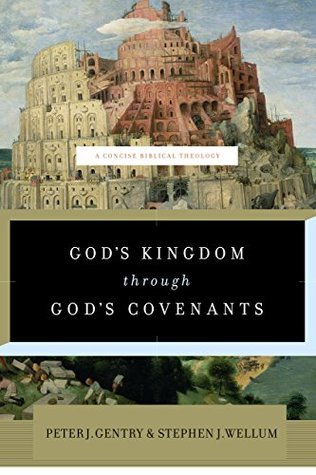
God’s Kingdom through God’s Covenants: A Concise Biblical Theology by Peter J. Gentry, Stephen J. Wellum
In this abridgement of the groundbreaking book Kingdom through Covenant, a biblical scholar and a theologian offer readers an accessible overview of the overarching structure of the Bible. Tracing the significance of the concept of “covenant” through both the Old and New Testaments, this book charts a middle way between covenant theology and dispensationalism―exploring the covenantal framework undergirding the history of redemption.
Behind the Scenes of the Old Testament: Cultural, Social, and Historical Contexts by Jonathan S. Greer (Editor), John W. Hilber (Editor), John H. Walton (Editor)
This authoritative volume brings together a team of world-class scholars to cover the full range of Old Testament backgrounds studies in a concise, up-to-date, and comprehensive manner. With expertise in various subdisciplines of Old Testament backgrounds, the authors illuminate the cultural, social, and historical contexts of the world behind the Old Testament. They introduce readers to a wide range of background materials, covering history, geography, archaeology, and ancient Near Eastern textual and iconographic studies.
Meant to be used alongside traditional literature-based canonical surveys, this one-stop introduction to Old Testament backgrounds fills a gap in typical introduction to the Bible courses. It contains over 100 illustrations, including photographs, line drawings, maps, charts, and tables, which will facilitate its use in the classroom.
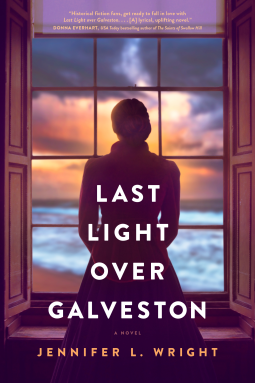
Amid the 1900 Galveston hurricane, one woman’s perseverance is tested in this captivating story from the author whose work has been called “intelligent and arresting” (Foreword Reviews) and “historical fiction as it is meant to be told” (Library Journal).
I walked until I could go no farther, until open water was all I could see.
Galveston, Texas. September 1900. Only months ago, Kathleen McDaniel returned from finishing school in Switzerland to her family home in New York’s Hudson Valley with a future of promise and privilege set before her. But one horrific event shattered her picturesque life. Now she has fled as far as the train line and a pocketful of money would take her, finding refuge at the St. Mary’s Orphan Asylum on Galveston Island, where she helps the nuns care for their young charges and prays her past will not find her. Despite her tenuous standing at the orphanage—and the grief and betrayal that drove her from home—Kathleen slowly begins to make friends. There is Emily, the novice nun she rooms with; Maggie, the tempestuous young girl who only bonds with Kathleen; and Matthew, a kind, handsome man recently employed by Isaac Cline at Galveston’s office of the US Weather Bureau.
Then in one fateful day, Kathleen’s fragile new life begins to crack as it becomes clear that she can’t run far enough to escape the reach of her former life. Meanwhile, as troubling news about a storm crossing the Gulf from Cuba swirls in the Weather Bureau offices, Matthew holds fast to Cline’s belief that no hurricane can touch Galveston. But as darkness falls on the island, Kathleen must gather her courage and reach for a strength beyond her own if she—and those she loves—are to survive.
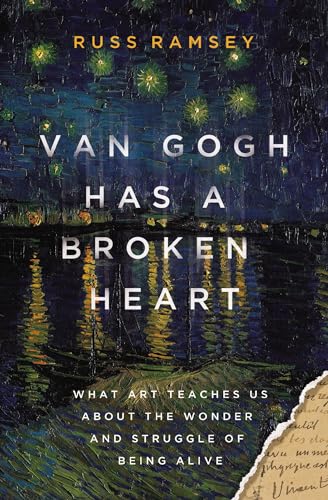
Van Gogh Has a Broken Heart by Russ Ramsey – Published October 22, 2024 by Zondervan
What Art Teaches Us About the Wonder and Struggle of Being Alive
I love art history and I was thrilled to come across this book from a YouTuber I follow. The cover is a stunning piece of art and the premise of the book sounds intriguing! Are you an art history enthusiast? Adding this one to my wish-list.
Stephanie
Book Description:
Beyond a mere introduction to great art, Van Gogh Has a Broken Heart is about loving to learn what art has to teach us about the wonder and struggle of being alive.
Did you know that:
Vincent van Gogh’s attempt to start an artist’s colony with Paul Gauguin lasted only nine weeks, ending in his infamous “ear episode”?
Pablo Picasso was a prime suspect in the disappearance of the Mona Lisa?
Artemisia Gentileschi was tortured with thumbscrews to verify her testimony at her own rapist’s trial?
Norman Rockwell’s critics said his work would never be accepted as “high art”–and he agreed?
These stories–and many more–shaped the work these artists left behind. In their art are lessons common to the human experience about the wonder and struggle of being alive: dreams lost, perspectives changed, and humility derived through suffering.
In Van Gogh Has a Broken Heart, Russ Ramsey digs into these artists’ stories for readers who may be new to art, as well as for lifelong students of art history, to mine the transcendent beauty and hard lessons we can take from their masterpieces and their lives. Each story from some of the history’s most celebrated artists applies the beauty of the gospel in a way that speaks to the suffering and hope we all face.
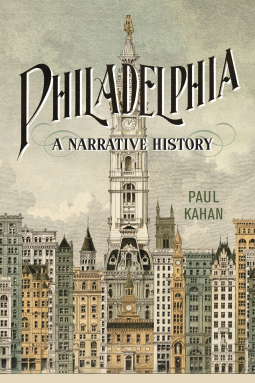
Philadelphia is the epicenter of our nation’s creation.
My enthusiasm for American history is long standing and it has been a goal of mine to further study the history and development of all fifty states and territories individually, including notable cities and towns. To my delight, the discovery of this book was perfect timing. Learning more about Philadelphia has been high on my list for some time.
Paul Kahan presents the reader with a sweeping narrative of the city’s history beginning with the Lenape tribe who inhabited the land that became Philadelphia all the way through the twenty-first century. Highlighting individuals who made their mark on the city’s history and delves into cultural diversity of the people and explore its uniqueness of what the city offers that makes Philadelphia stand out.
As I got a few chapters in, I quickly realized that I had only scratched the surface of Philadelphia origins and history. I found myself taking pages of notes and jotting down questions I had regarding several notable people and details I did not previously know. For example: Charles Dickens visited the city. The city is home to the first natural history museum in the United States. Philadelphia remained the world’s leading publishing center and had several subscription libraries. In 1850, Philadelphia was still home to a few enslaved people. The first hospital was in Philadelphia and so on… There are a few people mentioned I’m looking forward to learning more about: Folklorist and Humorist Charles Godfrey Leland, William Hamilton, John Bill Rickets, Cecil B. Moore and Cherelle Parker.
This book is packed full of information and at times, I felt a few topics or mentions jump from one to the other too quickly without being fleshed out. Personally, I wanted to have a bigger picture of certain elements of history. Though, by reading Kahan’s account, I understand the direction he chose to go with, and nor did my opinions on that score take away from how much I enjoyed reading his narrative. I will say that while this book is educational and excellent, the dense information provided may be slightly overwhelming to readers who are not used to reading such material. I do recommend taking your time with this book. You’ll be glad you did.
As for the information of the history provided in this book, I can only attest to a few of its accuracies on account that I chose to read this book wanting to go more in-depth with the timeline of the city’s growth and to the contribution of culture, architecture, city planning, science, political arena, and government formed through the centuries. Kahan meets all those points, and it is apparent that the research and time that went into writing this account of Philadelphia’s history, ever-growing culture and diversity is quite extensive. I respect Kahan’s intellectual ability to provide readers with this profound selection of work.
I’m delighted to have chosen Kahan’s book to read as I have learned tremendously from its pages, and it has provided me with a comprehensive source for further study and reference. I will be adding a physical copy of this book to my history stacks.
Stephanie
Pub Date Oct 29 2024 by University of Pennsylvania Press
Hardback: 424 pages
For more information about this book and Kahan’s work please visit Kahan’s website HERE or by typing: http://www.paulkahan.com
I obtained an ARC from the publishers through NetGalley for an honest review.
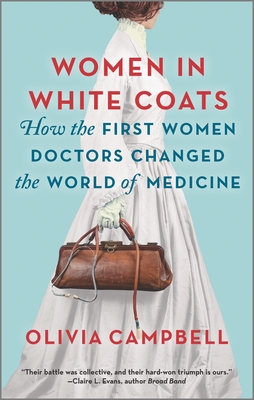
I’m currently reading, “Sisters in Science” by Olivia Campbell for review and while doing so, I looked up if Campbell has written other stories. There is a story called, “Women in White Coats” that I’ve heard of and hadn’t paid attention to the fact that Campbell is the author. While, I’m curious about this book, I’m still not sure I will be able to fit it into my reading schedule at present. The story is non-fiction and the premise is something I’m greatly interested in knowing more about. Hopefully, it may be a 2025 read.
I thought I would share the book description and perhaps this story will be a new discovery for someone. Have you heard of this book? Thoughts?
Stephanie
Book Description:
Published March 2, 2021
In the early 1800s, women were dying in large numbers from treatable diseases because they avoided receiving medical care. Examinations performed by male doctors were often demeaning and even painful. In addition, women faced stigma from illness—a diagnosis could greatly limit their ability to find husbands, jobs or be received in polite society.
Motivated by personal loss and frustration over inadequate medical care, Elizabeth Blackwell, Elizabeth Garrett Anderson and Sophia Jex-Blake fought for a woman’s place in the male-dominated medical field. For the first time ever, Women in White Coats tells the complete history of these three pioneering women who, despite countless obstacles, earned medical degrees and paved the way for other women to do the same. Though very different in personality and circumstance, together these women-built women-run hospitals and teaching colleges—creating for the first-time medical care for women by women.
Acquiring books and reading them are entirely two different hobbies. I must say in the last few years, I have been working on curating my home library and working out what criteria I want to set to grow my stacks.
In this book stack series, I’m sharing books I’ve previously read and reviewed from NetGalley and want to obtain a physical copy for my home library.
I reviewed, “Good Time Coming” by C.S. Harris in September of 2016 and I was deeply moved by this story. I feel my review did not do the story justice and I want to go back and read it again to update my thoughts and to-of course-add a physical copy to my book stacks. Interestingly enough, ever since I’ve been on the lookout for the book at used bookstores and have never come across a copy. I have noticed-I’m not surprised-that there are a few readers that misunderstand the story and the author’s intentions in writing about the subject of what civilians in Mississippi went through during the war. Harris doesn’t leave any women out no matter their class, status in society, or age. What I mean to say is that there is a diversity of women in this book that are tied together by war, uncertain of their fate and the utter despair and savagery of war. Today many people still don’t want to address this part of the American Civil War because then it will force one to admit that we tend to look at things with prejudice. Harris is a brave woman to write this story and I admire her greatly for her spirit of persistence in bringing Good Timing Coming to the public.
Stephanie Hopkins
About the Book:
A powerful tale of the survival of the women and children left behind during the American Civil War by the author of the Sebastian St Cyr mysteries.”
It’s the beginning of the American Civil War and the Union army is sailing down the Mississippi, leaving death and destruction in its wake. The graceful river town of St. Francisville, Louisiana, has known little of the hardships, death, and destruction of the War. But with the fall of New Orleans, all changes. A Federal fleet appears on the Mississippi, and it isn’t long before the depredations and attacks begin.
For one Southern family the dark blue uniform of the Union army is not the only thing they fear. A young girl stops a vicious attack on her mother and the town must pull together to keep each other safe. But a cryptic message casts doubt amongst the town s folk. Is there a traitor in the town and can anybody be trusted?
Twelve-year-old Amrie and her family have never felt entirely accepted by their neighbors, due to their vocal abolitionist beliefs. But when Federal forces lay siege to the nearby strongholds of Vicksburg and Port Hudson, the women and children of St. Francisville find themselves living in a no man’s land between two warring armies. Realizing they must overcome their differences and work together to survive, they soon discover strengths and abilities they never knew they possessed, and forge unexpected friendships.
As the violence in the area intensifies, Amrie comes to terms with her own capacity for violence and realizes that the capacity for evil exists within all of us. And when the discovery of a closely guarded secret brings the wrath of the Federal army down on St. Francisville, the women of St. Francisville, with whom Amrie and her mother have shared the war years many deprivations and traumas, now unite and risk their own lives to save them.
When I come across a book title with the word’s bookstore, bookseller, librarian or libraries, it is a sure bet I’m going to want to check it out and perhaps add it to my to-read pile. What is even more intriguing is that this story takes place during World War II in Lisbon. I can’t remember if I’ve read a historical story that takes place there. Isn’t the book cover nice? For those of you who are NetGalley members, this one is available to request a copy.
Stephanie
Description
In a glittering city of secrets and shadows, love is the most perilous gamble of all.
Lisbon 1943. As two American librarians are drawn into a city of dangerous subterfuge and unexpected love affairs, they are forced to choose between their missions and the men they love. Brimming with evocative writing and meticulous research, award-winning author Suzanne Nelson spins a web of secret aliases, sweeping romance, and great sacrifice. Inspired by real historical figures, this is the captivating story of two remarkable young women, their bravery and heartache, and a friendship that withstands the ravages of war.
With World War II raging across Europe, best friends Selene Delmont and Beatrice Sullivan are enlisted by the U.S. Intelligence Office and sent to Lisbon—a sparkling city and hotbed of trouble, harboring exiled royalty, hunted refugees, and spies trading double-edged secrets in seductively dark corners. In official capacity, librarians Selene and Bea have been recruited to catalog the vast mountain of information gathered by the Allies, but by night, both women are undercover agents tasked with infiltrating the Axis spy network.
Where Selene is confident and brash, Bea is bookish and careful. Selene longs to escape her family’s impossible expectations and embrace her independence, while all Bea wants is to heal from heartbreak and keep impulsive Selene out of trouble. But soon, both librarians are caught up in treacherous games of deception alongside two of Lisbon’s most notorious men—the outcast Portuguese baron, Luca Caldeira, and the lethal double-agent, Gable. As Selene charms her way through lavish ballrooms and fêtes with Luca, Bea is plunged into Gable’s shadowy underworld of informants.