Book Review: The Paris Library by Janet Skeslien Charles

Paris, 1939: Young and ambitious Odile Souchet has it all: her handsome police officer beau and a dream job at the American Library in Paris. When the Nazis march into Paris, Odile stands to lose everything she holds dear, including her beloved library. Together with her fellow librarians, Odile joins the Resistance with the best weapons she has: books. But when the war finally ends, instead of freedom, Odile tastes the bitter sting of unspeakable betrayal.

Montana, 1983: Lily is a lonely teenager looking for adventure in small-town Montana. Her interest is piqued by her solitary, elderly neighbor. As Lily uncovers more about her neighbor’s mysterious past, she finds that they share a love of language, the same longings, and the same intense jealousy, never suspecting that a dark secret from the past connects them.

A powerful novel that explores the consequences of our choices and the relationships that make us who we are—family, friends, and favorite authors—The Paris Library shows that extraordinary heroism can sometimes be found in the quietest of places.

My thoughts:

“Libraries are lungs, […] books the fresh air breathed in to keep the heart beating, to keep the brain imagining, to keep hope alive.” ― Janet Skeslien Charles, The Paris Library

The Paris Library is truly an unforgettable story. My favorite books are usually told in dual timelines. This story is without a doubt, my new favorite. If you are a lover of books and libraries, you must read, The Paris Library. I was completely spirited with abounding emotions. I laughed, cried, cheered, was enraged at injustice, and was thoroughly in my element with the librarians. I wanted-so much-to have tea with them and discuss literature and humanity. I wanted to be in their world surrounded with so many wonderful stories.

Not all is wonderful because of the war and personal struggles. That is what happens in life and this story portrays that in such a way, you realize that we all can learn from each other. Even so, it carries the narrative to great heights, shows you how deeply impacted the librarians were during the dark time of Word War II, and the lengths they went to keep reading alive.  

I actually leaned about a few authors and books I am not familiar with and want to read them because of the people’s experience with them in this book.

The author’s style of writing appealed to me and there are countless of passages that I marked so that I can make a record of them in my journal. That is how much this story affected me.

Stories like this are what brings us together and forever changes our impressions on life and humanity.

A must read!

I rated this book five stars and obtained a copy of this book from the publishers for an honest review.

Stephanie Hopkins

Feeding the Creative Soul

Happy Monday, everyone! I hope the holiday was a special one despite the tough times we are experiencing across the globe. Today I want to talk a little about what art supply I ordered this weekend and why. I’ve also started a new book to read that I have been enjoying so much that I’m wanting to take my time with. First, let’s talk art.

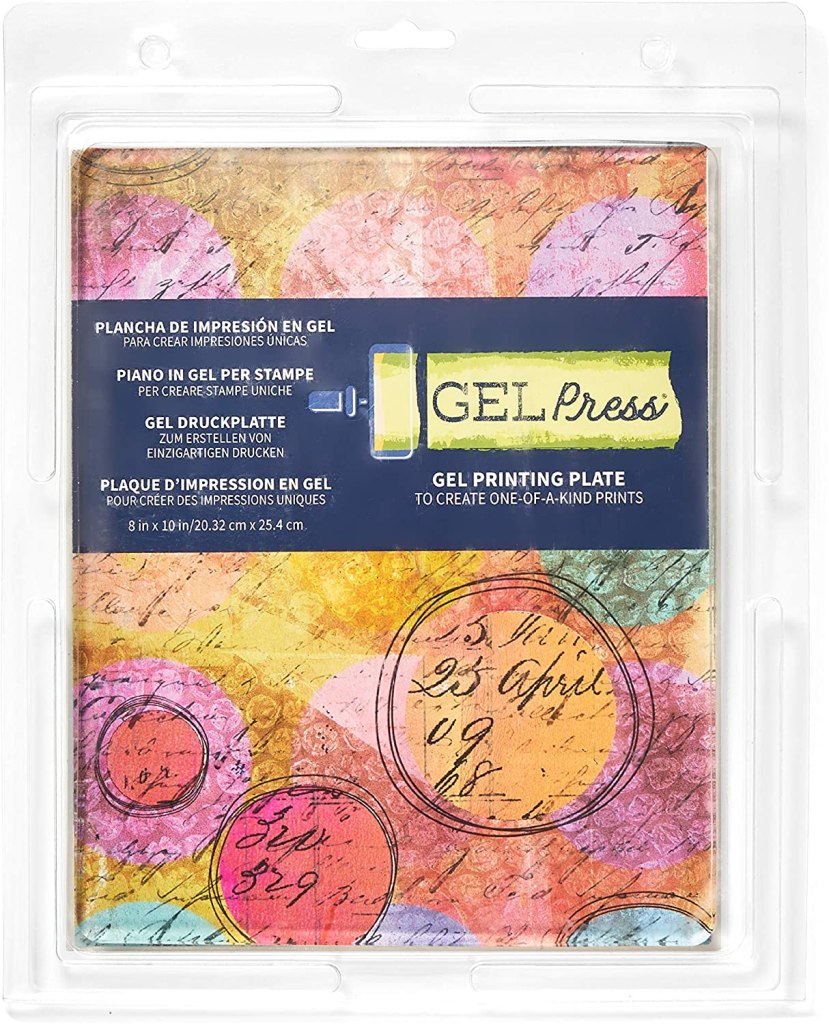
A few years ago, I developed my own technique in creating painted papers without the use of Gelli Plates. I didn’t want to spend the money and I wanted to be as original as possible. I created a masking technique of sorts and use my abstract painting style to create these papers. I knew one day that I wanted to invest in the Gel Press Plate. This weekend I decide to bite the bullet and order a plate. I can’t wait to see what I create with it and how much it differs from my painted papers “Masking” technique. I’ve even ordered a new soft brayer for this project. I look forward to sharing with you all what I come up with!

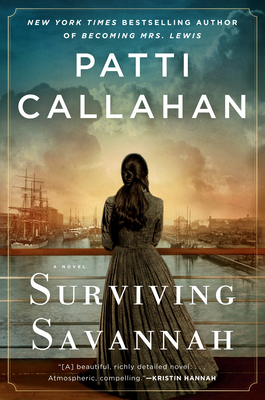
This weekend I started Surviving Savannah by Patti Callahan and I’m really enjoying the story so far. I’m about half way through. Callahan is a talented story-teller and when I saw this one available for reviewers, I had to read it! Savannah Georgia is in my State and its history is among my favorites to study and read about. -Stephanie

Expected publication: March 9th 2021 by Berkley

About the book:

It was called “The Titanic of the South.” The luxury steamship sank in 1838 with Savannah’s elite on board; through time, their fates were forgotten–until the wreck was found, and now their story is finally being told in this breathtaking novel from the New York Times bestselling author of Becoming Mrs. Lewis.

When Savannah history professor Everly Winthrop is asked to guest-curate a new museum collection focusing on artifacts recovered from the steamship Pulaski, she’s shocked. The ship sank after a boiler explosion in 1838, and the wreckage was just discovered, 180 years later. Everly can’t resist the opportunity to try to solve some of the mysteries and myths surrounding the devastating night of its sinking.

Everly’s research leads her to the astounding history of a family of eleven who boarded the Pulaski together, and the extraordinary stories of two women from this family: a known survivor, Augusta Longstreet, and her niece, Lilly Forsyth, who was never found, along with her child. These aristocratic women were part of Savannah’s society, but when the ship exploded, each was faced with difficult and heartbreaking decisions. This is a moving and powerful exploration of what women will do to endure in the face of tragedy, the role fate plays, and the myriad ways we survive the surviving.

Q&A with Writer Judith Starkston

Stephanie Hopkins

Writing is an art form that weaves together words that tell a story.  My passion at Layered Pages is to capture their essence and to further explore the craft so people will have a deeper understanding of reading, writing and their importance to our society. Today, Judith Starkston is here to discuss with us her Tesha book series.

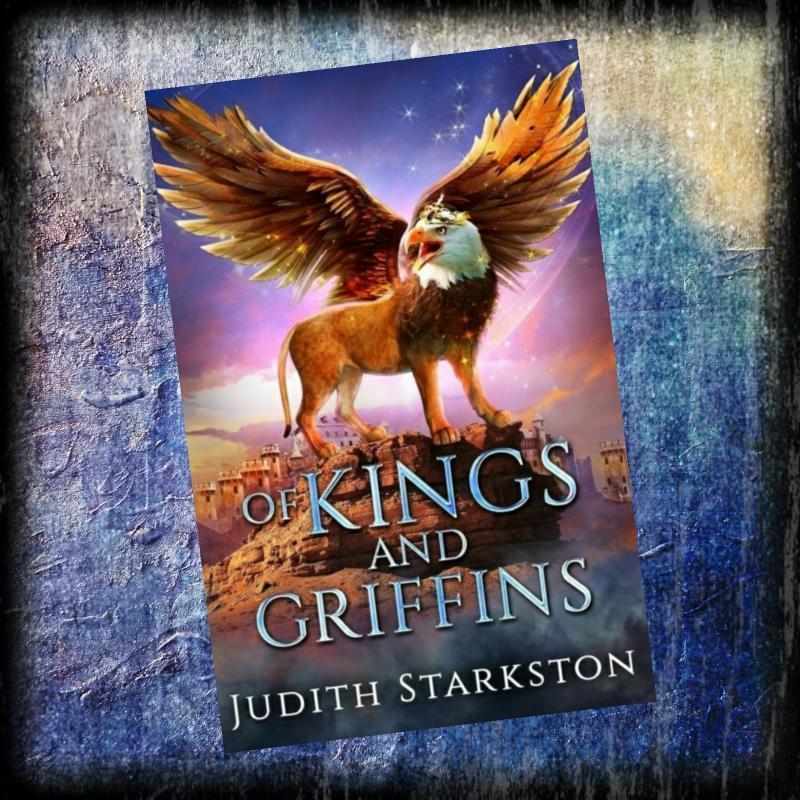
Thank you for visiting with us, Judith. Before we talk about your story, “Of Kings and Griffins,” what is your favorite childhood story and why?

There were many. I was a bookworm from the get-go, but “The Wind in the Willows” was a particular favorite, partly because my older brother did such a lively job reading aloud the voices and personalities of Mole, Ratty, and Toad. Friends messing about together outdoors, which is its main theme, appealed to me. That was back when a kid could wander unsupervised around the hills, canyons, and waterways near her house. At least, my mother never knew where I was or what I was up to. Also, I was a cautious child, and I think the main plot suited me. Toad receives his come-uppance for wild and absurd behavior, and he realizes that treating his friends kindly mattered most. So much of that book meanders rather than races—not how books are paced these days, but I loved it.

Has your love for reading influenced you to become a writer?

Absolutely! I have to get lost in a story on a regular basis or I get buggy in the head. I love that sensation of being drawn compulsively forward through the pages inside a twisty, layered plot amid characters I can’t stop caring about. To make that happen for someone else is such fun. And doing that wouldn’t be possible for me if I didn’t have a lifetime of models bombarding my imagination with every word I write.

Tell me a little about how you became interested in ancient worlds and historical fantasy?

My career before I became a fiction writer was as a scholar and teacher of Greek and Roman languages and literature. So, I had the knowledge base and enthusiasm for ancient worlds. When writing my first novel, set at Troy, I discovered the culture of the Hittites, powerful neighbors of the Greeks. The archaeology of this massive empire (roughly today’s Turkey, Syria, and Lebanon) had only begun to emerge when I was a graduate student, and I didn’t learn about it then. It’s very exciting for a whole people to step from historical obscurity with the help of all the brilliant, contemporary archaeological tools. It helps that this literate people left behind archives that are gradually being translated.

No one was bringing the Hittite world alive in fiction at that point, so I couldn’t resist. All the more when I met in the written record the most respected and unusual of the Hittite rulers, a queen named Puduhepa, whom I renamed Tesha in my fiction. (Tesha is the Hittite word for “dream,” and this queen was known for her divinely inspired dreams.)

The fantasy aspect flowed naturally from there because the Hittites believed in rites and practices that we call magic. This queen was also a priestess, and she excelled in all these supernatural skills. Allowing the magic full expression inspires my plots with creative power. The framework remains historically grounded and accurate.

If a reader came up to you and asked about, “Of Kings and Griffins,” how would you describe your story?

A Bronze Age queen takes on a vicious king, vengeful griffins, and a scheming goddess.

The somewhat longer version is this:

For Tesha, priestess and queen, happiness is a world she can control, made up of her family and the fractious kingdom she and her husband rule within the Great King’s empire. But now the Great King is dead, and his untried son plots against them. Tesha fights back with forbidden sorcery and savvy. In yet another blow, the griffin king lures Daniti, Tesha’s magical blind sister, into a deadly crisis that Daniti alone can avert.

As danger ensnares everyone Tesha loves, her goddess offers a way out. But can Tesha trust this offer of divine assistance or is it a trap—one that would lead to an unstoppable bloodbath?

Does, “Of Kings and Griffins,” make a good stand alone or should readers start with your first book in the series?

“Of Kings and Griffins” is the third in my Tesha series, but readers will have no trouble starting with this book if they wish—especially if they are drawn to mythical beasts! “Priestess of Ishana” is the first book in the series for those who like to start at the beginning. I am careful to write each book as a satisfying stand alone.

My interest was sparked when I read on goodreads that your series is inspired by the Hittite empire. For those who might not be familiar with that particular empire, can you please tell us a little about it?

The Hittites ruled Anatolia and parts of the Near East from 1650 to 1200 BCE. Their capital, Hattusa, now a World Heritage site, lies about an hour northeast of Ankara. Kingdoms like Troy on the western coast shifted over time from loosely allied to vassal states subservient to the Hittite Great King. The primary rival of the Hittites was Egypt. During Puduhepa’s reign, she and her husband sealed a peace treaty with Ramses II, the Pharaoh in the Biblical Moses story. The Hittite language is related to Greek, although it’s written with the Near Eastern writing system of cuneiform, groups of wedges made with a reed stylus in clay that represent words and syllables, so it doesn’t look anything like Greek. Their culture borrows a lot from Mesopotamia, but it also has a significant core of distinctly Hittite religious and ethnic traditions. In many ways, the Hittites are the bridge we’d lost between the Greeks and the Near Eastern world. Historians now recognize how much “Western Civilization” owes to the cultures further east.

Will there be another book in the series? If so, when can your readers expect the publish date?

Fortunately for me, Queen Puduhepa (my Tesha) ruled from her teens into her eighties, so there is almost never-ending inspiration for more books, and the Late Bronze Age was a time of great turmoil and international political scheming—all great raw material for epic historical fantasy. I end each book with a satisfying sense of completion, even while the next “chapter” in Tesha’s life beckons, so no frustrating cliffhanger endings that require the next book instantly to cure the pain.  No one has to “wait until the series is complete” with mine—a comment I hear a lot about some books.

The fourth Tesha novel will hopefully come out next Fall/early Winter. I say hopefully because I’ve taken a short detour and haven’t started it yet. I am working at the moment on a novella set in the land of the griffins because I’ve been having such fun with those characters, and I wanted to explore them entirely in their own terms. They live for centuries, so my main griffin character in “Of Kings and Griffins” has some seriously grand life stories to dive into. I will publish the novella in a month or so and give it to my newsletter subscribers as a present before I make it available to buy. This is a good time to head over to JudithStarkston.com and sign up!

Thank you for such an intriguing interview, Judith. Where can reader purchase your books?

My books are available in the “real world” at the Poisoned Pen Bookstore (They’ll mail you signed copies, which are also sealed with my reproduction of Puduhepa’s actual seal) and online at Amazon. “Hand of Fire” is my Trojan War book told from a woman’s point of view. The three Tesha series books are “Priestess of Ishana,” “Sorcery in Alpara,” and “Of Kings and Griffins.”

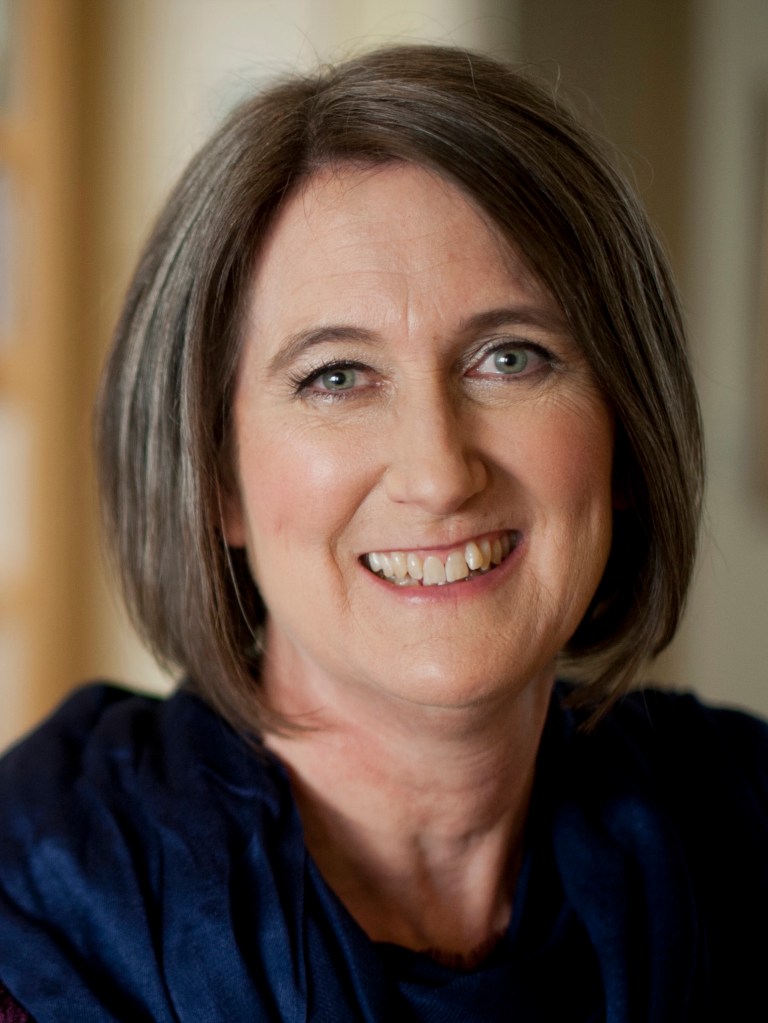
Judith Starkston

Judith Starkston has spent too much time reading about and exploring the remains of the ancient worlds of the Greeks and Hittites. Early on she went so far as to get two degrees in Classics from the University of California, Santa Cruz and Cornell. She loves myths and telling stories. This has gradually gotten more and more out of hand. Her solution: to write fantasy set in the exotic worlds of the past. Fantasy and Magic in a Bronze Age World. Hand of Fire was a semi-finalist for the M.M. Bennett’s Award for Historical Fiction. Priestess of Ishana won the San Diego State University Conference Choice Award. Judith has two grown children and lives in Arizona with her husband.

Author Links:

Amazon  / Newsletter Signup    / Website  

Twitter    / FB   / Instagram

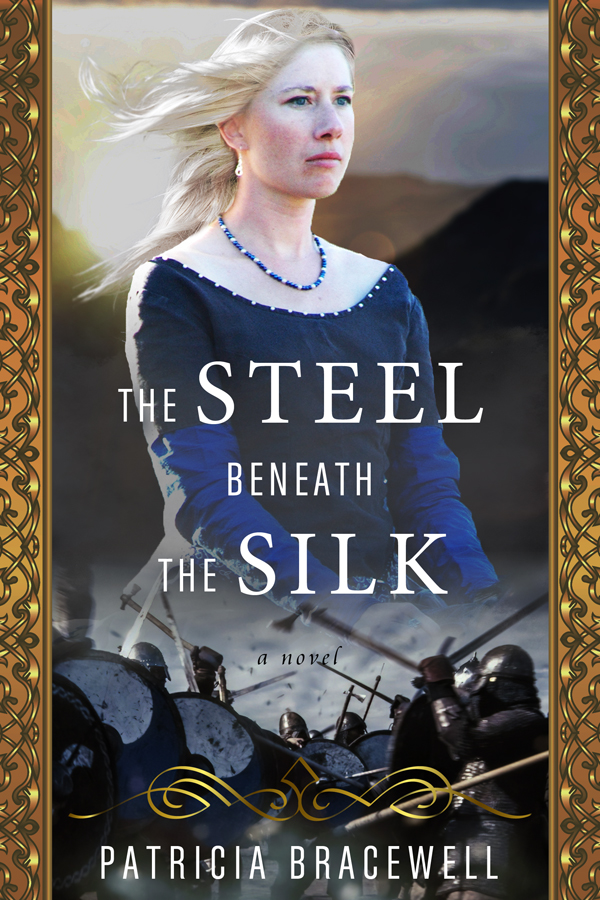
Cover Reveal: The Steel Beneath the Silk by Patricia Bracewell

A breathtaking conclusion to Bracewell’s Emma of Normandy Trilogy, brimming with treachery, heartache, tenderness and passion as the English queen confronts ambitious and traitorous councilors, invading armies and the Danish king’s power-hungry concubine.

Release Date: 2 March 2021

The eBook is available for pre-order now via the links below.

The paperback edition will be available for pre-order soon.

About the Book:

A breathtaking conclusion to Bracewell’s Emma of Normandy Trilogy, brimming with treachery, heartache, tenderness and passion as the English queen confronts ambitious and traitorous councilors, invading armies and the Danish king’s power-hungry concubine.

In the year 1012 England’s Norman-born Queen Emma has been ten years wed to an aging, ruthless, haunted King Æthelred. The marriage is a bitterly unhappy one, between a queen who seeks to create her own sphere of influence within the court and a suspicious king who eyes her efforts with hostility and resentment. But royal discord shifts to grudging alliance when Cnut of Denmark, with the secret collusion of his English concubine Elgiva, invades England at the head of a massive viking army. Amid the chaos of war, Emma must outwit a fierce enemy whose goal is conquest and outmaneuver the cunning Elgiva, who threatens all those whom Emma loves. 

Links:

Patricia Bracewell’s website

AMAZON

AMAZON.CO.UK

AMAZON AUSTRALIA

BARNES & NOBLE

KOBO

SNEAK Peek AT WHAT’S INSIDE

Interview with Julie McElwain

Julie MelwainI have the great pleasure and honor to introduce Julie McElwain to Layered Pages today, to talk with me about her book A Murder In Time. Julie is an award-winning journalist, who began her career as a business reporter at California Apparel News, a weekly Los Angeles-based fashion trade newspaper. She has freelanced for numerous publications from professional photographer’s magazines to those following the fashion industry. Currently, Julie is an editor for CBS Soaps In Depth, a national soap opera magazine covering the No. 1 daytime drama, The Young and the Restless. Julie lives in Long Beach, CA.

 Julie, please tell your audience about A Murder in Time.

A Murder In Time is about FBI agent Kendra Donovan, who goes rogue after her present day mission is botched. In her quest for justice, she infiltrates a costume ball at Aldridge Castle in England. When she encounters an assassin, she escapes through a passageway and encounters a terrifying phenomenon, which transports her back to 1815.

You could say that Kendra’s modern senses clash with Regency England’s sensibilities. She’s initially mistaken for a lady’s maid, but is quickly demoted to a below-stairs maid. When the body of a young girl is found brutally murdered, Kendra realizes that a serial killer is on the loose. Stripped of her twenty-first century tools, Kendra is forced to rely on her wits to unmask the murderer.

What are some of the courage and strengths of Kendra and possibly the isolation she may feel with these attributes?

As the offspring of two scientists who believed in positive eugenics, Kendra didn’t have a normal upbringing. Like an athlete, she spent her life “training” to excel in academics. Her intelligence has always set her apart from her peers, and made her feel isolated. She was only a young teenager when she went to college. Socially, she didn’t fit in with the older college students, which only made her feel more like a freak. When her parents abandoned her after she asserted her independence, Kendra was forced to develop a tough outer shell to survive. She became a loner, dedicated to proving herself in her chosen career, and deeply wary of emotional attachments because of her parents’ abandonment. As tragic as Kendra’s life was, I think it gave her the strength to deal with being transported to 1815, where she’s the ultimate outlier. I think a person with a more normal upbringing would have been driven insane or reduced to a quivering ball of fear!
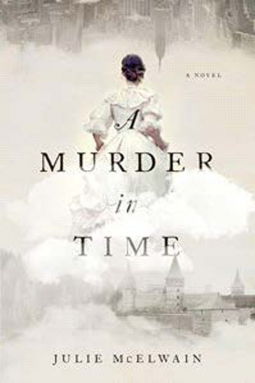
A murder in time

What is the mood or tone your characters portrays and how does this affect the story?

 There is a great deal of suspicion between Kendra and her nineteenth century counterparts, which adds to the tension. The Duke of Aldridge, Alec, and Sam Kelly are aware that Kendra lied about how she came to England. They have varying degrees of distrust. They also regard Kendra’s manners, speech patterns and behavior as peculiar, to say the least, but they put it down to her being an American. For her part, Kendra has a difficult time trusting them with her big secret, and that has her proceeding cautiously. And she worries about screwing up the space-time continuum, which is something she’s never had to worry about in her previous murder investigations for the FBI! She can’t help but be skeptical over this group’s contribution to the murder investigation. She was always more advanced than her peers, but with these people, she’s centuries more advanced. It’s not that she thinks she’s superior… but she kind of does. It will be a journey for her to reach a different conclusion.

 Who are your five top antagonist? What motivates them?

 Kendra’s father, Carl Donovan, is an early antagonist. He plays a small part in the overall story, but he is crucial in Kendra’s development as a human being. As a scientist, he prizes intellect above all else, and believes that Kendra stubbornly refused to live up to her potential. His black-and-white view always made Kendra feel unworthy, and therefore more determined to prove herself.

I consider Mrs. Danbury — the castle’s housekeeper — a wonderful antagonist. She’s like the Old Guard protecting the status quo. The world of aristocrats, servants, working class, and merchants is what she’s familiar with, and she finds Kendra’s bold behavior — her lack of deference to the hierarchy — to be bewildering and rather threatening.

I really don’t want to give away the murderer’s identity for someone who hasn’t read the book, so I will put the following men in the antagonist category, with Kendra bumping heads with each of them. Alec’s brother, Gabriel, is a self-pitying alcoholic. Mr. Harris is the youngest son of an earl, who was appointed the village vicar, a station that he thinks is beneath him. Mr. Morland lives in a nearby estate and is the local magistrate, whose chauvinistic attitude towards Kendra is typical of the era. Mr. Dalton is a former surgeon, who inherited a nearby estate, and is insulted to be considered a suspect in Kendra’s investigation. Finally, Captain Harcourt is Gabriel’s friend, and is hunting for an heiress to replenish his funds. All of these men are motivated to keep their secrets from coming to light. Of course, no one is more motivated than the murderer!

 What inspired you for your main character to be an FBI agent?

 I really wanted Kendra to be in some type of law enforcement. She needed to have a specialized skill set — the ability to read a crime scene, to understand criminal behavior, and to be able to defend herself. Being an FBI agent was very organic to the story, which involves a serial killer. But it also felt right, given Kendra’s background. Her parents are driven, ambitious scientists who are at the top of their field. While Kendra chose a different path, which led to a chasm between her and her parents, she is as ambitious and determined to prove herself, and wants to be at the top of her field. Being the youngest agent ever accepted by the Bureau certainly put her on that path!

 Why did you choose 1815 for the period Kendra falls back in time too?

 I’ve always found this period in history to be utterly fascinating. It parallels our own era in so many ways. The war with Napoleon had just ended and the Industrial Revolution was just beginning. New machines were taking away jobs, creating a lot of simmering tensions between the haves and have nots. It was a time of contrasts — with great wealth on one side, and terrible poverty on the other; a silliness in its celebrity culture and yet a seriousness in the political upheaval. Of course, I’m also a big Jane Austen fan, and have enjoyed reading romances set during this era… I just wanted to write a mystery that actually had a modern day heroine — sort of Jane Austen meets Criminal Minds.

Does Aldridge Castle really exist?

 No, but I’ve traveled throughout England, Scotland and Ireland, and one of my favorite things to do is tour old castles and great estates. Aldridge Castle is an amalgam of many of the fantastic places that I’ve visited, including Dublin Castle, Kensington Palace and Leeds Castle, just to name a few.

 How much research went into your story?

 I did tons of research! I probably own every reference and history book on the time period. There are many wonderful blogs and websites by romance writers who specialize in the Regency era, which were invaluable. I also have a library of forensics books and police procedurals, and I did a lot delving into the subjects of quantum physics, wormholes, and string theory. This may be a piece of fiction, but it was important to me to be as accurate as possible.

What do you like most about writing a time travel story?

 I really liked the idea of taking a smart, modern person and tossing them back in time. We have a tendency to think that we’re so much more intelligent than our ancestors. But if you take away our modern inventions, just how smart are we? Would we be able to survive? Once my DSL went out, and I was forced to use dial-up to get on the Internet for about a week. That darned near killed me! I loved putting someone as clever as Kendra, as self-sufficient and independent, in a world that was totally alien to her, and watching how she would cope.

The time travel element also allowed me to offer dual viewpoints. Kendra was as much a puzzle and an oddity to her nineteenth century counterparts as they were to her. I liked being able to view the early nineteenth century through modern eyes, while at the same time, look at our own twenty-first century culture through the lens of the nineteenth century. We don’t blink an eye anymore at using profanity in casual conversation, but that would have shocked and appalled most people in 1815.

Time travel is pivotal to the plot, but this is not a science fiction story. Of course, Kendra thinks about the mechanics of time travel — how could she not? — but I’m more interested in the human element, on how we’ve changed as a people… and how we’ve stayed the same.

Will there be a sequel?

 It depends on how well A Murder In Time does, but I’m currently working on a sequel — so cross your fingers!

Who are your influences in writing?

I’m an avid reader, and am inspired by many authors. Some of my favorites are Karen Slaughter, Lisa Gardener, Tami Hoag, Tess Gerritsen, Nora Roberts, Dean Koontz, Lee Child, Ariana Franklin, Amanda Quick… the list goes on. I tend to be pretty eclectic in what I read, but I veer towards mysteries and thrillers. Let’s just say, I get motivated by anyone who can spin a good tale.

Where can readers buy your book?

 Barnes & Noble and independent bookstores, as well as online retailers like Amazon.

Links: 

Author Facebook Page

Pegasus Books

Thank you, Julie! 

Review: Godwine Kingmaker by Mercedes Rochelle

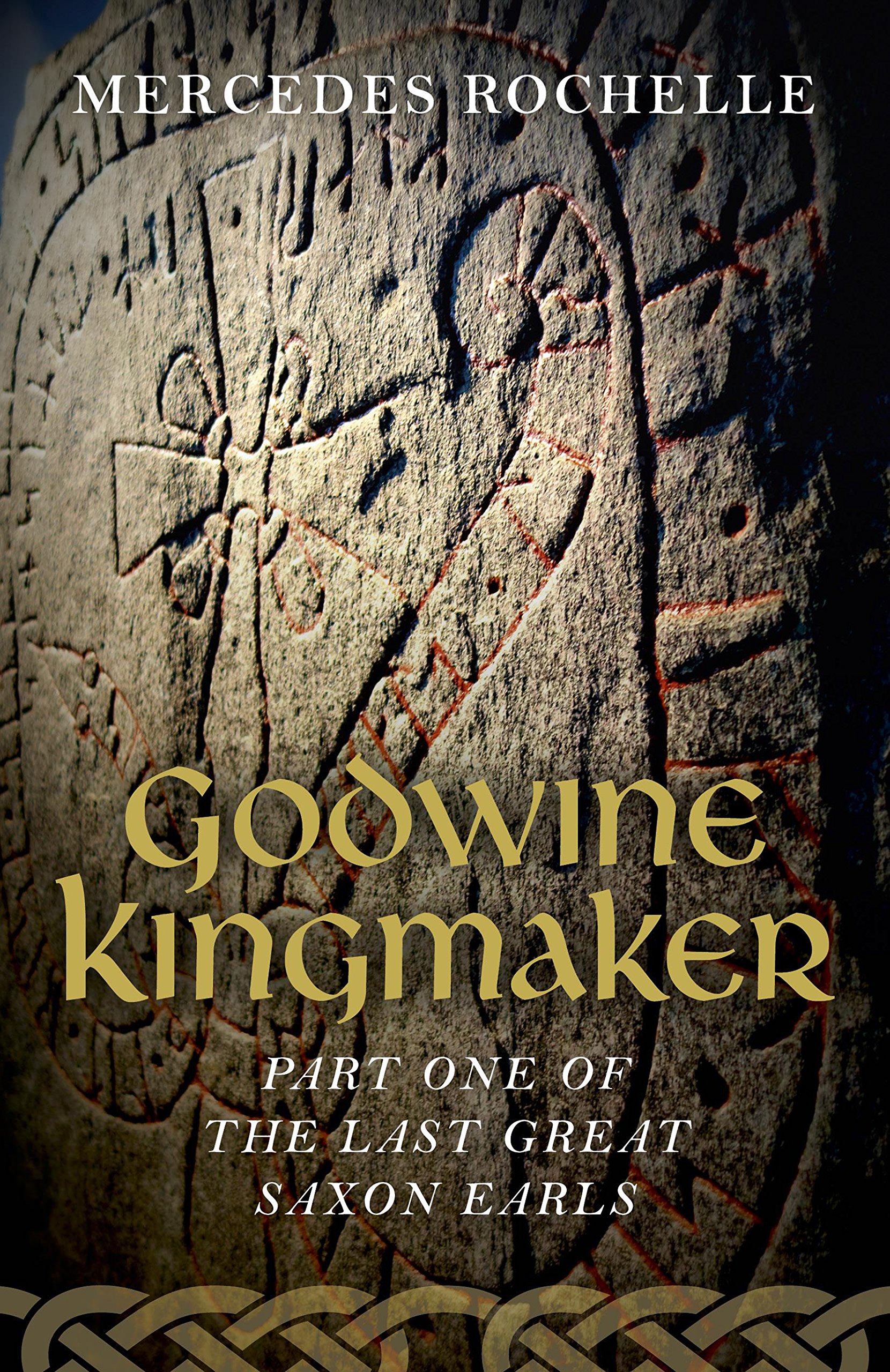
Godwine Kingmaker

Harold Godwineson, the Last Anglo-Saxon King, owed everything to his father. Who was this Godwine, first Earl of Wessex and known as the Kingmaker? Was he an unscrupulous schemer, using King and Witan to gain power? Or was he the greatest of all Saxon Earls, protector of the English against the hated Normans? The answer depends on who you ask. He was befriended by the Danes, raised up by Canute the Great, given an Earldom and a wife from the highest Danish ranks. He sired nine children, among them four Earls, a Queen and a future King. Along with his power came a struggle to keep his enemies at bay, and Godwine’s best efforts were brought down by the misdeeds of his eldest son Swegn. Although he became father-in-law to a reluctant Edward the Confessor, his fortunes dwindled as the Normans gained prominence at court. Driven into exile, Godwine regathered his forces and came back even stronger, only to discover that his second son Harold was destined to surpass him in renown and glory.

**********

I’d like to first say that this period in English history is probably without a doubt my favorite. I am quite the critic when it comes to reading historical fiction during this extraordinary time…when I saw this book tour available for this book, I knew that I had to read this story. I wanted to know how seriously Rochelle takes her history and how she will portray this period and the people. I’d have to say I was thoroughly fascinated with her look into this time. She gives you a really good sense of it if you will. That’s what I want in a story. To be transported back.

This story centers on Harold Godwineson’s Father, Godwine. He became Earl of Wessex under King Canute. For those of you who don’t know, Canute is Danish by birth. He and his father conquered England. I highly recommend you read up on King Canute.

Anyhow, I really have never had an opinion about Godwine. I knew he was powerful and how he got his power. I have always been more interested in his son Harold-the last king of the Saxon rule. They were both two powerful men in their own right. Although what Godwine built for his families power was amazing! It really is extraordinary how he rose from his commoner status and how his family rose even further with Harold. This story shows Godwine’s power and intelligence-I think-perfectly. The story begins with him as a young boy who was befriended by the Danes. By chance really and was befriended by King Canute. This is that story and more. A brilliant story at that. Gosh there is so much to this story and I could go on and on about it. But instead of me doing that, I really encourage you to read the book.

I will caution those who are critical of authors for taking liberties regarding the historical aspects of a story. I will say this with a firm voice, “This is Historical Fiction!” I did spot some of that in this story and even asked the author about one particular scene via social media. How she explained it to me worked perfectly in her story. Matter of fact there is a part of history about a piece of land that Canute and Godwine was viewing and where Canute was telling Godwine about it is where she took some liberty. Still she kept it believable and I actually want to do further study on it. So thank you, Rochelle for including the scene in your story. Readers, I can’t tell you what it is because I don’t want to give spoilers….so go read it and find out!

I adore the authors writing style, premise, how she brought it all together. She knows how to write historical fiction and I can’t WAIT for the second book to come out. I hope it will be soon! I’m rating this book five stars. Thank you, Rochelle for a fine story. We readers of history do appreciate it.

Oh, and one last thing….I pretty much agree with Rochelle’s portrayal of the Normans! Ha! 🙂

Stephanie M. Hopkins

Available at

Amazon US

Amazon UK

About the Author

03_Mercedes-Rochelle-Author-265x300

Born in St. Louis MO with a degree from University of Missouri, Mercedes Rochelle learned about living history as a re-enactor and has been enamored with historical fiction ever since. She lives in Sergeantsville, NJ with her husband in a log home they built themselves.

For more information please visit Mercedes Rochelle’s website and blog. You can also find her on Facebook, Twitter, and Goodreads.

Godwine Kingmaker Blog Tour Schedule

Monday, April 20 Review at Svetlana’s Reads and Views Spotlight at Genre Queen

Tuesday, April 21 Review at Book Nerd Spotlight at Unshelfish

Wednesday, April 22 Review at Flashlight Commentary Guest Post & Giveaway at Let Them Read Books

Thursday, April 23 Interview at Flashlight Commentary

Saturday, April 25 Spotlight at With Her Nose Stuck in a Book

Tuesday, April 28 Spotlight at CelticLady’s Reviews

Wednesday, April 29 Review at Broken Teepee

Thursday, April 30 Guest Post & Giveaway at Teddy Rose Book Reviews Plus More Spotlight at The Writing Desk

Monday, May 4 Review at Impressions in Ink Character Interview at Boom Baby Reviews

Tuesday, May 5 Guest Post & Giveaway at Passages to the Past

Thursday, May 7 Review at Bookramblings Spotlight at The Never-Ending Book

Friday, May 8 Review at Layered Pages

Godwine Kingmaker banner