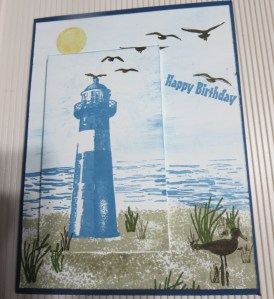
Saturday Sunday: Weekend Vibes

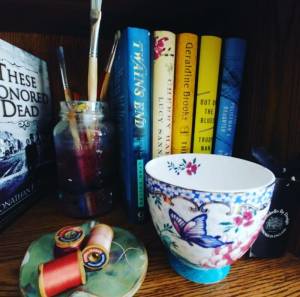
tea cup image

Photo by Stephanie Hopkins

I want to thank you all for your support and visiting Layered Pages. Have a bless weekend. See you on Monday!

“We always have to choose to live our lives to the fullest.  No one is better or worse than anyone else.  We are different and beautiful.” ~ Mattie Stepanek

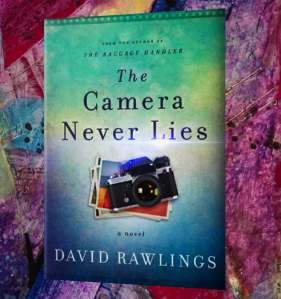
Cover Crush & Collage: The Camera Never Lies by David Rawlings

Tha Camera Never Lies

Book Collage by Stephanie Hopkins

I spotted this book on Facebook  and the title, colors of the background and the premise intrigued me. I have an older mix media art piece I created on Canvas that I thought would be perfect for a collage of this book. I took my image and the book cover and made digital art with them. I did sharpen and added a few little mediums to really make it pop. I think it turned out pretty cool.


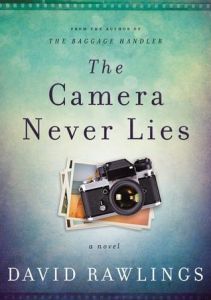
The Camera Never LiesThe Camera Never Lies

by David Rawlings

Daniel, Kelly, and Milly appear to be the perfect family. But an old camera will expose secrets no one wants developed.

Daniel Whitely is a successful marriage counselor and bestselling author, yet his own marriage is in crisis and his daughter is drifting further away each day. To make matters worse, the deadline for his second book has come and gone, and he still hasn’t written a single word.

When Daniel inherits an old camera from his grandfather, he notices an inscription on the bottom: “No matter what you think you might see, the camera never lies.”

Daniel begins using the camera, but every time he develops his photos, they threaten to reveal secrets that could sabotage both his marriage and his career—exposing him as a fraud and destroying the life he has worked so hard to build.

He’s faced with a choice: keep his secrets and save his career or come clean and possibly save his family. Which will he choose? Which would you choose?

*****

Cover Crush banner

Cover Crush is a weekly series that originated by Erin at Historical Fiction Reader 

Other book bloggers who participated in the great cover crushes series. 

Magdalena at A Bookaholic Swede
Colleen at A Literary Vacation
Heather at The Maiden’s Court
Holly at 2 Kids and Tired

(All book reviews, interviews, guest posts and promotions are originals. In order to use any text or pictures from Layered Pages, please ask for permission from Stephanie.)

The Secrets of J.P. Morgan’s Private Library

By Nancy Bilyeau

On March 27, 1902, leading architect Charles McKim had an appointment to see John Pierpont Morgan in Manhattan. Any time J.P. Morgan beckoned, people came running. He was the most powerful banker in America, the financier of railroads and the U.S. Steel purchase. That day McKim was astounded—and excited—to learn that Morgan wanted him to design a new building but not an office or bank. It was to be a private library to hold the banker’s overflowing collection of rare books, ancient treasures, sculptures, and paintings.

The library was planned for next door to Morgan’s house on Madison Avenue and 36th Street, McKim learned. As for its design, this was to be no simple collection of rooms to house books and other valuables. In his voracious collecting of valuables, Morgan seems to have seen himself as a Medici prince. So his library reflected that: McKim was hired to design an Italian Renaissance wonder built with Italianate marble, its rotunda boasting ceiling frescoes painted by Harry Siddons Mowbray that were fit for a cathedral.
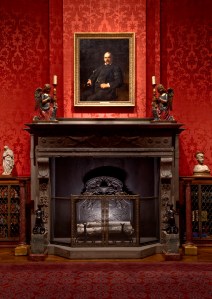
1. Pierpont Morgan's StudyMorgan had so much to house there. He collected Old Masters paintings and sculptures, tapestries, Regency furniture, bronzes, jewelry, armor, metalwork, illuminated manuscripts, Gutenberg bibles, ancient Babylonian cylinder seals, and medieval metalwork with gold.

And then there were the books. He bought Charles Dickens’ original manuscript of A Christmas Carol, with the author’s revision notes in the margin. Morgan owned the sole surviving manuscript of John Milton’s Paradise Lost, Henry David Thoreau’s journals, Thomas Jefferson’s letters to his daughter Martha, and rare letters to Jane Austen and Charlotte Bronte.

One of his most cherished acquisitions was the Lindau Gospels. Its importance was suggested by the designation it held: M1.  The gospels were written by monks in the 9th century and the jeweled covers were considered the finest treasures of the Carolingian age. The way Morgan acquired it was significant. His scholarly nephew, Junius Spencer Morgan, sent a telegram in code to him in July 1899 saying that the Lindau Gospels, in the possession of the Earl of Ashburnham, could be purchased, and the British Museum could not meet the asking price. “Morgan could: he paid 10,000—nearly $50,000—for something that would be valued at millions if it came on the market a century later,” wrote Jean Strouse in Morgan: American Financier.

6-Pierpont-Morgans-LibraryJunius Spencer was also the person who told the banker about a prospective librarian: a young brilliant woman named Belle da Costa Greene, who was then working at the Princeton University library. Once she came to work for Morgan at his library in 1906, she took charge and not only cataloged his acquisitions but helped him pursue new purchases.

Morgan loved his private library so much that he spent most of his time there instead of the bank office at 23 Wall Street. He worked out of his study, also known as the West Room. As Herbert Satterlee, Morgan’s son-in-law and first biographer, later recalled, “No one could really know Mr. Morgan at all unless he had seen him in the West Room. This was because the room expressed his conception of beauty and color in varied and wonderful forms.” The study had an antique wooden ceiling, stained glass windows, and red damask silk covering the walls.

Much of Morgan’s collection of books was stored in the main library room. The walls, reaching to a height of thirty feet, were lined floor to ceiling with triple tiers of bookcases fashioned of bronze and inlaid Circassian walnut. Above were ceiling frescoes, many of them showing astrological figures. Morgan was a member of the mysterious Zodiac Club in New York, which never had more or less than twelve members. Morgan is believed to have met with astrologers as well as psychics.

Another remarkable feature of the main room was two secret winding staircases that allowed people to move between the levels of bookshelves and balconies. Two staircases, concealed behind bookcases at the corners of the room, could only be revealed by pulling a certain lever.

And this was but one of the secrets contained in J.P. Morgan’s sumptuous, magical private library…

Article written by Author and Editor Nancy Bilyeau

********

Nancy BNancy Bilyeau is the author of the historical thrillers “The Blue” and “Dreamland” and the Tudor mystery series “The Crown,” “The Chalice,” and “The Tapestry.” She is a magazine editor who has lived in the United States and Canada.

In “The Blue,” Nancy drew on her own heritage as a Huguenot. She is a direct descendant of Pierre Billiou, a French Huguenot who immigrated to what was then New Amsterdam (later New York City) in 1661. Nancy’s ancestor, Isaac, was born on the boat crossing the Atlantic, the St. Jean de Baptiste. Pierre’s stone house still stands and is the third oldest house in New York State.

Nancy, who studied History at the University of Michigan, has worked on the staffs of “InStyle,” “Good Housekeeping,” and “Rolling Stone.” She is currently the deputy editor of the Center on Media, Crime and Justice at the Research Foundation of CUNY and a regular contributor to “Town & Country” and “Mystery Scene Magazine.”

Nancy’s mind is always in past centuries but she currently lives with her husband and two children in New York City.

Twitter

Facebook

Website

Amazon 

The Ghost of Madison Avenue 4 F3From the author of The Blue and the Joanna Stafford trilogy—a compelling mystery set in the faded glory of New York’s Gilded Age.

In this unforgettable story, bestselling author Nancy Bilyeau takes readers to J. P. Morgan’s private library in December 1912, when two very different people haunted by lost love come together in an unexpected way.

Helen O’Neill, part of a tight-knit Irish-American family in the Bronx, is only too happy to report to work at the spectacular private library built on Madison Avenue by millionaire financier J. P. Morgan. The head librarian, the brilliant and beautiful Belle da Costa Greene, had hired Helen away from the Metropolitan Museum of Art after she witnessed Helen’s unusual talent with handling artifacts.

Helen soon discovers the Morgan Library is a place like no other, with its secret staircases, magical manuscripts, and mysterious murals. But that’s nothing compared to a person Helen alone sees: a young woman standing on Madison Avenue, looking as if she were keeping watch. In learning the woman’s true link to the Morgan, Helen must face the pain of her own past. She finds herself with a second chance at happiness—if she has the courage.

From the author of The Blue, the Joanna Stafford trilogy, and the soon-to-be published Dreamland, set in 1911 Coney Island, comes The Ghost of Madison Avenue, a story both thrilling and moving.

Praise for Nancy Bilyeau’s Fiction

“Nancy Bilyeau’s passion for history infuses her books”
—Alison Weir, bestselling historian and novelist

On The Ghost of Madison Avenue:

“The Gilded Age splendors of the Morgan Library come to life in this wonderful, warm-hearted tale of Christmases past, present, and future. Bilyeau weaves a wealth of gorgeous period detail into her ghost story of old New York, delivering genuine chills, family drama, and poignant romance with equal skill. A gorgeous holiday treat!”
—Mariah Fredericks, author of Death of a New American

On Dreamland:

“This fast-paced, engrossing novel from Bilyeau … gives readers an up-close and personal view of New York’s Gilded Age”
Library Journal, starred review

“Beautifully written and impeccably researched, Dreamland is a rollicking ride.”
—Fiona Davis, author of The Chelsea Girls

“A marvelous book!”
—Ellen Marie Wiseman, author of What She Left Behind

On The Blue:

“Definitely a winner!”
—Kate Quinn, author of The Alice Network

“Fascinating”
—Ian Rankin, international bestseller

On the Joanna Stafford Trilogy:

“All the ingredients of the best historical fiction … will satisfy even the most ardent mystery fans.”
—Deborah Harkness, author of A Discovery of Witches

“Bilyeau deftly weaves extensive historical detail throughout, but the real draw of this suspenseful novel is its juicy blend of lust, murder, conspiracy and betrayal.”
Oprah Magazine

A New Year Of Layered Pages

Me2019 was an interesting year to say the least and I took a much-needed break from book reviewing among other things…I am slowly getting back in book reviewing but on a different scale altogether. I read 25 books in 2019 and hope to read the same amount for 2020! I have amazing mix media projects coming up for the year and I look forward to revealing them as the new year continues.
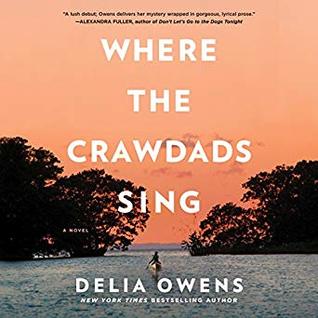
Today I want to share three highlight books I read in 2019.

Where the Crawdads SingHow long can you protect your heart?

For years, rumors of the “Marsh Girl” have haunted Barkley Cove, a quiet town on the North Carolina coast. So in late 1969, when handsome Chase Andrews is found dead, the locals immediately suspect Kya Clark, the so-called Marsh Girl. But Kya is not what they say. Sensitive and intelligent, she has survived for years alone in the marsh that she calls home, finding friends in the gulls and lessons in the sand. Then the time comes when she yearns to be touched and loved. When two young men from town become intrigued by her wild beauty, Kya opens herself to a new life – until the unthinkable happens.

Perfect for fans of Barbara Kingsolver and Karen Russell, Where the Crawdads Sing is at once an exquisite ode to the natural world, a heartbreaking coming-of-age story, and a surprising tale of possible murder. Owens reminds us that we are forever shaped by the children we once were, and that we are all subject to the beautiful and violent secrets that nature keeps.

***

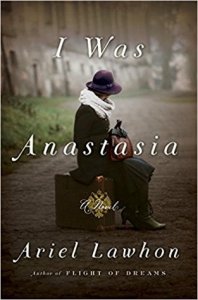
I Was Anastasia

Countless others have rendered their verdict. Now it is your turn.

Russia, July 17, 1918
Under direct orders from Vladimir Lenin, Bolshevik secret police force Anastasia Romanov, along with the entire imperial family, into a damp basement in Siberia where they face a merciless firing squad. None survive. At least that is what the executioners have always claimed.


Germany, February 17, 1920

A young woman bearing an uncanny resemblance to Anastasia Romanov is pulled shivering and senseless from a canal in Berlin. Refusing to explain her presence in the freezing water, she is taken to the hospital where an examination reveals that her body is riddled with countless, horrific scars. When she finally does speak, this frightened, mysterious woman claims to be the Russian Grand Duchess Anastasia.

Her detractors, convinced that the young woman is only after the immense Romanov fortune, insist on calling her by a different name: Anna Anderson.
As rumors begin to circulate through European society that the youngest Romanov daughter has survived the massacre, old enemies and new threats are awakened. With a brilliantly crafted dual narrative structure, Lawhon wades into the most psychologically complex and emotionally compelling territory yet: the nature of identity itself.
The question of who Anna Anderson is and what actually happened to Anastasia Romanov creates a saga that spans fifty years and touches three continents. This thrilling story is every bit as moving and momentous as it is harrowing and twisted.

***

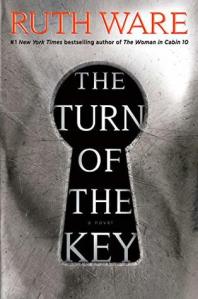
The Turn of the Key

Page-turning psychological thriller

When she stumbles across the advert, she’s looking for something else completely. But it seems like too good an opportunity to miss: a live-in nanny position, with a staggeringly generous salary. And when Rowan arrives at Heatherbrae House, she is smitten by the luxurious ‘smart’ home fitted out with all modern conveniences, by the beautiful Scottish Highlands, and by this picture-perfect family.

What she doesn’t know is that she’s stepping into a nightmare – one that will end with a child dead and her in a cell awaiting trial for murder.

She knows she’s made mistakes. But, she maintains, she’s not guilty – at least not of murder. Which means someone else is.

Full of spellbinding menace, The Turn of the Key is a gripping modern-day haunted house thriller from the Agatha Christie of our time.

***

I am continuing to sell fashion on Poshmark and I’m working on additions to my business as well. Can’t wait to share more.

Follow my closet @artsycouture42 and use my code: ARTSYCOUTURE42 to get a free $10 credit when signing up for Poshmark! www.poshmark.

Happy New Year!

Stephanie


History Surrounds Us With Stuart S. Laing

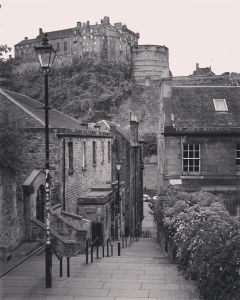
It is always a pleasure to have Author and history enthusiast Stuart S. Laing visit Layered Pages. He talks with me about the images he captures of Edinburgh and gives us a glimpse of it’s fascinating history! 

Stuart, I have been enjoying the photos of Edinburgh you have been posting on social media. Even though I haven’t had the chance to visit the city, it is on my bucket list! When you find an image to photograph, what is going through your mind?

Stuart

Stuart S. Laing

Thank you, and I would love to give you a guided tour around town one day. As to taking photos I think it just comes down to being in the moment. I love the architecture of the Old Town, the history surrounding you, and the energy of the people both local and visitors from all corners of the world. Trying to capture just a hint of that is such fun. But I am strictly of the point and click school of photography.

The architecture is certainly breathtaking!  You really do have a great eye for imagery. Which I believe is part of your story telling in books. What do you characters have to say about that?

I think Robert Young would agree with you. He would point out that the more you can see, the more you can know. A shady character like Shug Nicholls would prefer people not go prying into what he and his old adversary, Sergeant MacIan of the Town Guard, get up too. What I try to achieve with words is to paint the reader into the scene so they can be there and feel the cobbled streets beneath their feet and catch a waft of the stink from open sewers or the sweet aroma of perfumed ladies as they pass by.

I notice you choose a black and white medium for your pictures. Is there a particular reason why?

I think the benefit of black and white is it brings an element of doubt into a picture, was it taken yesterday or 50 years ago? It’s my attempt to try to capture the timelessness of a city which seems to never change on the surface but in reality has been in constant motion as old buildings crumble and new ones rise. The thing which saves Edinburgh from the anonymity which besets so many city centres is the fact that in large the centre of town has managed to escape the concrete and glass monstrosities of so many other old cities.

Edinburgh 6What do you love most about Edinburgh?

The simple answer is everything. As I mentioned earlier it’s the history, the buildings, the noise and the hustle and bustle. I know that many locals decry events which fill the centre of town such as the

Festival Fringe which draws tens of thousands daily throughout August but I actually love the crowds. I think that many forget that until the development of the New Town from the 1760s onwards, Edinburgh was largely shoehorned into a space smaller than many modern city parks. It was this which led to Edinburgh Old Town being home to the first skyscrapers as builders went up rather than out. So, for me, seeing those crowds is simply an echo of the past when the Royal Mile was home to shops, coffeehouse, stalls, animals, horses and carts all competing for space. These days there is little risk of having a cow squash your foot under its hoof so people probably should count their blessings

Edinburgh IIHow often do you get a chance to visit the city?

I try to get across as often as possible, and normally at least several times a year. Having a membership of Historic Scotland allows me unlimited entry to Edinburgh Castle which provides another excuse to pop over.


Edinburgh 7

Cowgate before the ‘improvements’ of the 1860s

What have you discovered on your adventures to be the most surprising?

Probably that despite all the changes Edinburgh has faced, urban planners, great fires, which destroyed a large area of the Royal Mile meaning that parts of the New Town are actually older than parts of the Old Town, is the fact that you can take the map of town drawn in the 1740s and use it to guide you through the streets, closes and wynds (alleyways) today. Even when regeneration meant the slum dwellings of the Cowgate were obliterated in the name of progress in the 1860s, the new homes and shops were all built on the footprint of what they replaced. It is still remarkably easy to walk from the Royal Mile to the south side of town following the exact same route you would have taken in the 15th, 16th, 17th or 18th century. That is what constantly inspires me to keep going back.

Edinburgh 4Describe Edinburgh to me from your mind.

Edinburgh, to me, is a strange combination of what you see and what you feel. When I stand on the cobbles by St Giles Cathedral in the very heart of town I don’t only see the beauty of the church before me but, in my mind, I also see the tall, grim walls of the old Tolbooth which once stood here, its location marked by brass markers set in the cobbles. It was here that William Burke, one half of the murderous duo with William Hare, met his end in 1829 on gallows built where the Tolbooth had once stood. It was from the Tolbooth that Captain Porteous of the Town Guard was seized by a mob who would lynch him in the Grassmarket. However it was also here where stalls once stood ran by women selling their wares such as home weaving and hand knitted clothes, fresh wild flowers and vegetables to the people of town. Nearby the famous poet Allan Ramsay operated the first circulating library which opened in 1725. That is what fascinates me about Edinburgh, the constant mixture between beauty and darkness. It was the city of Enlightenment when Scotland led the world in the advancement of science while at the same time huge crowds would gather in good humoured revelry to watch the public hangings in the street. The city itself presents visitors with its split personality. On one hand you have the cramped, towering tenements with the warren of narrow alleys running under and between them where every Close tells its own story and where you can get a taste of how the city once looked and felt, and occasionally smelled as you venture down them. Meanwhile only a short walk away you discover the elegance, charm and open, broad streets of the Georgian New Town where upmarket retailers and fashionistas can be found sipping artisan coffees in the streets where Robert Louis Stevenson grew up. That is what keeps drawing me back again and again. The dual nature of a city where everything changes and nothing does. If that doesn’t make sense you need to visit and spend a day just walking the streets and let some of fair Edina’s spirit work its way into your heart.

Stuart, thank you!

And thank you for allowing me to share my love of Auld Reekie with you. And remember that invite for a guided tour is always open.

Thank you, everyone for visiting Layered Pages today. Stay tuned for our follow up post about History Surrounds Us coming soon here at Layered Pages! -Stephanie

More About Stuart: 

Born and raised on the east coast of Scotland in the ancient Pictish Kingdom of Fife Stuart grew up looking across the Firth of Forth towards the spires and turrets of the city of Edinburgh and its castle atop its volcanic eyrie.

He has always been fascinated by the history of Auld Reekie and has spend most of his life studying Scottish history in all its aspects whenever he finds the time between family, work and the thousand and one other things that seek to distract him.
Despite the vast panorama of Scotland’s history he always find himself being drawn back to the cobbled streets of the Old Town. Those streets have provided the inspiration for his stories and characters.

He would urge all visitors to Scotland’s ancient capital to (briefly) venture into one of the narrow closes running down from the Royal Mile to get a flavour of how alive with mischief, mayhem, love and laughter these streets once were.

Stuart’s Facebook Pages where you can find more images from him and information about his stories HERE.

****

(All book reviews, interviews, guest posts and promotions are originals. In order to use any text or pictures from Layered Pages, please ask for permission from Stephanie Hopkins)


Magical Moments And Bookish Things

MeI hope everyone had a wonderful Christmas yesterday! I don’t know about y’all but I think my family consumed more calories in a day than we do in an entire week! Ha! Such at beautiful day yesterday with the Fam and just being at peace…

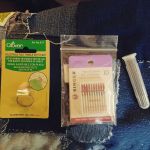
Sewing kitCheck out the sewing tools in the picture I was gifted! I am forever grateful for my family. The secret project I am working on was revealed to my daughter and she loves it! I won’t reveal it to y’all until its completed. Hoping that will be by the end of January.

On the book front, I’m one book away from being at my reading goal for the year. I’m so excited! I don’t read as many books in a year as I use too but twenty-five novels’ is nothing to sneeze at! I want to read fifty in the upcoming year but not sure that is doable with my new schedule. I’m not going to stress about it really. I’m just a planner when it come to books. It’s the hunt you see…if I don’t plan a little, I get swamped with trying to figure out which book I want to read next then it gets way too stressful! I guess that is good though because that means writers are still casting beautiful stories. Ok, I am sounding all over the place with this. Anyhow, the New Year of reading, hunting for new stories, and blogging about them will be thrilling!

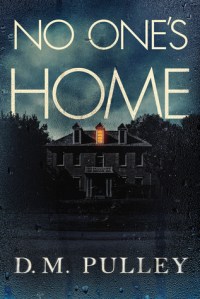
No One's HomeThis week I finished up No One’s Home by D.M. Pulley. There are highlights of the story I liked and a few moments where I wasn’t feeling it. However, it is a good story and one of the things I was fascinated with was about the Shakers. I actually would have liked to seen the history of that fleshed out more in the story. It certainly is a spooky story for sure.

Many blessing to you and yours and see you tomorrow!

Stephanie

Saturday Sunday: Book Collage & Lost Love

Book Art Nancys book

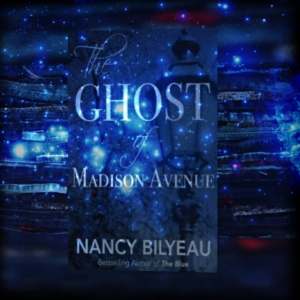
Author Nancy Bilyeau sent me a galley copy of her novella, The Ghost of Madison Avenue and the cover inspired me to create a mix media digital collage for the cover. I started reading the story Thursday night and I was so engrossed in the story, I read late into the night. What a perfect time to read this hauntingly good story.

My background choice for the collage comes from my own picture of a denim rag rug I sewed this week. The textures are digital stars and I felt they added a mysterious feel to the cover. Be sure to get your copy of this fabulous story on Amazon! My review coming soon! -Stephanie Hopkins

A Christmas Novella in Old New York

In this compelling and poignant story, bestselling author Nancy Bilyeau takes readers to New York City’s Morgan Library in December 1912, when two very different people haunted by lost love come together in an unexpected way.

Helen O’Neill, part of a tight-knit Irish-American family in the Bronx, is only too happy to report to work at the spectacular private library built on Madison Avenue by millionaire financier J. P. Morgan. The head librarian, the brilliant and beautiful Belle da Costa Greene, had hired Helen away from the Metropolitan Museum of Art after she witnessed Helen’s unusual talent with handling artifacts.

About Nancy Bilyeau

Nancy Bilyeau is the author of the historical thrillers “The Blue” and “Dreamland” and the Tudor mystery series “The Crown,” “The Chalice,” and “The Tapestry.” She is a magazine editor who has lived in the United States and Canada.

In “The Blue,” Nancy drew on her own heritage as a Huguenot. She is a direct descendant of Pierre Billiou, a French Huguenot who immigrated to what was then New Amsterdam (later New York City) in 1661. Nancy’s ancestor, Isaac, was born on the boat crossing the Atlantic, the St. Jean de Baptiste. Pierre’s stone house still stands and is the third oldest house in New York State.

Nancy, who studied History at the University of Michigan, has worked on the staffs of “InStyle,” “Good Housekeeping,” and “Rolling Stone.” She is currently the deputy editor of the Center on Media, Crime and Justice at the Research Foundation of CUNY and a regular contributor to “Town & Country” and “Mystery Scene Magazine.”

Nancy’s mind is always in past centuries but she currently lives with her husband and two children in New York City.

Creative Journey With Heather Hall

Today my friend Heather Hall is a guest on Layered Pages to share her creative journey with us. When I met Heather a few years ago I was thrilled to discover her creative side and it is always exciting to discover another paper crafter. Let’s get our craft on! 

Heather HallThank you for visiting with me today, Heather! Tell me how you got into card making?

I started making cards in the mid 90’s when a group of women where I lived started sharing different crafts that we did…. teaching each other. We got together once a month to work on new project and talk.  We talked a lot.  I learned to stencil, cross-stitch and card making.  Card making has stuck with me as it is so much fun.

 Is there a specific style you stick with or do you mix it up?

I like to try new techniques all the time, but find I revert back to simple but fun to make, as my favourite. I have been to card making classes and learned many new styles, but I also check out Pinterest, as there are so many creative ideas on there. Most of the time I try to take an idea and make it my own, using what supplies I have on hand. Online videos also give me many options.

 Are your cards available for sale and where can people reach out to you?

At the moment my cards are not for sale, I make them for family and friends, but my goal is to eventually sell them but I am not there yet.  I hope is to get this going in the New Year. So, stay tuned.

What are some ways you upcycle pieces you might use to make your creations?

I like to use other cards I receive to add to my new cards. I also try to save all my little scrap paper, using them in other project to not waste anything.  I like to reuse ribbon and lace from clothes, gifts and from supplies given to me.  Unique items like buttons add dimension to cards. I would like to add things like fabric to my cards, but haven’t done any yet. I love fabric and texture, so that is my next thing to try. I want my cards to be able to go in the mail without too much cost, so I can’t add too much bulk to it. I look forward to experimenting though.

How much time a week do you spend on your card making ?

I try to be creative a few hours a week at the moment, but in order to start selling them, I would like to expand my time to a couple of 7-hour days per week

Card making III

What advice would you give someone who wants to get into card making?

I would suggest that if you want to get into card making, that you find a group in your community, where you can meet and share stamps and supplies. To start out you will need to have a few basic items like a paper trimmer, adhesives, a few ink pads, card stock and a couple of stamps you really like. With these in hand you are ready to go. Card making supplies are available at many stores and online.  The sky is the limit, but working with others and sharing will help you to get started, without much expense.

Most important to me is to have fun, start out with a simple design and move on from there.

A Weekend Of R&R

MeGood morning and happy Monday! I hope you all had two days of rest and renewal to start off the new week right.

The last few days I’ve had a bad cold and I rested in my recliner all weekend while working on my projects, exploring new ideas, stitch doodling, prepping upcoming projects, reflecting and being in the present. I thought a lot about blending the old with the new and the re-purpose ones clothes, and what it means for the environment. For a deep appreciation of keeping the old ways of mending and sewing alive. I also reflected on my creations and how I express them. For me, there is no wrong way in doing so.

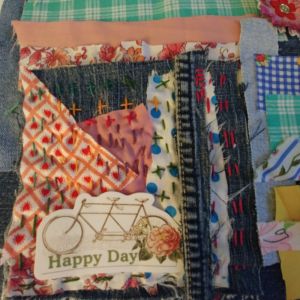
January CollageSaturday I was working on my secret project pretty much all day then decided to take a break from it and prep scraps for a Sashiko/Boro influence/ mix media art collage project I’m starting in January. I haven’t sewed any of the fabrics down yet. I’m still in the process of placing the fabrics. Anyhow, it’s going to be about a 12×12 collage. I’ll probably frame it once its completed or if I change my mind, use the collage in another project. There is no pressure in making a final decision. I did go ahead and slow stitched on denim square.

I would really like to stress that your stitches don’t have to be perfectly straight. Make your creations your own. That is unless you’re working on a art piece for someone who is paying for straight stitches, if its something you prefer or working with patterns. Please keep in mind that slow stitching is forgiving and if you are not satisfied with what you stitched, you can go back and change it. Enjoy the process. Slow down and breath.

Sunday was another day of resting and a bit of planning for the pattern of my Denim Rag Quilt. I arranged my Grandmother’s scraps the way I want them-for the most part. I need to put a lighter denim square in the upper right corner. I did play around with some visible stitching on one of the quilt squares. The process was so relaxing! I won’t be doing stitching patterns on all of them. However, I’m slow stitching on the scrap patches. I’m sewing this quilt by hand as much as possible.

I’ve been jumping around on projects this weekend. That’s how I roll!

Follow my closet @artsycouture42 and use my code: ARTSYCOUTURE42 to get a free $10 credit when signing up for Poshmark! www.poshmark.

See you next time! Bye for now.

Stephanie


Projects Galore

Before I went to bed I started cutting my first pair of old jeans for several projects. I will be making patches with the legs for a denim rag quilt. Since the pockets have buckles on this pair, I’ll use them for another project. The scraps of hem and waist from the jeans will be used to make place mats and throw rugs. The remaining scraps I’ll use for my mix media art projects. Many and I mean many more jeans to prep for these projects. This will take time as I’m doing this on my free time from work, family life, visiting friends, reading, writing, visible mending project, blogging and Poshing on Poshmark so I’ll post updates on here once in awhile. Okay, I’ll just fess up right now. As you can see I have A LOT going on and adding more projects to the mix is a bit nuts. Oh, did I mention I’m also working on Acrylic Painting for wall hangings as well? Yikes. I need to prioritize or put something on the back burner. Yeah…y’all think? But hey, I love it all and I don’t think my brain knows how to shut down. Anyhow, it will all work out. Somehow. *laughing*