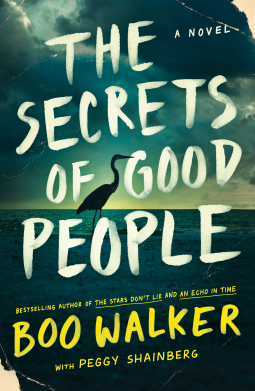
Book Review: The Secrets of Good People by Boo Walker; Peggy Shainberg

Pub Date Mar 18 2025 by Lake Union Publishing

On a tiny island off Paradiso, Florida, in 1970, neighbors gather to toast two new arrivals: shy Catherine and her taciturn husband, Dr. Frank Overbrook, who is taking over an old friend’s medical practice. It’s an intimate welcoming for the newlyweds, who have abandoned city life for swaying palms and an ocean breeze. But the morning after is anything but peaceful when Frank is found dead on the beach.

Detective Quentin Jones has his eyes on the island’s residents and the welcome party’s guest list. There’s the retiring doctor and host, as well as his nurse. Volatile marrieds Miriam and her husband, David, constantly at each other’s throats. The Carters, a strangely antisocial young couple. And Sylvie, a blind sculptor to whom Quentin lost his heart years ago.

But which one is a murderer? As the investigation unravels a close-knit group of friends, secrets are exposed—and more than one of them is worth killing for.

My thoughts:

I love a good mystery with all the right elements and this one is just the ticket. The story is compelling with intriguing and complex characters. Anyone of the people on the small island could have been the murderer and the motives are stacked high! Quentin Jones makes a great laid-back detective and completely unassuming with his breezy, casual Florida attire which helps him fit right in with the close-knit community.

I must confess I haven’t read stories by these authors before and what first caught my attention to the book was that it takes place in Florida-my home state. The premise sounded so intriguing and I wanted to know how the authors depict the setting for the story. Florida is an interesting place to say the least and what I mean by that is the people. I was thrilled that they chose the 1970s for this story because that period is still remnants of old Florida. If you’re not from Florida, you may not know what I’m talking about. Well, this story depicts a little of that and the small-town atmosphere of its native Floridians. I am pleased I chose this story and I found it engaging and the mystery had me guessing until the big reveal.

I rated this book four stars and I obtained a review copy from the publishers through NetGalley for an honest review.

I must caution you, there is a little spice in this story. I did skip over it but luckily, the scene was brief. Also there is a little profanity but not so much that it overwhelming or on a whole lot of pages, thankfully.

Stephanie

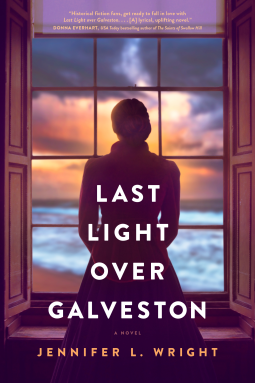
Book Review: Last Light Over Galveston by Jennifer L. Wright

Historical \ Fiction Christian \ Fiction

Expected publication August 12, 2025 by Tyndale

About the book:

Galveston, Texas. September 1900. Only months ago, Kathleen McDaniel returned from finishing school in Switzerland to her family home in New York’s Hudson Valley with a future of promise and privilege set before her. But one horrific event shattered her picturesque life. Now she has fled as far as the train line and a pocketful of money would take her, finding refuge at the St. Mary’s Orphan Asylum on Galveston Island, where she helps the nuns care for their young charges and prays her past will not find her. Despite her tenuous standing at the orphanage—and the grief and betrayal that drove her from home—Kathleen slowly begins to make friends. There is Emily, the novice nun she rooms with; Maggie, the tempestuous young girl who only bonds with Kathleen; and Matthew, a kind, handsome man recently employed by Isaac Cline at Galveston’s office of the US Weather Bureau.

Then in one fateful day, Kathleen’s fragile new life begins to crack as it becomes clear that she can’t run far enough to escape the reach of her former life. Meanwhile, as troubling news about a storm crossing the Gulf from Cuba swirls in the Weather Bureau offices, Matthew holds fast to Cline’s belief that no hurricane can touch Galveston. But as darkness falls on the island, Kathleen must gather her courage and reach for a strength beyond her own if she—and those she loves—are to survive.

My thoughts:

Last Light over Galveston is a story of perseverance during the historic, deadly and catastrophic hurricane in Galveston, Texas in September of 1900. This story also touches on human greed, selfishness, and cruelty at the expense of others that people tend to look down on in life. What is even more maddening is how the people involved justified their corrupt actions. Jennifer Wright does a marvelous job at showing the realities of life that is too often overlooked in my opinion.

The main character Kathleen McDaniel is a person who -at all odds- breaks away from the cruelty of her situation in life and on doing so finds herself in greater danger as the storm hits land. I was completely immersed in her plight and I felt as I if was right beside her going through what she was going through.

I did know about this hurricane prior to reading this book but I didn’t know all the details and how bad it actually was. Once I finished this story, I did a bit of research and I was really struck more so on Wrights depiction of the storm and the period in which the events took place.

The author does a brilliant job at pulling in her readers and I highly recommend this story to all and I want to encourage everyone who read the book to embrace the message of this story with an open heart.

I rate this book five stars and my gratitude and thanks to the publisher for an ARC through NetGalley for an honest review.

Stephanie

Reader’s Log 044: Latest Reads

This past weekend I was able to fit in a lot of reading time. I’m making a conscious decision to focus more on reading for reviews in the evening times before bed. I’ve gotten busy with so many other things that my reading pile for reviewing was somewhat neglected. It surely is time to get back on track!

I’ve chosen the evening times for focusing on my review pile because in the mornings I do my Bible studies, history studies and research. That is a good schedule for me and I’m wanting to stick to it! Sometimes life gets in the way but it’s important to regroup or make changes if it isn’t working out.

I would really like to get to the place where I’m posting book reviews every four to eight days. I probably could make that work if I don’t stress about it. We will see what happens. On top of reading and studying, I’m also working on my art. Now that is a juggle to stay consistent with everything. So many things to do, so little time…

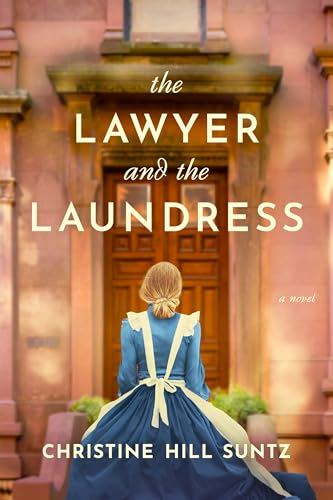
Yesterday I started reading “The Lawyer and the Laundress” by Christine Hill Suntz and I’m enjoying it so far. Here is the book description: Canada, 1837. Widower James Kinney knows his precocious daughter, Evie, needs more than his lessons on law and logic, but Toronto offers few options. Classes with the neighbor children seem ideal until James discovers Evie is secretly spending her time with Sara O’Connor, a kind and mysteriously educated servant. For propriety’s sake, James forbids their friendship. But then Evie falls victim to the illness ravaging the city, and James must call upon Sara’s medical knowledge and her special bond with Evie to save his daughter’s life.

When Sara’s presence in his household threatens scandal, however, James offers an unexpected become his wife, in name only, and help him raise Evie to be a proper young lady.

If Sara can ignore the sparks she feels when they’re together, his logical proposal could keep her secret secure forever. But soon, the forces of rebellion unravel their tidy arrangement. When James is accused of treason, Sara must find the courage to face a past that could save her husband’s life.

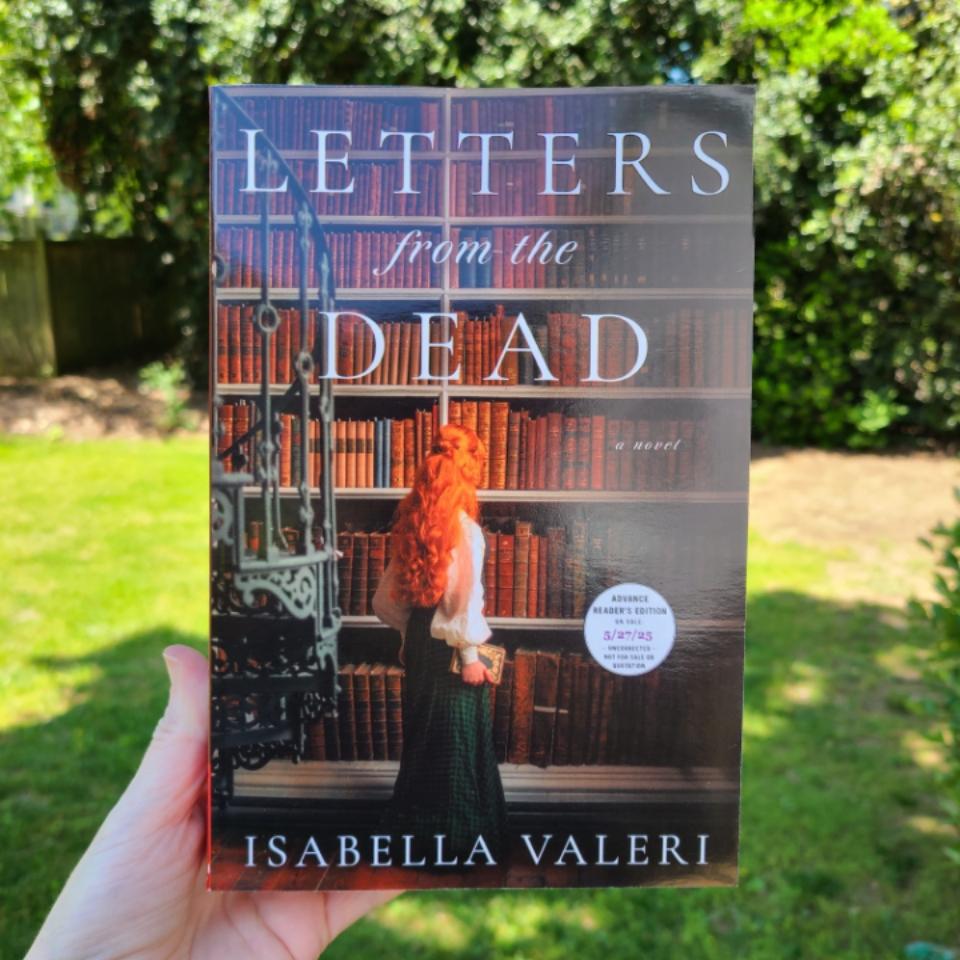
I’m also trying to finish up “Letters from the Dead” by Isabella Valeri and I must confess I’m struggling to get though it which has caused me to get behind on posting my review. Here is the description of the book: For the first eleven years of her life, the precocious daughter of a great European family tracing its roots back more than fifteen generations, never set foot on land that her family didn’t own. Cloistered on a sprawling estate in the Alpine foothills, as the youngest sibling of her generation she has little knowledge of the dark forces gathering in the shadows to strike at her family. But, when her insatiable curiosity leads her to uncover a priceless text hidden hundreds of years before, she shines light into corners meant to be left in the dark and threatens to uncover secrets that could trigger an internecine battle for succession.

Then, with no warning or explanation, she is whisked away on a private jet and exiled to an elite but isolated all-girls boarding school in the United States. More than a decade later, now in her twenties, she finds her bank accounts abruptly frozen by her family. She is recalled from her affluent but empty existence abroad. Little does she know that her family has plans for her, including an arranged marriage. Worse, as she draws closer to discovering the horrific act that sent her into exile a decade before, and shadowy enemies close in on her family, she must face her most dangerous and powerful foe: her own father.

I’ve also started reading, The Lies They Told by Ellen Marie Wiseman (I have an advance reader’s copy) and a book about Cyrus the Great.

Stephanie

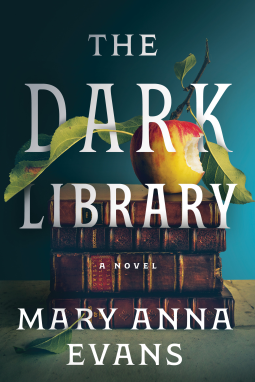
Book Review: The Dark Library by Mary Anna Evans

Publish Date June 24, 2025 by Poisoned Pen Press

Historical Fiction | Mystery & Thrillers

Years after leaving home due to her father’s suffocating and oppressive treatment, Estella receives a phone call from Annie-her family’s housekeeper-that she must come home. Estella’s father has had a stroke that caused his death and her mother has gone missing. When she returns home, everything is disjointed and up in the air and she takes a teaching position at the college where her father influence was powerful to say the least. Not only that, their family house is celebrated throughout the decades and her Father’s library holds rare books that her father closely guards and with strict orders, Estella is not allowed to touch the books.

With her father’s death, her mother missing and the war that is raging on, Estella must figure out how she will support Annie, the house and the gorgeous land it sits on. The more she looks into her father’s and mother’s life, she realizes how much she doesn’t know about them and the secrets they have kept.

This Gothic tale of mystery, buried secrets, death, family and local town intrigue begins slowly and half way through the story, unfolds in a major way. I must confess, at first, I didn’t have high hope for this story but as the plot reveals itself, you have a better understanding of why the story starts out the way it does. It gave me a better understanding of the-bread crumbs-if you will- the author was dropping. You won’t be shown an explanation of why the story is called “The Dark Library” until the second half of the book and it is a shocker! I did not see that coming a mile away. The premise of this story is unique and the author sure can weave a story of intrigue and deceptive people that leaves you trusting no one. The ending does tie up loose ends the reader wonders about and I want to encourage readers who might be frustrated with the beginning to rally on. You won’t regret it.

A truly atmospheric story with Gothic themes, deadly secrets and twisty turns of events that has you racing to the end to discover the deceptions, truths and the fate of Estella and the people in her life.

I rated this book four stars and I obtained an ARC from the publishers through NetGalley for an honest review.

Stephanie

Reader’s Log 042: Books on Cyrus the Great

Ancient history is fascinating and so relevant to our present time. Once one takes a deep give into cultures and the rise and falls of civilizations, you see patterns of these events more clearly. This has been my experience since I’ve started this journey and I see so many events that are happening today in a different light. This has led me to read more about the Persian, Hellenistic, and the Hasmonean periods to the the beginning of the Roman period BC. Over my lifetime I feel like I’ve only done surface studies of these periods and I want to be more than just a generalist of these histories. Since I’ve decided to go this route, I realize I need to be a bit more methodical in my research. Which isn’t always easy since there are so many paths in the details one uncovers that can easily lead you down a rabbit hole!

Today, I thought I would share three books about Cyrus the Great that I have on my wish-list. I’ve always been intrigued by him, particularly because he freed the Jews from their Babylonian exile.

I’m curious about comparing these books as well as seeing what each writer has to say about Cyrus. Most likely, I will take my time with these readings and take breaks.

Stephanie

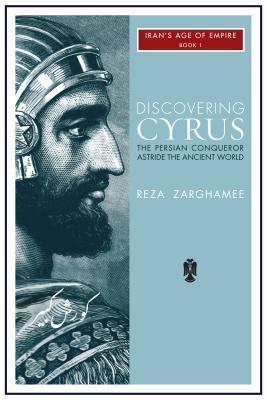
Discovering Cyrus: The Persian Conqueror Astride the Ancient World by Reza Zaghamee

Some of the most fascinating human epochs lie in the borderlands between history and mystery. So, it is with the life of Cyrus the Great, founder of the Persian Empire in the sixth century BCE. By conquest or gentler means, he brought under his rule a dominion stretching from the Aegean Sea to the Hindu Kush and encompassing some tens of millions of people. All across this immense imperium, he earned support and stability by respecting local customs and religions, avoiding the brutal ways of tyranny, and efficiently administering the realm through provincial governors. The empire would last another two centuries, leaving an indelible Persian imprint on much of the ancient world. The Greek chronicler Xenophon, looking back from a distance of several generations, wrote: “Cyrus did indeed eclipse all other monarchs, before or since.” The vision of the biblical prophet known as Second Isaiah anticipates Cyrus’ repatriation of Jews living in exile in Babylon with these words of the Lord: “He is my shepherd and will accomplish all that I please.”

Despite what he achieved and bequeathed, much about Cyrus remains uncertain. Persians of his era had no great respect for the written word and kept no annals. The most complete accounts of his life were composed by Greeks. More fragmentary or tangential evidence takes many forms – among them, archaeological remains, administrative records in subject lands, and the always tricky stuff of legend.

Given these challenges, Discovering Cyrus: The Persian Conqueror Astride the Ancient World is a remarkable feat of portraiture. In his vast sweep, Reza Zarghamee draws on sources of every kind, painstakingly assembling detail, and always weighing evidence carefully where contradictions arise. He describes the background of the Persian people, the turbulence of the times, and the roots of Cyrus’ policies. His account of the imperial era itself delves into religion, military methods, commerce, court life, and much else besides. The result is a living, breathing Cyrus standing atop a distant world that played a key role in shaping our own.

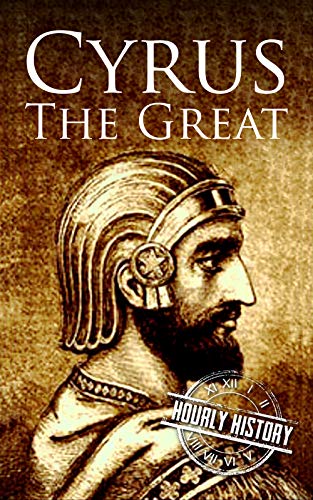
Cyrus the Great: A Life from Beginning to End by Hourly History

Cyrus II of Persia was one of the greatest leaders that the world had ever known; he was the one in whose footsteps other empire builders would follow. From Alexander the Great to countless Roman emperors and Ottoman sultans—it was the mighty shoes of Cyrus that they all attempted to fill.

More than merely a successful conqueror, Cyrus the Great is known just as much for being a great liberator as he is known for his conquests. He was even credited in the Bible as the one who freed the Jews from their long-held Babylonian exile. By the time of his death, Cyrus controlled more land and people than anyone before him. Under his dominion were countless principalities, nationalities, ethnicities, and religions of all kinds. In contrast to many other powerful rulers, Cyrus did not seek to oppress his subjects or interfere with their way of life, religions, or local customs. It is for this reason that, as great as his temporal conquests may have been, the benevolence of Cyrus the Great’s leadership stands as his greatest attribute of all.

The life of Cyrus the Great remains as an unparalleled testament in the annals of history.

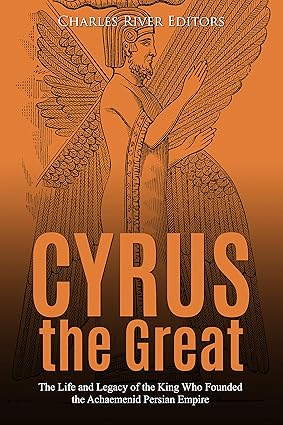
Cyrus the Great: The Life and Legacy of the King Who Founded the Achaemenid Persian Empire by Charles River Editors

“I am Cyrus the king, an Achaemenian.” – An inscription found at the Persian capital of Pasargadae

At one point in antiquity, the Achaemenid Persian Empire was the largest empire the world had ever seen, but aside from its role in the Greco-Persian Wars and its collapse at the hands of Alexander the Great, it has been mostly overlooked. When it has been studied, the historical sources have mostly been Greek, the very people the Persians sought to conquer. Needless to say, their versions were biased.

It was not until excavations in the region during the 20th century that many of the relics, reliefs, and clay tablets that offer so much information about Persian life could be studied for the first time. Through archaeological remains, ancient texts, and work by a new generation of historians, a picture can today be built of this remarkable civilization and their most famous leaders.

When considering this empire’s rulers, the two most often referenced are Xerxes, the leader of the Persian invasion of Greece which caused the heroic sacrifice of the Spartans and their allies at Thermopylae, or Cyrus the Great, the man who created the empire. While he was one of the most influential men in the ancient world, research on Cyrus the Great is simultaneously fascinating and frustrating. The Persians’ ancestors did not write (in fact, in their epic poems and myths, they claim that it was something taught to man by demons and therefore something to be avoided), and though the Iranians had taken up writing in their governmental and administrative functions by the time Cyrus lived, the kings still did not learn to write. Put simply, it was considered a functional skill, but not of the greatest importance.

As a result, while plenty of ancient sources mention the great Persian king, Persian sources themselves are rare, and those sources that do exist, such as the Babylonian Chronicle, are largely dry and state only the basic facts and large events. By contrast, Greek sources about Cyrus embrace the artistic aspect of their work so highly that the accuracy often comes into question, and sometimes deep scrutiny is necessary to attempt to separate the fact from the fiction. In the end, the full truth about Cyrus and his reign may never be truly understood.

Of course, this reality has deepened the mystique that surrounds Cyrus even to this day, and it has elevated his status from conqueror and king to enlightened humanist monarch and ideal ruler. In fact, a modern misconception based on the Cyrus Cylinder has labeled him the first proponent of civil rights, though this is somewhat of an exaggeration. The argument hinges on the Cylinder being a unique artifact in listing the ideology by which Cyrus intended to rule, but it equally ignores the fact that such declarations were commonplace among kings of the ancient Near East and more a tool of monarchal propaganda than a sweeping declaration of human rights.

That said, Cyrus was a fair and rational leader, particularly compared to the many brutal kings and warlords of ancient times. The high praise he received, even from his enemies, must certainly not be dismissed, and the admiration directed toward him came from many other exceptional individuals, including Alexander the Great, a bitter enemy of the empire Cyrus founded. Whatever the underlying issues, the incredible achievements of Cyrus distinguish him as one of the greatest kings in history, and his life, conquests, reforms, and rule continue to be of great interest over 2,500 years later.

Cyrus the Great: The Life and Legacy of the King Who Founded the Achaemenid Persian Empire looks at the life of the Persian leader and the major legacy he left. Along with pictures depicting important people, places, and events, you will learn about Cyrus the Great like never before.

Reader’s Log 041: The West and Islam

For many years now, I’ve been quietly studying Islam starting with its origins to the present day and have maybe told two or three people in my acquaintance. When it comes to religions, cults and religious laws and culture, I tend to do deep dives into these areas. After all, studying religions is the backbone of knowing about civilizations and cultures throughout history. In all honestly, you can’t have one without the other. I discovered Raymond Ibrahim’s works a while ago and I’ve been following his interviews and his YouTube channel. I tend to do this with scholar’s and historian’s nonfiction works I’m considering reading. That is to say, I want to know a bit about their background before I invest my time and money. I do read books on said topics from writer’s I might disagree with or hold a different religious background. I’m looking forward to reading the three books listed below in the near future for further study and I’m curious about the takeaways I will have from them. The Two Swords of Christ is coming out in November of this year.

Stephanie

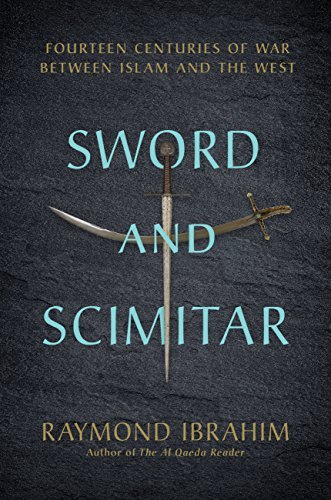
Sword and Scimitar: Fourteen Centuries of War between Islam and the West by Raymond Ibrahim, Victor Davis Hanson (Foreword)

A sweeping history of the often-violent conflict between Islam and the West, shedding a revealing light on current hostilities

The West and Islam–the sword and the scimitar–have clashed since the mid-seventh century, when, according to Muslim tradition, the Byzantine emperor rejected Prophet Muhammad’s order to abandon Christianity and convert to Islam, unleashing a centuries-long jihad on Christendom.

Sword and Scimitar chronicles the significant battles that arose from this ages-old Islamic jihad, beginning with the first major Islamic attack on Christian land in 636, through the occupation of the Middle East that prompted the Crusades and the far-flung conquests of the Ottoman Turks, to the European colonization of the Muslim world in the 1800s, when Islam largely went on the retreat–until its reemergence in recent times. Using original sources in Arabic, Greek, Latin, and Turkish, preeminent historian Raymond Ibrahim describes each battle in vivid detail and explains the effect the outcome had on larger historical currents of the age and how the military lessons of the battle reflect the cultural faultlines between Islam and the West.

The majority of these landmark battles are now forgotten or considered inconsequential. Yet today, as the West faces a resurgence of this enduring Islamic jihad, Sword and Scimitar provides the needed historical context to understand the current relationship between the West and the Islamic world, and why the Islamic State is merely the latest chapter of an old history.

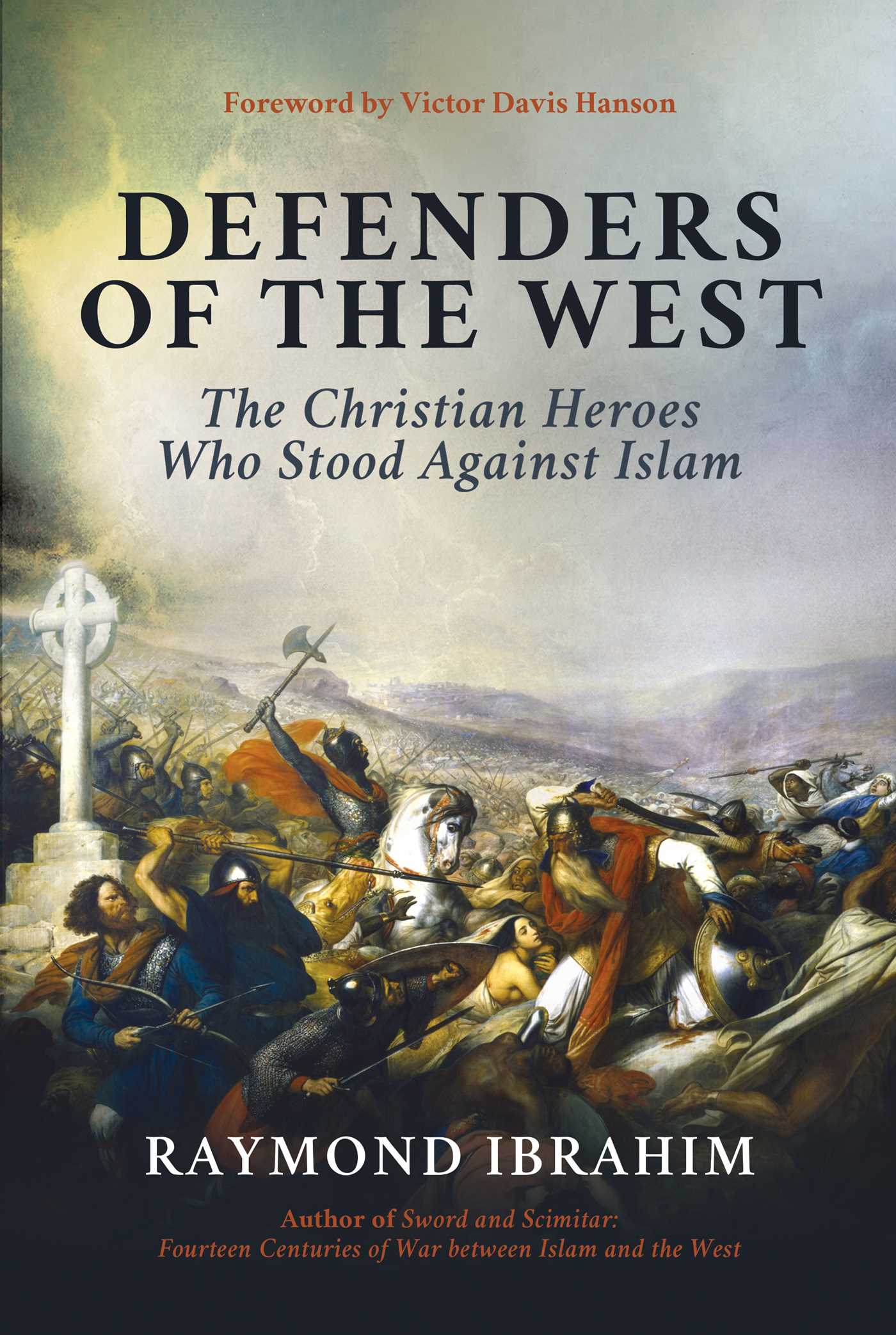
Defenders of the West: The Christian Heroes Who Stood Against Islam by Raymond Ibrahim

A riveting account of the lives and epic battles of eight Western defenders against violent Islamic jihad that sheds much-needed light on the enduring conflict with radical Islam.

In Defenders of the West, the author of Sword and Scimitar follows up with vivid and dramatic profiles of eight extraordinary warriors—some saints, some sinners—who defended the Christian West against Islamic invasions. Discover the real Count Dracula, Spain’s El Cid, England’s Richard Lionheart, and many other historical figures, whose true and original claim to fame revolved around their defiant stance against jihadist aggression. With sixteen full color pages of photos and illustrations, Defenders of the West is an instructive and inspiring read. Whereas Sword and Scimitar revolved around decisive battles, this book revolves around decisive men.

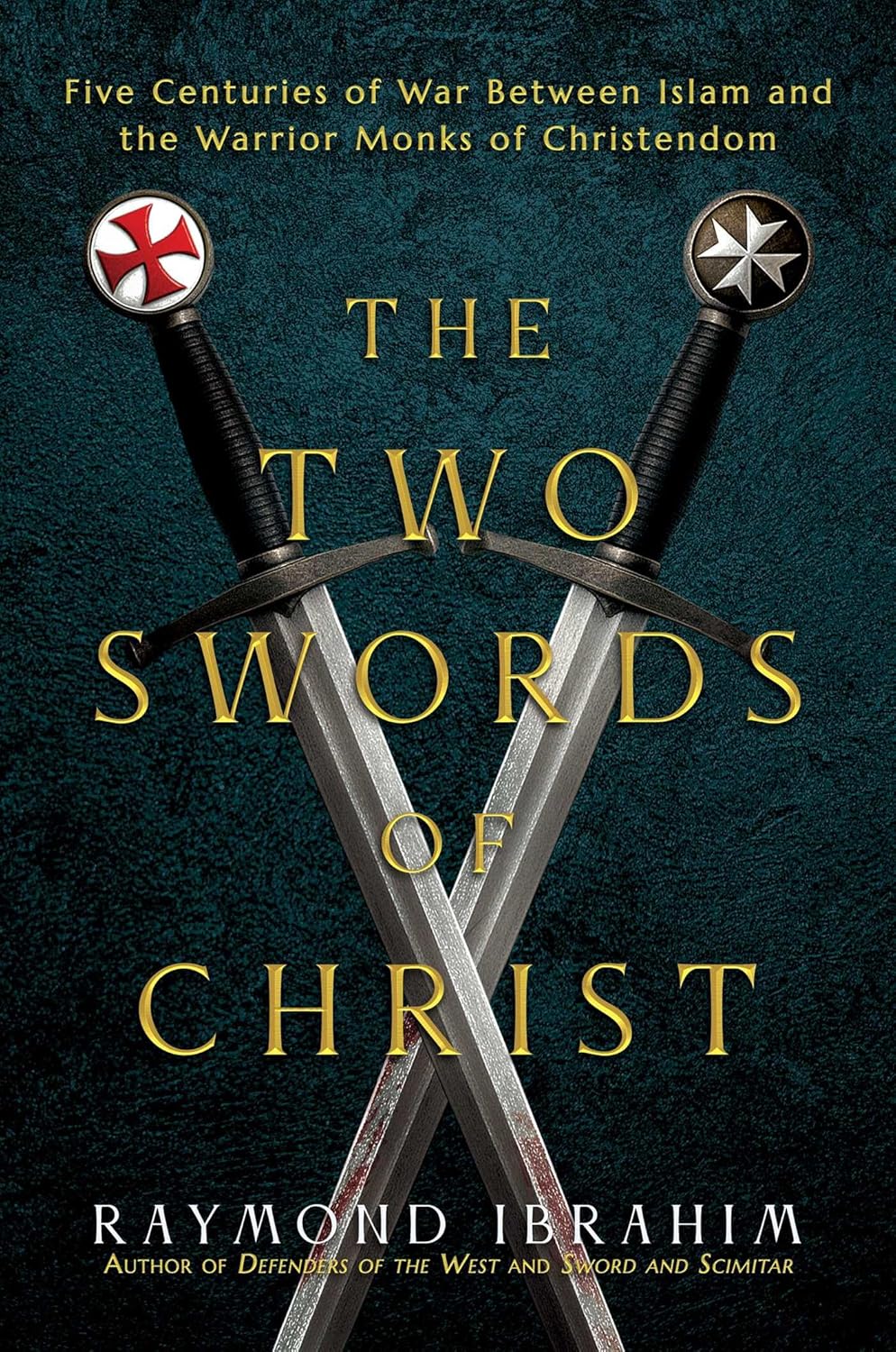
The Two Swords of Christ: Five Centuries of War between Islam and the Warrior Monks of Christendom by Raymond Ibrahim

Pub Date: November 25, 2025 and is available for pre-order on Amazon.

The definitive account of the warrior-monks who stood as Christendom’s shield against centuries of relentless Islamic aggression and a superlative example of Muscular Christianity for an era marred by effete and effeminized forms of the faith.

In this magisterial history, Raymond Ibrahim chronicles the long and brutal conflict between Islam and the West through the eyes and lives of Christendom’s original commando forces: the knights of the Temple and Hospital. These warrior monks, whose unprecedented fusion of piety and militancy remains unmatched to this day, played a pivotal—though overlooked if not suppressed—role in defending Christian civilization against the onslaught of Islamic forces during the Crusades and beyond.

Drawing on an exhaustive study of primary sources, and infused with his signature blend of rigorous scholarship and compelling storytelling, Ibrahim’s groundbreaking work far transcends the typical constraints of modern academic retellings, debunks widely held myths (such as the persistent claim that the Templars evolved into the Freemasons), and uncovers the theological foundation that gave rise to and provided justification for these military orders. In line with Christ’s now ignored directive that “two swords” are “enough” (Luke 22:38), these two brotherhoods wielded both spiritual and martial power to safeguard the faith.

WARNING: Brimming with epic battles, stunning heroism, and self-sacrificial martyrdom against the savage hordes of Islam, The Two Swords of Christ—the third installment of Ibrahim’s trilogy (following Sword and Scimitar and Defenders of the West)—stands as his fiercest and most violent narrative to date.

About Author:

(Bio and Picture from goodreads)

RAYMOND IBRAHIM is a widely published author, public speaker, and Middle East and Islam expert. His books include Crucified Again: Exposing Islam’s New War on Christians (2013) and The Al Qaeda Reader (2007). His writings, translations, and observations have appeared in a variety of publications, including Fox News, Financial Times, Jerusalem Post, Los Angeles Times, New York Times Syndicate, United Press International, USA Today, Washington Post, Washington Times, and Weekly Standard; scholarly journals, including the Almanac of Islamism, Chronicle of Higher Education, Jane’s Islamic Affairs Analyst, Middle East Quarterly, and Middle East Review of International Affairs; and popular websites, such as American Thinker, the Blaze, Bloomberg, Christian Post, FrontPage Magazine, Gatestone Institute, the Inquisitr, Jihad Watch, NewsMax, National Review Online, PJ Media, VDH’s Private Papers, and World Magazine. He has contributed chapters to several anthologies and been translated into various languages.

Ibrahim guest lectures at universities, including the National Defense Intelligence College, briefs governmental agencies, such as U.S. Strategic Command and the Defense Intelligence Agency, provides expert testimony for Islam-related lawsuits, and has testified before Congress regarding the conceptual failures that dominate American discourse concerning Islam and the worsening plight of Egypt’s Christian Copts. Among other media, he has appeared on MSNBC, Fox News, C-SPAN, PBS, Reuters, Al-Jazeera, Blaze TV, CBN, NPR, and dozens of radio interviews.

Ibrahim’s dual-background—born and raised in the U.S. by Coptic Egyptian parents born and raised in the Middle East—has provided him with unique advantages, from equal fluency in English and Arabic, to an equal understanding of the Western and Middle Eastern mindsets, positioning him to explain the latter to the former. His interest in Islamic civilization was first piqued when he began visiting the Middle East as a child in the 1970s. Interacting and conversing with the locals throughout the decades has provided him with an intimate appreciation for that part of the world, complementing his academic training.

Raymond received his B.A. and M.A. (both in History, focusing on the ancient and medieval Near East, with dual-minors in Philosophy and Literature) from California State University. There he studied closely with noted military-historian Victor Davis Hanson. He also took graduate courses at Georgetown University’s Center for Contemporary Arab Studies—including classes on the history, politics, and economics of the Arab world—and studied Medieval Islam and Semitic languages at Catholic University of America. His M.A. thesis examined an early military encounter between Islam and Byzantium based on arcane Arabic and Greek texts.

Ibrahim’s resume includes serving as Associate Director of the Middle East Forum and working as a Reference Assistant at the Near East Section of the Library of Congress, where he was often contacted by, and provided information to, defense and intelligence personnel involved in the fields of terrorism and area studies, as well as the Congressional Research Service.

He resigned from both positions in order to focus exclusively on researching and writing and is currently a Shillman Fellow at the David Horowitz Freedom Center, an associate fellow at the Middle East Forum, a Hoover Institution Media Fellow (2013), and a CBN News contributor.

Reader’s Log 040: Book Spotlight

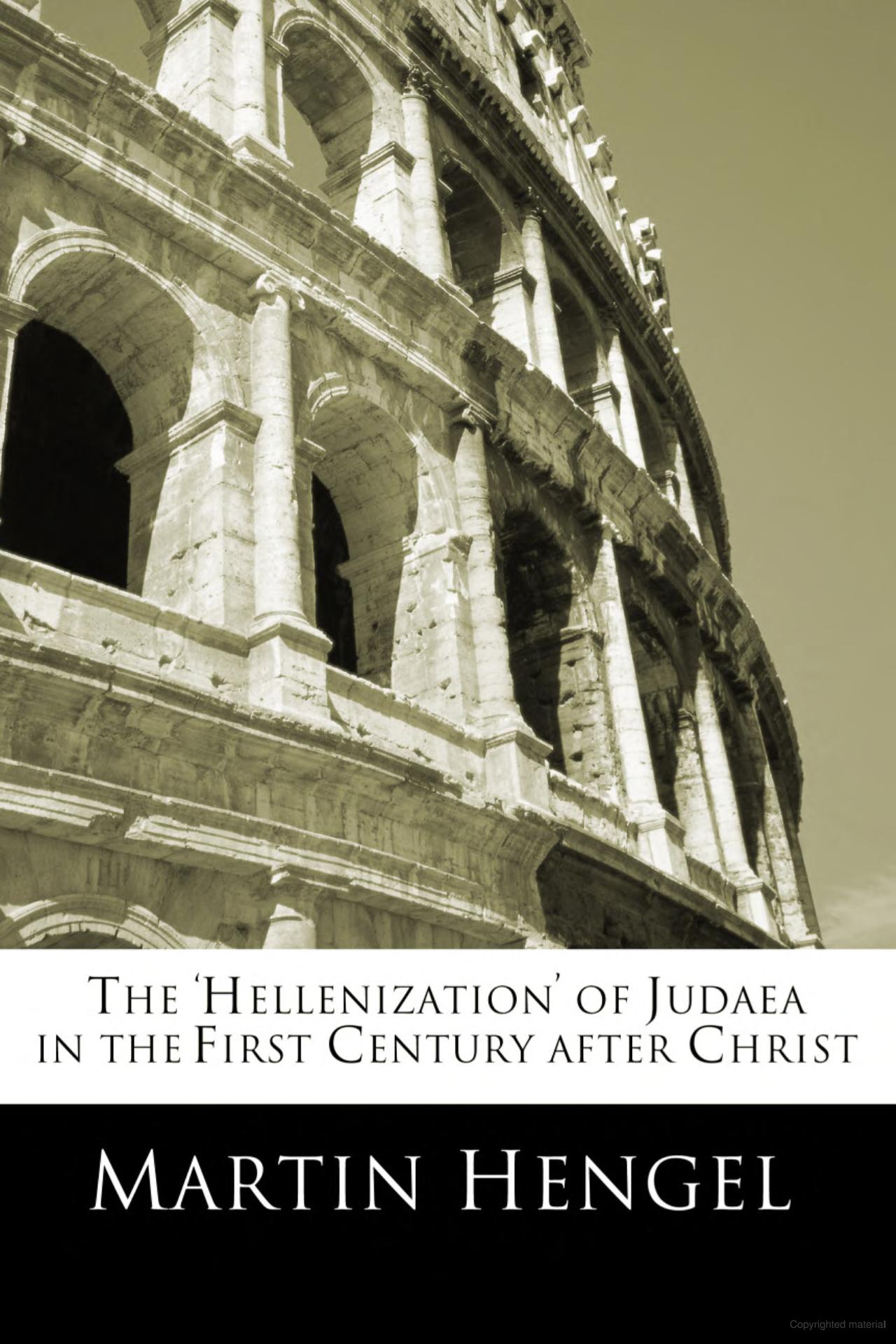
The ‘Hellenization’ of Judaea in the First Century after Christ by Martin Hengel

I’ve had this copy in my personal library for about three years now and I almost forgot I had it! I came across it while organizing my books by topic. Hengel’s work is absolutely brilliant and I’m delighted to be reading my copy again. This first time I read it, I mostly did surface reading and now I’m taking a deeper study of its text, highlighting passages and taking notes. It is my goal to read all of Hengel’s work.

Stephanie

Book Description: This short but highly significant study is the first real sequel to Professor Martin Hengel’s classic and monumental work Judaism and Hellenism. It demonstrates from a wealth of evidence, much of it made readily available here for the first time, that in the New Testament period Hellenization was so widespread in Palestine that the usual distinction between ‘Hellenistic’ Judaism and `Palestinian’ Judaism is not a valid one and that the word `Hellenistic’ and related terms are so vague as to be meaningless. The consequences of this for New Testament study are, of course, considerable. Martin Hengel was Professor of New Testament and Early Judaism in the University of Tuebingen.

Reader’s Log 039: Books for Further Study of Ancient History

Over Memorial weekend, I read quite a bit and have been listening to an audio book while working on a few art projects. These past few days has been reflective and I’m also busy with outlining a few ancient history articles I want to write. There is much work to be done on them and I have an extensive amount of research and studying to do. I’m thrilled with this endeavor and I’m looking forward to seeing where it leads me. In this post, I’m sharing a couple short books I read and one I started two days ago. This does not include my NetGalley reads or what I’m currently listening to. That may come in a later post.

Stephanie

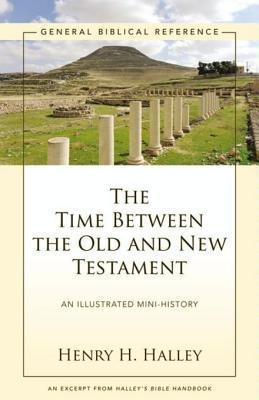
The Time Between the Old and New Testament: A Zondervan Digital Short by Henry H. Halley

First published July 24, 2012

Derived from Halley’s Bible Handbook, a world-renowned, accessible guide to the Bible now in its 25th edition, this digital short sketches the history of the time between the Old and New Testaments. The rise of the Greek and then Roman Empires, the Maccabees, Herod’s Temple, the Sanhedrin—this introduction to a fascinating era not covered in the Bible includes all of the above and more. Useful for Bible students wanting to better understand the cultural context of the New Testament and for readers interested in Middle Eastern and early European history, The Time Between the Old and New Testaments shines light on a key period in world and religious history.

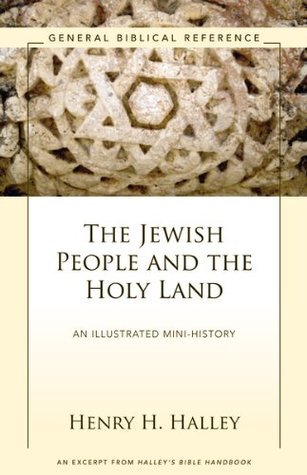
The Jewish People and the Holy Land: A Zondervan Digital Short by Henry H. Halley

First published July 24, 2012

Derived from Halley’s Bible Handbook, a world-renowned, accessible guide to the Bible now in its 25th edition, this digital short sketches the history of the Jewish people in the Holy Land from the time of Jesus until the present day. Useful for students of the Bible and church history, The Jewish People and the Holy Land will also fascinate readers wanting to better understand the historic roots of the modern state of Israel.

Currently Reading:

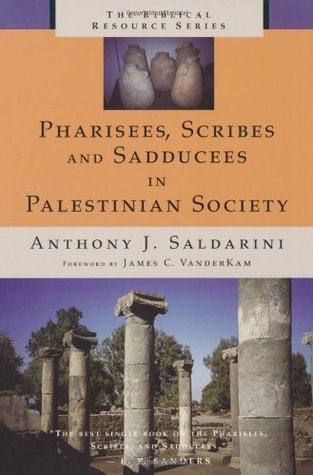
Pharisees, Scribes and Sadducees in Palestinian Society

by Anthony J. Saldarin

Widely praised in its original edition and now part of the Biblical Resource Series, this volume offers a superb discussion of the role of the Pharisees, scribes, and Sadducees in Palestinian Jewish society. Applying a sociological approach to the biblical and literary sources, Anthony Saldarini accurately portrays these three most prominent groups of educated leaders in Jewish society and describes their relationship to other Jewish social movements from 200 B.C.E. to 100 C.E. Featuring a new foreword by James C. VanderKam, Pharisees, Scribes, and Sadducees in Palestinian Society will remain a standard point of reference for the continuing study of Judaism and Christian backgrounds.

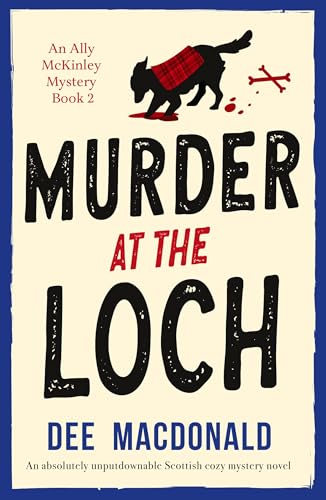
Book Review: Murder at the Loch by Dee MacDonald

An Ally McKinley Mystery #2

Published March 3, 2025 by Bookouture

About the book:

Recent retiree Ally McKinley has stepped out with her puppy Flora for a walk by the loch in the tiny village of Locharran, taking a break from running the cosiest little guesthouse in the Highlands. But Ally’s peace and quiet is sunk when she and Flora find the body of a mysterious woman floating in the water…

Before she knows it, Ally finds herself wading into the middle of a new investigation. Who was the mystery woman and why was she killed? Her inquiries take her all over the from the corner shop and the nearby hotel to the turreted castle, home of local earl Hamish Sinclair where preparations are underway for his upcoming – and much gossiped about – wedding.

The body in the loch soon has the rumor mills buzzing. But then Elena, the earl’s new bride, is also found poisoned to death the morning after her marriage! With two deaths to investigate, the police appear to suspect almost everyone in Locharran, even Ally herself…

My thoughts:

Despite my enjoyment in cozy mysteries, they tend to be hit or miss with me. I’ve noticed that writers sometimes push the envelope-if you will-with this subgenre. What I like most about this genre is that you don’t have the usual run-of- the- mill graphic violence, profanity (kept to a minimum) or sex that a lot of mystery thrillers include. I love the idea of the murder happening off stage and how the story is written to reveal or discovery of the homicide. In this story, there are two murders that have taken place and we follow Ally McKinley in solving the case. I really enjoy her process of elimination of suspects and discovering motives for these crimes.

Murder at the Loch is an absorbing and entertaining mystery with an atmospheric setting and fantastic character development. Whenever a crime story takes place in a small village in the Highlands, I can’t wait to get my hands on the book. I love stories such as this one and Dee MacDonald certainly knows how to weave a captivating mystery. I will be on the lookout for more stories by this author.

My thanks to the publishers for providing me a review copy through NetGalley.

Stephanie

Reader’s Log 038: A Weekend of Reading and Reflection

A Reader’s Voice

Yesterday, I blogged about my upcoming books I’ve selected and that post is a start in blogging about what I’m reading and why. In the past couple of years or so, certain themes in stories have weighed heavily on my mind. Not only that but if the themes and content is something I should be reading as a follower of Christ. I’ve always read widely but was cautious about content and my Christian conventions. However, I’ve agreed to review books that I wasn’t fully aware of its content and have done my best to honor those commitments keeping in mind that I’m not reading a biblical world view on morality and so forth. I have noticed in the past few years that a particular genre from certain authors I once enjoyed reading has become darker and too graphic in human nature to say the least which-I admit-reflects much of the world we live in today. This is not pointing fingers or making accusations towards others but a reflection on my own choices I make about reading material that I want to chose to read or omit from my life.

I’ve also reflected on the issue of how readers and reviewers on NetGalley are given information about the books we choose to read. I believe there is not enough information about its content and NetGalley should provide more information about any disclaimers of content we should be aware of since we are making a commitment to read said books. Yes, I am aware of the argument if that were the case, there would be so many books not selected to read because of the disclaimers and that wouldn’t be fair to the author and so on…I was onboard with that argument for a long time but I am no longer. After all, movies come with ratings and provide disclaimers.

I realize I haven’t always been consistent in my reviews to point out any content that people need to be aware of if they need or want to avoid for various reasons.

More times than not, I felt trapped into reading said books and recently I’ve rejected two books and stated my reasons to the publishers with respect of course. This may be difficult for many readers and authors to hear but as a long-standing book blogger, my experience as a book reviewer and reader needs to be voiced even at the risk of losing subscribers.

Christians are encouraged to engage with secular books-including fiction for an understanding of the world but we should also be discerning and cautious. That is true for secularist as well. For anyone in society really.

I have read many books that dealt with sensitive and difficult topics in such a way to make the story readable to a wide audience without compromising the readers convictions of what they can read without feeling uneasy or question if this is something they should be reading in the first place. My thanks to writers who weaves the story thus. I have more thoughts on this topic and may share more at a later time.

Stephanie