Book Review: Mind of a Killer (Alec Lonsdale #1) by Simon Beaufort

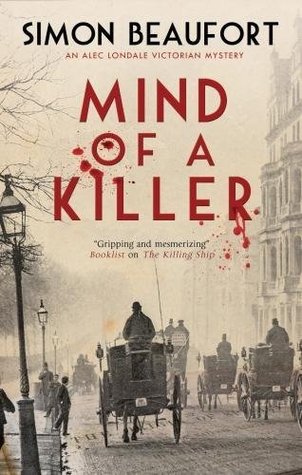
In London 1882, a new reporter for the Pall Mall Gazette, Alec Londale, comes across a house fire, that is not uncommon in those times, approaches the scene to watch the firemen hard at work to prevent the fire from spreading to the other houses.  Looking around for someone to tell him who lives there and how the fire started, he approaches a woman, asking her questions. A body has been discovered. Alex begins to take notes and shortly after speaking with the first woman, another woman, who appears distraught, approaches him and ask him to meet her at a later date. She has information for him that can’t be shared at the scene. Alex is unobservant to her emotions and what she is saying or not saying. It is quite clear to him what she is and he dismisses her from his mind. Alex is young and is portrayed as a naive and green around the quills-if you will- about the ins and outs of being a reporter.

When the post-mortem on the fire victim comes back as something other than an accident, it isn’t long before a second body is found and this time the person’s throat is cut and then the bodies start to pile up.

Alex’s feisty female colleague, Hula Friederrichs is assigned to help him investigate the case. He isn’t happy about it but he needs all the help he can get! The further they investigate, they delve into the mystery and start to uncover a conspiracy so sinister, that it takes them to the upper classes of Victorian Society. The threat of their own lives become a reality as they get closer to the murder plot and they begin to question whom can they trust.

My fascination with the Victorian era’s class-based society, the stereotypes and double standards of the period, journalism, and the murder mystery genre prompted me to read this book. Those elements combined make for a gripping story. There is also the fact, I’m always curious how writers today portray the culture of the period.

Darwin’s theories are introduced in the story and taken to an unspeakable dark and evil height that will have you wondering how far will these people go to advance their objective. I don’t think I have ever been so thoroughly taken back by a theme that pushes the boundaries of this nature. In fact, it makes this story all too realistic and chilling.

Highly entertaining, and a thought-provoking read.

Stephanie Hopkins

I obtained a copy of Mind of a Killer from the publishers through NetGalley for an honest review.
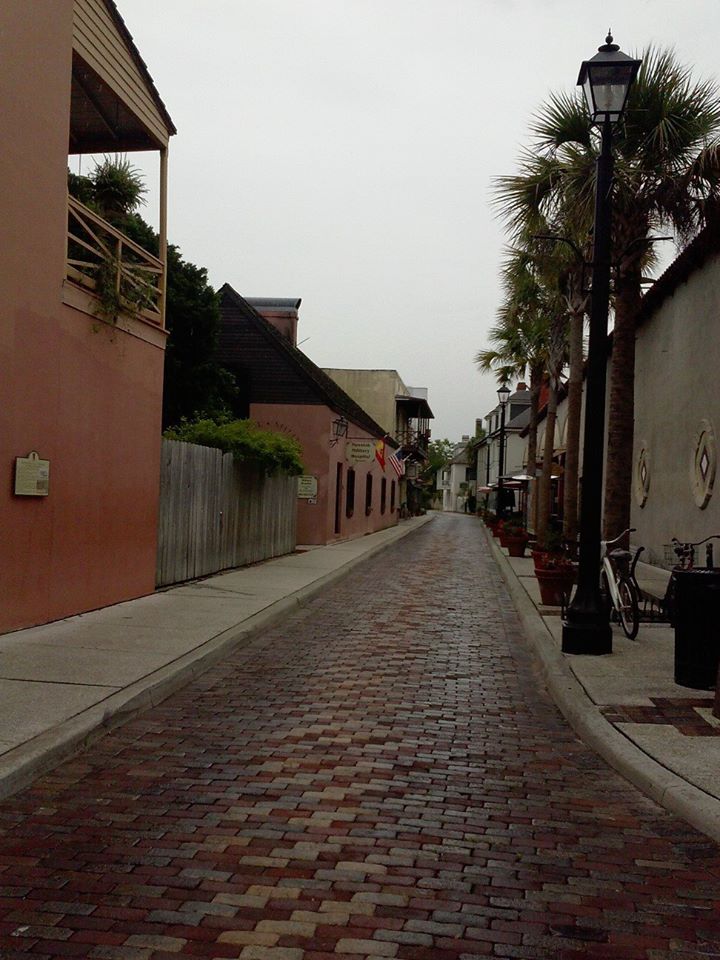
What World Building Includes

Photo by Stephanie Hopkins

A Reader’s Perceptive

World building serves the purpose to establish, time period, location, landscape, climate, and cultural surroundings. Its foundation of these elements is important for the reader to be transported in the character’s world. By accomplishing this, a writer must research and understand the world they are creating. Saying where your story takes place and adding a few notable locations, and buildings, doesn’t cut it. Make the reader believe they are there.

Use the Senses

You want your readers to be fully engaged in your story. It is a must!

Examples: Do your readers hear the horse’s hoofs on the cobble stone road drawing near? Do they see the dense fog rolling in the city’s streets? Does the reader know the culture’s way of dress, social class norms and rules? What are the events happening in the period they are living in? Such as, how things are made, talked about, and what is the population like? How do they get along or what are their resources? The list goes on…

I read a great story recently but didn’t feel transported to the time period. Which made it harder to understand the character’s actions. World building is vital.

Stephanie Hopkins

Art in Motion: Analog Collage

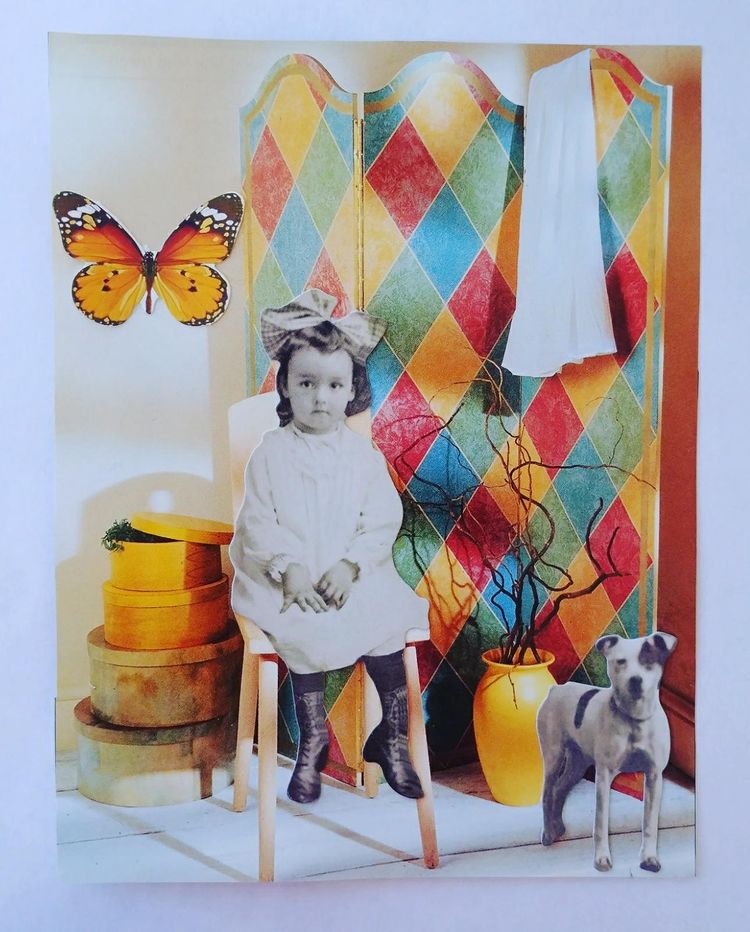
The pleasure in the simple designs. Collage Art by Stephanie Hopkins

“Without freedom, no art; art lives only on the restraints it imposes on itself, and dies of all others.”  ~Albert Camus

I’ve previously discussed a little about how to break the barrier of feeling stuck on an art piece you are wanting to create. Today, I’m examining a simple way to find confidence in your art.

In one way, building confidence in your art is taking the opportunity to explore different techniques. Collage is my main go-to way of creating. There are various types of collage and one of my favorites is, “Analog Collage.”

The process is taking cutouts from various sources and put them together to build a new whole. This type of collage ranges from simple to intricate designs. Often times, one’s vision for the collage changes as the image unfolds.

If you’ve never created this form of medium, I recommend starting with an uncomplicated collage. Magazine images are a great place to find images. Enjoy the journey!

-Stephanie Hopkins

Previous Art in Motion Post

Tribute to Sharon Kay Penman

Sharon Kay Penman

I’m deeply sadden to hear of Author Sharon Kay Penman’s passing. She will always be among my favorite Historical Fiction writers. I had the pleasure meeting her once-briefly-and wish I had the opportunity to know her more. There were so many things I would have liked to ask her. Her stories are also among the first of many books I’ve read in the genre. Penman breathed life into historical figures through her stories. Her stories have touched many readers and she will always be remembered as among the great writers of our time. May God fold her in His loving arms and give her eternal comfort. -Stephanie Hopkins

“I should like to freeze in time all those I do love, keep them somehow safe from the ravages of the passing years…”Rather like flowers pressed between the pages of a book!”

― Sharon Kay Penman, The Sunne in Splendour

Penman’s Bio:

Penman received her bachelor’s degree from the University of Texas at Austin, she majored in history, and also received a Juris Doctor (J.D.) degree from Rutgers University School of Law, and later worked as a tax lawyer.

The Sunne in Splendour, a novel about Richard III of England is one of the most popular books on the Historical Novel Society’s list of best historical novels. In 1996, following the success of When Christ and His Saints Slept (which dealt with the Anarchy and the early career of King Henry II of England), Penman ventured into the historical whodunnit with four mysteries set in the court of Eleanor of Aquitaine during the reign of Richard I. The mysteries did not enjoy the same success as her “straight” historical novels, to which she returned in 2002, with Time and Chance, again covering the life of Eleanor of Aquitaine and Henry II. In 2008, she published Devil’s Brood, which was to be the final book in her trilogy about Henry II and Eleanor of Aquitaine. She soon realized that there was still more of the Angevins’ story to tell and the result was Lionheart, followed by The King’s Ransom. Henry and Eleanor’s celebrated and controversial son, Richard the Lionheart is the major character in both books, although Eleanor, John, and Richard’s favorite sister, Joanna, also get to spend time on center stage. She has just finished The Land Beyond the Sea, set in the Kingdom of Jerusalem in the late 12th century. It will be published in the U.S. by G.P. Putnam’s and in the U.K. and Down Under by Macmillan and co; the publication date is early March, 2020.

Before the Second Sleep’s Tribute: Godspeed, Sharon Kay Penman

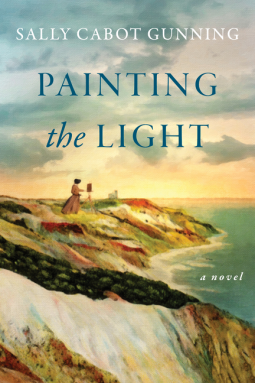
Cover Crush: Painting the Light by Sally Cabot Gunning

About the Cover: I chose this cover because of the ocean and cliffs. A calming and beautiful scenery. How the light is shown from the sky. One can imagine the smell of salt air and feel of the breeze coming from the ocean.

About the book: This story takes place in my favorite period to read about and I love that Ida is an artist. During that time it wasn’t “done” for a woman to enroll in art classes.

Imagine living on a seaside farm. Though, ,sadly, it sounds if she is having to put her passion of art behind her to tend to her duties on the farm.

Oftentimes, art is drawn from tragedy and heart-break. I wonder and hope she finds her passion again. -Stephanie Hopkins

Book Description

William Morrow and Custom House

William Morrow

General Fiction (Adult) Historical Fiction |Literary Fiction

Pub Date 01 Jun 2021

From the critically acclaimed author of Monticello and The Widow’s War comes a vividly rendered historical novel of love, loss, and reinvention, set on Martha’s Vineyard at the turn of the nineteenth century.

Martha’s Vineyard, 1898. In her first life, Ida Russell had been a painter. Five years ago, she had confidently walked the halls of Boston’s renowned Museum School, enrolling in art courses that were once deemed “unthinkable” for women to take, and showing a budding talent for watercolors.

But no more. Ida Russell is now Ida Pease, resident of a seaside farm on Vineyard Haven, and wife to Ezra, a once-charming man who has become an inattentive and altogether unreliable husband. Ezra runs a salvage company in town with his business partner Mose Barstow, but he much prefers their nightly card games at the local pub to his work in their Boston office, not to mention filling haystacks and tending sheep on the farm at home—duties that have fallen to Ida and their part-time farmhand Lem. Ida, meanwhile, has left her love for painting behind.

It comes as no surprise to Ida when Ezra is hours late for a Thanksgiving dinner, only to leave abruptly for another supposedly urgent business trip to Boston. But then something truly unthinkable happens: a storm strikes, and the Portland sinks. Ezra and Mose are presumed dead.

In the wake of this shocking tragedy, Ida must settle the affairs of Ezra’s estate, a task that brings her to a familiar face from her past—Henry Barstow, Mose’s brother and executor. As she joins Henry in sifting through the remnants of her husband’s life and work, Ida must learn to separate truth from lies and what matters from what doesn’t.

Painting the Light is an arresting portrait of a woman, and a considered meditation on loss and love.

Be sure to follow and check out more of my art at my Instagram!

before the second sleep cover crush

Stephanie Hopkins

Layered Pages Top 2020 Reads

Favorite Books Read in 2020

Last year my Goodreads challenge was to read twenty fiction books. I surpassed that goal and read thirty. However, I read more than thirty books. Beyond that was research books for my writing project and other research projects. I did not count those on goodreads because I’m continually referring to them.

The fiction books below are my top favorite reads, though not in a particular order. This year’s reading goal is much bigger. I will be talking about that more a little later on. What were your favorite 202 reads? -Stephanie Hopkins

Top Favorites

Dreamland by Nancy Bilyeau

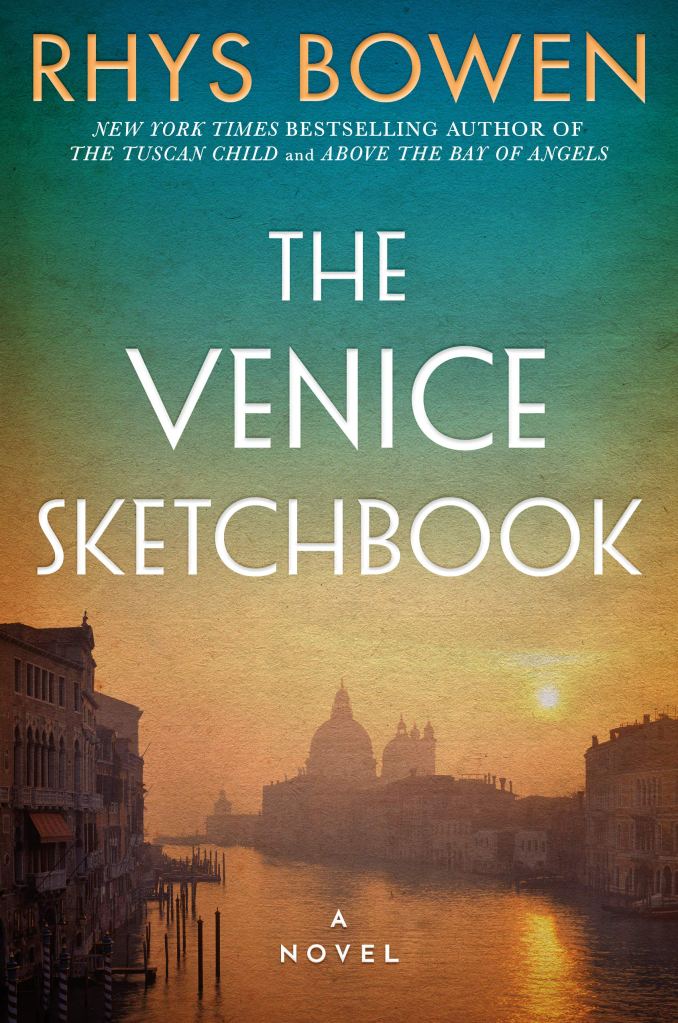
The Venice Sketchbook by Rhys Bowen

The Lost Village by Camilla Sten

Migrations by Charlotte McConaghy

The Jane Austen Society by Natalie Jenner

The Drowning Kind by Jennifer McMahon

Be sure to check these titles out on Goodreads and Amazon!

Favorite Covers:

Here are my favorite covers out of the bunch. Which covers do you like?

New Book Release: Madam C.J. Walker by Erica L. Ball

Congrats to Erica L. Ball’s

book publication of, “Madam C.J. Walker

The Making of an American Icon!”

I discovered Madam C.J. Walker a few years ago during my in-depth study of 19th Century Post Civil War. I thought at the time that it would be wonderful to watch a movie or read a book based on her life. I wanted to know more about this woman. Her story needs to be told. To my delight, I learned that Author Erica L. Ball wrote about Walker and have added the book to my reading list. I have not read any of Ball’s published works but have learned that she is a professor of History and Black Studies. Very cool.  -Stephanie Hopkins

About the book:

Rowman & Littlefield

Biographies & Memoirs | History | Nonfiction (Adult)

Pub Date 15 Jan 2021

Description

Madam C. J. Walker—reputed to be America’s first self-made woman millionaire—has long been celebrated for her rags-to-riches story. Born to former slaves in the Louisiana Delta in the aftermath of the Civil War, married at fourteen, and widowed at twenty, Walker spent the first decades of her life as a laundress, laboring in conditions that paralleled the lives of countless poor and working-class African American women. By the time of her death in 1919, however, Walker had refashioned herself into one of the most famous African American figures in the nation: the owner and president of a hair-care empire and a philanthropist wealthy enough to own a country estate near the Rockefellers…

In this biography, Erica Ball places this remarkable and largely forgotten life story in the context of Walker’s times.

Learning to Speak Southern

What are you up to now, Stephanie?

On NetGalley, often times, book reviewers can, “wish-for,” books to review. When I spotted, “Learning to Speak Southern,” I knew this one was for me. Ha!

Why?

For several reasons really. I’m a southern girl, I love journaling, writing and family is very important to me. Oh, and I love the cover of this book!

Did the publishers grant your wish?

Yes! I was quite surprised really. I usually old my breath when I wish for a book. So delighted and thankful.

I thought you are trying to catch up on your back-list? What are you thinking?

Err…I am. I promise. This one looked too good to pass up. I know, I know…I can’t keep doing this. In my defense, Sourcebooks rarely disappoints in their reading selection and looking at my back-list, I’ve realized I’ve put myself in a corner of-sorts with my selection. One needs options so you don’t get burned out. That is my story and I’m sticking to it.

Thank you, Sourcebooks Landmark for a galley copy of this story! Looking forward to diving in very soon. -Stephanie Hopkins   

Learning to Speak Southern

by Lindsey Rogers Cook

SOURCEBOOKS Landmark

General Fiction (Adult) | Women’s Fiction

Pub Date 01 Jun 2021 

Description

A searing Southern story about confronting the difference between the family you’re born into and the family you choose, from the acclaimed author of How to Bury Your Brother

Lex fled Memphis years ago, making ends meet with odd jobs teaching English around the world. She only returns when she has no choice, when her godmother presents her with a bargain she can’t refuse. Lex has never understood her mother, who died tragically right before Lex’s college graduation, but now she’s got a chance to read her journals, to try and figure out what sent her mother spiraling all those years ago.

The Memphis that Lex inhabits is more bourbon and bbq joint than sweet tea on front porches, and as she pieces together the Memphis her mother knew, seeing the lure of the world through her mother’s lush writing, she must confront more of her own past and the people she left behind. Once all is laid bare, Lex must decide for herself: What is the true meaning of family?

Weird Wednesday: An Exploration of Our Quirky World

Nineteenth Century Slang, Phrases and Meanings

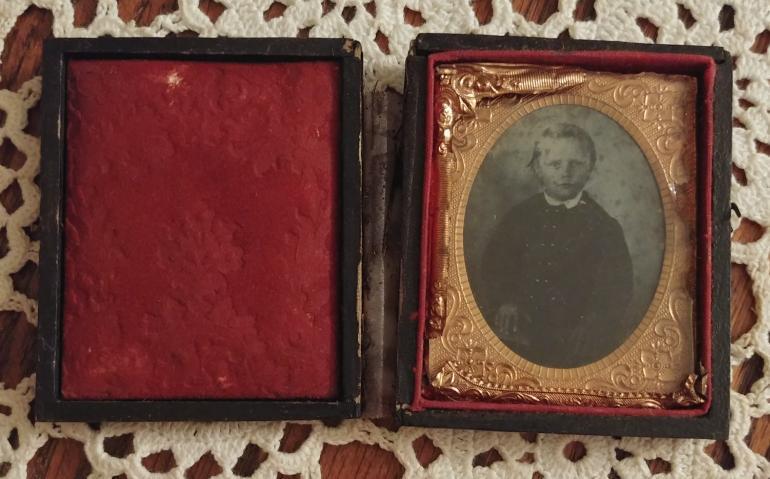
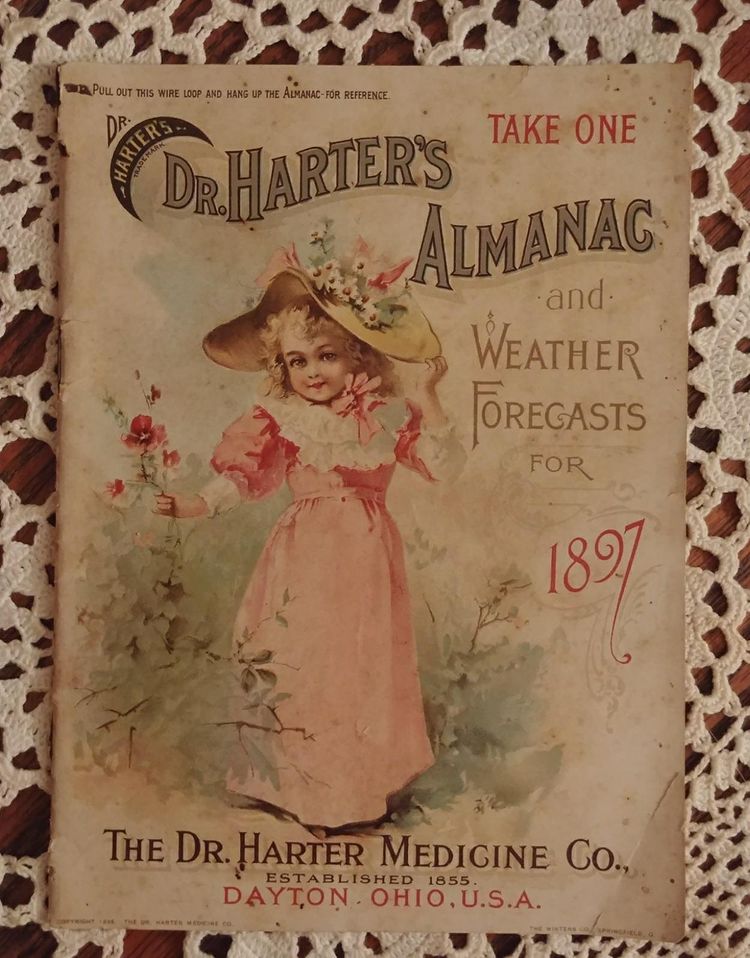
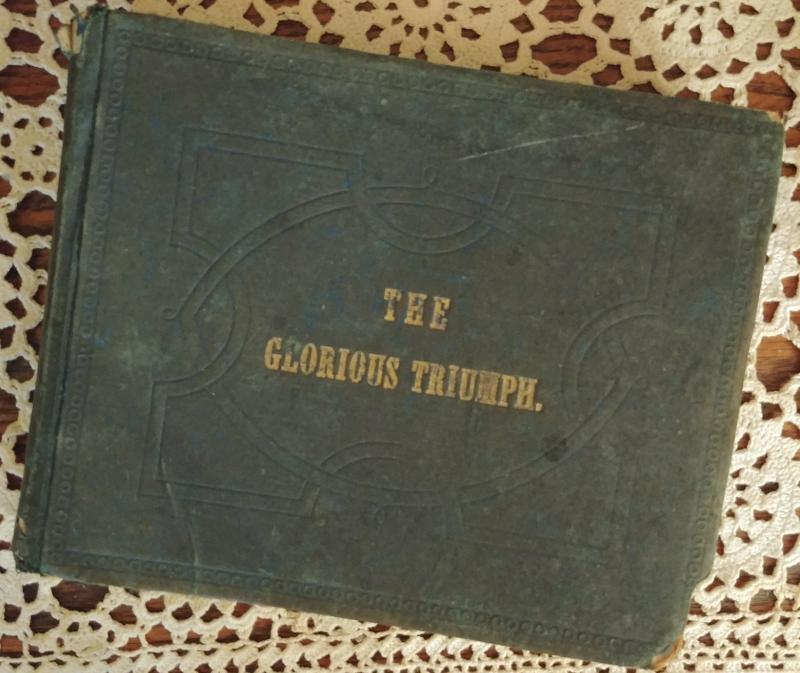
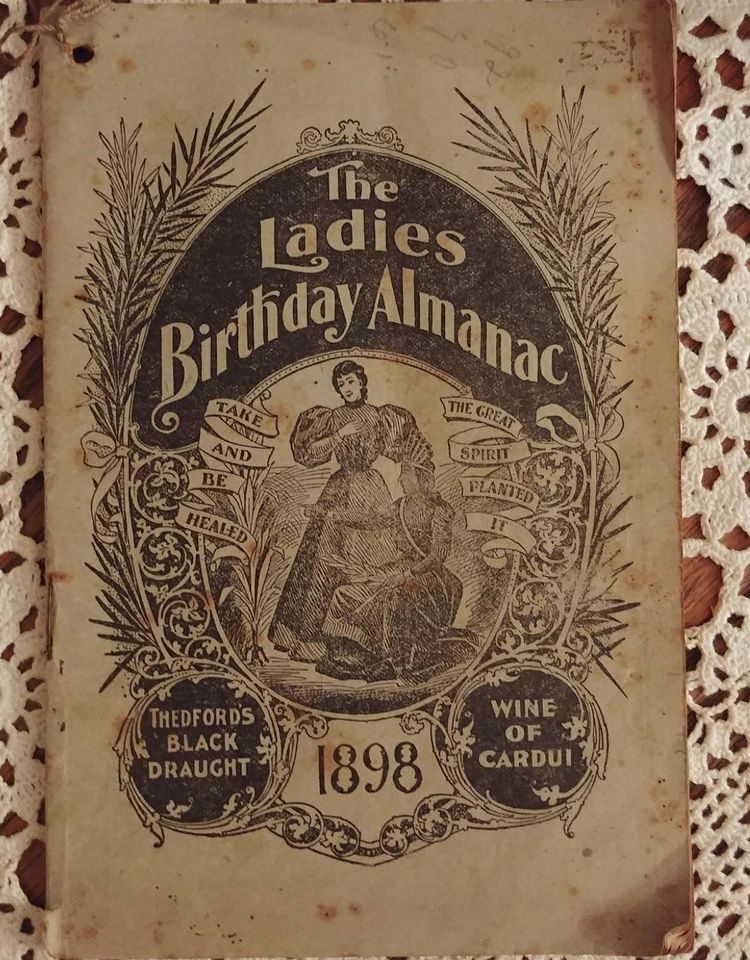
19th Century Family Heirloom

We live in an extraordinary quirky world that often times we forget to pause in our busy lives to notice. During these times many cannot venture outside-another great reason to pick up a book-so we are bringing our explorations to you.

I’m obsessed with history and cultures from all walks of like. A particular favorite of mine-because I read and write stories in the time period-is nineteenth century history in America. Did you know that many of our expressions and slang come from what many considered forgotten or overlooked? Today we are taking a look at a few quirky slang words and phrases from the nineteenth century and perhaps, we will find a few similar to our modern-day slang. But before we do, and without going too much in-depth on this subject, lets’ look at its definition and a minuscule of the development.

Many slang words and phrases were brought to America from other countries and thus been adopted. Subcultures blending and becoming our main culture-if you will. Slang is ingrained in Americans’ and many don’t realize they are using it or where it comes from or how it evolves. Truth be told, it is difficult to say where exactly it all originated from.Often times, the meaning of the words change or the word can be used for different purposes.. For example: In the American Civil War Era, the word, “Dictator,” means: “The nickname of a 13-inch seacoast MORTAR mounted on a railroad flatcar and utilized during the siege of Petersburg. A.k.a the Petersburg Express.” In today’s society, “Dictator,” is commonly known as a country governed by a Dictator. Another example is, “Dresser,” The usage of this word during the American Civil War Era meant: “A volunteer or medical student assigned the task of dressing wounds. Today we associate the word as a piece of furniture that has drawers to hold clothing, house items and etc…

19th Century Family Heirloom

According to Britannica: “Slang, unconventional words or phrases that express either something new or something old in a new way. It is flippant, irreverent, indecorous; it may be indecent or obscene. Its colorful metaphors are generally directed at respectability, and it is this succinct, sometimes witty, frequently impertinent social criticism that gives slang its characteristic flavor. Slang, then, includes not just words but words used in a special way in a certain social context. The origin of the word slang itself is obscure; it first appeared in print around 1800, applied to the speech of disreputable and criminal classes in London. The term, however, was probably used much earlier. The term, however, was probably used much earlier.” Click on the Britannica site to read more about it their interpretation.  

19th Century Family Heirloom

19th Century Slang and phrases used in America

Here are a few quirky slang and phrases you probably have never heard of:

Hornswoggling, Honey-fuggling, Give me jesse, Bottom fact, Hang up one’s fiddle, To give up, See the elephant, gallnipper, Go the whole hog: to go all the way, Acknowledge the corn, and I’ll Hang up my fiddle.  

Here are a few that you might know:

Humbug, Dad-blame it, You can sass me, You cussed scalawag, How came you so, they’re “Fixin’ to” do it, Carryings-on, Crazy as a loon, Almighty, grit, Bad egg, balderdash, dude (a dandy), and Over yonder.

19th Century Family Heirloom

Meanings of a few:  

Grit: guts; courage; toughness.

Hang up one’s fiddle: to give up.

Go the whole hog: to go all the way.

Almighty: huge

Bad egg: a bad person; a good-for-nothing person.

My personal favorites (Southerners Use):

A-hootin’ and a-hollerin’, Bless your heart, Fixin’ to, I reckon, Hold your horses, Well, I declare, Heavens to Betsy, and Hush your mouth, Water under the bridge, Hogwash, Stuff and nonsense.

Mind your own beeswax – started as a retort in the 1700’s. I remember using that phrases often as a child. Ha!

I’ve only scratched the surface of this fascinating and quirky topic and what a subject to explore! One can go down a rabbit hole with this. What are a few quirky slang words and phrases from the nineteenth century that you know? -Stephanie Hopkins

Images may be subjected to copyright. In order to use art images or any content on Layered Pages platform, please ask permission from Stephanie Hopkins

Life’s Simple Pleasures

2020 Journal Overview

Life has its ups and downs and it is vital for one to find the simple things in daily tasks to keep moving forward. One of my pleasures in life is journaling. Whether it be art journaling, creating a new DIY journal or just writing an entry, brings me peace.  

Whenever I sit at my desk or reading chair to journal, I’m reminded of the time I was gifted my first diary at a young age. The memory is forever cherished in my heart and with it brings an appreciation for the pastime of writing my thoughts down. When you express your thoughts and feelings on paper, it is an extraordinary record of moments in your life.

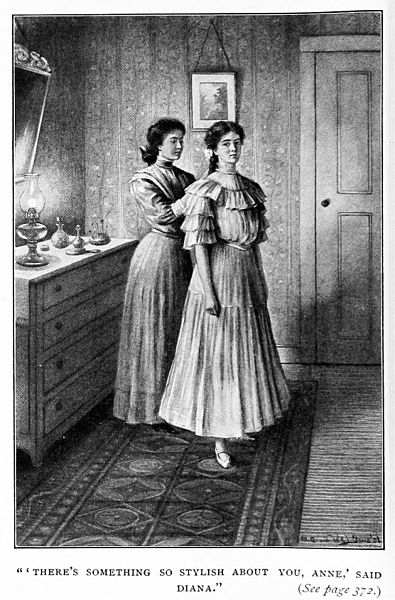
My first diary was an Anne Of Green Gables Journal filled with Anne’s saying and little passages of her story written by Lucy Maud Montgomery. Lucy’s beloved story is inspired by notes she wrote as a young girl in rural Canada.  I’ve lost count how many times I’ve watched the first adaption growing up. Looking back at what I wrote, I filled that diary with such strong emotions for one so young. Those were certainly captivating times…

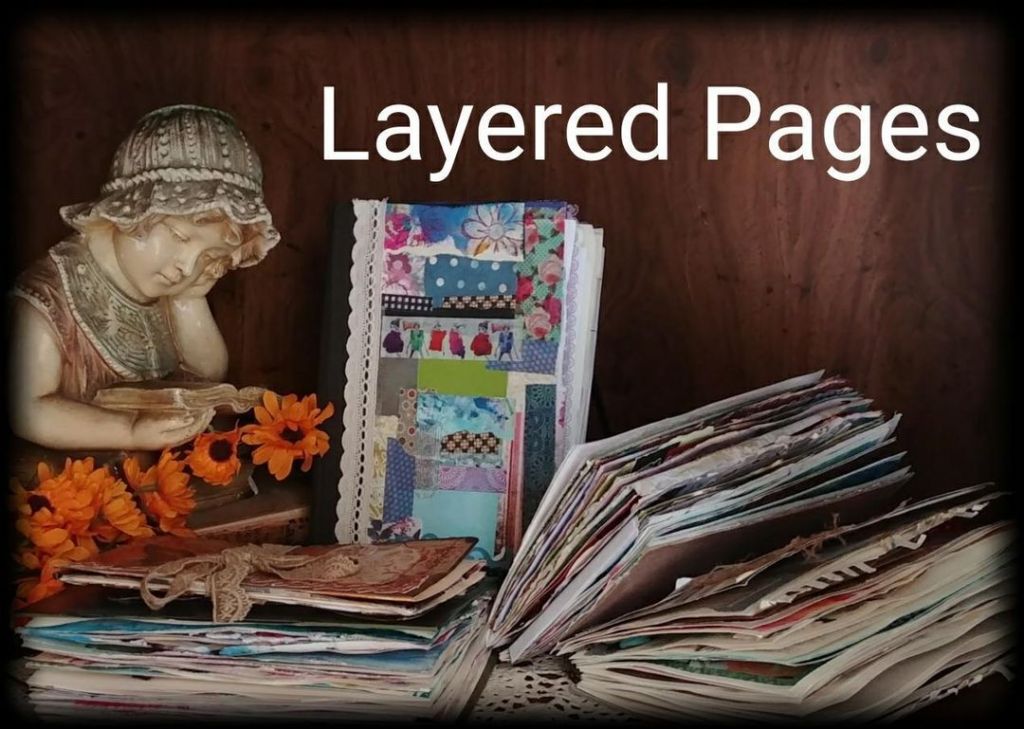
Completed Journals

Last year I completed several journals shown above.  I really grew in my craft with these journals and making them, I was encouraged to keep writing and create art throughout the troubled year.

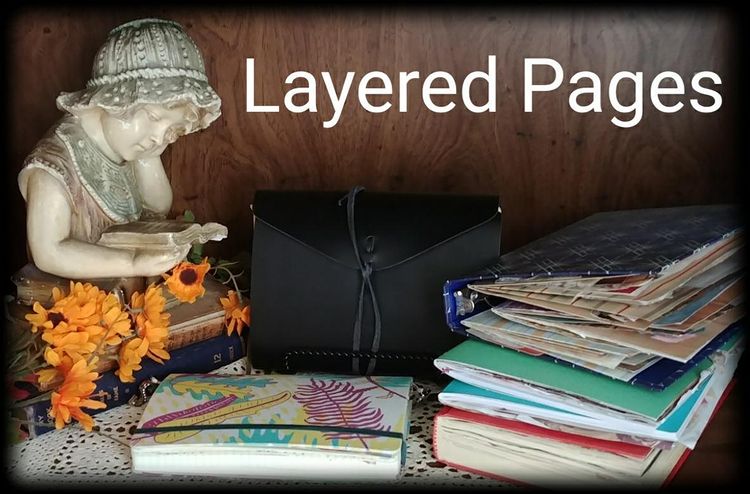
The journals shown below are my on-going ones that I write in from time to time. The earliest ones were started in 2014 and 2017. If you’ve never kept a journal before, I want to encourage you to start. You’ll learn, and grow mentally while providing yourself with valuable insight of your surroundings and your inner-self through life’s journey. -Stephanie Hopkins

On-going Journals

Images may be subjected to copyright. In order to use art images or any content on Layered Pages platform, please ask permission from Stephanie Hopkins