Book Review: Daughter of a Daughter of a Queen by Sarah Bird

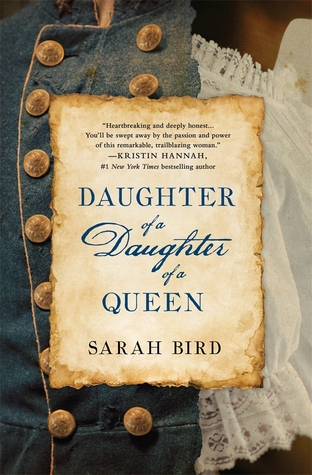
DAUGHTER OF A DAUGHTER OF A QUEEN“Here’s the first thing you need to know about Miss Cathy Williams: I am the daughter of a daughter of a queen and my Mama never let me forget it.”
Missouri, 1864

Powerful, epic, and compelling, Daughter of a Daughter of a Queenshines light on a nearly forgotten figure in history. Cathy Williams was born and lived a slave – until the Union army comes and destroys the only world she’s known. Separated from her family, she makes the impossible decision – to fight in the army disguised as a man with the Buffalo Soldiers. With courage and wit, Cathy must not only fight for her survival and freedom in the ultimate man’s world, but never give up on her mission to find her family, and the man she loves. Beautiful, strong, and impactful, Cathy’s story is one that illustrates the force of hidden history come to light, the strength of women, and the power of love.

My thoughts:

General Sheridan and his soldiers were burning everything in sight and took Cathy Williams-a slave-off a plantation as contraband to be an assistant to the generals cook. After the war is over she enlists in the Union Army disguised as a man with the Buffalo Soldiers.

I’ve always wondered how the Union Army was able to recruit/convince ex-slaves-right after the civil war- to become Buffalo Soldiers knowing what they were going to do to the Indians. It really has always baffled me. This story goes into that a little of that and explores the feelings of the Buffalo soldier’s feelings on this. The Union Army was not kind to the soldiers and I believe used them horribly.

As I was reading this story, I was dreading about what was going to happen to the soldiers once they get out west-already knowing its history and the author gives you a vivid picture of their struggles and Cathy’s efforts to keep her disguise as a man.

Daughter of a Daughter of a Queen is a top-notch historical fiction story, memorable characters, outstanding history details of its setting, conflict and I’m truly looking forward to more stories by this author.

I obtained a copy of this book from the publishers through NetGalley for an honest review.

I have rated this book five stars.

Stephanie M. Hopkins

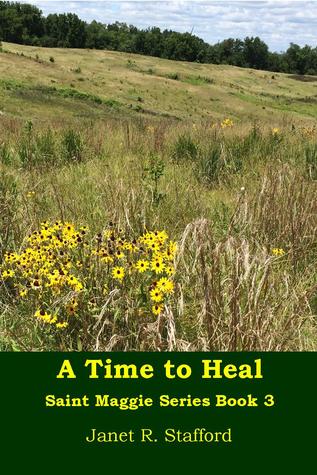
A Time to Heal by Janet Stafford

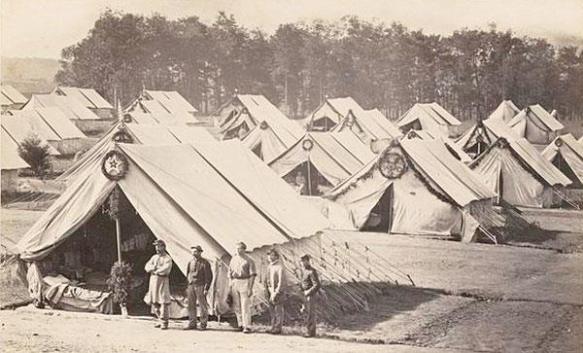
Camp Letterman tents

Camp Letterman tents 1863

After the battle of Gettysburg, over 30,000 Confederate and Union soldiers are estimated to have been wounded and were scattered over the battlefield, in field hospitals, and in public buildings and private homes throughout the area. Dr. Jonathan Letterman, Medical Director of the Army of the Potomac (also known as “the Father of Modern Battlefield Medicine), ordered a that a central hospital be established to care for those left behind. Camp Letterman was located east of Gettysburg near the York Pike on Wolf Farm. In A TIME TO HEAL, Capt. Philip Frost is assigned to the hospital, and he and Maggie’s oldest daughter, Lydia, strike up a friendship. Janet Stafford will be writing a blog about Camp Letterman at the end of the week at her website.

Janet Stafford’s Facebook Page

Website

About the book, A TIME TO HEAL:

A Time To Heal

In 1863, Maggie Blaine Smith sat down and wrote in her journal: “It seems to me that this time after the storm of battle has been a waiting time, a time of recovery. We did not know where we would be led next. We did not know when or if change would happen.” A TIME TO HEAL, set in the months immediately after the Battle of Gettysburg, continues the story of Maggie and Eli Smith and their unconventional family. Maggie’s daughters and friends remain in the town as they struggle to care for a houseful of wounded soldiers. Meanwhile, Maggie and Emily, having suffered terrible trauma, move with their husbands to a more peaceful location about seven miles away. Everyone hopes and prays for healing and a return to normal life. And then an act of compassion puts them in jeopardy.

Amazon


Cover Reveal: MARY –Tudor Princess by Tony Riches

New on Amazon UK Amazon US and Amazon AU

About the Book 

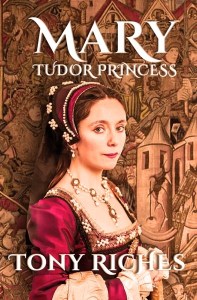
Mary Tudor PrincessFrom the author of the international best-selling Tudor Trilogy, the true story of the Tudor dynasty continues with the daughter of King Henry VII, sister to King Henry VIII. Mary Tudor watches her elder brother become King of England and wonders what the future holds for her.

Born into great privilege, Mary has beauty and intelligence beyond her years and is the most marriageable princess in Europe. Henry plans to use her marriage to build a powerful alliance against his enemies. Will she dare risk his anger by marrying for love?

Meticulously researched and based on actual events, this ‘sequel’ follows Mary’s story from book three of the Tudor Trilogy and is set during the reign of King Henry VIII.

About the Author

Tony Riches

Tony Riches is a full-time author of best-selling historical fiction. He lives in Pembrokeshire, West Wales and is a specialist in the fifteenth century, with a particular interest in the Wars of the Roses and the lives of the early Tudors. For more information about Tony’s other books please visit his website and his popular blog, The Writing Desk and find him on Facebook and Twitter.


Links:

Mary – Tudor Princess

Amazon UK

Amazon USA

Amazon AU

Website

The Writing Desk

Amazon Author Page UK

Twitter @tonyriches

Author Facebook Page

Goodreads Author Page


Novel Expressions Facebook Page Posts

Check out the fun posts and great titles at the Novel Expressions Facebook Page! Below is two examples of what you can expect.

Novel Expressions Facebook Page

Novel Expressions Website

Historical Fiction by subject!

Historical Fiction by subject

On This Day Recommendation!

On This Day Recommendation!

Q&A With Alfred Woollacott, III

Alfred with book resized to 300

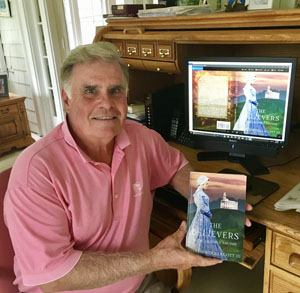
I’d like to welcome Alfred Woollacott, III to Layered Pages today. Alfred retired from KPMG after a career spanning 34 years, choosing to reside full time at his summer residence on Martha’s Vineyard. Being “45 minutes from America” and with a 50 – 60 hour per week void to fill, he began dabbling into his family history. His dabbling grew into an obsession, and he published several genealogical summaries of his ancestors. But certain ones absorbed him such that he could not leave them. So, he researched their lives and times further while evolving his writing skills from “just the facts ma’am” to a fascinating narrative style. Thus, with imagination, anchored in fact and tempered with plausibility, a remote ancestor can achieve a robust life as envisioned by a writer with a few drops of his ancestor’s blood in his veins.

When not writing, Al serves on several Boards, and keeps physically active with golf, tennis, and hockey. He and his wife of 44 years, Jill, have four children and ten grandchildren.

Thank you for talking with me today, Alfred. Please tell you how you got into story-telling?

My blessing to spin a good story comes from my namesake, Alfred Sr., sprinkled, at times, with humor — genes from my maternal grandmother, Gracie. Beneath an extemporaneous exterior, lies a logical, results-oriented mind that spent a career at KPMG, an international accounting firm, researching facts and forming conclusions. So when I retired, dabbling in genealogical facts came naturally, and I got hooked. For a few on my ancestral tree, the facts cried out, “There’s a story here, add more leaves to the branches.” So I allowed the extemporaneous to spin a yarn around the facts and brought an ancestor to life

Tell me about your book, The Immigrant.
The Immigrant

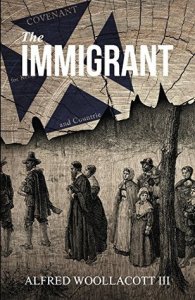
The Immigrant is a fictionalized account of my seven-greats grandfather, John Law, who came to The Colonies in chains, a Scottish prisoner of war captured during the Battle of Dunbar. Upon his arrival in the winter of 1651, he began his indenture at the Saugus Iron Works and concluded it as a public shepherd for the town of Concord. Freed from his indenture, he began life anew to endure a Puritan Theocracy, English bigotry, and Native American dangers. Throughout all his ordeals, he wondered if God ever heard him. One day, he did.


Tell me about your book, The Believers in The Crucible Nauvoo.
The Believers In The Crucible Nauvoo

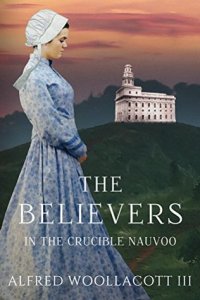
The book is the second of a planned trilogy, whose protagonist, Naamah Carter, like me descends from John Law. After enduring early parental deaths, she discovers renewed meaning to her strong Christian beliefs through Joseph Smith’s testaments. His following in Peterborough, New Hampshire flourishes, yet Naamah, her beloved Aunt Susan, and other believers suffer family strife and growing community resentment. She leaves her unfriendly situation and journeys to Nauvoo to be among thousands building their Prophet‘s revelation of an earthly Zion on a Mississippi River promontory. There, her faith is tested, enduring loss of loved ones and violence from those longing to destroy Nauvoo. With the western exodus imminent, she faces a decision that runs counter to her soul and all she holds sacred – whether to become Brigham Young’s plural wife.

The novel weaves the momentous events of Joseph Smith’s martyrdom and Brigham Young’s succession with Naamah’s story and offers differing perspectives to create a mosaic of Nauvoo, the crucible out of which arose today’s Church of Jesus Christ of the Latter-day Saints.

In your story, The Immigrant, you introduce an historical figure John Law, a young Scotsman captured by Cromwell’s forces during a well-known battle “The Battle of Dunbar.” For those who have not heard of John Law, can you please tell us a little about him historically and what his faith is?

Yes, John law is a historic figure, yet deemed too insignificant for the historian’s lens. The Immigrant has brought him to life and, since he’s symbolic of 10,000 Scottish men at Dunbar 3 September 1650, their lives have been discovered in some way.  His father died in 1649 when John was thirteen. An only child, he and his widowed mother managed for a year until the War Councilor appeared in summer of 1650. “He’ll be back in time for harvest,” was the Councilor’s remark as John left. John would never see his mother again, and she would never know John’s fate.After John’s capture, he endured a ‘death march’ into northern England, a horrific six week incarceration at Durham Cathedral, and a life-changing, Trans-Atlantic crossing to the Colonies. The Massachusetts Bay Colony was established with a wave of English, the great Migration 1630-1640. Except for the indigenous, they owned a virgin paradise to craft to their liking until John Law and a few Scots trickled in as immigrants. Since then, waves of immigrants have come, even still today. Each new wave has encountered prejudice, but far less blatant or extreme than what John endured. In 1660, Mary Dyer and William Leddra were hanged on Boston Common because they were Quakers. We all are aware of Salem and 1692 witch trials.

Since John was fighting with The Covenanters against Cromwell, he was most likely a Presbyterian.

How much research went into The Immigrant?

I am a CPA turn genealogist, so a lot! Some of John Law’s genealogy down to myself has been published in two-parts in MASSOG, a genealogy-register — 16 pages with over 200 footnote. Dry as dust, yet available on my website if you’re interested. John is presumed to be a Scottish POW, which I attempted to prove through research on early Scots at NEHGS, reading books on the Saugus Iron Works, reading 1600s Middlesex County court reports including John’s will, and perusing passenger lists of the Unity and the John and Sara ships that brought Scottish POW to The Colonies. And while I know of his life from 1655 on, I can neither prove nor disprove how he got here.

I visited the Saugus Ironworks, learned how iron was made, and romanticized while at the intersection of Lawsbrook Road and School Street in Acton, MA, where John lived.  The influence of my Lawsbrook visit are the concluding scene in The Immigrant.

Who are your secondary characters in your story?

Obviously, Lydia Draper, John’s wife. During my research, I found more snippets about the Drapers than I did about John Law to wrap a story around. Lydia’s POV occurs often, particularly during the birth of their first born, later with the loss of an infant son, and during King Philip’s War. Mary Rowlandson’s capture and release had a profound effect on Lydia.

Nagoglancit, a Nashobah Native, is complete fiction. Like John, he is an outcast, and ironically unlike John, an outcast in his native land. But these two ‘outcast’ form a unique bond, tested, at times, when Lydia reveals a past encounter with natives and during King Philip’s War.

John Hoare – during my research I came to love this guy, so he is throughout the book. He counsels John to do the right thing and make an honest woman of Lydia Draper, rescues Mary Rowlandson, and builds a dormitory for the ‘friendly’ Nashobah during King Philip’s War much to Concord’s dismay.

How long did it take to write your story?

Excluding the research, which seems continual since I can be a bit anal, about a year or so.

In your story, The Believers in The Crucible Nauvoo you introduce Naamah Carter. What a beautiful name! Could you please tell us a little about her?

Naamah, wife of Noah, meaning pleasant because Naamah’s conduct was pleasing to God. Naamah Kendall Jenkins Carter was named for her aunt who died three weeks before she was born, which created an immediate bond and early interest in the afterlife.

We first meet Naamah, age 6, placing flowers on her father’s grave. There, she asks her grandfather, Reuben Law, a question, the answer to which comes years later as Naamah grapples with a life-changing decision. Precocious in her Christian beliefs, she soon found traditional teaching uninspiring until she meets Elder Eli Maginn, a Latter-day Saint missionary. The strength of her faith continues to ebb and flow as she endures life until she finds lasting solace in Temple life.

Her life is mostly among women – her mother who dies early, her sister, and her LDS sisters. Like all the women of Nauvoo, she has the resiliency needed to endure the pain and suffering that was the crucible Nauvoo. While inexperienced in dealing with men, she marries only to have her husband die soon afterward. Thus, when she meets the powerful ‘lion of the Lord’, Brigham Young, she’s at first ill-prepared, yet perseveres to forge a unique relationship.

Where can readers buy your books?

At Amazon, or discerning book stores like Bunch of Grapes, Vineyard Haven, MA, or on my website

What is up next for you?

Reuben Law and the trilogy’s last book. You have met Reuben in the first and last chapters of The Immigrant. He’s on Jarmany Hill in the opening scene of The Believers In The Crucible Nauvoo and sprinkled throughout. He’s the lynchpin between the two novels. For more about Reuben, visit my website. I sensed John Law’s presence when I paused on Lawsbrook Road, but I sensed Reuben even more. Here is a link to what I experienced in September 2009.

Is there a message you would like to give to your readers?

Historical novelists research and pour their heart and soul into their writings, as do I. But my heart has a few drops of their blood and my soul has part of their DNA. My characters bore witness to King Philip’s War, The American Revolution, and Joseph Smith’s Martyrdom and encountered prejudice for being a Scottish POW in a Puritan Theocracy or a believer in a scorned prophet. I trust that the tingles I experienced at Lawsbrook Road or on Jarmany Hill came from erstwhile dormant DNA exploding thoughts that coalesced to say, “There’s a story here.”

Author Links:

Facebook Page

Twitter

Website 

L.A.P. it Marketing LLC

What is L.A.P. it Marketing?

LAPit Logo

L.A.P. it is a social media platform that applies to a variety of professions-such as-Literature, Art and Photography. The practicalities of Internet life can be tricky for many, not everyone is computer savvy and would prefer to solely focus on their craft or they have a tight budget but need help in this arena. How does one market their own work if they have little money or they don’t understand how the market works or both? There are so many entities out there charging fees that are not doable for most or they promise what they cannot deliver. L.A.P. it has created a new concept of social media marketing and provides a unique service to showcase writers, artists and photographers work. L.A.P. it will also work with publishers, independent presses, artist/photographer galleries and other entities that involve the three areas mentioned.

L.A.P. it Marketing Website

Twitter: @lapitmarketing

Facebook Page

Instagram 


Vintage Art & Historical Fiction


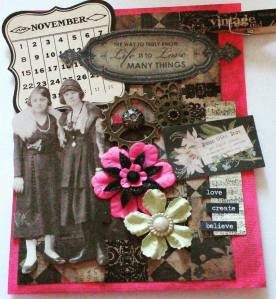
Image two vintage

This week’s vintage art collage/card turned out great! I had a lot of fun with this project and reflected on its meaning for my life and the lives of others. The month of November is one of my favorite times of the year and this piece shows much of my creative side. Many of you will recognize the mix-media I used for this craft. Among the supplies are Tim Holtz products and The Paper Studio. The background is heavy card stock and pattern paper I punched out into small squares. As you can see, I used layers and added metal and brads.

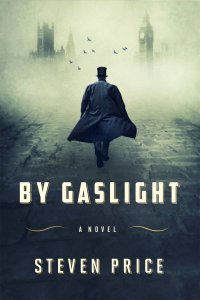
By Gaslight

I’m not sure I will have time for art this weekend. I have several social functions to attend to and I want to get a little bit more through, By Gaslight by Seven Price. This story has over seven hundred pages! Ahem, that is a lot of pages for someone who has a backlog of reviews a mile long and has a millions other things going on.

I hope you all have a wonderful weekend and thank you for visiting Layered Pages this week.

Stephanie M. Hopkins


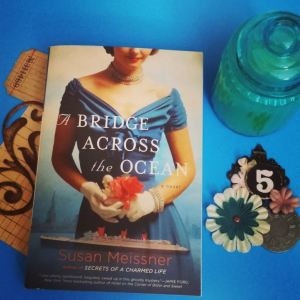
Book Spotlight: A Bridge Across the Ocean by Susan Susan Meissner

A birdge across the ocean

About the book:

Wartime intrigue spans the lives of three women—past and present—in the latest novel from the acclaimed author of Secrets of a Charmed Life.
 
February, 1946. World War Two is over, but the recovery from the most intimate of its horrors has only just begun for Annaliese Lange, a German ballerina desperate to escape her past, and Simone Deveraux, the wronged daughter of a French Résistance spy.

Now the two women are joining hundreds of other European war brides aboard the renowned RMSQueen Mary to cross the Atlantic and be reunited with their American husbands. Their new lives in the United States brightly beckon until their tightly-held secrets are laid bare in their shared stateroom. When the voyage ends at New York Harbor, only one of them will disembark…

Present day. Facing a crossroads in her own life, Brette Caslake visits the famously haunted Queen Mary at the request of an old friend. What she finds will set her on a course to solve a seventy-year-old tragedy that will draw her into the heartaches and triumphs of the courageous war brides—and will ultimately lead her to reconsider what she has to sacrifice to achieve her own deepest longings.

Available on Amazon

Author Website 

Characters in Motion with Cryssa Bazos

When I first started writing, I took a historical fiction course and I still remember the advice that the instructor gave us, which can apply to any fiction: Consider how the character moves around the page. This breathes life into the character as he/she goes about the business of achieving their personal story quest. I quickly found out that it was not enough for them do random actions; instead, the action should do double duty to reflect back on character.

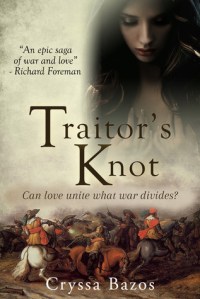
Traitor's KnotTraitor’s Knot, is the story of two fictional characters, James Hart, a former Royalist officer, and Elizabeth Seaton, a herbalist, who fall in love against the backdrop of the English Civil War.

James hasn’t been able to put the war behind him. After the execution of King Charles I, the regicide Parliamentarians are now in control of the country. James refuses to swear allegiance to the new regime, nor will he return home to Coventry to repair his severed relationship with his father. Everyone in Warwick knows him as the ostler of the Chequer and Crowne, but few realize that he’s the highwayman who has been preying on Roundheads.

The first scene that I wrote with that advice in mind is still in my novel today. The scene has been modified through subsequent drafts, but this particular piece survived as it initially written:

“The war’s over, lad. Put it behind you, and look to the future before it’s too late.”

 James studied his chipped tankard. “You have tables to clean.”

 Henry merely snorted and left.

Put it behind him? He’d have to accept defeat first. James traced his thumb along the    hairline cracks in his cup, then rotated it until he found a smooth, unblemished curve. If only he saw this section, would he fool himself into believing the tankard was undamaged? Frowning, he took another swig of ale. The brew failed to wash the bitterness away.’

Here is a man who spent long, bitter years fighting for the king, but now he’s forced to accept that the usurpers have taken over the country. James has had to pretend to pick up the pieces, but he can’t let go of the past. He’s had to swallow his pride while biding his time for the return of the new king, Charles II, to regain his crown. James’s apparent compliance to the new regime is as precarious as that tankard, and any moment he will shatter.

James’s frustration is manifested in many ways. After being rejected by Elizabeth and having to deal with annoying enquiries from the new constable, Lieutenant Hammond, James’s agitation escalates through the scene. At first, as he’s grooming his horse, his brush strokes are harsher than normal:

‘James reached for a brush and started running it through Sovereign’s coat with brisk strokes. He made several passes before the horse tossed his head and took a step back. “Easy,” James said, and grasped him by the halter. When the horse continued to agitated, James grimaced and eased the pressure.’

Later on the scene, when Henry tries to drill into his head, ‘The war is over, and nothing you do will change the fact that these Roundheads control our lives, from that horse brush you’re holding to the ale that flows through my kegs.” James’s temper boils over:

“I will not accept that,” James snapped and whipped the brush into the bucket. The tin rattled and nearly tipped. “If I could, I’d have gone back to Coventry, belly exposed, to take my kicks there. I am not a beaten dog…’”

He then kicks the bucket and sends it clattering across the straw.

But it’s not all teeth grinding frustration for James. Even in a quieter moment of reflection, I use his actions to demonstrate that:

‘Through there were a number of chores he needed to finish in the barn before he turned in, he couldn’t muster the will to leave. Instead, he picked up a long twig and started drawing shapes in the ground with its tip. It was only when the door opened and Elizabeth stepped outside that he realized he had been waiting for her.’

My heroine, Elizabeth Seton, is a young woman who has had her family ripped apart during the war. She and her mother have been shunned in her community after her father was killed during a failed Royalist uprising. After her mother passes away, she is determined to carve out a new life out for herself and moves to Warwick to live with her aunt.

Elizabeth is subtler in how she walks around the page, but her actions reflect her character. Being a healer, she’s keenly attuned to the sense of touch. When she first sees her aunt’s stillroom, she connects to the wonders through touch.

‘Elizabeth’s fingertips brushed over the labels: monkshood, foxglove, and sweet woodruff. I could lose myself in this place. A thrill rippled through her.’

Even her aunt’s coveted collection of herbal recipes is handled with reverence, and as she examines the volume, she’s careful not to crease the pages.

The first time that Elizabeth finds herself alone with James, she’s on a riverbank working out her frustration by throwing rocks in the river. Later, when he’s managed to take her hand, she responds to the awakening of new emotions:

‘His touch was warm and stirring, the contact intimate. His fingers explored her palm, following the gentle curves to its hollow, then lingering on the tips of her fingers. The way his fingers brushed over her skin felt as she imagined a kiss to be.’

Elizabeth is a woman who has to maneuver between living within the rigid constricts of society and expressing her individuality. I often show this in a number of ways, from the way she dresses (she opts for a blue woolen skirt, over more serviceable greys or browns) to even how she deals with her hair.

Women at that time would have worn a coif with hair sedately bound. Elizabeth is no different, however, there is always one dark lock that will not be pinned back or confined, and she is often trying to tuck it behind her ear. I intended this to represent Elizabeth’s streak of independence. While she attempts to subdue it, its nature is otherwise.

Even a first meet market scene provides an opportunity to show her individuality. When James sees Elizabeth wending her way through the market, he notices what draws her attention amongst the stalls:

‘While fancy ribbons and laces had not attracted her interest, a stack of pamphlets and chapbooks made the difference.’

Literacy was growing amongst women during this century, but her interests would have still marked her as unique, and James was struck by this.

I believe it’s important to reveal characters through a variety of different ways, not just through dialogue. How they walk around the page and their reflective actions often reveal more than any declarations they make.

About Author: 

Cryssa

Cryssa Bazos is an award winning historical fiction writer and 17th century enthusiast with a particular interest in the English Civil War. She is a member of the Historical Novel Society, the Romantic Novelist Association and is a co-editor and contributor of the English Historical Fiction Authors blog. Her debut novel, Traitor’s Knot, is published by Endeavour Press. For more stories, visit her blog.

Social media links:

Website

Facebook

Twitter: @CryssaBazos

Instagram

Traitor’s Knot is available:


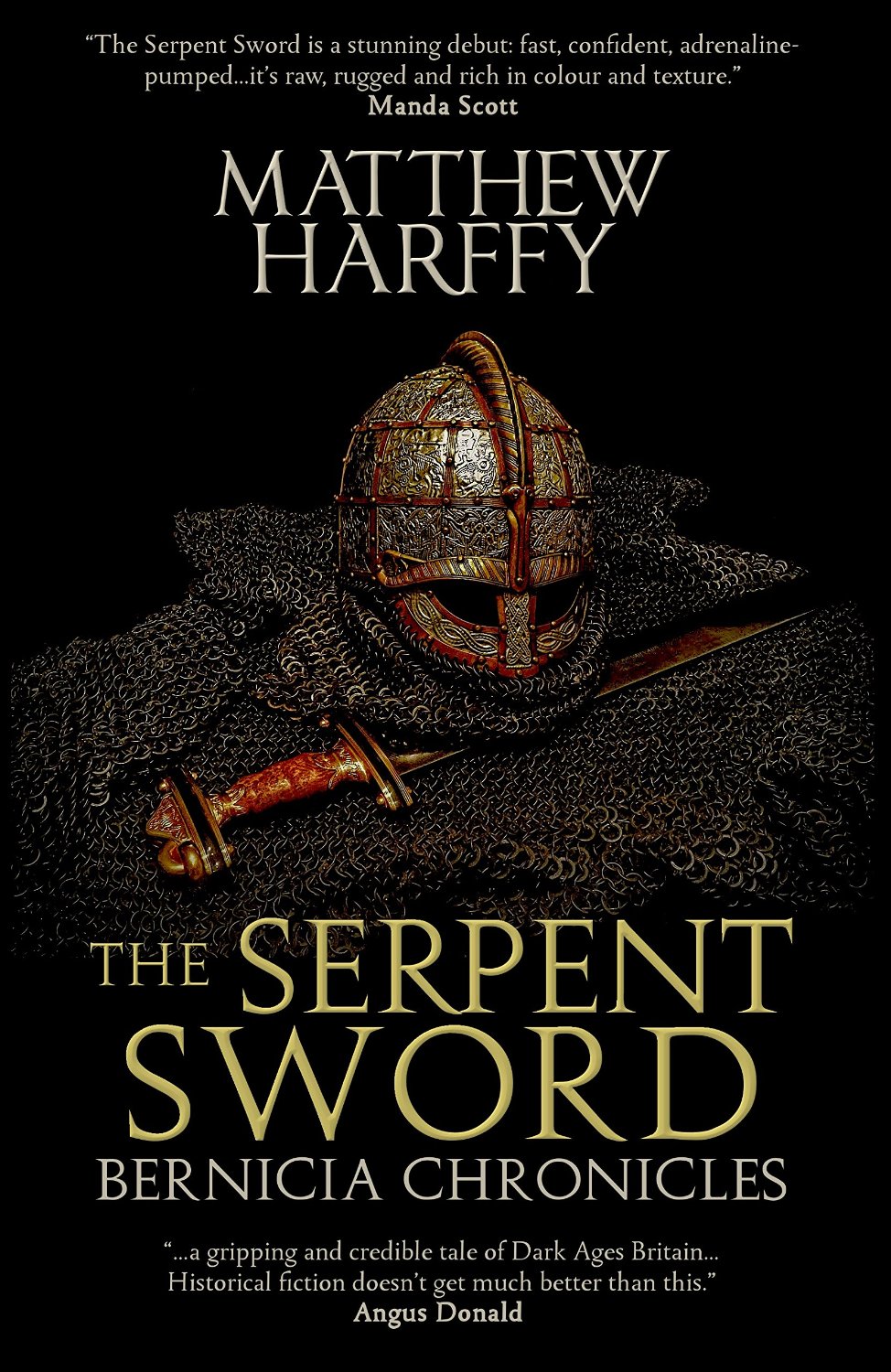
Book Review: The Serpent Sword by Matthew Harffy

The Serpent Sword Cover

BRITAIN 633 A.D. Certain that his brother’s death is murder, young farmhand Beobrand embarks on a quest for revenge in war-torn Northumbria. When he witnesses barbaric acts at the hands of warriors he considers his friends, Beobrand questions his chosen path and vows to bring the men to justice. Relentless in pursuit of his enemies, Beobrand faces challenges that change him irrevocably. Just as a great sword is forged by beating together rods of iron, so his adversities transform him from a farm boy to a man who stands strong in the clamour and gore of the shieldwall. As he closes in on his kin’s slayer and the bodies begin to pile up, can Beobrand mete out the vengeance he craves without sacrificing his own honour … or even his soul? 

My thoughts:

Seventh Century Britain has been a deep fascination for me of late and there are few authors who write about this period-in my opinion-that really draws me in. Three comes to mind and Matthew Harffy is one of them. The setting in this story is Northumbria and it is made up of two Kingdoms, Berninia and Deira. I really like those names for some reason. To give you a picture of how small these Kingdoms were, Deira was probably smaller than the county I live in the USA. Civilization at this time was so untamed, wild and dangerous. Savagery was not uncommon. While reading through this book, I couldn’t help but keep thinking that just to survive in a single day in the Dark Ages was a challenge to put it mildly.

In this story, you will find Beobrand’s challenges greater still. What he came against is-what’s the word I’m looking for-brutality more times than not it seemed like. His will to survive and find his brothers killers were extremely courageous and admirable. Especially during those times. You saw him become stronger not only in his resolve to bring justice for his brother but he had to grow up quickly. He really didn’t have a choice. He was a man of conscious and that is often put to the test in this story. One example is when he witnessed violence towards women. Those scenes were hard to read but I felt in this story it was relevant and I was able to get through it. Maybe I was little scathed…

There was a battle in the story that was a significant time in Britain and I really enjoyed reading about it. Matthew has a knack for writing historical events with such imagery and clarity. One can only think he portrayed this as if he was actually there. A sign of a good historical fiction writer is to take the reader to the setting, period and have them believe they’re actually witnessing it for themselves.

This story is a great achievement for a debut and it was well worth investing my time reading. Harffy pursues his writing endeavors with zeal, passion and creativity. So much so, you will be swept away to the Dark Ages. A powerful story, rich with history, conflict, politics, religions of that time, intense situations, danger, powerful characters and historical figures. If you are interested in the Dark Ages or looking for a first read in this period, this book is for you.

Stephanie M. Hopkins

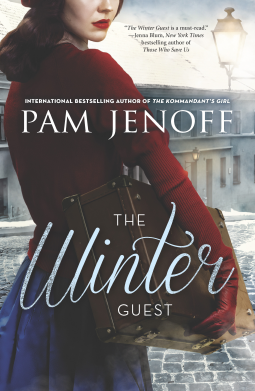
Book Review: The Winter Guest by Pam Jenoff

cover48919-medium

The Winter Guest by Pam Jenoff

Harlequin MIRA

Pub Date   Aug 26 2014

My thoughts:

Two eighteen year old twin sisters-Helena and Ruth-are living in the mist of war and the Nazi occupation in Poland. Their father dead and their mother in the hospital, they struggle to take care of their younger siblings. Food is sparse and they are in fear of the constant threat of the Nazi’s arresting them or worse. Helena and Ruth couldn’t be more different in personalities. Helena has a daring, and courageous spirit-ventures out to the local village almost every day, to buy food. (A village where children grew up and married and the sons worked the same jobs their fathers did….no one left until the war…. For the daughters, marriage was the best option.) Every time she ventures out it becomes more and more dangerous and she can trust no one….

One day Helena discovers an American Soldier stranded and helps him. He is wounded, needs food and in the constant threat of the Nazis discovering him, she continues to help him. And even more dangerous is that he is a Jew. As she helps him, their relationship grows and her resolve to not abandon him even though she is keeping him a secret from her sister makes their situation more dangerous as Helena and the soldier make plans to flee, taking her family with them.

Ruth taking the role of care-giver to her younger siblings in her mother’s place, clothes them, makes sure they are clean and feeds them with what little they have, all the while longing for a husband and a home of her own (She was the sister that expected to marry). As Ruth discovers Helena’s secret of helping the soldier and sees how her sister feels for this soldier, Ruth becomes jealous and makes an unwise choice and betrays Helena that could put all their lives in danger. The choices that the two sisters make forever changes their lives and changes the course of their families’ future. Without giving too much detail away, I couldn’t help thinking throughout the story if that only Ruth would have realized the importance of her role to her siblings and their survival….would the outcome have been different then it was.

This story touches on several themes that really made an emotional impact. Betrayal and the effects of that, the importance of family, survival, the realities of war, persecution, and love. The author gives vivid and realistic details throughout the story and her flow of speech has you hanging on to every word. This book is one you won’t want to put down and when you are finished reading, you will remember for a long time after.

Stephanie Moore Hopkins