Weird Wednesday: An Exploration of Our Quirky World

Nineteenth Century Slang, Phrases and Meanings
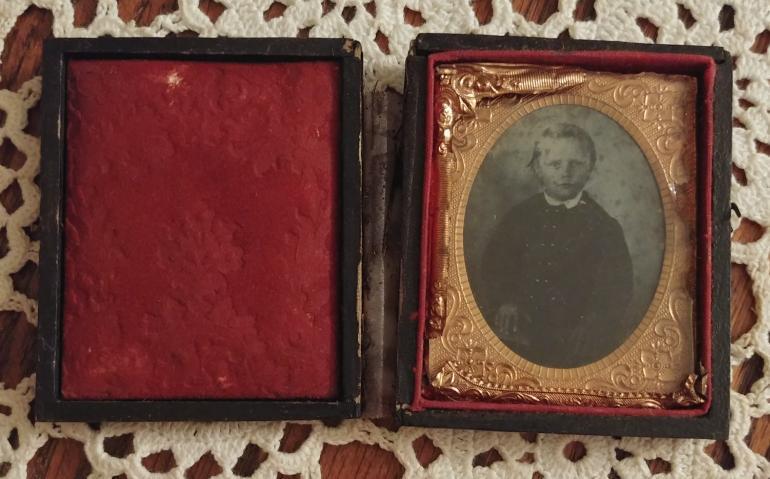
19th Century Family Heirloom

We live in an extraordinary quirky world that often times we forget to pause in our busy lives to notice. During these times many cannot venture outside-another great reason to pick up a book-so we are bringing our explorations to you.

I’m obsessed with history and cultures from all walks of like. A particular favorite of mine-because I read and write stories in the time period-is nineteenth century history in America. Did you know that many of our expressions and slang come from what many considered forgotten or overlooked? Today we are taking a look at a few quirky slang words and phrases from the nineteenth century and perhaps, we will find a few similar to our modern-day slang. But before we do, and without going too much in-depth on this subject, lets’ look at its definition and a minuscule of the development.

Many slang words and phrases were brought to America from other countries and thus been adopted. Subcultures blending and becoming our main culture-if you will. Slang is ingrained in Americans’ and many don’t realize they are using it or where it comes from or how it evolves. Truth be told, it is difficult to say where exactly it all originated from.Often times, the meaning of the words change or the word can be used for different purposes.. For example: In the American Civil War Era, the word, “Dictator,” means: “The nickname of a 13-inch seacoast MORTAR mounted on a railroad flatcar and utilized during the siege of Petersburg. A.k.a the Petersburg Express.” In today’s society, “Dictator,” is commonly known as a country governed by a Dictator. Another example is, “Dresser,” The usage of this word during the American Civil War Era meant: “A volunteer or medical student assigned the task of dressing wounds. Today we associate the word as a piece of furniture that has drawers to hold clothing, house items and etc…
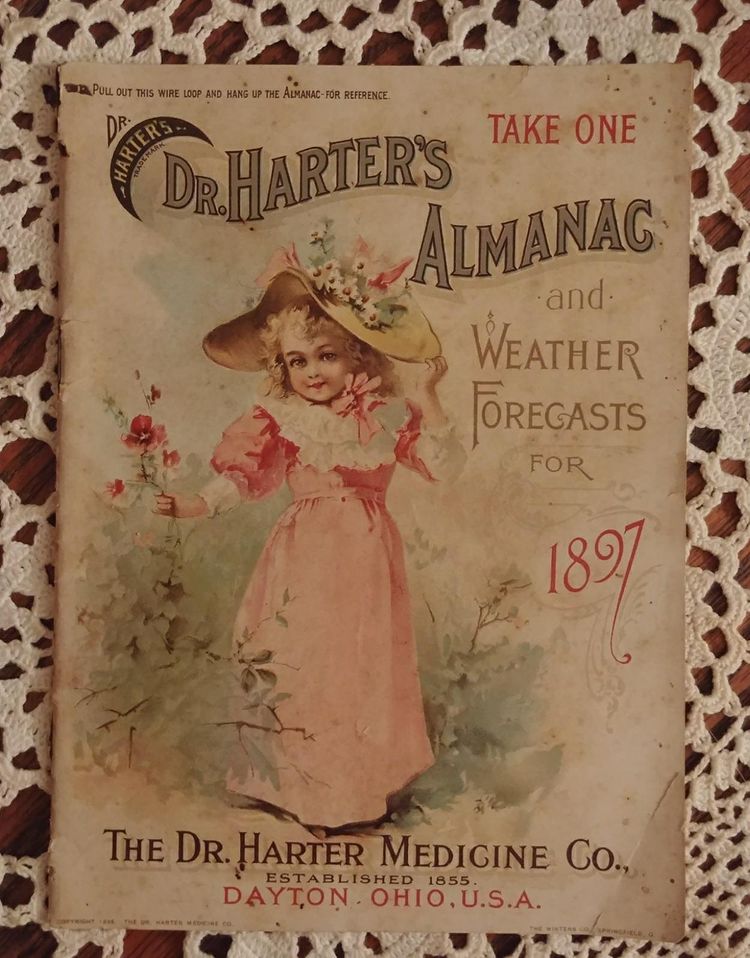
19th Century Family Heirloom

According to Britannica: “Slang, unconventional words or phrases that express either something new or something old in a new way. It is flippant, irreverent, indecorous; it may be indecent or obscene. Its colorful metaphors are generally directed at respectability, and it is this succinct, sometimes witty, frequently impertinent social criticism that gives slang its characteristic flavor. Slang, then, includes not just words but words used in a special way in a certain social context. The origin of the word slang itself is obscure; it first appeared in print around 1800, applied to the speech of disreputable and criminal classes in London. The term, however, was probably used much earlier. The term, however, was probably used much earlier.” Click on the Britannica site to read more about it their interpretation.  
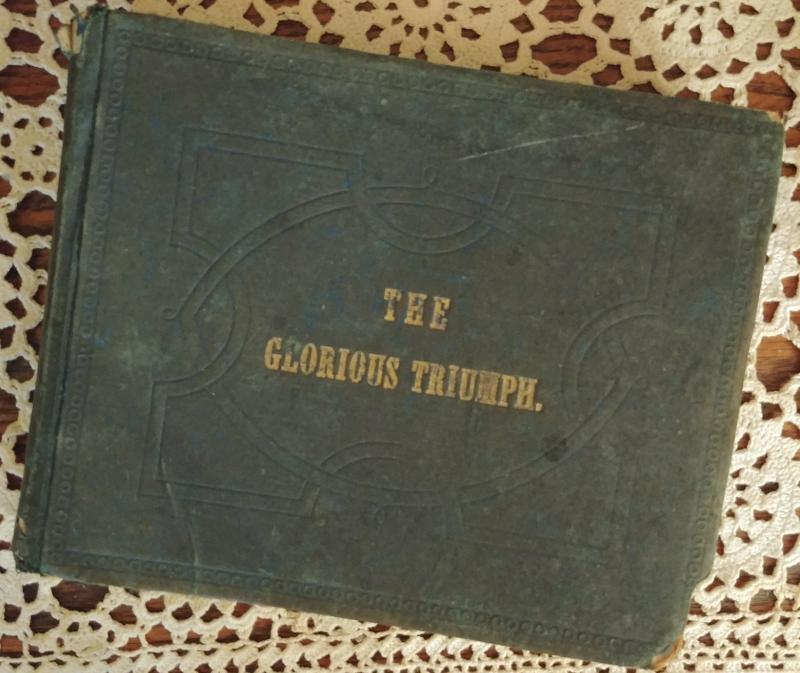
19th Century Family Heirloom

19th Century Slang and phrases used in America

Here are a few quirky slang and phrases you probably have never heard of:

Hornswoggling, Honey-fuggling, Give me jesse, Bottom fact, Hang up one’s fiddle, To give up, See the elephant, gallnipper, Go the whole hog: to go all the way, Acknowledge the corn, and I’ll Hang up my fiddle.  

Here are a few that you might know:

Humbug, Dad-blame it, You can sass me, You cussed scalawag, How came you so, they’re “Fixin’ to” do it, Carryings-on, Crazy as a loon, Almighty, grit, Bad egg, balderdash, dude (a dandy), and Over yonder.
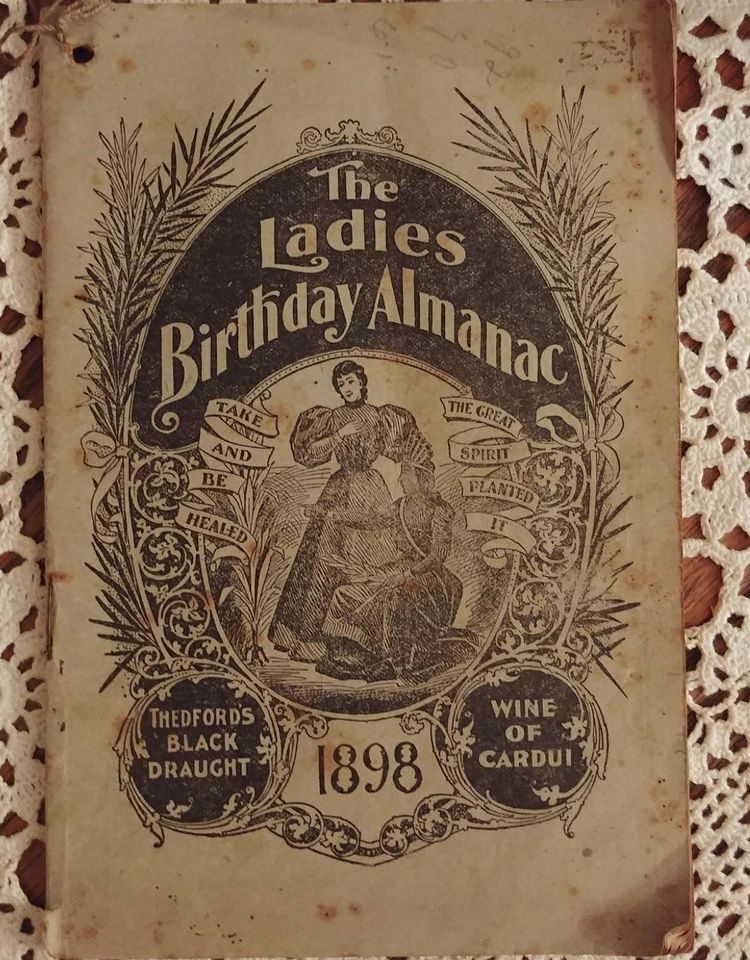
19th Century Family Heirloom

Meanings of a few:  

Grit: guts; courage; toughness.

Hang up one’s fiddle: to give up.

Go the whole hog: to go all the way.

Almighty: huge

Bad egg: a bad person; a good-for-nothing person.

My personal favorites (Southerners Use):

A-hootin’ and a-hollerin’, Bless your heart, Fixin’ to, I reckon, Hold your horses, Well, I declare, Heavens to Betsy, and Hush your mouth, Water under the bridge, Hogwash, Stuff and nonsense.

Mind your own beeswax – started as a retort in the 1700’s. I remember using that phrases often as a child. Ha!

I’ve only scratched the surface of this fascinating and quirky topic and what a subject to explore! One can go down a rabbit hole with this. What are a few quirky slang words and phrases from the nineteenth century that you know? -Stephanie Hopkins

Images may be subjected to copyright. In order to use art images or any content on Layered Pages platform, please ask permission from Stephanie Hopkins
Conversing About Novellas

I’ve committed 2021 to be a year of catching up-somewhat-on my back list of books that have been patiently waiting on me. Well, maybe not too patiently. The new year brings new reading goals, habits and a fresh start on many things. This week, I have pondered the idea of adding more novellas to my ever-growing pile of books I want to absorb.

There are various opinions about reading novellas. Some say it is a waste of time and leaves you unsatisfied, but I beg to differ. I admire the writer who takes on the task of weaving a story with fewer words. Often times when having read a six-hundred-page novel, I wanted more. So, there you are. It is not, in truth, about the number of pages but what you make of them and allowing your imagination to explore the what-ifs. -Stephanie Hopkins

Our Souls at Night by Kent Haruf

Published May 28th 2015 by Alfred A. Knopf

A spare yet eloquent, bittersweet yet inspiring story of a man and a woman who, in advanced age, come together to wrestle with the events of their lives and their hopes for the imminent future.

In the familiar setting of Holt, Colorado, home to all of Kent Haruf’s inimitable fiction, Addie Moore pays an unexpected visit to a neighbor, Louis Waters. Her husband died years ago, as did his wife, and in such a small town they naturally have known of each other for decades; in fact, Addie was quite fond of Louis’s wife. His daughter lives hours away in Colorado Springs, her son even farther away in Grand Junction, and Addie and Louis have long been living alone in houses now empty of family, the nights so terribly lonely, especially with no one to talk with.

Their brave adventures – their pleasures and their difficulties – are hugely involving and truly resonant, making Our Souls at Night the perfect final installment to this beloved writer’s enduring contribution to American literature

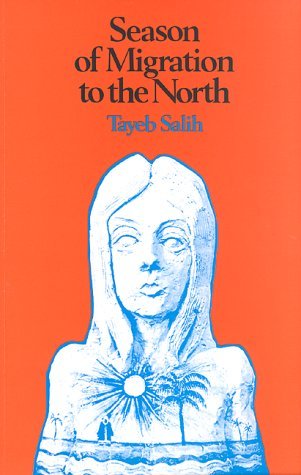
Season of Migration to the North by Tayeb Salih

Published January 1st 1970 by Heinemann (first published 1966)

After years of study in Europe, the young narrator of Season of Migration to the North returns to his village along the Nile in the Sudan. It is the 1960s, and he is eager to make a contribution to the new postcolonial life of his country. Back home, he discovers a stranger among the familiar faces of childhood—the enigmatic Mustafa Sa’eed. Mustafa takes the young man into his confidence, telling him the story of his own years in London, of his brilliant career as an economist, and of the series of fraught and deadly relationships with European women that led to a terrible public reckoning and his return to his native land.

But what is the meaning of Mustafa’s shocking confession? Mustafa disappears without explanation, leaving the young man—whom he has asked to look after his wife—in an unsettled and violent no-man’s-land between Europe and Africa, tradition and innovation, holiness and defilement, and man and woman, from which no one will escape unaltered or unharmed.

Season of Migration to the North is a rich and sensual work of deep honesty and incandescent lyricism. In 2001 it was selected by a panel of Arab writers and critics as the most important Arab novel of the twentieth century. 

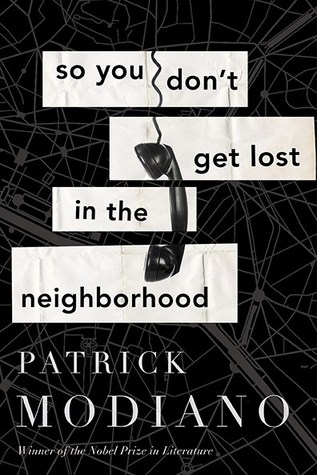
So You Don’t Get Lost in the Neighborhood by Patrick Modiano, Euan Cameron (Translation)

Published September 15th 2015 by Houghton Mifflin Harcourt

A haunting novel of suspense from the winner of the 2014 Nobel Prize in Literature

In the stillness of his Paris apartment, Jean Daragane has built a life of total solitude. Then a surprising phone call shatters the silence of an unusually hot September, and the threatening voice on the other end of the line leaves Daragane wary but irresistibly curious. Almost at once, he finds himself entangled with a shady gambler and a beautiful, fragile young woman, who draw Daragane into the mystery of a decades-old murder. The investigation will force him to confront the memory of a trauma he had all but buried.

With So You Don’t Get Lost in the Neighborhood Patrick Modiano adds a new chapter to a body of work whose supreme psychological insight and subtle, atmospheric writing have earned him worldwide renown — including the Nobel Prize in Literature. This masterly novel, now translated into twenty languages, penetrates the deepest enigmas of identity and compels us to ask whether we ever know who we truly are.

The Lifted Veil by George Eliot

The Penelopiad by Margaret Atwood

The Slow Regard of Silent Things by Patrick Rothfuss

The Uncommon Reader by Alan Bennett

What are some novellas on your to-read list?

Mixed Media: Rolodex Card Art

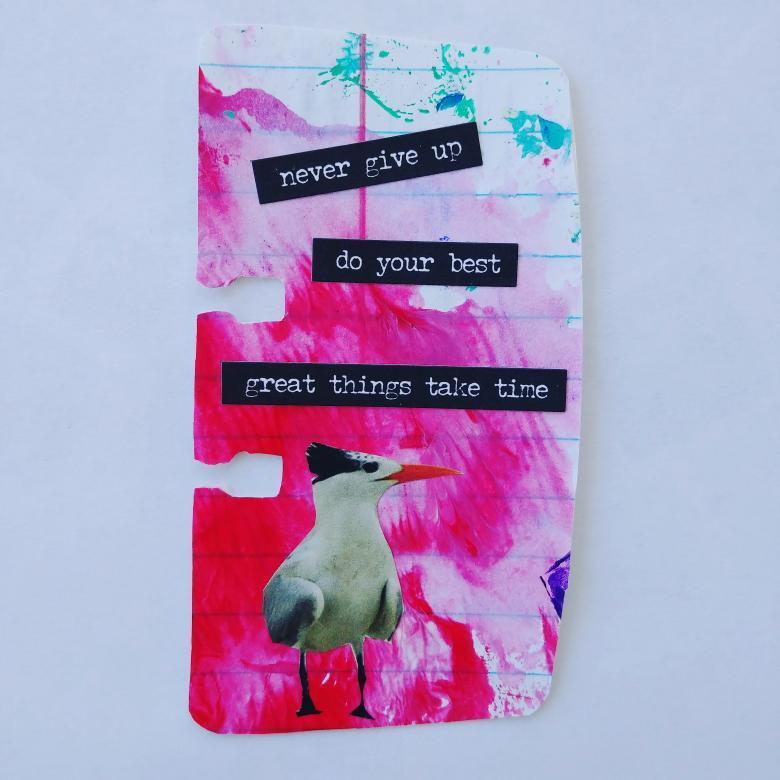
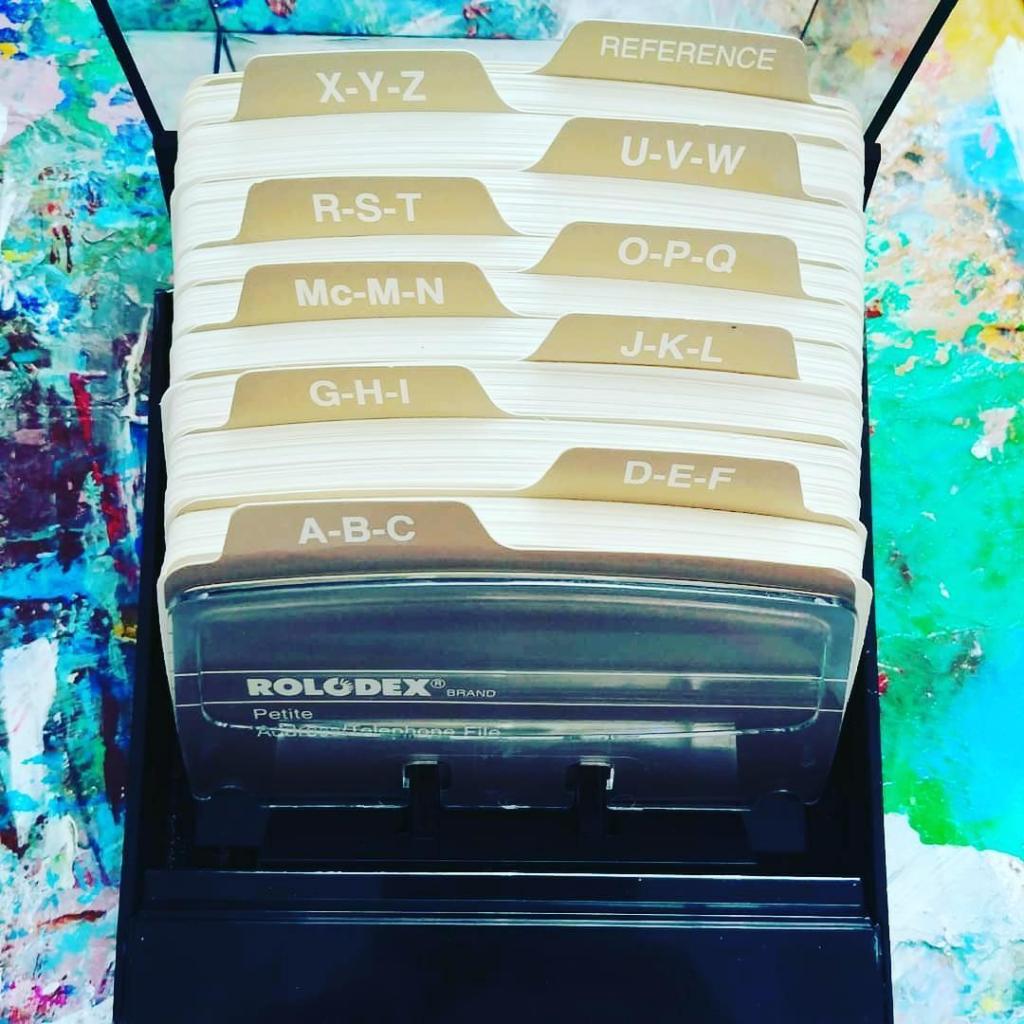
I was inspired by a fellow artist on Instagram to create art on Rolodex Cards. When I first saw the artist’s cards, I was quite intrigued with idea. Crafting with this medium was a bigger challenge than I originally thought.  These cards are a lot smaller than the index cards I was working with beforehand. I struggled to find my way in the beginning. After four or so cards completed, my muse awoken!

I’m thrilled with how many of them have turned out and looking forward to crafting more of these beauties. The pictures you see here are among a few of the cards I’ve created thus far.

I did have a few thoughts on what I would do with them but I think I will leave them in their original container. It certainly adds more interest that way.

Which one is your favorite? What is your latest inspiration for crafting and art making?

Supplies:

Rolodex cards, ephemera and images for collage, stickers, acrylic paint, stamps and ink.

Be sure to comment below and click on the subscribe button to stay updated with new content.

Stephanie Hopkins

Images may be subjected to copyright. In order to use art images or any content on Layered Pages platform, please ask permission from Stephanie Hopkins
Should Speed Reading be Your Objective?

Introduction to exploring why we read and what methods we use.

The topic of speed reading has been around a long time. For a while now I’ve been meaning to explore why it is even a consideration.

The concept of speed reading according to Wikipedia is to improve one’s ability to read quickly. Reading further on the subject, I discovered that the term was coined by Evelyn Wood in the late 1950’s. She was a school teacher who wanted to understand why some people read faster, and to create a method to increase speed. Wood claimed her intentions were also to improve comprehension.

It is safe to say that most have heard of the speed reading. Does the method over shadow the main objective that comes with reading? Or should it even be something you try? How will it benefit you? Does it really improve comprehension? Is there value in the method? Would speed reading decrease your ability to be a critical thinker? Will there be important details you might miss? Do you speed read just to see how many books you can read within a limited time? Or to reduce your ever-growing pile of books? Those are a lot of questions to ponder.

I’ve looked at this from different angels and I’ve come to the conclusion that you might as well not read if speed reading is your main objective. The point of reading is broad and a matter to explore further. One of the points of reading is to expand your knowledge. I realize that everyone learns differently. What one method might work for some; it might not work for others.

When we take the time to appreciate and reflect upon the material we are reading, we add value. Especially if you apply it. Let’s face it, you’ll enjoy a book more or get more out of it by slowing down your pace. Of course, if you incorporate reading in your daily routine, you’ll find yourself consuming books faster.

I’m still wanting to write about this subject in more depth and to discuss the many important points of reading. Looking forward to it. Who knows where this might lead us?

Stephanie Hopkins

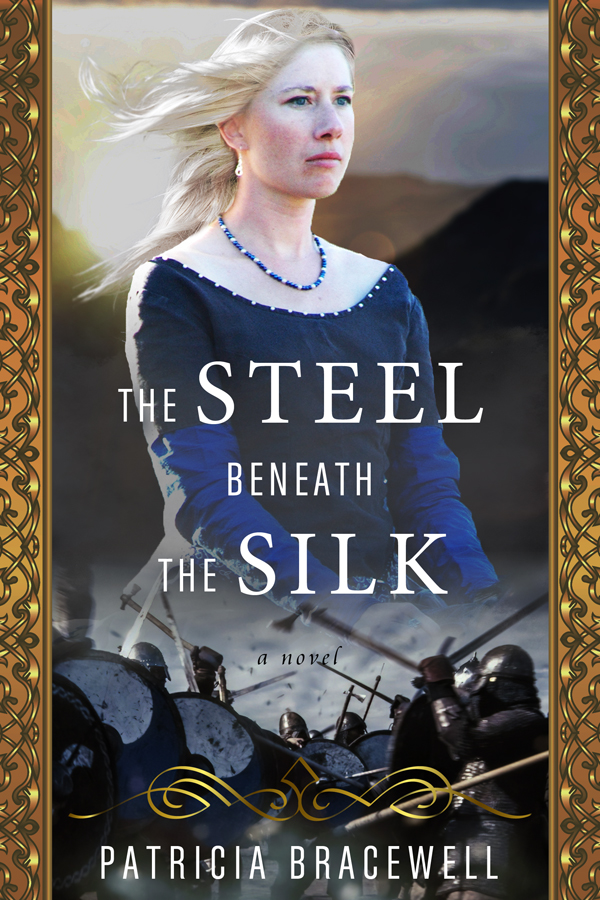
Cover Reveal: The Steel Beneath the Silk by Patricia Bracewell

A breathtaking conclusion to Bracewell’s Emma of Normandy Trilogy, brimming with treachery, heartache, tenderness and passion as the English queen confronts ambitious and traitorous councilors, invading armies and the Danish king’s power-hungry concubine.

Release Date: 2 March 2021

The eBook is available for pre-order now via the links below.

The paperback edition will be available for pre-order soon.

About the Book:

A breathtaking conclusion to Bracewell’s Emma of Normandy Trilogy, brimming with treachery, heartache, tenderness and passion as the English queen confronts ambitious and traitorous councilors, invading armies and the Danish king’s power-hungry concubine.

In the year 1012 England’s Norman-born Queen Emma has been ten years wed to an aging, ruthless, haunted King Æthelred. The marriage is a bitterly unhappy one, between a queen who seeks to create her own sphere of influence within the court and a suspicious king who eyes her efforts with hostility and resentment. But royal discord shifts to grudging alliance when Cnut of Denmark, with the secret collusion of his English concubine Elgiva, invades England at the head of a massive viking army. Amid the chaos of war, Emma must outwit a fierce enemy whose goal is conquest and outmaneuver the cunning Elgiva, who threatens all those whom Emma loves. 

Links:

Patricia Bracewell’s website

AMAZON

AMAZON.CO.UK

AMAZON AUSTRALIA

BARNES & NOBLE

KOBO

SNEAK Peek AT WHAT’S INSIDE

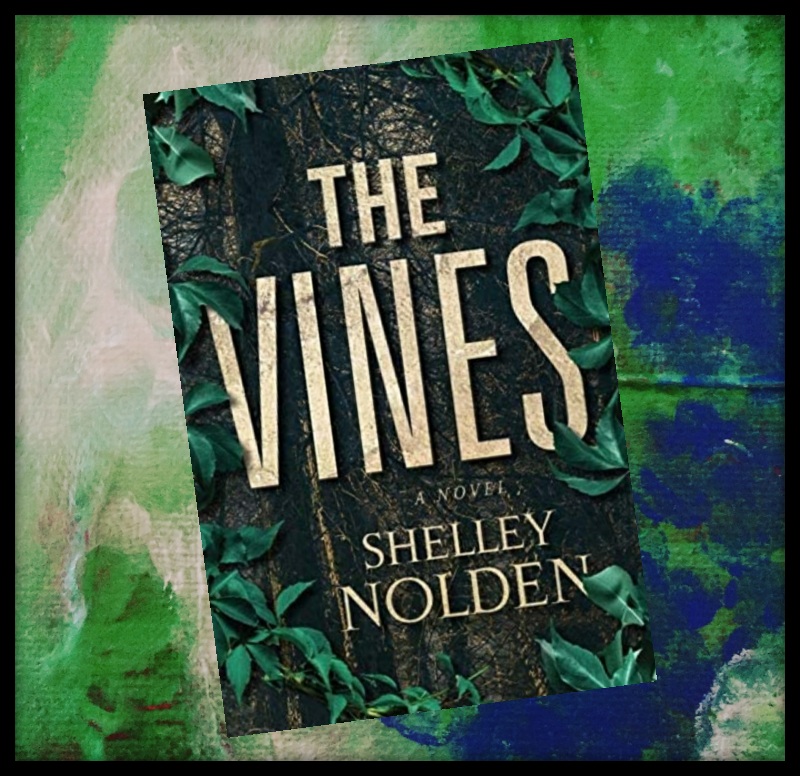
Book Review: The Vines by Shelley Nolden

About the book:

Pub Date 23 Mar 2021

In the shadows of New York City lies forbidden North Brother Island, where the remains of a shuttered hospital hide the haunting memories of century-old quarantines and human experiments. The ruins conceal the scarred and beautiful Cora, imprisoned by contagions and the doctors who torment her. When Finn, a young urban explorer, arrives on the island and glimpses an enigmatic beauty through the foliage, intrigue turns to obsession as he seeks to uncover her past—and his own family’s dark secrets. By unraveling these mysteries, will he be able to save Cora? Will Cora meet the same tragic ending as the thousands who’ve already perished on the island?

The Vines intertwines North Brother Island’s horrific and elusive history with a captivating tale of love, betrayal, survival, and loss.

My thoughts:

If I remember correctly it was last year when I discovered North Brother Island. A documentary of the Island popped up on my YouTube feed. I watched it and learned a few details about its history and thought-at the time-I would love to read a fiction story that included the history elements. Low and behold, writer Shelley Nolden wrote a dual time-line story that takes place on the mysterious Island.

I must admit I was briefly hesitant at first to read the book based on the story’s topic of contagions. It’s not that I lacked interest in that subject but because of our current world-wide state of a pandemic. I thought it might be too sensitive of a story to read at the moment. However, my curiosity had gotten the better of me and I changed my mind.

When I opened to the first page on my Kindle, it wasn’t long before I became fully absorbed in the story. Finn Gettler arrives-more like sneaks-to North Brother Island and becomes immediately intrigued with the nature reclaiming the Island. He soon comes in contact with Cora. A woman who is not only trapped on the Island but, unknown to him , a prisoner of his family.

Cora is a fascinating woman and I enjoyed how the author developed her character as the story unfolded. Her experiences and circumstance had me connecting dots about real life, past and present, medical science I’ve often thought about.

When I discovered Finn’s last name is, “Gettler,” it struck a chord. I had heard of that name before but couldn’t remember where. I delved in little research and I was stunned at what I discovered to say the least! Nolden brilliantly balances real people and events into her story.

I experienced countless emotions reading this book. Many of them were sorrowful and feelings of anger on behalf of what was happening to Cora. The other emotions, I felt strongly, were for the absolute lack of humanity of a few of the characters. What makes this story good, yet all too disturbing, is the relevancy of the subject contagions and the evil that exists in this world.

There were moments I felt a few scenes were boggled down by just a little too much detail but overall, it was a worthwhile read. I’m looking forward to reading the next book in this series!

I’ve rated this story four stars and obtained a galley copy from the publishers through NetGalley.

Stephanie Hopkins

Book Banner Created by Stephanie

Images may be subjected to copyright. In order to use art images or any content on Layered Pages platform, please ask permission from Stephanie Hopkins
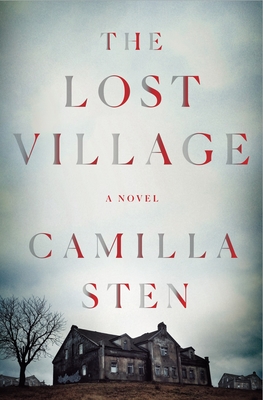
Book Review: The Lost Village by Camilla Sten

Description

The Blair Witch Project meets Midsommar in this brilliantly disturbing thriller from Camilla Sten, an electrifying new voice in suspense.

Documentary filmmaker Alice Lindstedt has been obsessed with the vanishing residents of the old mining town, dubbed “The Lost Village,” since she was a little girl. In 1959, her grandmother’s entire family disappeared in this mysterious tragedy, and ever since, the unanswered questions surrounding the only two people who were left—a woman stoned to death in the town center and an abandoned newborn—have plagued her. She’s gathered a small crew of friends in the remote village to make a film about what really happened.

But there will be no turning back.

Not long after they’ve set up camp, mysterious things begin to happen. Equipment is destroyed. People go missing. As doubt breeds fear and their very minds begin to crack, one thing becomes startlingly clear to Alice:
They are not alone.

They’re looking for the truth…
But what if it finds them first?

My thoughts:

First, I must mention that I chose this story for two reasons. The story takes place in Sweden. Perfect setting for a story such as this. How do I know? I’ve never visited the country but I have studied enough about it to know. The other reason is that I am obsessed with old abandoned towns, cemeteries, mills and homes. That is the history lover in me, one might say. Or that fact that I am always curious about how even ordinary people lived and the traces they leave behind. Having said that, everyone has a story to tell. No one is ordinary in my opinion.

This book had me hooked in the beginning stages of the story. The author set the stage with the creep vibe as soon as Alice and her crew were approaching the village. The center of the town alone…wow.

I love the period the author chose for the village people to have disappeared. Not only that but this story brilliantly highlights close knit communities, and how people are easily led.

I highly recommend reading this book and discovering-for yourself-the mysteries surrounding this hauntingly atmospheric read.

I rated this book five stars!

Stephanie Hopkins

I obtained a galley copy from the Publishers through NetGalley for an honest review.

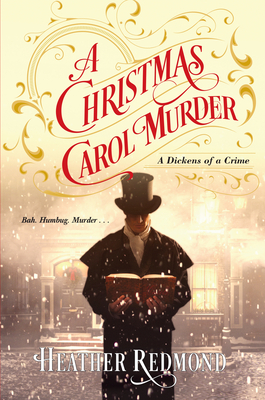
A Christmas Carol Murder (A Dickens of a Crime) by Heather Redmond

Book Spotlight: This story sounds fascinating! I love a good mystery. Love the cover! Keeping a sharp eye on this one. -Stephanie Hopkins

The latest novel from Heather Redmond’s acclaimed mystery series finds young Charles Dickens suspecting a miser of pushing his partner out a window, but his fiancée Kate Hogarth takes a more charitable view of the old man’s innocence . . .
 
London, December 1835: Charles and Kate are out with friends and family for a chilly night of caroling and good cheer. But their blood truly runs cold when their singing is interrupted by a body plummeting from an upper window of a house. They soon learn the dead man at their feet, his neck strangely wrapped in chains, is Jacob Harley, the business partner of the resident of the house, an unpleasant codger who owns a counting house, one Emmanuel Screws.
 
Ever the journalist, Charles dedicates himself to discovering who’s behind the diabolical defenestration. But before he can investigate further, Harley’s corpse is stolen. Following that, Charles is visited in his quarters by what appears to be Harley’s ghost—or is it merely Charles’s overwrought imagination? He continues to suspect Emmanuel, the same penurious penny pincher who denied his father a loan years ago, but Kate insists the old man is too weak to heave a body out a window. Their mutual affection and admiration can accommodate a difference of opinion, but matters are complicated by the unexpected arrival of an infant orphan. Charles must find the child a home while solving a murder, to ensure that the next one in chains is the guilty party . . .

Two in One Talk About Books

Today I’m doing a two in one post about titles that stand out to me and a cover crush. I know. Usual for Layered Pages but fun! When browsing books to choose to read, one can’t help but be drawn in by unique books titles. There are times I feel that the title alone is what draws my interest and want to discover its meaning. Strong titles are important to the story as are the cover designs.

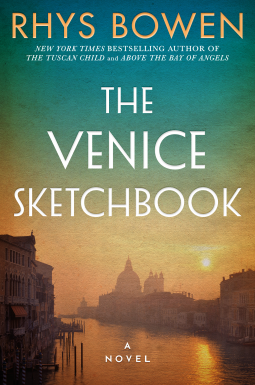
Several of these books could easily be my cover crush choice but I need to pick just one for today. Hmm… I’m going to go with, “The Venice Sketchbook” by Rhys Bowen. I love the blend of colors and the romantic feel to the landscape. The title immediately caught my attention because of the mention of a sketchbook. That word alone draws in intrigue, stories, imagery, a window to the owner’s mind and secrets captured on paper. I obtained a copy from the publishers through NetGalley and I can’t wait to dive into the story!

About the book:

The Venice Sketchbook

Lake Union Publishing

Pub Date 13 Apr 2021

Love and secrets collide in Venice during WWII in an enthralling novel of brief encounters and lasting romance by the New York Times bestselling author of The Tuscan Child and Above the Bay of Angels.

Caroline Grant is struggling to accept the end of her marriage when she receives an unexpected bequest. Her beloved great-aunt Lettie leaves her a sketchbook, three keys, and a final whisper…Venice. Caroline’s quest: to scatter Juliet “Lettie” Browning’s ashes in the city she loved and to unlock the mysteries stored away for more than sixty years.

It’s 1938 when art teacher Juliet Browning arrives in romantic Venice. For her students, it’s a wealth of history, art, and beauty. For Juliet, it’s poignant memories and a chance to reconnect with Leonardo Da Rossi, the man she loves whose future is already determined by his noble family. However star-crossed, nothing can come between them. Until the threat of war closes in on Venice and they’re forced to fight, survive, and protect a secret that will bind them forever.

Key by key, Lettie’s life of impossible love, loss, and courage unfolds. It’s one that Caroline can now make right again as her own journey of self-discovery begins.

*********

Other titles that stand-out and in the coming weeks I will be talking a bit about why I’m interested in them. Each title is linked to Amazon.

The Lost History of Dreams by Kris Waldherr

The Cabin at the End of the World by Paul Tremblay

A Betting Woman (A Novel of Madame Moustache)

by Jenni L. Walsh

The Straits of Treachery by Richard Hopton

Be sure to follow and check out more of my art at my Instagram!

before the second sleep cover crush

Stephanie Hopkins

Images may be subjected to copyright. In order to use art images or any content on Layered Pages platform, please ask permission from Stephanie Hopkins
Abstract Impressionism

My latest pieces will feature some of the influences of Abstract Impressionism. My fascination for layers, texture and the depth come from this form of art from many artists I have studied over the years. No only that, but from patterns and colors I observe in nature and how they coincide with each other. Later on, I will be discussing further about my interest in the medium, the artists that inspire me and when I first discovered my passion for Abstract Impressionism.

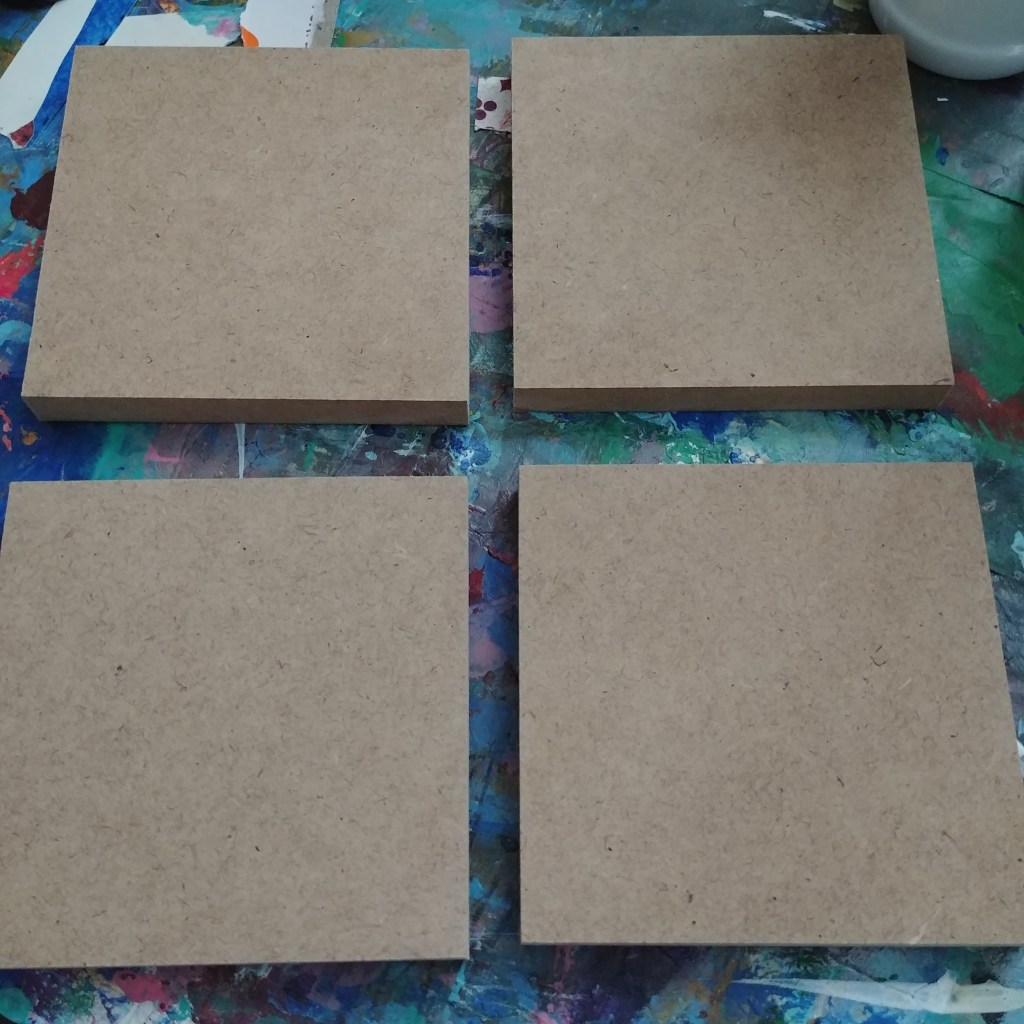
This past Thursday, Georgia had a wicked storm come through and over a million people were out of power. Of course, that was the day I had planned on starting new art pieces. The lighting was poor in my art area so I eventually moved my panels to the kitchen island. I am working with Birch and MDF Boards and I have begun the first layers of three and prepping the others with Gesso. The third piece is not shown in these pictures. Have a blessed weekend! -Stephanie Hopkins

The definition of Abstract Impressionism according to Wikipedia: “Is an art movement that originated in New York City, in the 1940’s.  It involves the painting of a subject such as real-life scenes, objects, or people (portraits) in an Impressionist-style, but with an emphasis on varying measures of abstraction. The paintings are often painted en plein air, an artistic style involving painting outside with the landscape directly in front of the artist. The movement works delicately between the lines of pure abstraction (the extent of which varies greatly) and the allowance of an impression of reality in the painting.”

Be sure to follow and check out more of my art at my Instagram!

Images may be subjected to copyright. In order to use art images or any content on Layered Pages platform, please ask permission from Stephanie Hopkins