Purple Irises With Hues Of Gold And Fragility – Poem by Chris Lane

Painting 12-18-17 II by Stephanie

The purple Irises glistened

in the morning stillness

with three tongues that lick

as if to catch a dew drop

upon each tip

Golden bearded and strong

these living gems

calling for those lucky enough

to scent and see them.

Rhizomes barely catch the earth,

with roots that serve as a place of rebirth

Dividing as they go

year after year, they double in show

Oh, this beauty with for my eyes to see

I cannot keep them for only me

with friends true I shall share.

and next year bring to them

this joy I find in

a purple world with hues of gold and fragile love.

© Calac

Chris Lane

Painting by Stephanie M. Hopkins

Q&A With Alfred Woollacott, III

Alfred with book resized to 300

I’d like to welcome Alfred Woollacott, III to Layered Pages today. Alfred retired from KPMG after a career spanning 34 years, choosing to reside full time at his summer residence on Martha’s Vineyard. Being “45 minutes from America” and with a 50 – 60 hour per week void to fill, he began dabbling into his family history. His dabbling grew into an obsession, and he published several genealogical summaries of his ancestors. But certain ones absorbed him such that he could not leave them. So, he researched their lives and times further while evolving his writing skills from “just the facts ma’am” to a fascinating narrative style. Thus, with imagination, anchored in fact and tempered with plausibility, a remote ancestor can achieve a robust life as envisioned by a writer with a few drops of his ancestor’s blood in his veins.

When not writing, Al serves on several Boards, and keeps physically active with golf, tennis, and hockey. He and his wife of 44 years, Jill, have four children and ten grandchildren.

Thank you for talking with me today, Alfred. Please tell you how you got into story-telling?

My blessing to spin a good story comes from my namesake, Alfred Sr., sprinkled, at times, with humor — genes from my maternal grandmother, Gracie. Beneath an extemporaneous exterior, lies a logical, results-oriented mind that spent a career at KPMG, an international accounting firm, researching facts and forming conclusions. So when I retired, dabbling in genealogical facts came naturally, and I got hooked. For a few on my ancestral tree, the facts cried out, “There’s a story here, add more leaves to the branches.” So I allowed the extemporaneous to spin a yarn around the facts and brought an ancestor to life

Tell me about your book, The Immigrant.

The Immigrant

The Immigrant is a fictionalized account of my seven-greats grandfather, John Law, who came to The Colonies in chains, a Scottish prisoner of war captured during the Battle of Dunbar. Upon his arrival in the winter of 1651, he began his indenture at the Saugus Iron Works and concluded it as a public shepherd for the town of Concord. Freed from his indenture, he began life anew to endure a Puritan Theocracy, English bigotry, and Native American dangers. Throughout all his ordeals, he wondered if God ever heard him. One day, he did.


Tell me about your book, The Believers in The Crucible Nauvoo.

The Believers In The Crucible Nauvoo

The book is the second of a planned trilogy, whose protagonist, Naamah Carter, like me descends from John Law. After enduring early parental deaths, she discovers renewed meaning to her strong Christian beliefs through Joseph Smith’s testaments. His following in Peterborough, New Hampshire flourishes, yet Naamah, her beloved Aunt Susan, and other believers suffer family strife and growing community resentment. She leaves her unfriendly situation and journeys to Nauvoo to be among thousands building their Prophet‘s revelation of an earthly Zion on a Mississippi River promontory. There, her faith is tested, enduring loss of loved ones and violence from those longing to destroy Nauvoo. With the western exodus imminent, she faces a decision that runs counter to her soul and all she holds sacred – whether to become Brigham Young’s plural wife.

The novel weaves the momentous events of Joseph Smith’s martyrdom and Brigham Young’s succession with Naamah’s story and offers differing perspectives to create a mosaic of Nauvoo, the crucible out of which arose today’s Church of Jesus Christ of the Latter-day Saints.

In your story, The Immigrant, you introduce an historical figure John Law, a young Scotsman captured by Cromwell’s forces during a well-known battle “The Battle of Dunbar.” For those who have not heard of John Law, can you please tell us a little about him historically and what his faith is?

Yes, John law is a historic figure, yet deemed too insignificant for the historian’s lens. The Immigrant has brought him to life and, since he’s symbolic of 10,000 Scottish men at Dunbar 3 September 1650, their lives have been discovered in some way.  His father died in 1649 when John was thirteen. An only child, he and his widowed mother managed for a year until the War Councilor appeared in summer of 1650. “He’ll be back in time for harvest,” was the Councilor’s remark as John left. John would never see his mother again, and she would never know John’s fate.After John’s capture, he endured a ‘death march’ into northern England, a horrific six week incarceration at Durham Cathedral, and a life-changing, Trans-Atlantic crossing to the Colonies. The Massachusetts Bay Colony was established with a wave of English, the great Migration 1630-1640. Except for the indigenous, they owned a virgin paradise to craft to their liking until John Law and a few Scots trickled in as immigrants. Since then, waves of immigrants have come, even still today. Each new wave has encountered prejudice, but far less blatant or extreme than what John endured. In 1660, Mary Dyer and William Leddra were hanged on Boston Common because they were Quakers. We all are aware of Salem and 1692 witch trials.

Since John was fighting with The Covenanters against Cromwell, he was most likely a Presbyterian.

How much research went into The Immigrant?

I am a CPA turn genealogist, so a lot! Some of John Law’s genealogy down to myself has been published in two-parts in MASSOG, a genealogy-register — 16 pages with over 200 footnote. Dry as dust, yet available on my website if you’re interested. John is presumed to be a Scottish POW, which I attempted to prove through research on early Scots at NEHGS, reading books on the Saugus Iron Works, reading 1600s Middlesex County court reports including John’s will, and perusing passenger lists of the Unity and the John and Sara ships that brought Scottish POW to The Colonies. And while I know of his life from 1655 on, I can neither prove nor disprove how he got here.

I visited the Saugus Ironworks, learned how iron was made, and romanticized while at the intersection of Lawsbrook Road and School Street in Acton, MA, where John lived.  The influence of my Lawsbrook visit are the concluding scene in The Immigrant.

Who are your secondary characters in your story?

Obviously, Lydia Draper, John’s wife. During my research, I found more snippets about the Drapers than I did about John Law to wrap a story around. Lydia’s POV occurs often, particularly during the birth of their first born, later with the loss of an infant son, and during King Philip’s War. Mary Rowlandson’s capture and release had a profound effect on Lydia.

Nagoglancit, a Nashobah Native, is complete fiction. Like John, he is an outcast, and ironically unlike John, an outcast in his native land. But these two ‘outcast’ form a unique bond, tested, at times, when Lydia reveals a past encounter with natives and during King Philip’s War.

John Hoare – during my research I came to love this guy, so he is throughout the book. He counsels John to do the right thing and make an honest woman of Lydia Draper, rescues Mary Rowlandson, and builds a dormitory for the ‘friendly’ Nashobah during King Philip’s War much to Concord’s dismay.

How long did it take to write your story?

Excluding the research, which seems continual since I can be a bit anal, about a year or so.

In your story, The Believers in The Crucible Nauvoo you introduce Naamah Carter. What a beautiful name! Could you please tell us a little about her?

Naamah, wife of Noah, meaning pleasant because Naamah’s conduct was pleasing to God. Naamah Kendall Jenkins Carter was named for her aunt who died three weeks before she was born, which created an immediate bond and early interest in the afterlife.

We first meet Naamah, age 6, placing flowers on her father’s grave. There, she asks her grandfather, Reuben Law, a question, the answer to which comes years later as Naamah grapples with a life-changing decision. Precocious in her Christian beliefs, she soon found traditional teaching uninspiring until she meets Elder Eli Maginn, a Latter-day Saint missionary. The strength of her faith continues to ebb and flow as she endures life until she finds lasting solace in Temple life.

Her life is mostly among women – her mother who dies early, her sister, and her LDS sisters. Like all the women of Nauvoo, she has the resiliency needed to endure the pain and suffering that was the crucible Nauvoo. While inexperienced in dealing with men, she marries only to have her husband die soon afterward. Thus, when she meets the powerful ‘lion of the Lord’, Brigham Young, she’s at first ill-prepared, yet perseveres to forge a unique relationship.

Where can readers buy your books?

At Amazon, or discerning book stores like Bunch of Grapes, Vineyard Haven, MA, or on my website

What is up next for you?

Reuben Law and the trilogy’s last book. You have met Reuben in the first and last chapters of The Immigrant. He’s on Jarmany Hill in the opening scene of The Believers In The Crucible Nauvoo and sprinkled throughout. He’s the lynchpin between the two novels. For more about Reuben, visit my website. I sensed John Law’s presence when I paused on Lawsbrook Road, but I sensed Reuben even more. Here is a link to what I experienced in September 2009.

Is there a message you would like to give to your readers?

Historical novelists research and pour their heart and soul into their writings, as do I. But my heart has a few drops of their blood and my soul has part of their DNA. My characters bore witness to King Philip’s War, The American Revolution, and Joseph Smith’s Martyrdom and encountered prejudice for being a Scottish POW in a Puritan Theocracy or a believer in a scorned prophet. I trust that the tingles I experienced at Lawsbrook Road or on Jarmany Hill came from erstwhile dormant DNA exploding thoughts that coalesced to say, “There’s a story here.”

Author Links:

Facebook Page

Twitter

Website 

L.A.P. it Marketing LLC

What is L.A.P. it Marketing?

LAPit Logo

L.A.P. it is a social media platform that applies to a variety of professions-such as-Literature, Art and Photography. The practicalities of Internet life can be tricky for many, not everyone is computer savvy and would prefer to solely focus on their craft or they have a tight budget but need help in this arena. How does one market their own work if they have little money or they don’t understand how the market works or both? There are so many entities out there charging fees that are not doable for most or they promise what they cannot deliver. L.A.P. it has created a new concept of social media marketing and provides a unique service to showcase writers, artists and photographers work. L.A.P. it will also work with publishers, independent presses, artist/photographer galleries and other entities that involve the three areas mentioned.

L.A.P. it Marketing Website

Twitter: @lapitmarketing

Facebook Page

Instagram 


Art Expressions

Stephanie Art Card

“It is not your business to determine how good it is, nor how valuable it is, nor how it compares with other expressions. It is your business to keep it yours clearly and directly, to keep the channel open.” ― Martha Graham

L.A.P. it Marketing LLC

Cover Crush: Dreamland Burning by Jennifer Latham

Cover Crush banner

I am not a cover designer but I can agree that cover layouts play an important role in the overall presentation of stories and I must admit, often times I first judge a book by its cover.

Cover Crush is a weekly series that originated with Erin at Flashlight Commentary.
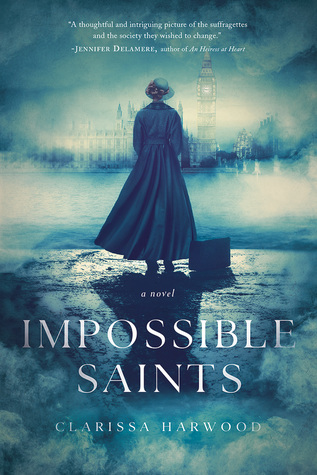
Dreamland BurningDreamland Burning by Jennifer Latham

Published February 21st 2017 by Little, Brown Books for Young Readers

When seventeen-year-old Rowan Chase finds a skeleton on her family’s property, she has no idea that investigating the brutal century-old murder will lead to a summer of painful discoveries about the past, the present, and herself.

One hundred years earlier, a single violent encounter propels seventeen-year-old Will Tillman into a racial firestorm. In a country rife with violence against blacks and a hometown segregated by Jim Crow, Will must make hard choices on a painful journey towards self-discovery and face his inner demons in order to do what’s right the night Tulsa burns.

My thoughts:

Hands down, this cover is amazing! I love everything about it and I am really interested in the premise. I have added this book to my wish-list.

Stephanie M. Hopkins

Other great cover crushes from my fellow book bloggers:

Magdalena at A Bookaholic Swede
Colleen at A Literary Vacation
Heather at The Maiden’s Court
Holly at 2 Kids and Tired
Meghan at Of Quills & Vellum
Stay calm and support book bloggers

Q&A With Photographer Scott Moore

Scott Moore with Sally

I’d like to welcome Scott Moore today to talk with me about his photography business and how he got into photography.

Scott, what is the name of your Photography business?

The name of my business in WSM Photography. It’s an often-used formula, but the WSM stands for my initials “Walker Scott Moore”. I also have a variation of my initials I use online, as an online id, which is “Wizum”. Kind of how you would say my initials as a word… I use that identity quite a bit with social media and photo sharing sites.

How long have you been in photography?

I started shooting with a Minolta film camera back in the late 90’s. It was something very casual and I really didn’t have a clue what I was doing. After finishing up my degree in architecture in the early 2000’s, I picked up my first digital camera, a Coolpix 3200, and used it quite a bit on travels, especially when I visited famous buildings designed by architects I had studied in school. Two “point and shoot” cameras later I decided to buy my first SLR camera, a Canon XTi. From there, things really took off and around the start of 2009 I excepted my first architectural paid shoot, which just so happened to be a new high rise I could see from my work desk looking out the window. It must have been fate, right?

Professionally I’ve been photographing architecture for 8 years. I’ve also sold a number of prints and canvases over the years as well or Landscapes and Cityscapes, as well as having done some professional portraits and a wedding or two as a second shooter. This last year I shot the Tom Glavine Spring Training Georgia Transplant Foundation fundraiser event. I shot that for 5 years straight and it was always a rewarding and fun event to shoot.

What is your motivation in photography?

Place.

While studying architecture in school- a lot of time is spent studying other architects work and also their writings. This invariably led to other writings from non-architects, but still discussing related subjects, or subjects that could influence the world of architecture. One of the more influential writings led to the realization of how we interact with the world and how when we create architecture, it is something that does not sit in an open field of grass, it sits in a place. Buildings have context. and it is this context which can have a major influence on the design of a building.

So, context is such a key for me when I look at a place. Whether that place is in the city or in a natural setting. I love capturing places and subjects within these places.

What do you specialize in and what is your process?

For pay, my photography work is primarily shooting architecture. I obviously understand the subject well, as I have been trained to be an architect and have been practicing it for 20 plus years.

My process for shooting sometimes depends on the building I’m shooting, and also the client I am shooting for, but primarily I like to do a survey of the project and take sample shots before doing the final shooting. This allows me to get a feel for the project and how light, depending on the time of day, interacts with it. After that I’ll have a good understanding of the shots I will take, which are usually derived from a client request and ideas I see while shooting and reviewing the sample shots I took.

I also shoot multiple exposures when shooting. I sometimes will use these exposures in a blending process, but sometimes I am able to capture the right shot in one exposure. You might ask why I do this? Well, the camera does not have the same exposure adjustment that the human eye has. When dealing with multiple light levels, sometimes very drastic from each other, you shoot for these extremes so you can balance them out in post processing, so that the final image reflects more closely to what the eye can see of the scene you captured.

Who are a few of the businesses you have shot images for?

I have had the opportunity to shoot a number of buildings I have actually designed, while working for various architecture firms in Atlanta. These firms are DAG Architects, CDH partners and AE Perspective (formally AE Design). I’ve also shot for 2 firms in Chattanooga, TN as well as having the opportunity to shoot for an architect in Cape Town South Africa. The 2 homes I photographed in Cape Town were simply amazing, one having an open view of the Atlantic Ocean from the living room, overlooking an infinity edge pool, and the other on the beach, with a view of Table Mountain in the distance and across the bay.

I have also photographed for an architectural lighting company as well several General Contractors who constructed several of the projects I have photographed.

What gear do you prefer to use the most?

For my architectural work I shoot a lot with my 17mm Tilt Shift lens. It is very wide and it allows for me to correct perspective within the lens real-time. It is a really great lens and gives me some of my sharpest images.

When shooting landscapes or cityscapes I also tend to shoot with a wide angle, but generally I shoot with my L17-40 4.0 Lens.

My current camera body is the Canon 6D. I used to shoot with the 5D mark ii, but had a mishap with it in the ocean. 😦

What settings do you use when at a shooting site?

Not to give away too many secrets 😉 but when shooting architectural work, I keep my aperture around f11-f16. I shoot with a tripod 90% of the time, which allows for the multiple exposures I mentioned before. The ISO is usually at 100, for as little pixel noise (grain), and the exposures will vary drastically, but I do like to shoot with longish exposures.

Please share your favorite image you have taken.

I don’t know if I have just 1 favorite. So many of my shots remind me of those times I shot them and are also kind of a photographic journal of my journey, and development as a photographer. The one I will share with you though is from early on in my shooting career of a waterfall in Alabama. It is called, Caney Creek Falls. What is so cool about the shot is that visiting the place was really amazing. Call it a good day or the location itself, but a lot of things photographically really came to me when doing this shoot.

CaineyCreekFalls002 Scott's Picture

Who are your influences in the industry?

It is kind of funny, but I cannot really name one established or famous photographer that has been an influence on me. What I can name is the massive amount of talent that is out there, who share their work on sites like Flickr and 500px. Also, there is a local photography group in Atlanta called the Atlanta Photography Guild. They started out as a meet-up group from Flickr and met at a small local pub in Castleberry Hill. Every 2 weeks models would be there to photograph and the organizer, Mark Turnley, would setup different lighting. Everyone would pay 5 bucks to shoot and it was a really fun social, and engaging group. Though I don’t do a whole lot of portrait work the knowledge about lighting was important to my development as a photographer. The group is still around, though I’m not 100% where they meet these days.

How can people get in contact with you?

I can be reached easily online through my website or shoot me an email at wizum2003@yahoo.com.

Also, if you find an image on my website or while exploring my work on Flickr or 500px, that you like, I can do custom prints. Contact me on those for a quote. These days I’ve sent photographs to be printed on metal sheets, canvas and even carpet. The options are abundant, so reach out to me.

About Scott Moore:

Scott Moore started his photography venture in 2008. His work is rooted in his love and practice of architecture. He has been practicing architecture for nearly 20 years, while shooting architecture, throughout the Southeast U.S. and abroad in South Africa, for 9 years.

What allows Scott’s work to stand apart from others is his background in architecture and design. By practice and training Scott understands the architect’s vision. He has had the opportunity to shoot a number of projects he also designed and managed through construction. It is this comprehensive understanding of place, design and architectural vision that influences his eye through the lens.

Scott also enjoys shooting landscapes and cityscapes from various continents. This love of architecture and photography comes from his understanding and appreciation of the context all of us live around and within. Capturing places and things, while an extension of his education and practice in architecture, is an extension of his passion for the beautiful world we all live in.

Other Social Media Links:

WSM Photography Facebook Page

Twitter

Instagram

WSM Photography Blog

L.A.P. it Marketing LLC

What is L.A.P. it Marketing?

LAPit Logo

L.A.P. it is a social media platform that applies to a variety of professions-such as-Literature, Art and Photography. The practicalities of Internet life can be tricky for many, not everyone is computer savvy and would prefer to solely focus on their craft or they have a tight budget but need help in this arena. How does one market their own work if they have little money or they don’t understand how the market works or both? There are so many entities out there charging fees that are not doable for most or they promise what they cannot deliver. L.A.P. it has created a new concept of social media marketing and provides a unique service to showcase writers, artists and photographers work. L.A.P. it will also work with publishers, independent presses, artist/photographer galleries and other entities that involve the three areas mentioned.

L.A.P. it Marketing Website

Twitter: @lapitmarketing
Facebook Page


Winter Storm and New Projects

Winter 12-9-17

This past weekend Georgia had a snow storm that even the weatherman did not predict! Where I live, we had 7 inches of snow and our power went out so, I decided to spend my time in my art studio and get much-needed reading time in. I have to admit, even though I did not like the fact we had no power for a bit, it was nice to have that time to create and reflect on things without having access to the internet to distract me.

Absratct Art

I have a couple of new blogging projects coming up for Layered Pages soon and I will be sharing more about that probably next week. Meanwhile I am working on drafting contracts for a couple of clients who are signing on with L.A.P. it and working on blog posts for the L.A.P. it Blog.

What is L.A.P. it Marketing?

LAPit Logo

L.A.P. it is a social media platform that applies to a variety of professions-such as-Literature, Art and Photography. The practicalities of Internet life can be tricky for many, not everyone is computer savvy and would prefer to solely focus on their craft or they have a tight budget but need help in this arena. How does one market their own work if they have little money or they don’t understand how the market works or both? There are so many entities out there charging fees that are not doable for most or they promise what they cannot deliver. L.A.P. it has created a new concept of social media marketing and provides a unique service to showcase writers, artists and photographers work. L.A.P. it will also work with publishers, independent presses, artist/photographer galleries and other entities that involve the three areas mentioned.

L.A.P. it Marketing Website

Twitter: @lapitmarketing

Facebook Page

Stephanie M. Hopkins

A glance at a Southern Story: The Unexpected Daughter by Sheryl Parbhoo

Me outside October 2017

Last month I posted about a book event I went to and southern authors and their stories were featured. This gave me an idea to start a series on southern writers and how important their stories are and what makes them unique. Today I am featuring a unique southern story by Sheryl Parbhoo that gives us an intercultural relationship look and the struggles that come with and shows the commitment of love.

Stephanie M. Hopkins

The Unexpected Daughter by Sheryl ParbhooBook Description:

Three people’s lives intersect in a tumultuous yet redeeming way that none of them could have ever predicted. Jenny is a young professional from the South with an upbringing she wants to forget. She meets Roshan, an Indian immigrant who has moved to the United States with his mother, Esha, to escape family ghosts. With strong cultural tradition, Esha has devoted her entire life to her only child, both for his own good and for her personal protection from a painful past. Roshan understands his role as his mother’s refuge, and from an early age, he commits himself to caring for her. But when Jenny and Roshan embark on a forbidden, intercultural relationship, all three get tangled into an inseparable web—betrayal, violence, and shame—leaving them forced to make choices about love and family they never wanted to make while finding peace where they never expected to look.

About the author:

Sheryl Parbhoo

Sheryl Parbhoo is an author and blogger. A native southerner, her interest in culture led to a B.A. in Anthropology from the University of Memphis. Her longing for the spice of life culminated when she married her high school sweetheart, a South African Indian immigrant, and became a stay-at-home mom to their five children for over 20 years.

Sheryl has blogged for years about her spicy masala/southern cornbread way of life, raising her large multicultural family, and navigating the quirks of Southern and Indian in-law relationships. These, along with the responses received from readers, are the real-life inspirations for her novel, The Unexpected Daughter.

For more, follow her on Facebook ,
Twitter @SherylParbhoo and on Instagram.

What People Are Saying about The Unexpected Daughter on Amazon:

“Sheryl writes engaging characters and definitely captures the reader’s attention from the get-go. Even without the same cultural backgrounds, the characters and stories are relatable in a universal way… cultural struggles, familial backgrounds and expectations, baggage, battling your own demons, and making your own future. Her characters are flawed individuals, making good, questionable, and even horrible decisions…”

“You won’t want to put this book down, it will have you from the first few pages. Thru the twists and turns of the story you never know what is coming. I am an avid reader, this book is on level with J.K. Rowling, Danielle Steel, James Patterson, Nicolas Sparks, Nora Robert, etc. I look forward to more books from this author.”

“I loved this story, enjoyed following each character as they fought their own personal battles and learned a lot about Indian culture and tradition along the way! Roshan and Jenny have a unique friendship that grows into more but they resist the temptation to commit, he due to his Indian background, customs and parental influences, and she due to her fear of abandonment, and her difficult upbringing surrounded by poverty and addiction. After fighting the attraction, going their separate ways and living their lives apart for a decade, they come together and are faced with the same obstacles and more. As author Sheryl Parbhoo shows us in The Unexpected Daughter, it is impossible to escape our formative years, good or bad; it is a part of who we are and how we live in this world. What we can do is make good decisions for ourselves, embrace opportunities, live authentically and love with an open heart.

One of my favorite types of books is a story of immigration, assimilation and the mixing of cultures. The Unexpected Daughter delivers all of that so well as the backdrop with a rollercoaster ride of a story of a modern multicultural family as they come to terms with their past and grow together, navigating love, loyalty, addiction, ambition, death, birth and celebration….Life. A wonderful debut!”

LAPit Logo

Writers, Artists and Photographers, are you wanting to spend less time on social media and spend more time on your craft or are you looking to expand your brand? L.A.P. it Marketing can help you in your endeavor! For more information about our company, visit our Website

Cover Crush: The Spring Girls by Anna Todd

Cover Crush banner

I am not a cover designer but I can agree that cover layouts play an important role in the overall presentation of stories and I must admit, often times I first judge a book by its cover.

Cover Crush is a weekly series that originated with Erin at Flashlight Commentary.

The Spring GirlsThe Spring Girls

A Modern-Day Retelling of Little Women

by Anna Todd

Pub Date 02 Jan 2018 by Gallery Books

Four sisters desperately seeking the blueprints to life—the modern-day retelling of Louise May Alcott’s Little Women like only Anna Todd (After, Imagines) could do.

The Spring Girls—Meg, Jo, Beth, and Amy—are a force of nature on the New Orleans military base where they live. As different as they are, with their father on tour in Iraq and their mother hiding something, their fears are very much the same. Struggling to build lives they can be proud of and that will lift them out of their humble station in life, one year will determine all that their futures can become.

The oldest, Meg, will be an officer’s wife and enter military society like so many of the women she admires. If her passion—and her reputation—don’t derail her.

Beth, the workhorse of the family, is afraid to leave the house, is afraid she’ll never figure out who she really is.

Jo just wants out. Wishing she could skip to graduation, she dreams of a life in New York City and a career in journalism where she can impact the world. Nothing can stop her—not even love.

And Amy, the youngest, is watching all her sisters, learning from how they handle themselves. For better or worse.

With plenty of sass, romance, and drama, The Spring Girls revisits Louisa May Alcott’s classic Little Women, and brings its themes of love, war, class, adolescence, and family into the language of the twenty-first century.

My thoughts:

Who doesn’t love beautiful pictures of flowers? This cover is stunning in my eyes. Makes me long for spring as we are actually moving into winter. I need to stop teasing myself with these spring images!

Stephanie M. Hopkins

Magdalena at A Bookaholic Swede
Colleen at A Literary Vacation
Heather at The Maiden’s Court
Holly at 2 Kids and Tired
Meghan at Of Quills & Vellum
A Conversation with Author Rhys Bowen

The Tuscan Child_300dpi

Q: The Tuscan Child takes place in both the 1940s, where readers get glimpses of Hugo Langley’s experience as a soldier in World War II, and the 1970s, where we follow Hugo’s daughter Joanna as she tries to unpack the mystery of her father’s life. Rhys, where did you get the idea for this two-part, multigenerational narrative, and how did you go about balancing the narrative between the two difference eras?

A: I have always loved books that take place in multiple time periods, but this was a challenge for me, as I’d never tried to write that kind of story myself. But I’d been dying to write about Tuscany, where I was writer-in-residence last summer and will be again next summer. So the place is already special to me, and I thought it would be fun to write a mystery about what happened to Joanna’s father in WWII.

As to balancing the narratives: I wrote Hugo’s story first, then Joanna’s story. Then I physically placed the chapters in Joanna’s story all the way down my hallway and decided where to slot in Hugo’s chapters. It worked well!

Q: Joanna is a wonderful female protagonist. What was your inspiration for her character, and how does she differ from some of your other leading ladies?

A: Some of my leading ladies have been feisty and had great support groups. Joanna is different in that she’s more vulnerable: she has grown up without a mother, in a difficult environment, and we meet her at a low point in her life. So the challenge was not to make her a victim but to allow her to rise and triumph through her own efforts.

Rhys Bowen Landscape PictureQ: Much of this book takes place in Tuscany in the 1940s and 1970s — what kind of research did you have to do to write about this area and those time periods authentically? Did you travel to Italy while doing research for the novel and if so, what did that involve?

A: I’ve been to Tuscany several times, starting when I travelled with my aunt first in my teens, then my 20s. So I had actually been in Italy around the time Joanna visited. I stayed with my husband in my college friend’s flat near Cortona one year and played at being an Italian housewife (which worked well until I went to the butcher to order a chicken, and I got the whole bird, including head and feet!) And as I mentioned, I was writer-in-residence conducting a workshop in Chianti last year. The professor who runs the workshop is from an old Tuscan family, so I used him to check my facts.

As for getting everything right about WWII, I stayed with other college friends in Lincolnshire and visited WWII airbases that are now museums. I looked at planes, parachutes, letters home, helmets, and flight suits, and I met experts who told me more than I actually needed to know about the Blenheim Bomber (experts are always keen to share their subject!).

Q: Your last novel, In Farleigh Field, also focused on World War II. What do you find so fascinating about that period in history, and why do you think it makes for such a rich setting for writers of historical fiction?

A: I have always found the era fascinating, I suppose because I was born in the middle of it and my family had to endure it. I grew up with tales of bombings, of my father’s experiences in Egypt with the Eighth Army, and I was always impressed with how matter-of-fact the stories were. People were so brave and took it for granted that they should do “their bit” to win the war, whatever it took.

I think it resonates with readers particularly now that we are going through a troubled time. Many people feel insecure, and we don’t know where our world is heading. So it’s comforting to read about a period when the good guys did win!

Q: While this book is part historical fiction, it also involves a mystery and a long-buried family secret. What do you most enjoy about blending genres like mystery and historical fiction, and why do you think they pair together so well?

A: History and mystery are a perfect blend! Think of the foggy streets of old London, misty castles, the terrific motives for murder: “I love another, but I am not free!” In this case we have the heightened drama of war: small human interpersonal conflict against the background of world conflict.  The stakes couldn’t be higher.

Q: When people think about World War II, they often think about it in terms of what happened in Britain, Germany, or France. Italy, on the other hand, is often considered the forgotten front of WWII — what made you want to write a novel that dealt with WWII Italy in particular?

A: I remember visiting a small town that had a memorial to the townspeople massacred by the Germans for hiding partisans. A whole town gunned down! That stuck with me.  And I think we tend to forget that Italy suffered twice. Under Mussolini they were sent to fight in Africa and were invaded by the Allies, and then when the population turned and refused to help the Germans, they were literally starved to death and had awful punishments inflicted upon them, while their towns were bombed by the Allies.

Q: We have to ask — what are you working on next?

A: In the New Year I begin yet another stand-alone novel for Lake Union. This one is not about WWII but about WWI. It’s about a young woman who becomes a land girl, against the wishes of her parents, and about a group of women who have to adapt and take over men’s jobs after their husbands and sons are killed on the front. Its title at the moment (which might change) is The Healing Garden.

About the Author: 

Rhys Bowen_(c)John Quin-Harkin_72dpi

Rhys Bowen is the New York Times bestselling author of over thrity mystery novels. Her work includes In Farleigh Field, a standalone novel of World War II; the Molly Murphy mysteries, set in 1900’s New York City; the Royal Spyness novels, featuring a minor royal in 1930’s England; and the Constable Evans mysteries about a police constable in contemporary Wales. Rhy’s works have won multiple Agatha, Anthoony, and MacAvity awards. Her books have been translated into many languages, and she has fans from around the world, including 12,000 who visit her Facebook page daily. She is a transplanted Brit who now divides her time between California and Arizona. Connect with her at her website.

Cover Crush: Steal Away Home by Billy Coffey

Cover Crush banner

I am not a cover designer but I can agree that cover layouts play an important role in the overall presentation of stories and I must admit, often times I first judge a book by its cover.

Steal Away HomeSteal Away Home by Billy Coffey

Paperback, 400 pages
Expected publication: January 2nd 2018 by Thomas Nelson

“This is a powerful story of grief, love, forgiveness, and holy mystery, and I loved it. Billy Coffey is a master storyteller.” —Lauren Denton, USA Today bestselling author of The Hideaway

Owen Cross grew up with two loves: one a game, the other a girl. One of his loves ruined him. Now he’s counting on the other to save him.

Owen Cross’s father is a hard man, proud in his brokenness, who wants nothing more than for Owen to succeed where he failed. With his innate talents and his father’s firm hand guiding him, Owen goes to college with dreams of the major leagues—and an emptiness full of a girl named Micky Dullahan.

Owen loved Micky from the first time they met on the hill between their two worlds: his middle-class home and her troubled Shantytown. Years later he leaves her for the dugouts and the autographs, but their days together follow him. When he finally returns home, he discovers that even peace comes at a cost. And that the hardest things to say are to the ones we love the most.

From bestselling author Billy Coffey comes a haunting story of small-town love, blinding ambition, and the risk of giving it all for one last chance.

“In one evening, a single baseball game, Coffey invites us into a lifetime. With lyrical prose and aching description, we join Owen Cross on a journey of love, loss, faith, the unexpected—and America’s favorite pastime.” —Katherine Reay, author of Dear Mr. Knightley and The Austen Escape

My thoughts:

I love the landscape of this cover and the colors used. It gives the imagery of a dream like story but reading the premise, it is probably far from it. Still…great cover and I will be keeping my eye on how the book does when it come out.

Stephanie M. Hopkins

Cover Crush is a weekly series that originated with Erin at Flashlight Commentary.

 Magdalena at A Bookaholic Swede
Colleen at A Literary Vacation
Heather at The Maiden’s Court
Holly at 2 Kids and Tired
Meghan at Of Quills & Vellum

Stay calm and support book bloggers