

Author Nancy Bilyeau sent me a galley copy of her novella, The Ghost of Madison Avenue and the cover inspired me to create a mix media digital collage for the cover. I started reading the story Thursday night and I was so engrossed in the story, I read late into the night. What a perfect time to read this hauntingly good story.
My background choice for the collage comes from my own picture of a denim rag rug I sewed this week. The textures are digital stars and I felt they added a mysterious feel to the cover. Be sure to get your copy of this fabulous story on Amazon! My review coming soon! -Stephanie Hopkins
A Christmas Novella in Old New York
In this compelling and poignant story, bestselling author Nancy Bilyeau takes readers to New York City’s Morgan Library in December 1912, when two very different people haunted by lost love come together in an unexpected way.
Helen O’Neill, part of a tight-knit Irish-American family in the Bronx, is only too happy to report to work at the spectacular private library built on Madison Avenue by millionaire financier J. P. Morgan. The head librarian, the brilliant and beautiful Belle da Costa Greene, had hired Helen away from the Metropolitan Museum of Art after she witnessed Helen’s unusual talent with handling artifacts.
About Nancy Bilyeau
Nancy Bilyeau is the author of the historical thrillers “The Blue” and “Dreamland” and the Tudor mystery series “The Crown,” “The Chalice,” and “The Tapestry.” She is a magazine editor who has lived in the United States and Canada.
In “The Blue,” Nancy drew on her own heritage as a Huguenot. She is a direct descendant of Pierre Billiou, a French Huguenot who immigrated to what was then New Amsterdam (later New York City) in 1661. Nancy’s ancestor, Isaac, was born on the boat crossing the Atlantic, the St. Jean de Baptiste. Pierre’s stone house still stands and is the third oldest house in New York State.
Nancy, who studied History at the University of Michigan, has worked on the staffs of “InStyle,” “Good Housekeeping,” and “Rolling Stone.” She is currently the deputy editor of the Center on Media, Crime and Justice at the Research Foundation of CUNY and a regular contributor to “Town & Country” and “Mystery Scene Magazine.”
Nancy’s mind is always in past centuries but she currently lives with her husband and two children in New York City.
- Share on X (Opens in new window) X
- Share on Facebook (Opens in new window) Facebook
- Share on Pinterest (Opens in new window) Pinterest
- Email a link to a friend (Opens in new window) Email
- Share on LinkedIn (Opens in new window) LinkedIn
- Share on Tumblr (Opens in new window) Tumblr
- Share on Reddit (Opens in new window) Reddit
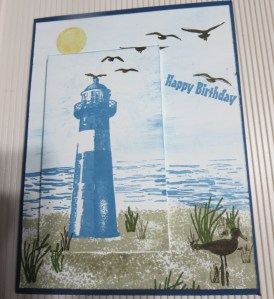
 Thank you for visiting with me today, Heather! Tell me how you got into card making?


 Good morning and happy Monday! I hope you all had two days of rest and renewal to start off the new week right.
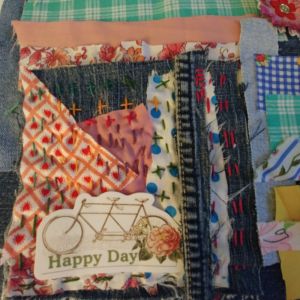 Saturday I was working on my secret project pretty much all day then decided to take a break from it and prep scraps for a Sashiko/Boro influence/ mix media art collage project I’m starting in January. I haven’t sewed any of the fabrics down yet. I’m still in the process of placing the fabrics. Anyhow, it’s going to be about a 12×12 collage. I’ll probably frame it once its completed or if I change my mind, use the collage in another project. There is no pressure in making a final decision. I did go ahead and slow stitched on denim square.


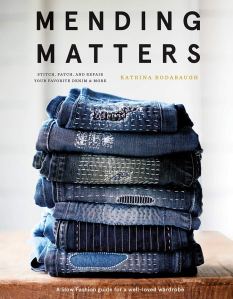 “Mending Matters explores sewing on two levels: First, it includes more than 20 hands-on projects that showcase current trends in visible mending that are edgy, modern, and bold—but draw on traditional stitching. It does all this through just four very simple mending techniques: exterior patches, interior patches, slow stitches, darning, and weaving. In addition, the book addresses the way mending leads to a more mindful relationship to fashion and to overall well-being. In essays that accompany each how-to chapter, Katrina Rodabaugh explores mending as a metaphor for appreciating our own naturally flawed selves, and she examines the ways in which mending teaches us new skills, self-reliance, and confidence, all gained from making things with our own hands.”
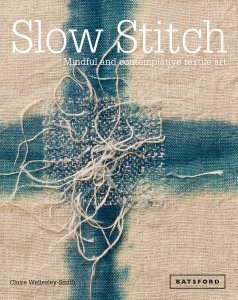 “Sometimes less is more—and quality is more important than quantity. That’s true in textile art too, and this much-needed guide brings a meaningful, thoughtful, and sustainable approach to stitchery. See how to slow down and experience more joy in your craft by trying simple techniques based on traditional practice, reusing and reinventing materials, and limiting equipment. Richly illustrated throughout, this inspirational book will connect with those who seek a new way of working—whether it’s starting a stitch journal or joining a community of like-minded artists.”
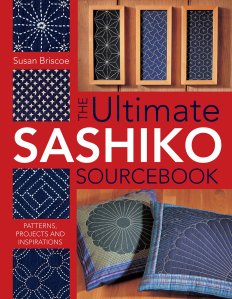 “Sashiko, the traditional Japaneses technique of needlework quilting, uses simple running stitch to create beautifully decorative patterns ideal for patchwork, quilting and embroidery. Sashiko (pronounced shash-ko) means ‘stab stitch’ and refers to the small running stitch that is worked to build up distinctive decorative patterns, of which there are hundreds. The book begins by exploring the origins of the technique to strengthen clothes and to make them warmer. Getting Started describes everything you need to begin stitching, including selecting suitable fabrics and threads, marking out patterns on the fabric, as well as the stitching technique itself. Ten project chapters show how easy it is to use sashiko patterns to make beautiful items for the home. The sashiko patterns are described in step-by-step detail in the pattern library, showing you exactly how to achieve each individual pattern with ease. Finally a gallery of work by contemporary Japanese textile artists provides extra inspiration.”
 2018 was the first year I did not reach my reading goal in a very long, long time. I thought I would be upset over that but surprisingly I am not. I still read a lot of books considering… I want to focus on the quality of reads and I am wanting to really dig deep into my Presidents Reading Challenge. Also, I am starting new works on Layered Pages.
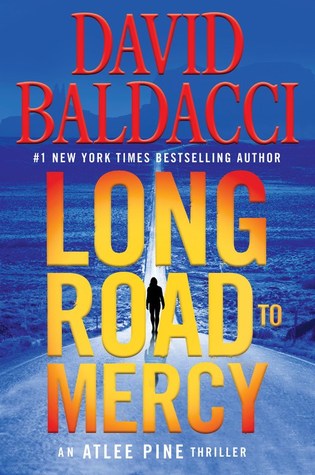 Long Road to Mercy (Atlee Pine #1) by David Baldacci
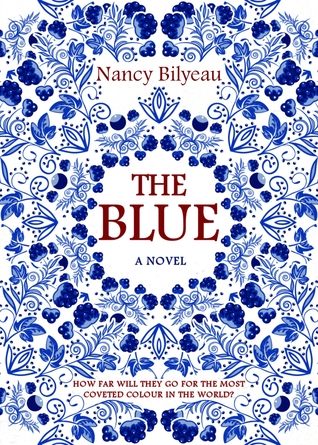 The Blue by Nancy Bilyeau
 Layered Pages